
July and August are the heart of El Nido’s wet season — and one of the most misunderstood times to visit. While the southwest monsoon (Habagat) brings regular rain and rougher seas, both months remain viable for travel with the right expectations. This guide covers what to expect weather-wise, which island hopping tours operate reliably, what advantages the wet season offers, and how to plan a great trip to El Nido in July or August 2026.

Table of Contents
- El Nido in July & August: Weather Overview
- Is El Nido Worth Visiting in July or August?
- Island Hopping in July & August: What Operates?
- The Daily Rain Pattern in July & August
- What to Do in El Nido in July & August
- July vs August: Key Differences
- Packing for El Nido in July & August
- Frequently Asked Questions: El Nido in July & August
- El Nido in July & August: Weather Overview
- Is El Nido Worth Visiting in July or August?
- Island Hopping in July & August: What Operates?
- The Daily Rain Pattern in July & August
- What to Do in El Nido in July & August
- July vs August: Key Differences
- Packing for El Nido in July & August
- Frequently Asked Questions: El Nido in July & August
El Nido in July & August: Weather Overview
| Factor | July | August |
|---|---|---|
| Season | Peak wet season (Habagat) | Peak wet season (Habagat) |
| Average rainfall | 280–380mm/month | 250–340mm/month |
| Rain pattern | Heavy afternoon downpours; often clear mornings | Similar to July; slightly less intense late Aug |
| Wind | Southwest winds 15–30 km/h; gusty periods | Southwest winds, gradually easing late Aug |
| Sea conditions | Choppy to rough on exposed routes (Tour C/D risk) | Similar; slight improvement in late August |
| Temperature | 27–31°C | 27–31°C |
| Water temperature | 27–29°C | 27–29°C |
| Visibility (snorkeling/diving) | 8–15m (reduced from dry season) | 8–15m |
| Tourist crowds | Low — 40–60% fewer visitors than peak season | Low, with slight uptick (school holiday season) |
| Accommodation prices | 25–40% below peak rates | 20–35% below peak rates |
Is El Nido Worth Visiting in July or August?
Yes — with realistic expectations. El Nido in July and August is not the sun-soaked paradise of the travel brochures, but it offers a genuinely different and in some ways superior experience for travelers who embrace the conditions:
- Far fewer tourists: The beaches and tours that feel crowded in December–April are spacious and relaxed in July–August. You’ll share island hopping boats with 4–8 people instead of 12–15.
- Lower prices: Accommodation, tours, and restaurants are significantly cheaper. Some guesthouses offer 30–40% discounts off peak rates.
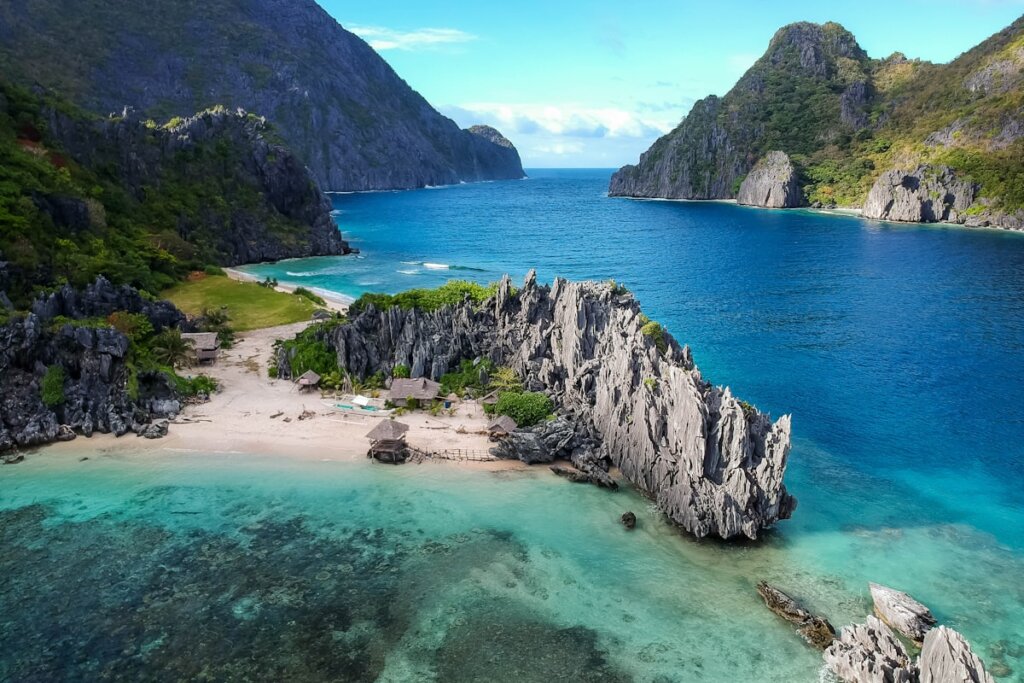
- Lush, vivid scenery: The post-monsoon vegetation is at its most vibrant — limestone cliffs draped in rich green foliage rather than the parched dry-season look. Photographers often prefer the dramatic cloud formations and moody light of the wet season.
- Surf at Nacpan and Duli: July and August bring the most consistent swells to Nacpan and Duli beaches — El Nido’s best surfing months.
- Still operational: Tour A and Tour B operate on most days. The town, restaurants, and night market are fully open.
Island Hopping in July & August: What Operates?
| Tour | July/August Reliability | Reason |
|---|---|---|
| Tour A (Big & Small Lagoon) | ⭐⭐⭐⭐ Very reliable | Sheltered route near Miniloc — protected from southwest winds |
| Tour B (Caves & Sandbars) | ⭐⭐⭐⭐ Reliable | Mostly sheltered northwest route; Snake Island exposed but manageable |
| Tour C (Hidden Beach & Matinloc) | ⭐⭐ Unreliable | Exposed northern route — frequently cancelled in strong Habagat winds |
| Tour D (Cadlao Lagoon) | ⭐⭐⭐ Moderate | Southern route mostly sheltered but Paradise Beach can have swell |
Practical advice: Book Tour A as your primary tour — it’s the most important and most reliable tour in all conditions. Ask your operator on the day of booking whether Tour C is expected to run (they check conditions 24 hours ahead). If Tour C is cancelled, operators typically substitute Tour A or B at no extra cost.
The Daily Rain Pattern in July & August
A critical thing to understand about El Nido’s wet season: rain doesn’t fall all day. The typical July–August pattern in El Nido is:
- Morning (6am–11am): Often clear or partly cloudy — this is when island hopping tours operate and conditions are usually manageable
- Midday–early afternoon: Clouds build, humidity increases
- Afternoon–evening (2pm–6pm): Heaviest rain probability — short intense downpours lasting 30–90 minutes, followed by clearing
- Evening: Often clears again for sunset (Corong-Corong sunsets can be spectacular on post-rain evenings with dramatic cloud formations)
Island hopping tours depart at 8am and return by 4pm — coinciding with the calmer morning window. You’ll likely get some rain during the tour (pack a light rain jacket in your dry bag), but full-day cancellations due to weather are less common than travelers fear, particularly for Tour A.
What to Do in El Nido in July & August
Island Hopping Tour A — Still Outstanding
The Big Lagoon and Small Lagoon are just as beautiful in the wet season — arguably more dramatic with moody skies and lush green cliff vegetation. The reduced crowds mean fewer kayaks queuing at the Small Lagoon entrance and more space at Shimizu Island for snorkeling. The main difference is choppier water on the way out to Miniloc (15–20 min of bouncy boat ride) and reduced underwater visibility at Shimizu (8–15m instead of 20m+).
Nacpan Beach & Surfing
Nacpan Beach is at its best for surfing in July and August — consistent 0.5–1.5m swells create beginner-friendly waves along the 4km beach. Board rental is available (₱300–₱500/hr) and surf lessons can be arranged (₱800–₱1,500). The beach itself is less crowded than in peak season, with the lush green coconut palms at their most vibrant against grey monsoon skies. Dramatic and photogenic.
Duli Beach Surfing
Duli Beach, 15 minutes north of Nacpan, receives the most consistent and powerful surf of any El Nido beach in July–August. It’s El Nido’s best-kept wet-season secret — a completely undeveloped beach with reliable 1–2m swells and almost no other tourists. Bring your own food and water, rent a board from Nacpan (some rental shops deliver), and have the beach to yourself.
Waterfall Hiking
Nagkalit-kalit Waterfall is at its most impressive in July and August — peak wet season means the falls are running at full volume with thundering cascades into the swimming pool below. The hike is muddy and slippery but more rewarding than in the dry season when the falls reduce to a trickle. Hire a local guide (₱300–₱500) — the trail requires river crossings that are higher in wet season.
El Nido Town & Night Market
The town, restaurants, and Night Market operate fully in July–August. With fewer tourists, you get better service, no queues at popular restaurants, and a more authentic local atmosphere. The Night Market is a reliable evening option — it’s partially covered and vendors continue operating through light rain.
Scuba Diving
Diving continues in July–August with most sites accessible, though visibility is reduced (8–15m vs 20–30m in dry season). Some exposed sites (South Miniloc Wall during strong current days) are skipped by operators. The advantage: dive shops have fewer customers and instructors can spend more time with each diver. If you’re completing a PADI course, July–August in El Nido means more personalized instruction and less waiting around.
July vs August: Key Differences
| Factor | July | August |
|---|---|---|
| Rainfall intensity | Peak — heaviest rain month of the year | Slightly less intense than July |
| Wind strength | Strongest Habagat winds | Gradually easing by late August |
| Tour C availability | Low (frequently cancelled) | Slightly better, especially late August |
| Surf conditions | Consistent, good for beginners | Slightly less consistent but still good |
| Crowds | Fewest tourists of the year | Slight uptick (European school holidays) |
| Best for | Surf, waterfalls, budget travel, photography | All of July’s advantages + slightly better seas |
Packing for El Nido in July & August
- Lightweight rain jacket or poncho: Essential — pack one in every day bag. A thin packable jacket (not a heavy waterproof) is ideal for tropical rain.
- Quick-dry clothing: Everything gets wet at some point. Pack synthetic fabrics that dry fast; avoid cotton.
- Dry bag (10–20L): Critical for protecting phone, camera, and valuables on island hopping boats. Buy one before leaving Manila (₱300–₱600 at outdoor shops).
- Water shoes: The waterfall hike involves river crossings. Water-grip sandals or lightweight trail shoes work well.
- Reef-safe sunscreen: Still needed — the UV index is high even on overcast days in the tropics.
- Insect repellent: Mosquitoes are more prevalent in wet season, especially near mangroves at dusk.
Frequently Asked Questions: El Nido in July & August
Is El Nido worth visiting in July?
Yes, if you go with realistic expectations. July is the peak of El Nido’s wet season — regular afternoon rain, rougher seas on exposed routes, and reduced Tour C availability. However, Tour A operates reliably, crowds are at a yearly low (40–60% fewer tourists than peak), prices are 25–40% cheaper, scenery is lush and green, and Nacpan Beach offers good surf. Travelers who visit in July consistently report enjoying the experience despite the weather.
Is El Nido worth visiting in August?
Yes — August is slightly better than July. Rain is still frequent but typically less intense than July, and by late August the Habagat winds begin to ease. Tour A and B operate reliably; Tour C improves in the second half of August. All the wet-season advantages apply: lower prices, smaller crowds, lush scenery, surf at Nacpan. August is one of El Nido’s hidden sweet spots for those flexible about weather.
Does it rain every day in El Nido in July and August?
Almost every day will have at least some rain, but it rarely rains all day. The typical pattern is clear mornings (when tours operate), with heavy afternoon showers from around 2pm. Many days have gorgeous mornings followed by dramatic afternoon storms that clear by evening. Island hopping tours run in the morning and are usually not significantly impacted. A light rain jacket is essential.
Which island hopping tours run in July and August?
Tour A (Big and Small Lagoon) is the most reliable and operates on almost all days in July–August. Tour B also operates reliably on most days. Tour C (Hidden Beach and Matinloc) is the most weather-dependent and is frequently cancelled in July — it operates more reliably in August, especially late in the month. Tour D operates on moderate days but Paradise Beach can have rough landings in strong southwest swell.
What are the advantages of visiting El Nido in July or August?
The main advantages are: significantly lower tourist numbers (El Nido feels spacious and uncrowded), accommodation prices 25–40% below peak rates, lush green scenery at its most vibrant, excellent surf at Nacpan and Duli beaches, full waterfall flow at Nagkalit-kalit, and a more authentic local atmosphere with fewer tourist facilities crowded. For budget travelers and surfers, July–August can be the ideal time to visit.
| Platform | Best For | El Nido Deals |
|---|---|---|
| Booking.com | Hotels, resorts, free cancellation | View deals → |
| Agoda | Best Asia prices, loyalty rewards | View deals → |
| Klook | Tours & activities | Browse tours → |