
El Nido Sunrise Spots 2026: Best Viewpoints to Watch the Sun Rise Over Bacuit Bay
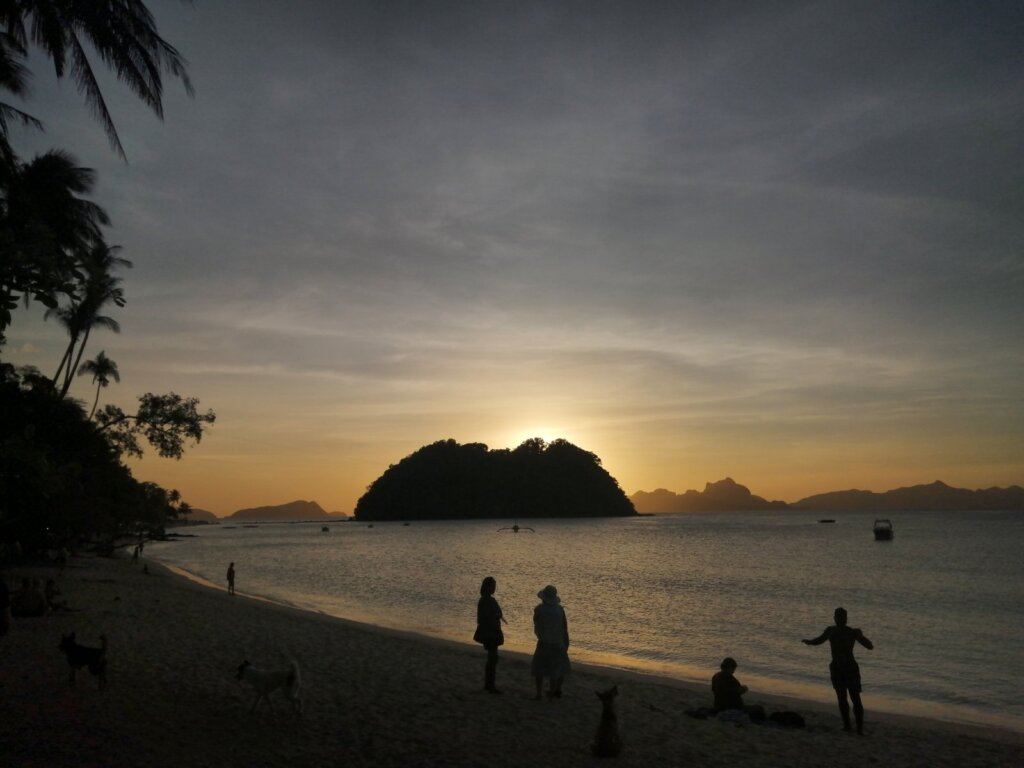
El Nido’s sun rises over the eastern limestone karsts — dramatically different from Nacpan’s westward sunsets. At dawn, the Bacuit Archipelago transforms: limestone peaks glow amber, the bay surface turns to hammered gold, and fishing boats head out through mirror-flat water. These are the best places to watch it happen in 2026.
Sunrise Times in El Nido (2026)
| Month | Sunrise Time | Best Conditions |
|---|---|---|
| January–February | 6:05–6:15 AM | Clear skies, stunning colour |
| March–April | 5:45–6:05 AM | Excellent — occasional haze adds atmosphere |
| May–June | 5:30–5:40 AM | Cloud build-up creates dramatic light |
| July–September | 5:35–5:50 AM | Overcast common; occasional stunning breaks |
| October–November | 5:45–6:00 AM | Improving; late October best |
| December | 6:05–6:15 AM | Clear, crisp, peak-season brilliance |
The Best Sunrise Viewpoints
1. Taraw Cliff Summit — The Ultimate Sunrise
Elevation: 270m | Depart town: 4:30 AM | Guide fee: ₱600
The definitive El Nido sunrise experience. From the summit, you watch the sun emerge over Palawan’s interior mountains, light flooding across Bacuit Bay below, the archipelago gradually materialising from dawn mist. No other viewpoint in El Nido comes close for drama and scope. The scramble up in the dark with headlamps adds to the sense of occasion.
See our hiking guide for the full route. Only attempt in dry conditions — wet limestone is dangerous. Dry season (November–May) only.
2. Corong-Corong Beach Waterfront
Effort: Zero — walk from any town guesthouse | Best for: All abilities
The town waterfront faces east across Bacuit Bay toward the karst islands. At sunrise, the limestone formations turn vivid orange-pink against a brightening sky, reflected in the glassy pre-wind bay surface. Completely free, no hiking, no guide. Simply walk to the beach before 6 AM and find a spot. The best vantage point is the small pier near the market — looking northeast toward the cluster of outer islands.
3. Cemetery Hill Viewpoint
Walk from town: 12 minutes | Elevation: ~80m | Access: Free
The steep path beside the town cemetery leads to a hilltop with 180-degree views over Bacuit Bay. At 80m, the elevation is enough to see over the rooftops and capture the full bay panorama. A hidden local spot — you may have it entirely to yourself at 5:45 AM. The path starts beside the church at the northern end of town; ask any local for “the cemetery view path.”
4. Lio Beach Headland
Distance from town: 15km | Access: Tricycle (₱150), depart 5 AM
The headland at the northern end of Lio Beach has an unobstructed eastern view — no karsts in the way, just the open South China Sea brightening as the sun climbs. Less dramatic than the bay views, but the isolation (you’ll almost certainly be alone) and the long flat beach lit by first light make for extraordinary photography. Arrive by 5:30 AM.
5. Bangka Sunrise on the Water
Cost: ₱800–₱1,200 | Access: Charter a small bangka from the beach
Arrange a pre-dawn bangka with a captain the evening before (depart 5:15 AM, return by 7:30 AM before tour traffic). Being on the water at sunrise — the karsts rising around you, the bay completely still, no other boats in sight — is El Nido at its most magical. The best photographic vantage point for capturing the full 360-degree bay panorama. Ask your guesthouse to arrange; ₱1,000 is a fair rate for a 2-hour charter.
6. Nacpan Beach (Eastern End)
Distance from town: 17km | Best for: Overnight Nacpan stays
If you’re based at a Nacpan guesthouse, the eastern end of the beach faces the inland mountains — the sun rises behind the hills and the dawn light sweeps across the 4km beach arc in sequence. Beautiful and unhurried. The twin-beach spit in early morning light, when the tide is dropping and the spit is beginning to emerge, is one of El Nido’s most compelling images.
Sunrise Photography Tips
- Arrive 30 minutes early — the pre-dawn blue light is often more interesting than the sunrise itself
- Shoot toward the east, but also look west — the karsts facing you may be front-lit, but those behind you receive the warmest last light
- Expose for the highlights — the bright orb of the rising sun will blow out everything else if you expose for shadows; use -1 to -2 stops exposure compensation
- Bracketing for HDR — the dynamic range between dark water and bright sky is extreme; shoot 3-frame brackets and blend in post
For full photography guidance see our photography tips guide and Instagram spots guide. For Taraw Cliff logistics see our hiking guide.