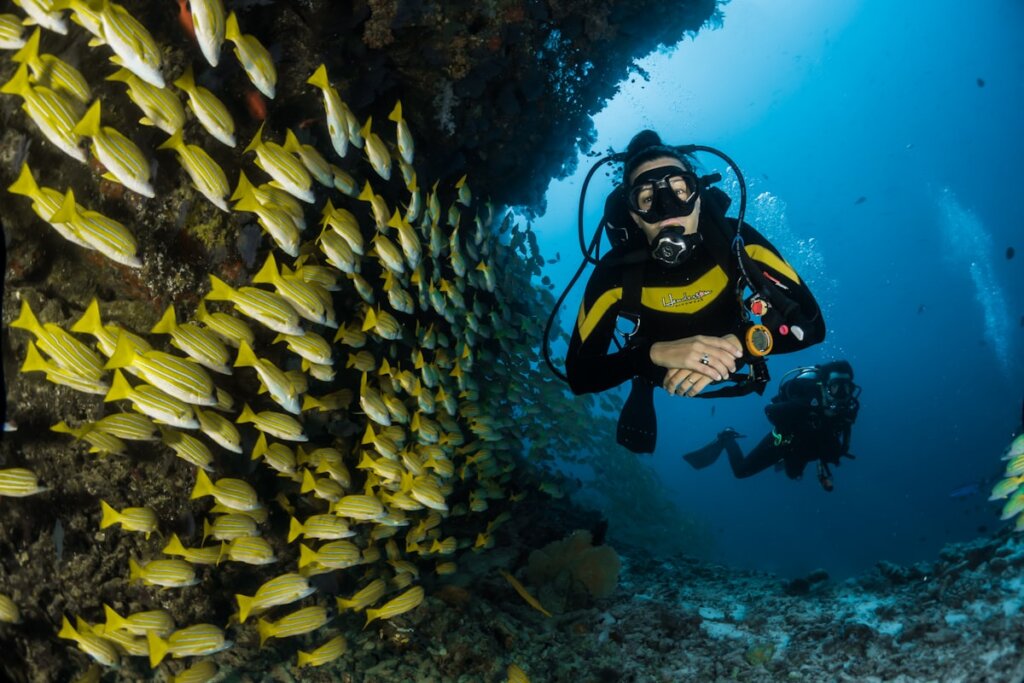

El Nido sits within one of the world’s most biodiverse marine and terrestrial ecosystems. The El Nido-Taytay Managed Resource Protected Area encompasses over 900 square kilometres of land and sea, protecting extraordinary wildlife: sea turtles, dugongs, whale sharks, endemic birds, monitor lizards, and some of the richest coral reef ecosystems in Southeast Asia. This guide covers what wildlife you can expect to see, where to see it, and how to experience it responsibly.
Marine Wildlife
Sea Turtles
El Nido’s most beloved marine residents — green sea turtles (Chelonia mydas) are spotted on almost every island-hopping tour during the dry season. The best spots are the Small Lagoon area (Tour A), Shimizu Island (Tour B), and the reefs around Cadlao Island (Tour D). Sea turtles are protected under Philippine law; observe from a respectful distance, never touch or chase them, and do not use flash photography underwater. Hawksbill sea turtles (Eretmochelys imbricata) — smaller and more critically endangered — are less common but occasionally spotted.
Reef Sharks
Whitetip reef sharks and blacktip reef sharks are regular visitors to El Nido’s healthier reef systems. Most commonly spotted while snorkeling around Shimizu Island (Tour B), Hidden Beach (Tour C), and at dive sites including South Miniloc and the Cathedral Cave area. Completely harmless to snorkelers — reef sharks are shy and fast-moving. A sighting is a sign of a healthy reef ecosystem.
Dugong (Sea Cow)
Palawan is one of the last strongholds for the dugong (Dugong dugon) in Southeast Asia. El Nido’s seagrass beds — particularly around Lagen Island and the northern archipelago — are important dugong feeding grounds. Sightings are uncommon on standard tours but possible on private boat charters into the northern bays. El Nido Resorts’ Lagen Island property is close to known dugong habitat — staff sometimes spot them from the resort’s pier. The dugong is critically endangered in much of its range; any sighting should be reported to the El Nido Resorts conservation team.
Whale Sharks
Whale sharks (Rhincodon typus) pass through Palawan’s waters seasonally, most commonly between January and April. While not reliably spotted in El Nido’s immediate Bacuit Bay, whale shark encounters are possible during liveaboard trips to deeper waters and around the western Palawan coast. Operators have reported occasional whale shark sightings near the northern islands of El Nido. If encountered, maintain a minimum 4-metre distance and never touch.
Manta Rays & Eagle Rays
Manta rays pass through El Nido’s deeper waters, most commonly November–March. Spotted ray and blue-spotted stingray are regular sightings at sandy-bottomed snorkel stops. Eagle rays are occasionally seen soaring through the water column around outer reef drop-offs — one of the most majestic wildlife encounters in El Nido.
Coral Reef Fish
El Nido’s Marine Protected Areas (MPAs) host extraordinary fish diversity. Regular snorkel sightings include: parrotfish (often 50cm+), surgeonfish schools, butterflyfish, angelfish, triggerfish, pufferfish, lionfish, grouper, barracuda, and clownfish in anemones (the “Nemo” fish that delights children and adults alike). The Small Lagoon and Shimizu Island reefs are considered among the best snorkel sites for fish diversity.
Octopus & Cephalopods
Day octopus and mimic octopus are found on sandy areas between reefs — look for them at Shimizu Island and the Helicopter Island snorkel stops. At night, reef squid hover in the shallows near El Nido pier — visible from the pier itself after dark. Night diving reveals extraordinary cephalopod diversity including flamboyant cuttlefish.
Terrestrial & Aerial Wildlife
Philippine Cockatoo (Cacatua haematuropygia)
Locally known as the Katala, the Philippine cockatoo is critically endangered — one of the rarest birds in the world, with an estimated wild population of under 1,000. El Nido is one of its last strongholds. The birds are white with a pink blush, distinctive in flight. Best spotted at dawn and dusk around forested islands in the northern archipelago, particularly around Lagen Island. El Nido Resorts runs a conservation programme and their staff can guide you to the best observation spots.
Palawan Peacock-Pheasant (Polyplectron napoleonis)
One of Palawan’s most spectacular endemic birds — the male is an iridescent emerald and blue bird with extraordinary eye-spotted tail feathers. Found in primary forest across Palawan, including areas accessible from El Nido on guided jungle walks. Very shy; early morning guided forest hikes offer the best chance of a sighting. Listed as Vulnerable on the IUCN Red List.
Asian Water Monitor (Varanus salvator)
Large monitor lizards — reaching 1.5–2m in length — are common sightings on El Nido’s beaches and forested islands. They’re visible on nearly every island-hopping tour, basking on rocks or prowling beaches for food scraps. Despite their intimidating size, water monitors are not aggressive toward humans unless cornered. Do not feed them — it habituates them to human presence and disrupts natural behaviour.
Philippine Hornbill
The Palawan hornbill (Anthracoceros marchei) — endemic to Palawan — is frequently spotted flying between islands in El Nido, identifiable by its black plumage, white tail, and distinctive casqued bill. A much-photographed bird; binoculars greatly enhance observation. Listen for its loud, distinctive call echoing across the karst cliffs.
Flying Lemur (Sunda Colugo)
The Sunda colugo (Galeopterus variegatus) — more accurately a colugo than a lemur — is nocturnal and found in Palawan’s forests. Guided night walks in the jungle around El Nido occasionally reveal these extraordinary gliding mammals clinging to tree trunks. Ask your hotel about guided night wildlife walks — a memorable experience for wildlife enthusiasts.
Sea Eagles & Raptors
White-bellied sea eagles (Haliaeetus leucogaster) are regularly spotted soaring over El Nido’s bay, hunting fish from the air. Brahminy kites — striking chestnut and white raptors — are also common. Both species are often seen from tour boats, providing excellent photography opportunities without leaving the water.
Where to See Wildlife in El Nido
| Wildlife | Best Location | Best Time | How to Get There |
|---|---|---|---|
| Sea turtles | Small Lagoon, Shimizu Island | Nov–Apr, 8–10am | Tour A or Tour B |
| Reef sharks | Shimizu Island, Hidden Beach | Nov–Apr | Tour B or Tour C |
| Dugong | Lagen Island seagrass beds | Year-round (rare) | Private charter |
| Philippine cockatoo | Northern archipelago, Lagen Island | Dawn, dusk | El Nido Resorts guided tour |
| Monitor lizards | Any island beach | Year-round | Any island-hopping tour |
| Palawan hornbill | Forested island edges | Year-round, morning | Any tour, boat trips |
| Manta rays | Outer reef drop-offs | Nov–Mar | Dive trips |
| Whale sharks | Open water, west coast | Jan–Apr | Liveaboard dive trips |
Wildlife Watching Tips
- Early morning is best — both marine and terrestrial wildlife are most active in the first 2 hours after sunrise. Depart on tours at 7–8am.
- Silence matters — noise and splashing frighten wildlife. The quietest snorkelers see the most.
- Binoculars for birds — a compact pair of 8×32 or 10×42 binoculars transforms El Nido’s bird watching. Lightweight and worth packing.
- No touching marine life — this applies to all species: turtles, reef fish, coral, and starfish. Even casual contact spreads disease and disrupts behaviour.
- No feeding — feeding monitor lizards, fish, or any wildlife is prohibited in the Marine Protected Area and disrupts ecological balance.
- Hire a specialist guide — for endemic birds and nocturnal wildlife, a specialist wildlife guide dramatically increases sighting success. Ask your hotel for a licensed guide referral.
El Nido Conservation & Marine Protection
El Nido’s marine environment is protected by several overlapping designations: the El Nido-Taytay Managed Resource Protected Area (MRPA), Marine Protected Areas at the most sensitive reefs, and regulations enforced by the El Nido Municipal Environment and Natural Resources Office (MENRO). The ₱200/person environmental fee collected at El Nido pier contributes to reef patrol, buoy maintenance, and conservation programmes.
El Nido Resorts’ Foundation runs the longest-running private conservation programme in the area, including sea turtle tagging, Philippine cockatoo protection, and reef monitoring. Guests at El Nido Resorts can participate in conservation activities; day visitors can support by booking tours through the foundation’s social enterprise arm.
For more on responsible tourism in El Nido, see our reef conservation guide and volunteering guide.
Frequently Asked Questions
Can you see sea turtles in El Nido?
Yes — sea turtle sightings are very common during the dry season (November–April) on Tour A (Small Lagoon area) and Tour B (Shimizu Island). During peak season, most Tour A days include at least one sea turtle encounter while snorkeling.
Are there whale sharks in El Nido?
Whale sharks pass through Palawan’s waters January–April, but sightings in El Nido’s immediate Bacuit Bay are uncommon. The most reliable whale shark encounters in the Philippines are at Oslob (Cebu) or Donsol (Sorsogon). Liveaboard dive trips from El Nido can reach areas where whale shark encounters are more likely.
Is El Nido good for bird watching?
Yes — Palawan has exceptionally high bird endemism (species found nowhere else on Earth). El Nido’s forested islands and the mainland jungle host the critically endangered Philippine cockatoo, Palawan peacock-pheasant, Palawan hornbill, and dozens of other endemic species. Hire a specialist guide for the best results.
External resources: IUCN Red List — Palawan endemic species | WWF Philippines — marine protected areas