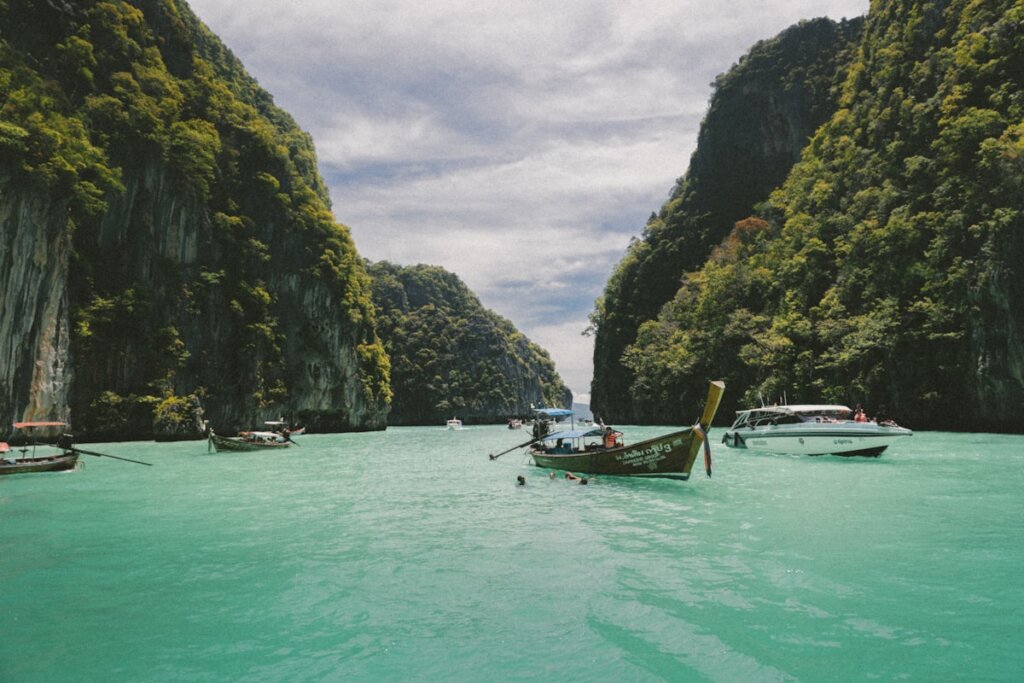

The Big Lagoon in El Nido is one of the most iconic natural wonders in the Philippines — a vast, emerald-green lagoon enclosed by towering limestone karst walls on Miniloc Island in the Bacuit Archipelago. It is the centrepiece of Island Hopping Tour A and a defining image of Palawan. Here’s everything you need to know before you visit in 2026.
Big Lagoon El Nido: Quick Facts
| Detail | Info |
|---|---|
| Location | Miniloc Island, Bacuit Archipelago, El Nido, Palawan |
| Access | Via Island Hopping Tour A only (no independent boat access) |
| Distance from El Nido town | ~20–30 min by bangka boat |
| Lagoon size | Approximately 1 km long × 400m wide |
| Water depth | 3–8m (sandy bottom, very clear) |
| Cliff height | 50–100m limestone karst walls |
| Water colour | Turquoise to emerald green depending on light |
| Kayaking | Yes — kayaks available inside or bring on tour boat |
| Snorkeling | Possible (modest reef at edges) but not the main draw |
| Best time of day | Morning (8–11am) for calmest water and best light |
| ENTP fee | ₱200/person (included in Tour A fees) |
What Makes the Big Lagoon Special?
The Big Lagoon’s appeal is immediately obvious — and almost impossible to photograph well enough to do justice. The lagoon is enclosed on three sides by near-vertical limestone karst walls rising 50–100 metres directly from the water, their surfaces streaked with green vegetation, hanging vines, and white mineral deposits. The water inside is extraordinarily clear — on a calm day you can see the sandy bottom at 5–7 metres depth with almost no distortion. The colour shifts from turquoise at the edges to a deeper emerald-green in the centre, depending on the angle of light.
The scale creates a profound sense of enclosure — inside the Big Lagoon, the cliffs block out the open ocean entirely, leaving only sky above and still water below. On windless mornings, the lagoon’s surface is mirror-flat, perfectly reflecting the cliff walls and creating one of the most visually striking landscapes in Southeast Asia. Many visitors describe the Big Lagoon as the single most beautiful place they’ve ever seen.
How to Get to the Big Lagoon
The Big Lagoon is accessible only via Island Hopping Tour A — it is not possible to arrange independent boat access. Tour A departs from El Nido pier daily at approximately 8:00–8:30am and reaches the Big Lagoon as its first or second stop (depending on the operator’s route order).
- Book Tour A: Through your guesthouse, a Calle Hama tour operator, or online (Klook, GetYourGuide). See our full island hopping cost guide for pricing.
- Travel time from El Nido: ~20–30 minutes by bangka boat
- Tour price: ₱1,200–₱1,500/person shared + ₱300 mandatory fees (ENTP + municipality)
- Private option: Book a private boat for ₱6,000–₱10,000/boat — your group has the lagoon to yourselves during your stop
Big Lagoon vs Small Lagoon: What’s the Difference?
| Factor | Big Lagoon | Small Lagoon |
|---|---|---|
| Size | ~1km × 400m — large, open space | Small enclosed circular basin |
| Access | Motorboat enters directly | Kayak only through a narrow crack |
| Water depth | 3–8m | 4–6m |
| Wow factor | Scale and grandeur of cliff walls | Intimacy of the kayak-through passage |
| Photography | Wide landscape shots, reflections | Intimate cavern shots, kayak perspective |
| Experience type | Drifting, kayaking in open space | Intimate adventure (the crack paddle) |
| Crowd feel | Multiple boats can be present simultaneously | One kayak at a time through the entrance |
| Verdict | More visually spectacular | More personally memorable experience |
Both lagoons are on Tour A and visited in the same day — the comparison is not about choosing one over the other, but understanding that they offer completely different experiences. Most visitors find the Big Lagoon more visually stunning in photographs, while the Small Lagoon’s kayak-through-the-crack experience is more personally memorable in person.
Kayaking the Big Lagoon
Kayaking is the ideal way to experience the Big Lagoon — it allows you to move slowly through the still water, stop wherever you want, and appreciate the full scale of the cliffs at a human pace. Motorboats must stay near the entrance; only kayaks and swimming are permitted deeper inside.
- Kayak availability: Kayaks are brought on or towed behind the tour boat. On shared tours they’re shared among the group.
- Kayak cost: On many shared tours, kayak use in the Big Lagoon is included. Some operators charge ₱100–₱200 extra — confirm before booking.
- Kayak type: Typically 2-person sit-on-top kayaks. No experience needed — the water is calm and the lagoon is wide.
- Tip: Paddle to the far end of the lagoon (furthest from the entrance) where other boats don’t venture — the cliffs are tallest there and the silence is complete.
Photography Tips for the Big Lagoon
The Big Lagoon is one of the most photographed sites in the Philippines. Here’s how to get the best shots:
- Visit in the morning (8–10am). The limestone cliffs face east — morning sun illuminates the walls with warm, golden light and creates the famous turquoise-water-against-golden-cliff colour combination. By noon the light is harsh and overhead; by afternoon the cliffs cast the lagoon in shadow.
- Get low in the kayak. The most dramatic lagoon shots are taken from water level — sitting low in the kayak with the kayak paddle as a foreground element and the full cliff height above. Standing up on a boat deck loses the scale.
- Wait for reflections. On calm mornings the still water creates perfect mirror reflections of the limestone walls. This is the image that goes viral — arrive early before boat wake disturbs the surface.
- Use a wide-angle lens (or wide mode on your phone). The lagoon is too large to capture in a standard photo. On a smartphone use the 0.5x ultra-wide setting; on a camera use 16–24mm.
- A waterproof camera or GoPro is worthwhile. The water is clear enough that underwater shots from the kayak — showing the sandy bottom and blue water above — make beautiful images.
- Face toward the entrance gap. Some of the best shots face back toward the lagoon’s entrance opening — framing the small gap in the cliffs with open water beyond, showing how enclosed the space is.
What Else to Expect on Tour A
The Big Lagoon is just one of four stops on Tour A. After kayaking the Big Lagoon, the tour continues to:
- Small Lagoon: Kayak through a narrow crack in the cliff into an enclosed circular lagoon — the most physically intimate experience on Tour A
- Secret Lagoon: Squeeze through a gap in the cliff + viewpoint climb for a bird’s-eye view of a hidden lagoon below
- Shimizu Island: El Nido’s best snorkeling reef — reef sharks, sea turtles, clownfish, and dense coral gardens
- Lunch beach: Grilled fish, vegetables, rice and fruit prepared by the boat crew on a white sand beach
Frequently Asked Questions: El Nido Big Lagoon
Is the Big Lagoon worth visiting in El Nido?
Absolutely — the Big Lagoon is one of the most spectacular natural landscapes in Southeast Asia and a highlight of any Palawan trip. The combination of towering limestone walls, crystal-clear turquoise water, and profound stillness creates an experience that most visitors describe as genuinely unforgettable. It is the reason many travelers include El Nido in their Philippines itinerary.
How do I get to the Big Lagoon in El Nido?
The Big Lagoon is accessible only via Island Hopping Tour A, which departs El Nido pier at approximately 8–8:30am daily. Book Tour A through your accommodation or a tour operator on Calle Hama. The boat reaches the Big Lagoon in 20–30 minutes. Independent boat hire to the Big Lagoon is not available — Tour A is the only way to access it.
Can you swim in the Big Lagoon?
Yes — swimming is permitted in the Big Lagoon. The water is 3–8m deep with a sandy bottom and is clean, clear, and safe to swim in. Life jackets are available from the tour boat for non-swimmers. Snorkeling is possible but the reef here is modest — the main draw is the scenery, not the underwater life. For the best snorkeling on Tour A, wait for the Shimizu Island stop.
Is the Big Lagoon crowded?
The Big Lagoon is one of the most popular stops in El Nido, so yes — multiple tour boats can be present simultaneously in peak season (December–April). The lagoon is large enough that it doesn’t feel unpleasantly overcrowded, but for the best experience go on an early-departing boat (8am rather than 9am) and paddle to the far end of the lagoon where other boats don’t reach. Private boat tours offer the most exclusive access.
What is the difference between the Big Lagoon and the Small Lagoon?
The Big Lagoon is a large, open lagoon (approximately 1km × 400m) accessible by motorboat and kayak — its appeal is the dramatic scale of the surrounding limestone cliffs and the vivid turquoise water. The Small Lagoon is a small, enclosed circular basin accessible only by kayaking through a narrow crack in the limestone cliff — its appeal is the intimate adventure of the kayak-through-the-crack experience. Both are on Tour A and visited the same day. Most visitors find the Big Lagoon more visually spectacular in photos; the Small Lagoon more personally memorable in experience.