Organising a trip for two is easy; organising one for twelve cousins, grandparents and toddlers is a project. This guide focuses on planning a family reunion or large group trip to El Nido specifically for organisers coordinating ten or more travellers of mixed ages and budgets. It covers when to book, how to split rooms and boats, how to keep everyone safe on the water and how to avoid the arguments that most often derail group holidays.
- Start With the Group, Not the Destination
- When to Go and How Early to Book
- Accommodation Options for Big Groups
- Getting Everyone There
- Island Hopping With a Crowd
- Feeding Twelve Without a Fight
- Money, Tips and Splitting Costs
- Plans for Rain, Heat and Tired Kids
- Making the Reunion Memorable
- A Sample Four-Day Schedule
- Handling Disagreements and Different Energy Levels
- Final Checklist for the Organiser
- Frequently Asked Questions
Start With the Group, Not the Destination
Before you book a single room, collect basic facts from every household: ages, mobility needs, swimming ability, dietary restrictions, budget range and preferred dates. Share a simple form so people can answer privately. The results usually reveal a few constraints that shape the whole trip, such as a grandparent who cannot manage stairs or a teenager who must be back for school on a fixed day.
Agree early on who decides. A small planning committee of two or three people works better than a vote among everyone, and a written summary of decisions prevents the “I never agreed to that” conversations later. Our guide to accessibility in El Nido is worth reading if any traveller has limited mobility, because steps, sand and boat boarding are the main obstacles.
When to Go and How Early to Book
Dry-season months from roughly December to May are the most popular, and large blocks of rooms disappear quickly around holidays such as Christmas, New Year and Holy Week. Book as far ahead as the cancellation policy allows, ideally four to six months for peak dates. Shoulder months can offer lower rates and fewer crowds, but weather is less predictable. Check forecasts and tropical cyclone bulletins from PAGASA, the national weather agency, before final payments, and read our rainy season guide if you are considering a summer or autumn reunion.
Accommodation Options for Big Groups
Large groups have three realistic choices: a block of rooms in one hotel, a cluster of villas or a private house. Each trades convenience against cost and privacy.
| Option | Best for | Advantages | Watch out for |
|---|---|---|---|
| Block of hotel rooms | Mixed budgets, multiple families | Daily housekeeping, on-site meals, easy to extend | Group rates need early negotiation; noise between rooms |
| Cluster of villas or cottages | Families with children | Shared lawn or pool, privacy for each household | Limited availability; check kitchen and Wi-Fi |
| Private house rental | Close-knit groups of 10 to 20 | Shared kitchen and common space, lower cost per person | Few large houses exist; backup power and water vary |
| Island resort | Milestone celebrations | All-inclusive logistics, boat transfers handled | Highest price; fixed schedules; limited flexibility |
Use our resort comparison to shortlist properties, then email several with your exact dates and headcount. Ask about extra-bed policies, child rates, deposits and what happens if the weather forces a cancellation. Request everything in writing, and ask for a single contact person at the property.
Getting Everyone There
Most visitors reach El Nido by flying into Puerto Princesa or by a direct flight to the El Nido airport at Lio, then continuing by shared or private van. A large group usually saves money and stress by chartering vans for the road transfer rather than relying on scheduled seats. Confirm luggage space, because a van full of people and suitcases fills fast. If relatives arrive on different days, assign one person to coordinate pickups and share a simple arrival chart.
Build in a buffer day at the start and end of the trip. Delayed flights are common, and a missed connection is much easier to absorb when no tour is waiting for you the next morning.
Island Hopping With a Crowd
Island hopping is the highlight for most groups, and a private boat is often better than a shared tour for ten or more people. A private charter lets you set the pace, leave later for sleepy grandparents and stop longer where the children are happiest. Compare itineraries before choosing; our Tour B guide is a good starting point for relaxed lagoons and beaches suitable for a mixed-age group.
Safety comes first. Only use boats that provide life jackets in every size, including children’s sizes, and insist that everyone wears them. Check that the operator is accredited, ask how many passengers the boat is licensed to carry and consult guidance from the Philippine Coast Guard. Never allow overloading to save money. Brief everyone on the plan, appoint a headcount person for each stop and agree on a signal for returning to the boat.
Feeding Twelve Without a Fight
Meals are where groups fragment. Decide in advance which meals are shared and which are free. A few shared dinners, perhaps a seafood feast on arrival and a farewell dinner, create memories without forcing everyone to eat together every night. Restaurants in town can handle large parties, but call ahead and offer a set menu with a few choices so the kitchen is not overwhelmed. If the group includes picky eaters or people with allergies, collect details early and tell the restaurant when booking. Packed lunches on boat trips are standard, but ask about vegetarian and child-friendly options.
Money, Tips and Splitting Costs
Choose a payment system before the trip begins. Many groups appoint a treasurer who collects an agreed amount from each household and pays shared expenses, with a simple shared spreadsheet showing every cost. Carry enough cash for tips and small purchases, since card acceptance and ATMs can be unreliable in town. Our tipping etiquette guide explains what is customary, so that your group does not under- or over-tip guides, boat crews and restaurant staff.
Agree how to handle optional activities. If half the family wants a kayaking trip and the rest prefer a beach day, let people pay for what they use instead of splitting every cost equally. That keeps resentment away and helps those on tighter budgets feel included.
Plans for Rain, Heat and Tired Kids
Always have a backup plan. Heavy showers, rough seas or a sick child can cancel a boat day at short notice. Keep a short list of indoor activities, such as cooking classes, massages, board games and film nights, and consult our indoor rainy-day ideas. Pace the schedule so that no day demands more than one major outing, and leave a free afternoon for naps and pool time. Pack sun protection, water bottles, a basic first-aid kit and any regular medication for everyone. Official visitor information and updates on tourism rules can be found through the Department of Tourism.
Making the Reunion Memorable
Small touches matter more than expensive extras. Organise a group photo at sunset, assign each household a day to choose an activity, and print a simple itinerary so older relatives know what is happening. Ask a local photographer to capture the whole family on the beach, and share the pictures afterwards. Most importantly, leave space for unplanned moments: the best stories from a family trip often come from a slow afternoon on the sand, not from the most packed itinerary.
A Sample Four-Day Schedule
A balanced itinerary keeps energy high across generations. On day one, arrive, settle in, enjoy a relaxed dinner and go to bed early. Day two can be the big island-hopping trip, with a late start, a packed lunch and a return before sunset. Day three should be gentle: a morning at a calm beach, a long lunch, an afternoon rest and a sunset walk. Day four is for souvenirs, a final group meal and packing. If you have more time, add a second boat day or a visit to a quieter beach, and keep at least one unscheduled afternoon so that nobody feels rushed.
Handling Disagreements and Different Energy Levels
Every large group contains early risers and night owls, thrill-seekers and sunbathers. Rather than forcing everyone into one schedule, offer parallel options. Teenagers might try kayaking while grandparents enjoy a massage, and both groups can meet for dinner. Set a simple rule that nobody is obliged to join every activity, and appoint a neutral person to resolve disputes about money or timing. A short check-in each evening, ten minutes over drinks, is enough to adjust tomorrow’s plan and keep small irritations from growing.
Final Checklist for the Organiser
Confirm all bookings in writing two weeks before departure, share emergency contacts and a copy of the itinerary, and ask each household to carry travel insurance details. Check that everyone has valid passports and any visas required, and remind relatives to bring cash, sunscreen and reusable water bottles. Finally, keep a printed copy of key addresses and phone numbers in case phones run out of battery.
Frequently Asked Questions
How far ahead should I book a family reunion in El Nido?
For peak dates such as Christmas, New Year or Holy Week, aim for four to six months ahead. Off-peak groups can often book two to three months out.
Is a private boat better than a shared tour for a large group?
Usually yes. A private charter lets you control the pace and timing, and it avoids splitting the group across several boats.
What is the easiest way to split costs among families?
Appoint a treasurer, agree a budget per household in advance and track shared expenses in a simple spreadsheet. Let people pay individually for optional activities.
Is El Nido suitable for grandparents and toddlers?
Yes with planning. Choose accommodation with few stairs, pick calm beaches, check life jackets for every age and keep days short with plenty of rest.
What should we do if the weather cancels our boat day?
Have a backup list of indoor activities and ask your operator about rebooking or refund policies when you book.
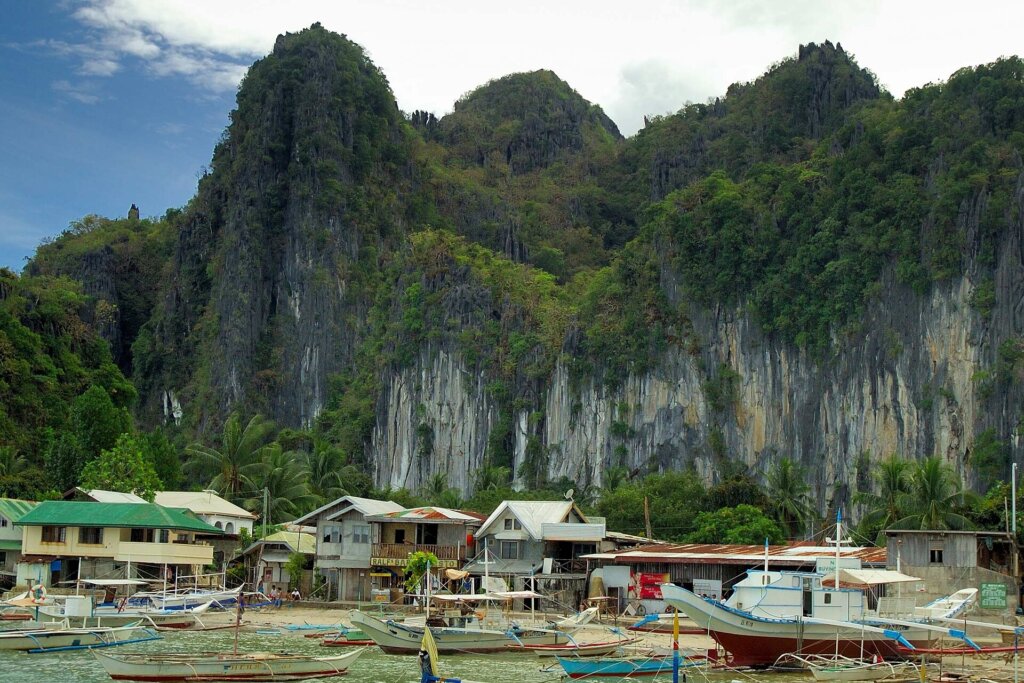
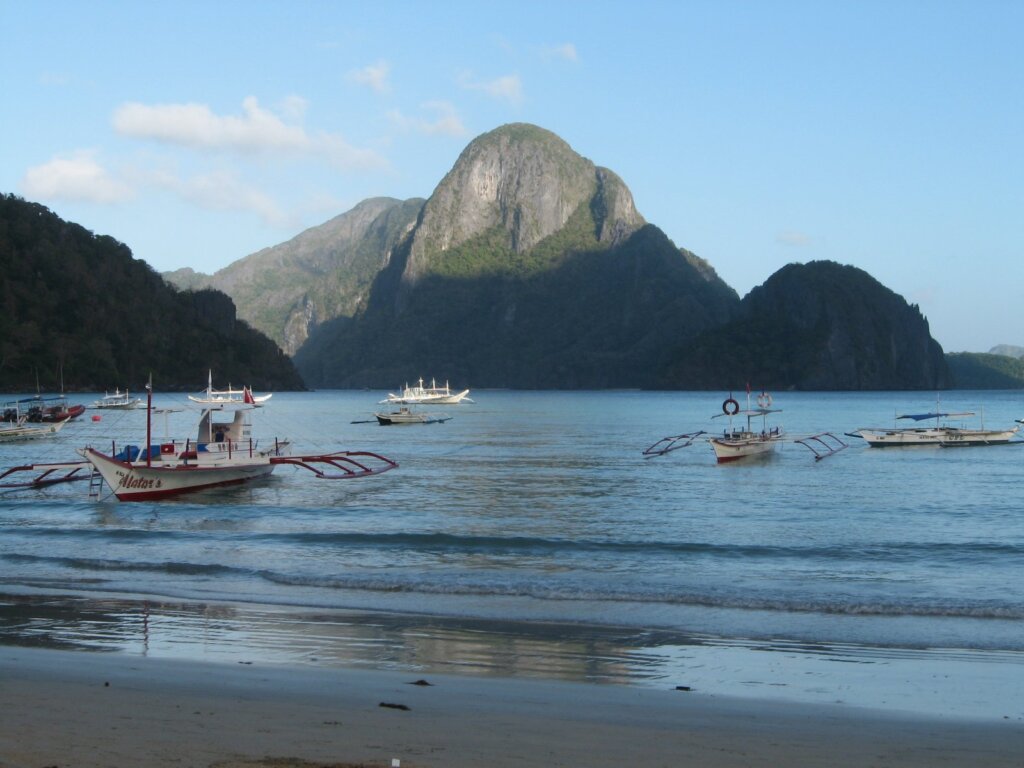
Photo: El Nido Bay, islands (CC BY 4.0), via Wikimedia Commons.