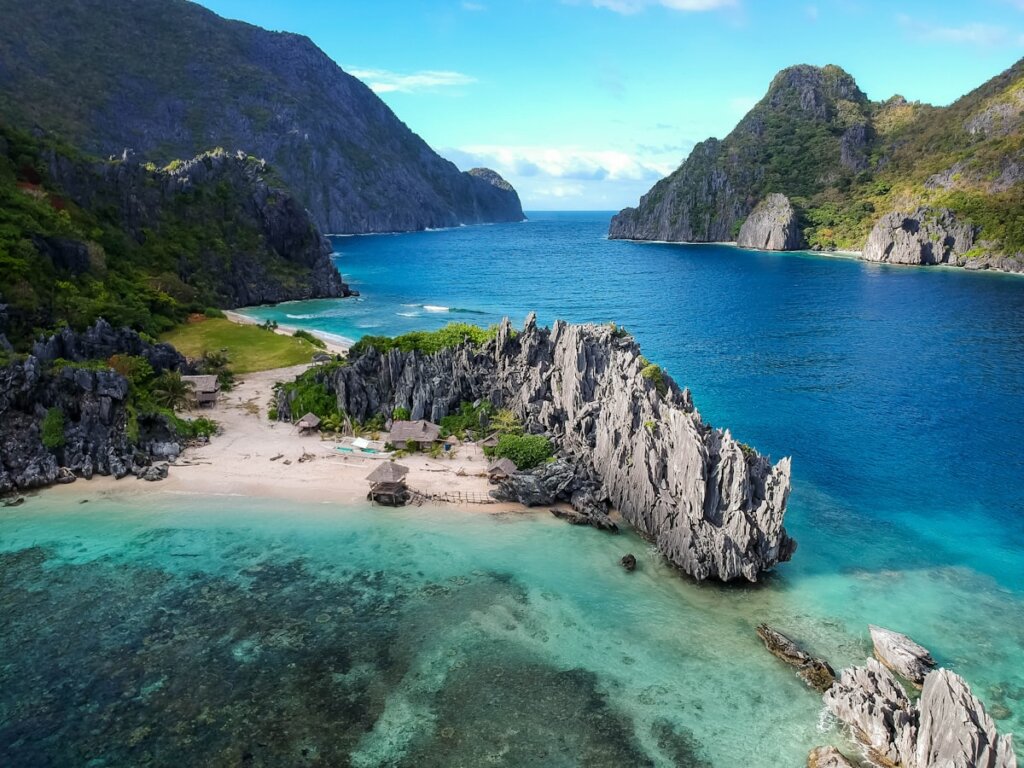

El Nido is one of the most ecologically important marine areas in the Philippines — and one of the most visited. The El Nido–Taytay Managed Resource Protected Area (ENTMRPA), established under Republic Act 7611, covers 903 square kilometres of land and sea, protecting some of the world’s most biodiverse coral reef ecosystems. Understanding this protected status isn’t just for conservationists: it directly shapes what you can and cannot do as a visitor, which tours operate here, and why El Nido looks the way it does.
This guide covers the nature reserve framework, the ecosystem you’ll encounter, responsible tour practices, eco-accommodation options, and how to enjoy El Nido without contributing to the environmental pressures threatening it.
- El Nido’s Protected Area: What It Means
- The Ecosystems of Bacuit Bay
- Tour Rules & Responsible Practices
- Environmental Fees Explained
- Best Eco-Friendly Accommodations in El Nido
- Wildlife You Might Encounter
- Responsible Photography in the Reserve
- Community-Based Ecotourism Initiatives
- How to Reduce Your Environmental Impact
- Frequently Asked Questions
- Plan Your Ecotourism Experience in El Nido
El Nido’s Protected Area: What It Means
The El Nido–Taytay Managed Resource Protected Area was declared a protected area in 1998. It encompasses Bacuit Bay and the surrounding limestone archipelago — the dramatic karst formations that make El Nido’s scenery so distinctive. The protected area is divided into:
- Core zones — strictly protected, no extractive use, limited tourism (Miniloc and Matinloc Islands are examples)
- Sustainable use zones — regulated fishing and tourism allowed
- Buffer zones — transitional areas where controlled development occurs
- Multiple use zones — includes El Nido town itself
Management is handled jointly by the DENR (Department of Environment and Natural Resources) and local government. The ECAN (El Nido Conservation Area Network) framework requires all tour operators to comply with carrying capacity limits, waste management standards, and marine protection rules. This is why you’ll see mooring buoys rather than anchors in critical reef areas — dragging anchors can destroy decades of coral growth.
The Ecosystems of Bacuit Bay
El Nido hosts five distinct ecosystems within close proximity — an extraordinary concentration of biodiversity:
Coral Reefs
Bacuit Bay contains some of the most intact coral reef systems in Southeast Asia. More than 800 fish species and 400 coral species have been recorded here. The best snorkelling reefs on Tour C (Secret Beach, Helicopter Island, Star Beach) sit in shallow water above thriving hard coral formations. Deeper reef walls — accessible only to scuba divers — support Napoleon wrasse, barracuda, turtles, and occasionally reef sharks. The most sensitive reefs are in the core zones around Miniloc Island, where visitor numbers are strictly capped.
Mangrove Forests
Mangrove forests line the sheltered inner shores of many El Nido islands. They serve as nurseries for juvenile fish, buffer coastlines against storm surge, and sequester carbon at rates higher than most terrestrial forests. Several tour routes pass through mangrove channels — the kayak passage to Big Lagoon (Tour A) is partly framed by mangrove roots. Visitors are prohibited from cutting or damaging mangroves, and paddling routes are designated to minimise disturbance.
Seagrass Beds
Seagrass meadows in the shallower bays — particularly around Nacpan and Corong-Corong — are feeding grounds for dugongs (sea cows), a critically endangered species still occasionally sighted in northern Palawan waters. These beds also support green sea turtles, which are protected under Philippine law. Boat operators are required to cut engines and use poles when transiting seagrass areas.
Limestone Karst Formations
The towering limestone cliffs that define El Nido’s skyline are ancient marine sedimentary rock, uplifted over millions of years. The caves and stalactite formations within them — including the famous lagoon caves at Big Lagoon and Shimizu Island — are home to swiftlets (whose nests are harvested for bird’s nest soup), bats, and rare cave-adapted invertebrates. Cliff climbers are prohibited from accessing certain protected cliff faces, and cave entry is managed via guide-to-group ratios.
Open Water and Pelagic Zone
Beyond Bacuit Bay, the outer waters of northern Palawan attract whale sharks (occasional, not guaranteed), manta rays (more reliably during the November–April calm season at certain cleaning stations), spinner dolphins, and migratory pelagic species. Responsible whale shark interaction requires staying 3+ metres from animals, no flash photography, and no touching — rules enforced by licensed guides.
Tour Rules & Responsible Practices
Every legitimate tour operator in El Nido is required to follow ECAN rules. As a visitor, knowing these helps you choose responsible operators and avoid unknowingly participating in destructive behaviour:
| Rule | Why It Matters |
|---|---|
| Use only reef-safe sunscreen (mineral-based, no oxybenzone) | Chemical sunscreens bleach and kill coral — Palawan has banned chemical sunscreens at certain sites |
| No touching or standing on coral | Even a brief touch kills polyps and can take decades to recover |
| No feeding fish or marine life | Alters natural feeding behaviours and reef ecology |
| No collecting shells, coral, or marine organisms | Illegal under Philippine law; fines apply |
| Use designated mooring buoys (no anchoring) | Anchors destroy reef formations in seconds |
| Carry out all rubbish — no dumping at sea | Marine debris kills turtles, fish, and seabirds |
| Respect carrying capacity limits at lagoons | Big Lagoon, Small Lagoon, and Cadlao Lagoon have maximum kayak/visitor limits per hour |
| Stay on designated paths at nesting sites | Swiftlet nests and sea turtle nesting beaches are protected |
What to look for in a responsible operator: DENR-accredited license displayed, mooring buoy use, biodegradable packaging on the boat lunch, guide briefing before snorkelling stops, and a maximum group size of 12 (the ECAN-mandated cap for most tour categories).
Environmental Fees Explained
When you arrive in El Nido, you’ll pay several overlapping environmental fees:
- ECAN environmental fee — ₱200 per tourist, collected at the port or by your tour operator. Funds go to conservation programs and ranger patrols.
- Tour fees — Per-tour fees (included in your tour price or collected separately): approximately ₱200 for Tour A, ₱150 for Tour B, ₱200 for Tour C, ₱150 for Tour D. Exact rates vary slightly by season.
- Lagoon entry kayak fees — Small Lagoon and Kayangan Lake in Coron (not El Nido) charge separate kayak fees.
- Las Cabanas Beach fee — ₱20 environmental fee for the Las Cabanas footpath area.
These fees are legitimate and should not be paid as cash to individuals on the street — always get an official receipt. Refuse any tours marketed as “ECAN fee not included” at suspiciously low prices; these operators are likely unregistered.
Best Eco-Friendly Accommodations in El Nido
Several properties in El Nido have built sustainability into their core model:
El Nido Resorts (Miniloc, Lagen, Pangulasian, Apulit Islands)
El Nido Resorts is the pioneer of ecotourism in Palawan. Their four island resorts operate under strict environmental standards: solar power supplements the grid, reverse osmosis water treatment, no single-use plastics, coral nursery programs, and mandatory mangrove restoration work for staff. Staying at El Nido Resorts places you inside the core protected zone — the most pristine part of Bacuit Bay. Prices are high (US$300–600+/night), but the experience and the conservation contribution are unmatched.
Mid-Range Eco-Conscious Hotels in Town
Several boutique properties in El Nido Town and along the main beach have implemented meaningful sustainability practices:
- Fern Paradise — eco-lodge style, solar-assisted power, no single-use plastics
- El Nido Cove — beachfront, participates in reef cleanup programs
- Duli Beach properties (Duli Resort, Duli 2 El Nido) — remote, low-impact footprint, primarily solar and collected rainwater
- Corong-Corong guesthouses — smaller carbon footprint than town centre, within walking/tricycle distance of quiet beaches
When booking, look for: solar or renewable energy use, refillable water stations, no single-use plastic policy, and involvement in beach or reef cleanup programs.
Wildlife You Might Encounter
El Nido’s protected status means wildlife encounters are genuinely possible, not curated tourist experiences:
| Species | Where | Season | Notes |
|---|---|---|---|
| Sea turtles (green & hawksbill) | Most snorkelling sites, seagrass beds | Year-round | Do not touch or approach — maintain 3m distance |
| Manta rays | Outer reef channels, particularly north of Matinloc | Nov–Apr | Strong currents at manta spots — scuba/experienced snorkellers only |
| Whale sharks | Open water, North Palawan passage | Nov–May (not guaranteed) | Special permit required for close interaction; pelagic sightings only |
| Dugong (sea cow) | Seagrass beds, Nacpan area | Rare, year-round | Extremely shy; do not approach |
| Monitor lizards (Varanus) | Beaches and island shorelines | Year-round | Harmless if unprovoked; do not feed |
| Flying foxes (fruit bats) | Evening roosts on limestone cliffs | Year-round | Best viewed at dusk from tour boats — natural predator of insect pests |
| Spinner dolphins | Open bay, early morning boat transits | Nov–May | Stay back from pods; do not pursue boats |
| Reef sharks (Whitetip) | Deep reef, Cave of Zeus (Tour B area) | Year-round | Non-aggressive; keep calm and do not corner them |
Responsible Photography in the Reserve
Photography in El Nido’s natural spaces comes with ethical obligations:
- No flash photography underwater — flash stresses marine animals and disrupts nocturnal creatures in caves
- No drone flying in protected zones — drones disturb nesting seabirds and are prohibited in ECAN core zones without DENR permit
- Do not move animals for a photo — repositioning shells, starfish, or nudibranch for composition is harmful and illegal
- Respect the guide’s distance rules — licensed guides enforce DENR wildlife interaction guidelines; follow them
Community-Based Ecotourism Initiatives
Beyond the major tour operators, several community-based programs allow visitors to engage directly with local conservation efforts:
- Coral rehabilitation programs — some resorts and NGOs run coral nursery programs open to volunteer participation (typically 3–5 days minimum commitment)
- Mangrove planting — periodic community mangrove planting events, often coordinated through El Nido Tourism office or local NGOs like Nagkakaisang Mangingisda
- Beach cleanup dives — Binalot Beach Cleanup events run periodically; Oceana Philippines and local dive shops organise underwater debris collection
- Sustainable fishing community tours — Barangay Corong-Corong fishing families offer guided sunrise fishing experiences using traditional non-destructive methods
How to Reduce Your Environmental Impact
Practical steps every visitor can take immediately:
- Bring a reusable water bottle — most hotels, restaurants, and some tour boats have refill stations
- Pack reef-safe sunscreen (Thinkbaby, Badger, Stream2Sea are widely tested brands)
- Avoid single-use plastic bags — bring a tote; El Nido Town market sells reusable bags cheaply
- Eat local and eat seafood from vendors who can explain their sourcing (Corong-Corong market vendors are generally better options than tourist-strip restaurants)
- Choose tour operators with DENR accreditation and small group sizes
- Book ahead for peak season to avoid the incentive for operators to exceed carrying capacity
- Walk or bike within El Nido Town — tricycles add to air and noise pollution in a town with a single main road
Frequently Asked Questions
Is El Nido a protected area?
Yes. El Nido is part of the El Nido–Taytay Managed Resource Protected Area (ENTMRPA), declared under Republic Act 7611 in 1998. It covers 903 km² of marine and terrestrial habitats across El Nido and Taytay municipalities in northern Palawan.
Can you go scuba diving in El Nido’s nature reserve?
Yes — recreational scuba diving is permitted in designated sustainable use zones within the protected area. Dive shops must hold DENR accreditation. Diving in core zones (immediately around Miniloc Island) requires special permits and is typically restricted to research or El Nido Resorts guests.
Is there a marine park fee in El Nido?
Yes. The ECAN environmental fee of ₱200 per tourist applies to all visitors participating in tours within the protected bay. Additional per-tour fees are charged for each island-hopping tour (A, B, C, D). These fees are collected at the port or by licensed tour operators and fund conservation management.
Are there sea turtles in El Nido?
Yes — both green sea turtles and hawksbill sea turtles are frequently encountered at snorkelling sites throughout Bacuit Bay. Both species are protected under Philippine law and CITES. Feeding or touching turtles is prohibited.
Can I see whale sharks near El Nido?
Whale shark sightings near El Nido occur occasionally in open water but are not reliably scheduled the way they are at Oslob (Cebu) or Donsol (Sorsogon). El Nido does not conduct feeding-based whale shark tourism, which is the ethically superior approach. If you encounter a whale shark on a tour, follow your guide’s instructions: no touching, maintain distance, no flash.
Plan Your Ecotourism Experience in El Nido
El Nido’s nature reserve is what makes it worth visiting — and protecting it is what will keep it worth visiting for future generations. For first-time visitors, we recommend reading our complete tour comparison to choose the right island-hopping tours for your interests, combining snorkel stops with reef education from your guide. Our El Nido scuba diving beginners guide covers the best reef sites and how to dive responsibly in the protected area. For accommodation choices that align with conservation values, check our curated rankings of the best hotels in El Nido.