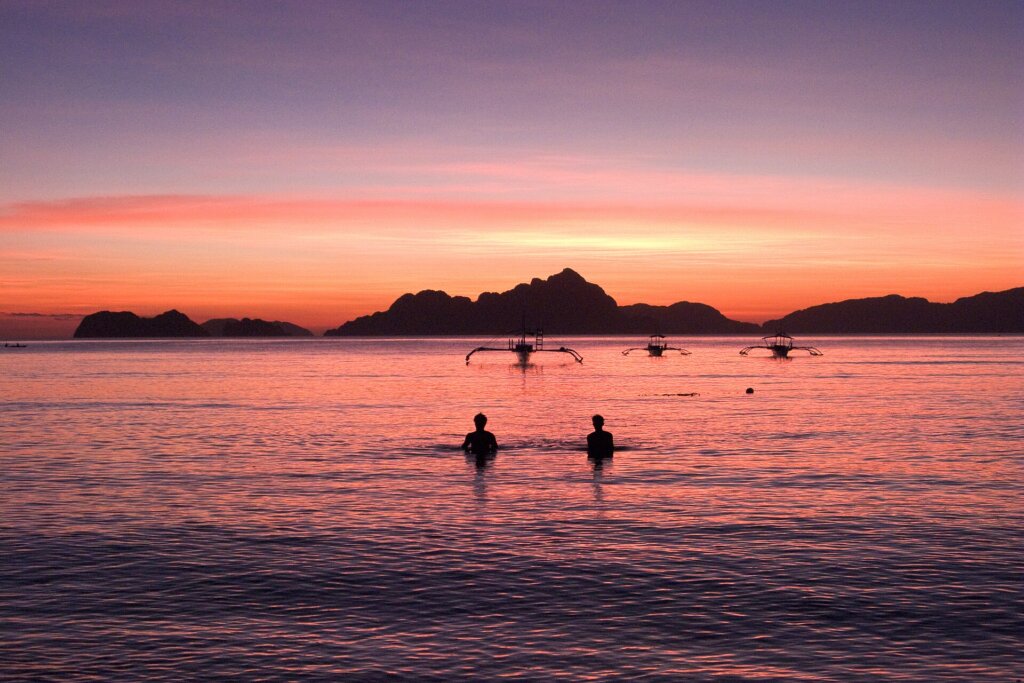
El Nido seas are calmest from March to May, generally good from December to February, and roughest from July to September when the southwest monsoon sends swell into Bacuit Bay; Tour C and long transfers are the first to be cancelled.
Weather guides tell you whether it will rain in El Nido. What they rarely tell you is whether the sea will be flat enough for a comfortable island hopping day, whether the boat to Coron will run, or whether you will spend Tour C clinging to the bench. This guide focuses on sea conditions month by month specifically for travelers planning island hopping, snorkeling, kayaking or a boat transfer, who want to pick dates with the calmest water and know which tours are most affected when it gets rough.
Our unique angle is the sea itself: wave patterns, wind direction, exposure of different tour routes and how often operators adjust plans. For rain and temperature, see our amihan and habagat seasons guide; this article goes deeper into what those winds do to the water.
How Wind Shapes El Nido’s Seas
El Nido sits on the northwest coast of Palawan, facing Bacuit Bay and the open West Philippine Sea. Two seasonal wind systems drive conditions, as described by PAGASA, the national weather agency:
- Amihan (northeast monsoon), roughly November to March: Cooler, drier winds from the northeast. Because El Nido’s main tour area is on the west side of the land, Bacuit Bay is partly sheltered, but channels and more exposed northern waters can be breezy and choppy on strong days.
- Habagat (southwest monsoon), roughly June to October: Moist winds and swell from the southwest blow straight into the west-facing coast. This is when Bacuit Bay can see the most sustained swell, and outer island routes are most often modified.
- Transition months, April to May and parts of October to November: Winds are lighter and variable. April and May often bring the glassiest seas of the year.
Tropical cyclones add another layer. Palawan is struck less often than northern and eastern parts of the country, but distant storms can still enhance the southwest monsoon and send swell into Bacuit Bay for days.
El Nido Sea Conditions by Month
| Month | Dominant Wind | Typical Sea State | Tour Disruption Risk | Notes |
|---|---|---|---|---|
| January | Amihan (NE) | Mostly calm in the bay; breezy in channels | Low–moderate | Peak season crowds; some windy days |
| February | Amihan | Calm to light chop | Low | Excellent all-round month |
| March | Amihan easing | Calm, clear | Low | Great visibility for snorkeling |
| April | Transition | Often glassy | Very low | Hot; Holy Week crowds |
| May | Transition | Glassy mornings, afternoon storms possible | Low | Best calm-sea month for many years |
| June | Habagat begins | Increasing swell from SW | Moderate | Early wet-season; conditions vary week to week |
| July | Habagat | Choppy to rough on exposed routes | Moderate–high | Expect route changes |
| August | Habagat | Choppy to rough; calm breaks | High | Most disrupted month in many years |
| September | Habagat | Variable; storms can enhance swell | Moderate–high | Watch cyclone bulletins |
| October | Habagat fading | Improving; mixed days | Moderate | Shoulder season value |
| November | Transition to Amihan | Mostly moderate, calming | Low–moderate | Late-season storms still possible |
| December | Amihan | Calm in bay; breezy days | Low–moderate | Holiday peak; book tours early |
These are typical patterns, not guarantees. A single tropical depression can bring rough seas in an otherwise calm month, while a quiet week in August can be beautifully flat.
Which Tours Are Most Affected by Rough Seas
El Nido’s standard island hopping tours cover different parts of Bacuit Bay, and they do not all react the same way to wind and swell.
- Tour A (Big Lagoon, Small Lagoon, Secret Lagoon area) stays mostly in the inner bay around Miniloc and is often the last to be cancelled.
- Tour C (Hidden Beach, Secret Beach, Matinloc area) visits the outer western islands and is frequently the first to be suspended or modified when swell builds.
- Tour B and Tour D sit in between, with some exposed stops and some sheltered ones.
- Kayaking and paddleboarding close to shore are affected even by moderate chop, especially in the afternoon when wind rises.
- Long transfers, such as the fast craft between El Nido and Coron, are the most sensitive, since they cross open water.
When conditions worsen, the Philippine Coast Guard and local tourism office can suspend sea travel. Operators then switch routes, combine tours or cancel. Our guide on cancelled boat tours and refunds explains what to expect and how refunds usually work.
Best Months for Calm Seas by Activity
Snorkeling and diving: March to May usually brings the best combination of calm water and clear visibility. Plankton blooms and runoff after heavy rain can reduce visibility in the wet season.
Kayaking the lagoons: February to May, and early mornings any time of year. Afternoons are almost always windier.
Inter-island transfers: February to May is the safest bet for a smooth crossing. In the habagat months, build a buffer day into your itinerary.
Travelers prone to seasickness: Aim for March to May, choose Tour A first, and read our El Nido seasickness guide for remedies.
Budget travelers: October and November often balance improving sea conditions with lower prices before the December peak. Our early December pre-peak window guide covers the shoulder period in detail.
How to Read the Daily Sea Forecast
- Check PAGASA’s gale warnings and tropical cyclone bulletins each morning in the wet season. Any gale warning covering the seaboard of Palawan usually means smaller boats stay in.
- Look at wind speed and direction. Light winds below about 15 km/h generally mean comfortable seas; sustained winds above roughly 30 km/h from the southwest often bring rough conditions in Bacuit Bay.
- Check wave height forecasts. Apps that show significant wave height help; our weather apps comparison explains which ones to trust.
- Ask your operator the evening before. Local boatmen read the sea better than any app and will tell you honestly whether a route is likely to run.
- Know the wind signals. Our explainer on PAGASA wind signals translates the warning levels into what they mean for tours.
Globally, the World Meteorological Organization notes that national meteorological services provide the authoritative warnings for marine safety, so treat PAGASA as your primary source and apps as supporting information.
Planning Around Rough-Sea Days
If you are traveling between June and October, plan your itinerary so that the most exposed tours fall early in your stay. That way, if Tour C is cancelled on day two, you can try again on day four. Keep one flexible “weather day” for land activities: the Nagkalit-Kalit Falls trek, a cooking class, a café afternoon or beaches reachable by road.
Book tours with operators that offer free rebooking for weather cancellations, and avoid paying for multiple days of tours in advance during the habagat months. If you have a fixed flight out, do not schedule a long sea transfer on your last day.
Finally, respect the decisions of boat crews and authorities. Being told a tour is cancelled is disappointing, but bangkas are small, open boats, and conditions outside the inner bay can be much rougher than they look from the beach. Our thunderstorm and lightning boat safety guide covers what crews watch for.
Families with young children and older travelers should be especially selective about dates. A choppy two-hour round trip on a bangka can be exhausting for small kids and tough on backs and knees. If your group includes either, prioritize March to May, pick shorter routes such as Tour A, and ask for seats near the middle of the boat, where motion is gentlest. Bring a dry bag for phones and spare clothes, since spray soaks everything on rougher days.
Photographers should note that calm seas also mean the best reflections and the clearest turquoise water in the lagoons. Overcast habagat days flatten colors, while bright April mornings make the limestone and water glow. Our tide times guide pairs well with this calendar, because low tide can make some lagoon entrances shallow even when the sea is calm.
Calm-Sea Myths to Ignore
“The dry season is always calm.” Not quite. Strong amihan surges in December and January can bring windy, choppy days even under clear skies.
“Rainy season means no tours.” Most days in the wet season still see tours run, often with modified routes. Rain itself does not stop boats; wind and swell do.
“Morning conditions predict the whole day.” Winds usually build after midday, so a glassy 8 am can become a choppy 3 pm, especially in the transition months. Start early when you can.
Key Takeaways
- March to May usually brings the calmest, clearest water of the year.
- July to September is the most disrupted period, driven by southwest monsoon swell.
- Tour A in the inner bay runs most often; Tour C and Coron transfers are first to be cancelled.
- Winds build in the afternoon, so book early departures.
- Use PAGASA bulletins as your primary source and ask your boat operator the night before.
- In the wet season, schedule exposed tours early and keep a flexible weather day.
Frequently Asked Questions
What is the calmest month in El Nido?
April and May usually have the calmest, glassiest seas, followed closely by March. Afternoon thunderstorms are possible in May.
Are El Nido island hopping tours cancelled in the rainy season?
Some are, especially in July to September. Many days still see tours run, often with modified routes. Tour C and outer islands are most affected.
Is the sea rough in El Nido in December?
Mostly not. Bacuit Bay is partly sheltered from the northeast monsoon, but strong amihan surges can bring windy, choppy days.
Which El Nido tour is best on choppy days?
Tour A, which stays mostly in the sheltered inner bay around Miniloc, is usually the most likely to run and the most comfortable.
Is the El Nido to Coron ferry affected by weather?
Yes. Fast craft cross open water and are among the first services suspended when wind and waves increase, so keep a buffer day.
About the Author
This guide was compiled by the El Nido Hotels Ranking editorial team, with input from local operators and ongoing on-the-ground updates.