Most El Nido advice splits the year into “perfect dry season” and “avoid the rain,” but the weeks in between are where smart travelers often find the best value. This guide focuses specifically on flexible travelers and budget-minded couples who want calmer beaches, lower room rates, and a realistic shot at good boat-tour weather. We explain what shoulder season means in Palawan, which weeks tend to work best, what can go wrong, and how to book so a bad forecast does not ruin your trip.
- What “Shoulder Season” Means in El Nido
- Why Travelers Choose the Shoulder Months
- The Trade-Offs You Should Accept Up Front
- Month-by-Month Shoulder Season Snapshot
- How to Plan Tours in Shoulder Season
- What to Pack for Variable Weather
- Who Should (and Should Not) Travel in Shoulder Season
- Frequently Asked Questions
What “Shoulder Season” Means in El Nido
In tourism, shoulder season is the stretch between the high season and the low season, when demand eases but conditions are still often acceptable. For El Nido, the high season is generally the drier months from around December through April, when seas are calmer and tours run most days. The wetter southwest monsoon period usually arrives around June and lasts into the early autumn months, bringing more rain, stronger winds, and a higher chance of tour cancellations.
The shoulder windows sit on either side of that wet period. In practice, travelers often talk about late October through November on one side and May through early June on the other. These windows are not guaranteed, because the Philippines is affected by tropical storms that can appear outside the typical monsoon months. Treat any month as a probability, not a promise, and always check the latest advisories from PAGASA before you finalize plans.
If you are weighing a trip right now, note that the calendar turns toward the drier months as the year ends. Our rainy season guide explains the conditions at the wetter end of the spectrum.
Why Travelers Choose the Shoulder Months
The first benefit is price. Hotels and resorts typically discount rooms when demand dips, and some offer free breakfast, free upgrades, or extra nights. Boat tour prices are often fixed by municipal or operator rules, so you save more on accommodation and flights than on tours. See our guide to low-season deals on hotels and tours for ideas.
The second benefit is atmosphere. Popular lagoons and beaches can be packed with boats at peak times, and shoulder periods often mean fewer people at the same stops. Restaurants have shorter waits and guides sometimes have more time to chat. If you love photography, thinner crowds make it easier to take pictures without strangers in every frame.
The third benefit is flexibility. In peak months, the best rooms and tours may be sold out weeks ahead. In shoulder months, you can often book closer to your travel date, which is useful if you want to watch the forecast before committing.
Shoulder months can also be a good time to meet the community. Smaller crowds mean shop owners, guides, and boat crews often have more time to talk, recommend lesser-known viewpoints, and share what is open that week. Travelers who value those unhurried conversations often say they remember them longer than a crowded postcard stop.
The Trade-Offs You Should Accept Up Front
The main drawback is weather uncertainty. Boat tours can be delayed or cancelled when seas are rough or storm signals are raised, and you may lose a day or two of your itinerary. Water clarity can drop after heavy rain, which affects snorkeling and photos. Some businesses reduce hours or close for maintenance during quieter weeks, so check before you assume your favorite restaurant is open.
There is also a logistics risk. Flights to Puerto Princesa and Lio can be rescheduled or cancelled in bad weather, and road transfers may take longer if there are landslides or flooding. If you have a tight international connection, build in a buffer night in Puerto Princesa or Manila. Read what happens when a boat tour is cancelled for bad weather before you book, and check cancellation rules for your hotel in our guide to resort cancellation and deposit policies.
Protecting your budget from surprises
Choose accommodation with flexible or free cancellation if you can, even if the nightly rate is a little higher. Pay for tours only when you can confirm the date and route, and keep receipts and screenshots of what was promised. Carry some cash for local services because card terminals can be unreliable when the signal drops during storms.
Month-by-Month Shoulder Season Snapshot
The table below is a general guide based on typical seasonal patterns, not a forecast. Weather varies year to year, and the safest approach is to monitor the official forecast in the days before you travel.
Late May and early June often combine warm temperatures with increasing afternoon showers, and some years still deliver plenty of sunny mornings. Late October can be unpredictable, with a mix of calm days and storm systems, while November usually trends drier. If your dates are flexible, aim for the part of the window closest to the dry season, since that tends to give you better odds.
Think about your return as carefully as your arrival. If you have an international flight home, plan to leave El Nido a full day early so a cancelled flight or delayed van does not force you to rebook at a high price. This single habit is the most effective way to keep shoulder-season travel stress-free.
| Window | Typical conditions | Pros | Watch out for |
|---|---|---|---|
| Late October | Mixed, storms possible | Lower rates, fewer crowds | Higher cancellation risk |
| November | Trending drier | Good value as dry season starts | Occasional rough seas |
| Late May | Hot, afternoon showers | Discounts before monsoon | Weather turns quickly |
| Early June | Wetter, windier | Very quiet beaches | Tours may be limited |
| Dec to Apr (peak) | Mostly dry and calm | Best tour reliability | Highest prices, crowds |
How to Plan Tours in Shoulder Season
Book your island hopping tours after you arrive rather than months ahead, so you can pick the best-looking days. Ask your accommodation or a licensed operator about the forecast and whether the route you want is likely to run. Our guide to verifying a licensed tour operator will help you avoid unreliable sellers.
Keep a flexible itinerary
Plan at least one spare day for every three days of tours. If the first day is good, go on the tour you most want to see rather than saving it for later. Many travelers book Tour A or Tour C first because they are the most popular, then fill in the rest as conditions allow.
Have indoor and low-key backups
Keep a list of things you can do when the sea is closed: cooking classes, cafes, massages, museum-style visits, and short hikes when the rain stops. A flexible mindset turns a cancelled tour from a disaster into a slower day.
What to Pack for Variable Weather
Pack a lightweight rain jacket or poncho, quick-dry clothing, and a dry bag to protect your phone, wallet, and camera. Reef-safe sunscreen and a hat still matter because clouds can hide strong UV. Bring water shoes if you plan to walk on rocky beaches and lagoons. See our full packing list and dry bag size guide for details.
Travel insurance is more important in shoulder season because weather disruptions are more likely. Read the policy for coverage on cancelled flights, delays, and missed connections. The Philippine official tourism site and the Department of Tourism publish advisories and traveler information that can help you plan.
Sample shoulder-season week
Arrive and rest on day one, then watch the forecast over breakfast for the next two mornings. Book your best-looking day first, ideally one of the classic island hopping routes. Keep days four and five loose for kayaking, snorkeling off the main beaches, or a viewpoint hike. Use day six as your safety buffer, and spend the final evening enjoying a relaxed dinner rather than rushing to pack.
Who Should (and Should Not) Travel in Shoulder Season
Shoulder season suits flexible travelers, couples, remote workers, and anyone who prefers a slower pace. It is less suitable if you have a once-in-a-lifetime honeymoon with no spare days, a wedding on the beach, or a strict return flight that cannot be changed. In those cases, the dry months offer lower risk even if they cost more.
If you do go, set your expectations: you may get a sunny week with empty lagoons, or you may get a few gray days with limited boat access. Either way, you can still enjoy the town, the food, and the viewpoints. A positive attitude and a flexible schedule are the best tools you can bring.
Remember that respect for local rules matters in every season. Follow marine park guidelines, avoid touching coral, and pay all required fees. Responsible travel helps keep El Nido worth visiting during both the quiet and busy parts of the year.
Frequently Asked Questions
Which months count as shoulder season in El Nido?
Most travelers consider late May to early June and late October to November the shoulder windows, though weather varies from year to year.
Are boat tours reliable in shoulder season?
They run on many days but can be delayed or cancelled when seas are rough or storm signals are raised. Plan spare days and book tours locally once you can see the forecast.
Is it cheaper to visit in shoulder season?
Usually. Hotels and flights tend to be cheaper, although tour fees are often fixed. Compare current rates and look for package deals.
Should I buy travel insurance?
Yes, it is strongly recommended in any season, and especially for shoulder months. Check that it covers weather-related cancellations and delays.
What is the best backup plan for a rainy day?
Keep a list of cafes, cooking classes, massages, and short walks. Having a few low-key plans ready makes weather changes less stressful.
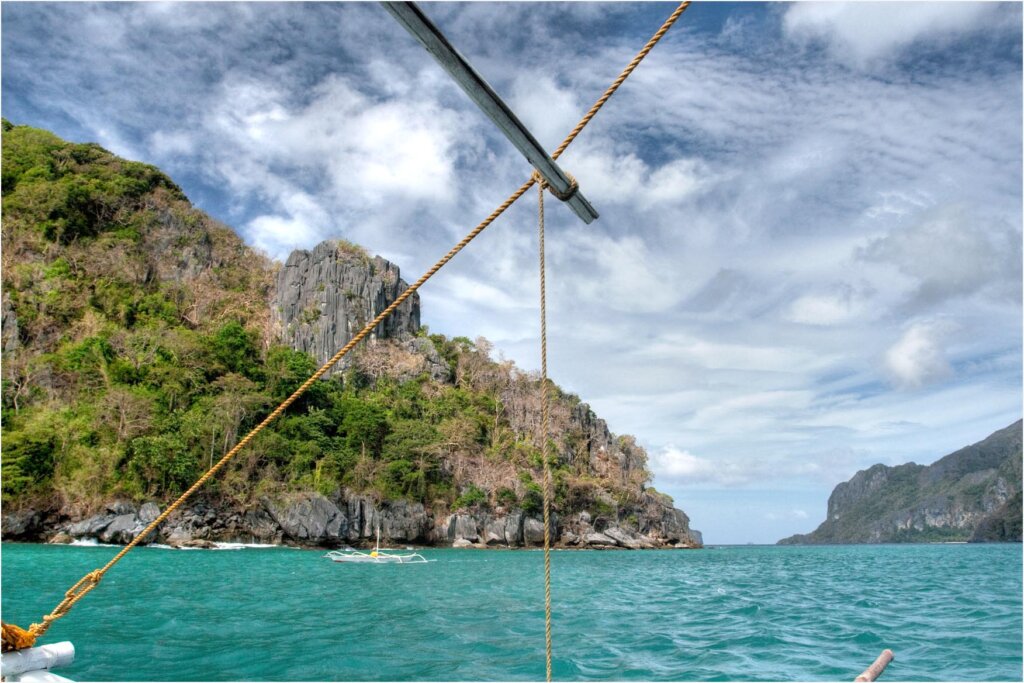
Photo: Limestone island in Bacuit Bay, via Wikimedia Commons (CC BY 4.0)