
El Nido is not built with tall travelers in mind. Van seats are tight, tricycle sidecars are low, doorways in older guesthouses can catch your forehead, and beds that feel normal to most visitors can leave your feet hanging. None of this should stop you from visiting one of the most beautiful places in the Philippines, but a little planning makes a big difference to your comfort.
This guide focuses on comfort in El Nido specifically for travelers around 6’1″ (185 cm) and taller, as well as long-legged travelers of any height. We cover each stage of a typical trip, from the transfer north to island hopping and sleeping, with practical fixes that cost little or nothing.
If you also want advice on body size more broadly, our plus-size travel tips for El Nido cover seating, boat boarding and gear in more detail.
The Transfer North: Vans, Buses and Flights
Most visitors still arrive via Puerto Princesa, followed by a road transfer of around five to six hours. Shared vans are the most common option, and they are where tall travelers suffer most: rows are close together, luggage is often stacked behind the last seats, and there is little room to stretch.
- Request the front passenger seat when booking. It usually has the most legroom. Some operators charge a little extra or simply allocate it to whoever asks first.
- Arrive early at the pickup point or be ready at your hotel well before the window, so you are not the last person squeezed into a back corner.
- Consider a bus. Larger buses are slower but sometimes offer more knee room than a full van.
- Book a private van if you are travelling as a group of three or more. Split between several people, it often costs less than you would expect and lets you stop to stretch.
If budget allows, a direct flight into El Nido’s small airport at Lio removes the long road journey entirely. Smaller aircraft have tight cabins too, but the flight is short.
Getting Around Town: Tricycles and Scooters
Tricycles are El Nido’s taxis: a motorbike with a covered sidecar. The sidecar roof is low, and most tall passengers end up hunched with knees near their chin. A few workarounds help:
- Sit sideways with your legs angled toward the opening.
- If travelling alone, ask whether you can ride behind the driver; many drivers are fine with it on short trips.
- For longer runs, such as Nacpan or Lio, consider a van transfer or renting a scooter yourself, if you are licensed and confident.
Fares are set by route; see our El Nido tricycle fares guide so you can negotiate confidently even when you request a non-standard seating arrangement.
Within town itself, walking is often the most comfortable option for short distances. The main streets are compact, and a ten- or fifteen-minute walk from Corong-Corong to the town beach saves you from folding into a sidecar. Bring a small torch or use your phone light at night, since sidewalks are uneven and some stretches are poorly lit.
Island Hopping on a Bangka
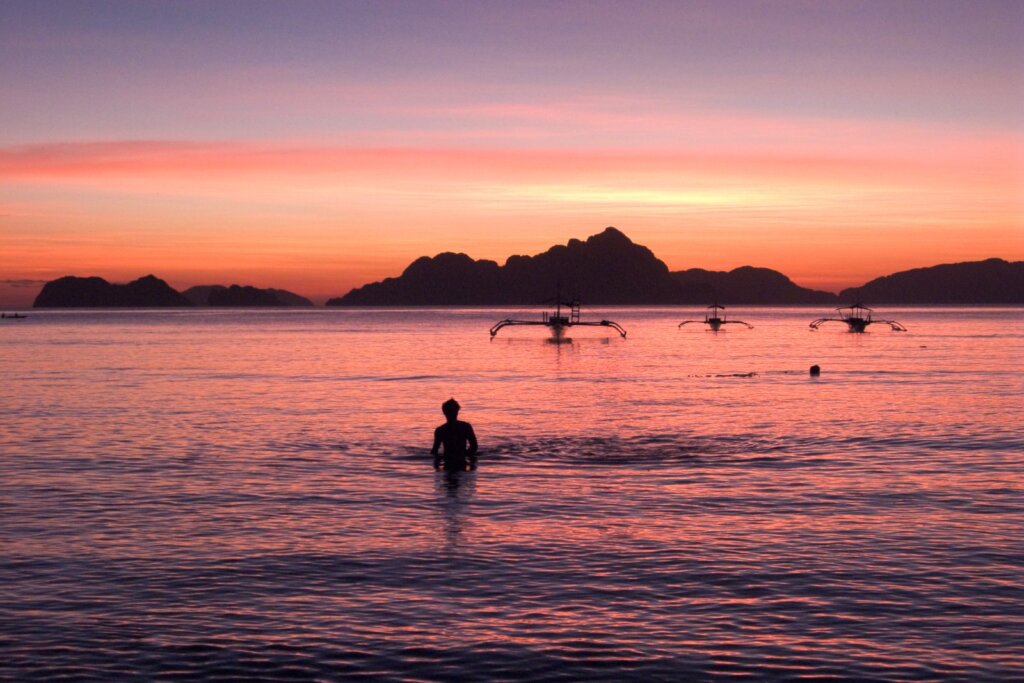
The traditional outrigger boats used for Tours A to D have wooden benches along each side and a roof canopy. The canopy is usually high enough to sit comfortably, but standing and moving around under it can be awkward if you are tall.
- Pick a bench end. Seats at the front or back of the bench row let you extend your legs into the open deck.
- Watch your head when boarding and moving under the canopy, especially when the boat rocks.
- Use a dry bag as a footrest rather than a hard-shell bag that takes space.
- Consider a private charter. More space, control of where you sit and flexibility on timing make a long day far more comfortable.
For packing smart and saving space on the boat, see our El Nido day bag checklist.
Comparison: Comfort by Transport Option
| Option | Legroom | Head clearance | Best tip |
|---|---|---|---|
| Shared van (Puerto Princesa route) | Tight | Okay when seated | Book front passenger seat |
| Private van | Good if seats left empty | Okay | Split cost with a group |
| Tricycle sidecar | Very tight | Low | Sit sideways or ride pillion |
| Group bangka tour | Moderate | Fine when seated | Grab a bench end |
| Private bangka charter | Excellent | Fine when seated | Choose your spot freely |
Sleeping Comfortably: Beds, Rooms and Doorways
Bed length is the biggest overnight issue. Many guesthouses use standard-length mattresses, and some include footboards that make a short bed feel even shorter.
- Ask for a king or a bed without a footboard. A footless bed lets your feet extend past the mattress edge.
- Two singles pushed together sometimes allow diagonal sleeping, which adds length.
- Newer hotels in Lio and along the Corong-Corong road tend to have larger rooms and more international-standard beds.
- Bunk beds in hostels are the hardest: low ceilings above the bottom bunk and short frames. Ask for a bottom bunk at the end of a row, or opt for a private room.
Doorways in older wooden or nipa-style cottages can be low, and bathroom shower heads are sometimes mounted at a height that suits shorter guests. A detachable shower head is a small but welcome sign when browsing room photos. If sleep quality is a concern for other reasons too, see our tips for quiet rooms in El Nido.
Restaurants, cafés and bars
Low stools, floor cushions and beanbags are popular at beach bars, and they can be hard on long legs and knees after a day of hunching in boats. Many places also have regular tables or raised bar counters if you ask. On the beachfront at sunset, a high bar stool facing the water is often the most comfortable seat in the house. Cafés in town tend to have standard chairs, but tables can be small; ask for a corner table where you can stretch your legs out without blocking the aisle.
Gear: Fins, Masks, Life Jackets and Kayaks
Tour operators provide snorkel gear and life jackets, but large sizes can run out or not exist at all.
- Fins: If your shoe size is large, bring your own fins or consider skipping fins on easy snorkel stops. Ill-fitting fins cause blisters quickly.
- Masks: A personal mask that fits a larger face is one of the best investments for comfort and hygiene.
- Life jackets: Usually adjustable, but check the straps fit before leaving the beach. The Philippine Coast Guard regulates passenger safety on vessels, and wearing a properly fitted jacket matters.
- Kayaks: Single sit-on-top kayaks used in lagoons can feel small; a double kayak with one paddler often gives taller guests more legroom.
Health and Comfort on Long Days
Being cramped for hours raises the risk of stiffness and, on long journeys, circulation problems. On the van ride, use every stop to walk and stretch. Keep hydrated, especially when combining heat and long transfers. The World Health Organization and most travel health services advise moving regularly during long periods of sitting.
On boat days, sun exposure is the other challenge: taller passengers often end up partly outside the canopy shade. Use a long-sleeved rash guard and reapply reef-safe sunscreen. The Department of Tourism also encourages reef-safe products in marine protected areas like Bacuit Bay.
Finally, keep a light, packable neck pillow or rolled towel for the van. It sounds minor, but supporting your neck while hunched in a low seat helps you arrive ready to enjoy the island rather than nursing a stiff back.
A quick booking checklist
- Transfers: request the front van seat in writing when you book, or price a private van for your group.
- Hotel: message ahead asking for bed length, a king bed or a footless frame, and whether doorways or bathroom ceilings are low in older cottages.
- Tours: ask the operator how many guests are booked on your group boat; a less crowded boat means more bench space. Consider at least one private charter day.
- Gear: pack your own mask and, if your feet are large, a pair of travel fins.
- Comfort kit: neck pillow, compression socks for the long road transfer, and a long-sleeve rash guard for boat days.
Tall travelers who plan these few details usually find El Nido far more comfortable than they feared. The cramped moments are short, and the reward is one of the most spectacular seascapes in Southeast Asia. Plan for space where it matters most, on the long transfer and in your bed, and the rest of the trip takes care of itself.
Frequently Asked Questions
Are beds in El Nido long enough for tall people?
Many budget and mid-range beds are around standard length, which can feel short if you are well over six feet. Ask for a king bed, a bed without a footboard, or a room where the bed is against a wall rather than enclosed, and consider booking an upper-category room at newer hotels.
Which van seat is best for tall travelers from Puerto Princesa?
The front passenger seat beside the driver usually has the most legroom. Ask when booking and arrive early for pickup. If the front seat is taken, aisle-side seats on the first row behind the driver are the next best option.
Are tricycles comfortable for tall people?
Not especially. The sidecar roof is low, so you will often sit hunched. Riding pillion behind the driver can be more comfortable for one person. For longer trips, a private van or renting a scooter may suit you better.
Are snorkel gear and life jackets available in larger sizes?
Life jackets are generally one-size adjustable, and larger fins can be hard to find. If you wear large shoe sizes, bringing your own fins or at least your own mask is worth it.
Is a private boat worth it for tall travelers?
Often yes. A private bangka gives you room to stretch across benches, choose where to sit and control the pace, which makes a long day on the water much more comfortable.
Photo: Jerick Parrone / Wikimedia Commons (CC BY-SA 2.0)