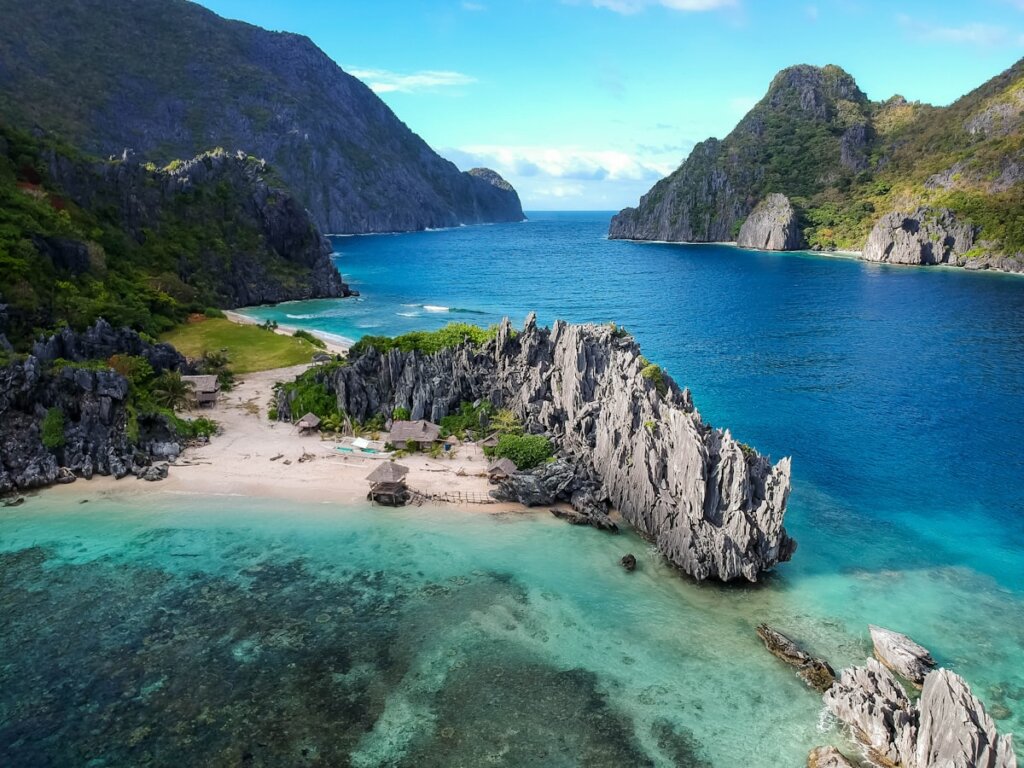

After living in El Nido for nine years, the question we get asked more than any other is simple: “When should I come?” The honest answer is that El Nido is beautiful year-round, but the experience changes a lot depending on the month. This guide breaks down the weather, sea conditions, crowds and prices month by month, so you can plan the trip that fits you best.
Quick answer: the best time to visit El Nido
The best time to visit El Nido is during the dry season, from December to May. These months bring the most reliable sunshine, the calmest seas and the clearest water for island hopping and diving. If we had to pick the sweet spot, it would be late November to early December and May — the shoulder weeks when the weather is already (or still) excellent but the crowds and prices have not yet peaked. March is statistically the driest month of the year.
El Nido has two seasons
- Dry season (December–May): sunny, warm days, calm water and the best conditions for tours. This is peak travel season.
- Wet season (June–November): higher humidity and frequent rain driven by the habagat (southwest monsoon). Rain often comes in short, heavy bursts rather than all day, and prices drop.
Two monsoons shape the year. The amihan (northeast monsoon, roughly November–February) brings cooler, drier air. The habagat (southwest monsoon, roughly June–October) brings the heaviest rain and stronger winds. One piece of good news: unlike much of the Philippines, this part of Palawan very rarely takes a direct typhoon.
Month-by-month weather in El Nido
| Month | Season | Typical weather | Good for |
|---|---|---|---|
| January | Dry / Amihan | Cool, dry, breezy; ~28°C | Great all-round; a few windy days |
| February | Dry | Dry and sunny; ~28°C | Excellent weather; Chinese New Year crowds |
| March | Dry | Driest month; 25–32°C | Best underwater visibility for diving |
| April | Dry | Hot and humid building; 25–33°C | Great tours; Holy Week peak |
| May | Dry / transition | Hot; first short showers late month; ~29°C | Still excellent, thinning crowds |
| June | Wet / Habagat | Humid; monsoon begins, heavy showers | Budget travel; lush green scenery |
| July | Wet | Rainiest month; rain roughly every other day | Deals; keep plans flexible |
| August | Wet | Heavy rain, stronger winds | Lowest crowds; some tours may be cancelled |
| September | Wet | Heavy rain continues; ~27°C | Quiet and cheap |
| October | Wet / improving | Rain easing; 24–31°C | Shoulder-season value |
| November | Transition | Drying out; ~28°C | Underrated sweet spot |
| December | Dry begins | Sunny, calm seas return | Excellent; holiday peak late month |
Best time for island hopping and diving
Island hopping (Tours A, B, C and D) runs all year, but the dry season delivers the calmest seas and the clearest lagoons. For diving, March to May offers the best underwater visibility, often 10–30 metres. During the peak of the wet season (July–September), boat trips are occasionally cancelled when the sea gets rough, so build a little flexibility into your itinerary if you travel then.
Crowds and prices: when to book
The busiest and most expensive periods are mid-December to early January (Christmas and New Year), Holy Week (the week before Easter, usually late March or April) and Chinese New Year in late January or February. Rooms book out weeks ahead and prices climb. For the best balance of good weather and manageable crowds, aim for late November, early December, or May. For the lowest prices, the wet-season months of June to October offer big discounts — just pack a rain jacket and stay flexible.
What to pack
- Dry season: reef-safe sunscreen, hat, sunglasses, light breathable clothing and a dry bag for tours.
- Wet season: everything above plus a light rain jacket, quick-dry clothes and waterproof protection for your phone and camera.
Frequently asked questions
What is the rainiest month in El Nido? July is typically the wettest month, with rain roughly every other day.
Is El Nido worth visiting in the rainy season? Yes — the landscape is lush, the crowds are thin and prices are low. Just expect some rain and the occasional cancelled boat tour.
Does El Nido get typhoons? Rarely. This part of Palawan sits largely outside the main typhoon belt, though distant storms can still bring rain and wind.
What is the driest month? March is the driest month of the year and one of the best for diving.
Whenever you decide to come, we will be here to help you make the most of it. — The El Nido Hotels Ranking team