
El Nido Digital Nomad Guide 2026: Working Remotely from Palawan
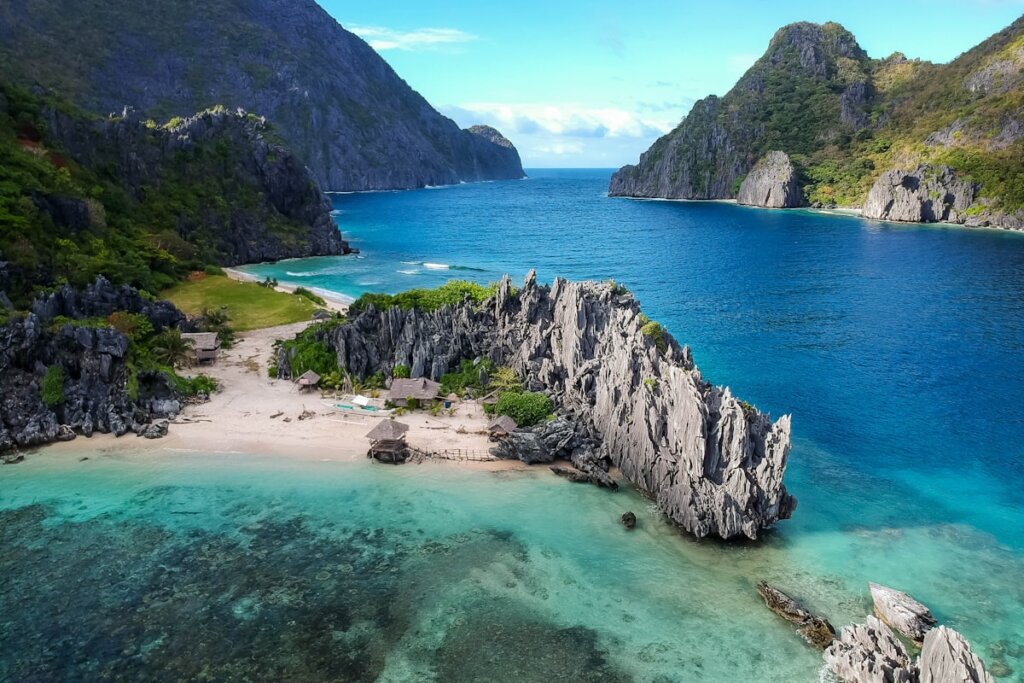
The idea of working from El Nido — laptop open to a view of limestone karst islands, San Miguel within arm’s reach — is genuinely appealing. And it is possible. But El Nido is not Chiang Mai, Bali, or Lisbon. It’s a remote island town in the Philippines whose infrastructure is constantly playing catch-up with the tourism boom. This guide gives you an honest, practical picture of what working remotely from El Nido actually looks like in 2026 — the good, the frustrating, and the workarounds.
- The Honest Assessment: Is El Nido a Good Nomad Base?
- Internet & Connectivity in El Nido 2026
- Best Cafés & Spots to Work in El Nido
- Visa Situation for Long Stays
- Cost of Living in El Nido for Nomads
- The El Nido Nomad Lifestyle: What It Actually Looks Like
- Nomad Community in El Nido
- Practical Nomad Tips for El Nido
- Related El Nido Guides
The Honest Assessment: Is El Nido a Good Nomad Base?
Short answer: Good for 1–3 weeks; challenging for longer. Excellent for part-time work; difficult for full-time high-bandwidth work.
El Nido works well for nomads who:
- Have async-heavy workflows (writing, design, coding, editing) that don’t require constant video calls
- Can work flexible hours (mornings before tours, evenings after)
- Are treating it as a “slow travel” destination — work in the mornings, explore in the afternoons
- Have a few weeks, not a few months, planned
El Nido is harder for nomads who:
- Need reliable high-speed internet for video calls, large file uploads, or video production
- Have fixed 9-5 schedules with back-to-back meetings
- Need a quiet, distraction-free dedicated workspace every day
- Are planning a 3+ month stay (visa constraints and limited social nomad community)
Internet & Connectivity in El Nido 2026
Mobile Data (Most Reliable Option)
Mobile data via Globe or Smart SIM cards is El Nido’s most reliable internet option. 4G LTE coverage is available across most of El Nido town and the immediate surrounding area, though speeds vary and can drop significantly during peak daytime hours when many tourists are using data simultaneously.
| Provider | Coverage | Typical Speed (2026) | Recommended Plan |
|---|---|---|---|
| Globe | Good in town; weakens north/south | 5–25 Mbps down / 3–10 Mbps up | GoSURF 299 (7 days, 8GB) or GoUNLI |
| Smart/TNT | Similar to Globe; slightly better in some areas | 5–20 Mbps down / 2–8 Mbps up | GigaSurf 299 or similar weekly plans |
| DITO | Emerging; limited coverage in El Nido | Variable — not recommended as primary | Not primary recommendation |
Best practice: Buy SIM cards in Manila or Puerto Princesa before arriving — selection is better and activation is faster. Carry both Globe and Smart for redundancy. A mobile hotspot device (pocket WiFi) performs better than phone hotspot for sustained work sessions.
Fixed WiFi at Accommodation
Most El Nido guesthouses and hotels offer WiFi, but quality varies enormously. The honest truth:
- Many properties share a single Starlink or PLDT fibre connection across all guests — speeds crater during peak times (8 AM–10 PM)
- Starlink adoption has improved connectivity significantly at better properties since 2024–25
- Budget guesthouses often have WiFi in name only — unusable for work
- Always ask specifically: “What is your internet setup? Is it Starlink or PLDT fibre? What are typical evening speeds?”
- Properties that specifically market to remote workers often have dedicated higher-bandwidth connections
Starlink in El Nido
Starlink satellite internet has rolled out to several El Nido accommodations and businesses since 2024. Properties with Starlink typically offer 50–150 Mbps down / 10–40 Mbps up — vastly superior to previous options and genuinely suitable for video calls and large uploads. When booking, ask explicitly whether the property has Starlink. It’s increasingly a deciding factor for nomad accommodation choices.
Best Cafés & Spots to Work in El Nido
1. Alternative Café (Health Café)
WiFi: Good | Power outlets: Limited | Ambience: Quiet, relaxed
The best work café in El Nido — relatively quiet, good coffee, and WiFi that’s functional for lighter work tasks. Not designed as a coworking space so don’t expect to monopolise a table all day, but a 2–3 hour morning work session is welcomed. Good for writing, email, planning.
2. Altrove Restaurant (Morning Hours)
WiFi: Moderate | Power outlets: Limited | Ambience: Relaxed Italian café feel in the morning
Opens early, quiet in the mornings before lunch service, decent WiFi. The Italian owners are nomad-friendly. A reliable backup if Alternative is full.
3. Squidos Restaurant (Rooftop)
WiFi: Moderate | Power outlets: Some | Ambience: Breezy rooftop, some background noise
Works well for relaxed afternoon sessions when you need a change of scenery. Background music and occasional noise make it better for async work than calls.
4. Your Accommodation (With Starlink)
For serious work sessions, working from your room at a Starlink-equipped property beats any café in town. Set up a dedicated work corner, work intensively in the mornings, and reward yourself with an afternoon tour or beach session.
What El Nido Doesn’t Have
There is currently no dedicated coworking space in El Nido town (2026). This distinguishes it from nomad hubs like Siargao (which has several coworking spots) or Puerto Princesa (basic options exist). If a professional coworking environment is non-negotiable for you, El Nido currently cannot provide it.
Visa Situation for Long Stays
The Philippines offers one of Southeast Asia’s more flexible tourist visa arrangements for most nationalities:
- Visa-free entry: Citizens of most Western countries, Australia, Japan, and many others receive 30 days on arrival, extendable to 59 days
- Extensions: Easily extended at the Bureau of Immigration in Puerto Princesa — each extension adds 1–2 months; can extend up to 36 months total in-country
- Cost: Extensions cost approximately ₱3,000–₱4,000 per extension (including express fee)
- No dedicated “digital nomad visa” exists as of 2026 — the standard tourist visa (with extensions) is the de facto long-stay mechanism
- SRRV (Special Resident Retiree’s Visa): For those 35+ who meet deposit requirements; allows indefinite stay
Practical note: You’ll need to travel to Puerto Princesa for immigration extensions — there is no immigration office in El Nido. Many nomads use this as an opportunity for a brief Puerto Princesa stopover (Underground River day trip, better supermarket shopping) every 1–2 months.
Cost of Living in El Nido for Nomads
| Expense | Budget | Comfortable | Notes |
|---|---|---|---|
| Accommodation (monthly) | ₱12,000–₱20,000 | ₱25,000–₱45,000 | Monthly rates available; negotiate directly |
| Food & dining | ₱400–₱600/day | ₱700–₱1,200/day | Market & local eateries vs. tourist restaurants |
| Mobile data | ₱500–₱1,000/month | ₱1,000–₱2,000/month | Multiple plans for redundancy |
| Motorbike rental (if needed) | ₱12,000–₱15,000/month | — | Negotiate monthly rate; essential for mobility |
| Activities & tours | ₱5,000–₱10,000/month | ₱15,000–₱30,000/month | You’ll still want to island hop regularly |
| Total monthly estimate | ₱30,000–₱45,000 | ₱50,000–₱80,000 | ~$530–$800 budget / ~$880–$1,400 comfortable |
El Nido is more expensive than mainland Filipino cities but cheaper than Bangkok or Bali for equivalent quality of life. Monthly accommodation rates are available from most guesthouses — negotiate directly for stays of 2+ weeks.
The El Nido Nomad Lifestyle: What It Actually Looks Like
The rhythms that work for most remote workers in El Nido:
- 6:30–7:00 AM: Wake before the heat; light breakfast; best WiFi speeds of the day
- 7:00–12:00 PM: Deep work session — writing, coding, calls (Asia-Pacific timezone compatible); minimal distraction
- 12:00–1:00 PM: Lunch break; local restaurant or market
- 1:00–5:30 PM: Off — island hopping tour, beach, kayaking, or motorbike exploration
- 5:30–7:30 PM: Sunset + dinner
- 7:30–9:30 PM: Light async work or evening calls (Europe morning / US evening timezone compatible)
This “split day” structure — work hard in the cool morning, explore in the afternoon, handle async in the evening — is the formula that makes El Nido sustainable as a temporary remote work base. It requires flexibility in your working hours, which is the baseline requirement for nomad life anywhere.
Nomad Community in El Nido
El Nido does not have an established nomad community in the way Chiang Mai, Tbilisi, or Canggu do. You will meet other travelers — some of them working remotely — but there are no regular nomad meetups, no coworking events, and no dedicated nomad social scene. This is part of El Nido’s charm (it feels like a real place, not a nomad theme park), but it means your social life will be primarily with other tourists and, if you make the effort, with local Filipinos.
The Facebook group “Digital Nomads Philippines” is the best resource for connecting with other nomads in the country. Some El Nido accommodation Facebook pages also function as informal community boards.
Practical Nomad Tips for El Nido
- Pre-download everything. Offline access to Notion, Google Docs, project files, and reference materials is essential for unreliable connectivity days
- Carry a power bank. Power cuts occur in El Nido — having a charged power bank means a power cut doesn’t kill your afternoon work session
- Use a VPN. Some streaming services and business tools geo-restrict content in the Philippines
- Schedule important calls for mornings. Network congestion and power stability are both better before 10 AM
- Have a Puerto Princesa backup plan. For critical deadline days when El Nido connectivity fails completely, the 6-hour van to Puerto Princesa gives you a proper city with reliable fibre internet at cafés and hotels
- Negotiate monthly accommodation. Weekly and monthly rates are significantly cheaper than nightly rates — even a 2-week stay justifies the conversation
Related El Nido Guides
- El Nido Accommodation Areas Guide: Where to Stay
- El Nido Budget Travel Guide
- El Nido Hostels & Budget Accommodation Guide
- El Nido Vegan & Vegetarian Food Guide
- El Nido Solo Travel Guide
Working from El Nido is an imperfect but genuinely rewarding experience. The internet won’t always cooperate, the ATM will be empty on the day you need it most, and the island hopping will call to you at 9 AM on a Monday morning. But watching the sun rise over limestone karsts from your balcony, work done by noon, the entire afternoon ahead of you and a lagoon to swim through — it’s the kind of imperfection that stays with you long after you’ve returned to a reliable broadband connection.