

El Nido is one of the most photographed destinations in Southeast Asia — and with good reason. Dramatic limestone karst towers rising from turquoise water, hidden lagoons accessible only by kayak, sea turtles gliding over coral reefs, and sunsets that paint the Bacuit Archipelago in shades of gold and crimson. Whether you’re shooting on a smartphone, a mirrorless camera, or a professional DSLR setup, this guide helps you capture El Nido at its absolute best in 2026.
- Best Photography Spots in El Nido
- 1. Big Lagoon — Turquoise Peak (Tour A)
- 2. Small Lagoon Kayak — Interior Drama (Tour A)
- 3. Nacpan Twin Beach — Sunrise Golden Hour
- 4. Helicopter Island Viewpoint — Aerial Perspective (Tour D)
- 5. Las Cabanas Beach — Sunset Silhouettes
- 6. Corong-Corong at Dawn
- 7. Secret Beach Entrance (Tour C)
- 8. Underwater — Reef & Marine Life
- Best Time of Day for El Nido Photography
- Best Season for El Nido Photography
- Camera Gear Recommendations for El Nido
- Photography Etiquette in El Nido
- El Nido Instagram vs Reality
- Frequently Asked Questions — El Nido Photography
Best Photography Spots in El Nido
1. Big Lagoon — Turquoise Peak (Tour A)
The Big Lagoon is arguably El Nido’s single most iconic photography location. A vast enclosed lagoon ringed by towering limestone walls, its colour transitions from jade-green at the edges to deep turquoise in the centre — a gradient that photographs extraordinarily well in direct sunlight. Best light: 9:30–11:30am when the sun is high enough to illuminate the lagoon walls without deep shadows. Go on a day with full blue sky for maximum colour saturation. Equipment: Wide-angle lens (16–24mm equiv.) for the scale of the walls; polarising filter to cut glare and deepen water colour.
2. Small Lagoon Kayak — Interior Drama (Tour A)
Kayaking into the Small Lagoon through the narrow cliff entrance creates one of El Nido’s most dramatic compositional opportunities — the dark narrow entrance giving way to the brilliantly lit enclosed lagoon beyond. Technique: Shoot back toward the entrance for a silhouette of the opening against the lit lagoon; shoot forward into the lagoon for the classic interior shot. Challenge: Keeping the camera dry on the kayak — use a waterproof case or dry bag with a clear panel.
3. Nacpan Twin Beach — Sunrise Golden Hour
Nacpan Beach at sunrise is one of the Philippines’ finest landscape photography opportunities. The twin beach formation — two golden strands joined by a sandbar — photographs best in the first 30–60 minutes after sunrise when the light is warm, shadows are long, and the beach is empty. Get there by 5:45–6am by motorbike to set up before first light. Shoot south from the sandbar junction looking at both strands simultaneously for the definitive composition. Full guide: Nacpan Beach Guide.
4. Helicopter Island Viewpoint — Aerial Perspective (Tour D)
The 15-minute scramble up to the Helicopter Island viewpoint rewards photographers with a panoramic 360° view of the Bacuit Archipelago — limestone islands rising from turquoise water as far as the eye can see. Best light: Morning (the island is typically reached 9–10am on Tour D, ideal light). Equipment: Wide-angle to medium zoom covers the full panoramic view; telephoto compression isolates island clusters dramatically. Golden hour option: Arrange a private charter to stay at sunset — the view at dusk is extraordinary.
5. Las Cabanas Beach — Sunset Silhouettes
Las Cabanas offers El Nido’s most accessible and reliable sunset photography. The unobstructed west-facing view across the Bacuit Archipelago — with limestone islands silhouetted against an orange-pink sky — is consistently spectacular in dry season. Arrive 45–60 minutes before sunset to secure a good position. Technique: Expose for the bright sky (−1 to −2 EV) to create dramatic island silhouettes; alternatively use graduated ND filter to balance foreground and sky. January–March provides the most vivid, cloud-enhanced sunsets.
6. Corong-Corong at Dawn
Corong-Corong Beach facing the inner bay catches the first light of dawn on the limestone islands — a softer, more intimate scene than the big lagoon shots. Photographers staying in Corong-Corong can walk to the beach at 5:30am for mist-over-water conditions before any boats are moving. Technique: Long exposure with tripod to smooth the glassy morning water; fishermen’s boats in the foreground add scale and local character.
7. Secret Beach Entrance (Tour C)
The narrow swim-through entrance to Secret Beach — a crack in the limestone cliff leading to a hidden enclosed lagoon — is a uniquely dramatic architectural photography subject. Challenge: You’re swimming through carrying camera gear — a waterproof camera or action camera (GoPro Hero 12 or Sony RX0 II) is ideal. The interior of the lagoon is softly lit by reflected light from the water; shoot back toward the entrance for a dramatic light-through-darkness composition.
8. Underwater — Reef & Marine Life
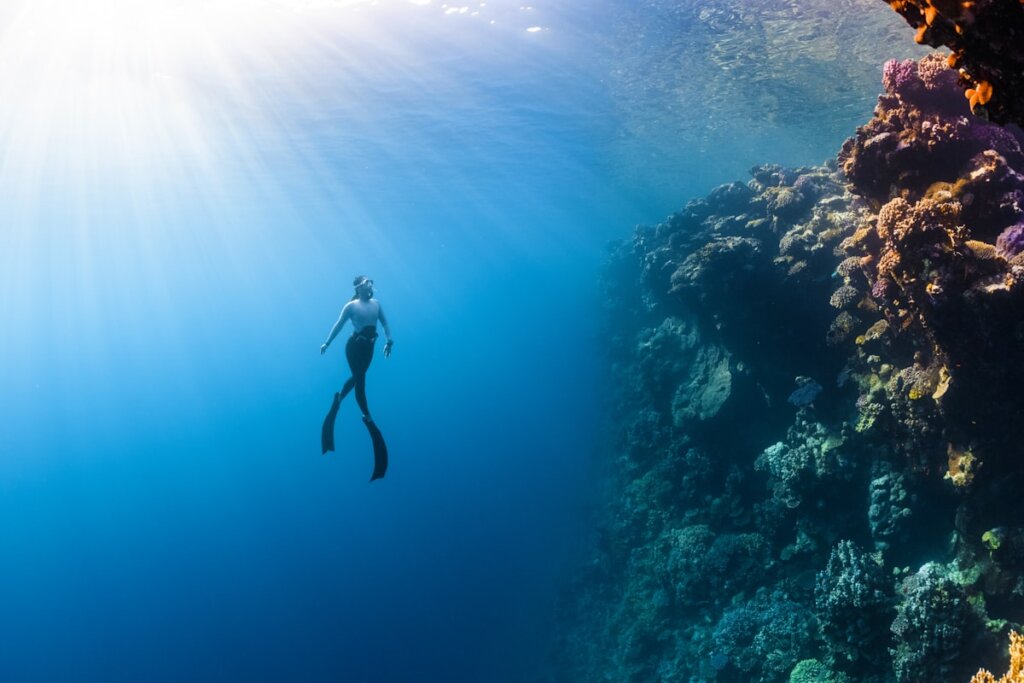
El Nido’s underwater world rewards photographers at every level. Sea turtles at Seven Commandos Beach, clownfish in anemones at every reef stop, and reef sharks at Hidden Beach are all highly photogenic subjects that approach closely when you move slowly and calmly.
- Action camera (GoPro): Excellent for wide-angle reef and turtle shots; mount on a selfie stick for closer control. Use GoPro’s Protune mode with flat colour profile for maximum editing flexibility.
- Mirrorless with underwater housing: Best image quality; allows proper manual control. Sony A7 series, Olympus OM-5, and Fujifilm X-T5 are popular choices with third-party housing options.
- Smartphone with waterproof case: Budget option; works well in shallow, bright conditions. Shoot in portrait mode for shallow depth of field around fish; switch to wide for reef landscapes.
- Tip: Shoot between 9am–noon when sunlight penetration is strongest. Use the “underwater” mode if your camera/phone has one, or correct white balance manually using the red channel boost.
Best Time of Day for El Nido Photography
| Time | Light Quality | Best Locations |
|---|---|---|
| 5:30–7am (Sunrise) | Golden warm light, long shadows, empty beaches | Nacpan Beach, Corong-Corong, town pier |
| 7–9am | Soft morning light, good for portraits and interiors | Lagoon interiors, boat departures, market |
| 9–11:30am | Peak sun — best for lagoon colour and underwater | Big Lagoon, Small Lagoon, underwater shooting |
| 11:30am–3pm | Harsh overhead — avoid for landscapes; ok underwater | Shade/interiors; underwater diving/snorkeling |
| 3–5:30pm | Warm afternoon light building, lower angle | Beach portraits, island hopping returns |
| 5:30–6:30pm (Sunset) | Golden hour to blue hour — most dramatic light | Las Cabanas, Corong-Corong, viewpoints |
| 6:30–7:30pm (Blue hour) | Cool blue-purple sky after sunset — long exposure | Corong-Corong waterfront, boats on bay |
Best Season for El Nido Photography
| Season | Photography Conditions | Verdict |
|---|---|---|
| January–February (peak dry) | Clearest skies, most vivid blues, flat calm seas | ★★★★★ Best for lagoons, beaches, underwater |
| March | Still excellent; slightly more haze building | ★★★★☆ Very good overall |
| November (late)–December | Dry season beginning; vivid post-monsoon green + clear sky | ★★★★☆ Excellent — lush jungle + blue sky combo |
| April–May | Dramatic clouds; vivid green; moody skies for landscapes | ★★★★☆ Outstanding for dramatic/moody photography |
| June–October (monsoon) | Heavy clouds, rough seas; limited island hopping | ★★★☆☆ Challenging — dramatic but logistically limited |
The underrated season for photography: Late April to May sees dramatic storm light, vivid green jungle, and atmospheric cloud formations over the karst peaks — completely different from the postcard-blue dry season, but equally compelling for the right photographic vision.
Camera Gear Recommendations for El Nido
Essential for All Photographers
- Polarising filter — eliminates surface glare on lagoons and sea; deepens sky blues; arguably the single most impactful accessory for El Nido photography
- Dry bag — non-negotiable for protecting gear on boat tours; spray and occasional waves are constant risks
- Extra batteries and memory cards — no charging points on boats; El Nido town has limited photography supply shops
- Microfibre cloths — for cleaning salt spray off lenses constantly
- Waterproof camera bag / backpack — your primary bag should be weather-resistant
Camera System Recommendations by Level
| Level | Recommended System | Why |
|---|---|---|
| Casual/smartphone | iPhone 16 Pro / Samsung S25 Ultra + waterproof case | Always available; AI computational photography; excellent in good light |
| Enthusiast | Sony A7C II or Fujifilm X-S20 + 16–55mm zoom + waterproof housing | Full control; excellent IQ; compact enough for boat bags |
| Underwater specialist | Olympus OM-5 or Sony RX100 VII in Ikelite/Nauticam housing | Native weather sealing; dedicated housing ecosystem; excellent strobe compatibility |
| Drone | DJI Mini 4 Pro | Under 249g — no Philippines CAA registration needed for tourist use; foldable; excellent 4K |
| Action camera | GoPro Hero 13 Black | Waterproof to 10m natively; HyperSmooth stabilisation; small enough for all situations |
Drone note: Check current Philippines CAA regulations before flying. Drones require registration for commercial use; tourist/recreational use of sub-250g drones is generally permitted but fly only in non-restricted areas. The Bacuit Marine Reserve may have specific restrictions — check locally on arrival.
Photography Etiquette in El Nido
- Ask before photographing locals — especially market vendors, fishermen, and children. A smile and “pwede po bang mag-kuha ng larawan?” (may I take a photo?) is always appreciated and often leads to genuine, warm portraits.
- Don’t disturb marine life for photos — never touch, chase, or block sea turtles, reef sharks, or other marine animals for a shot. The ethical photograph is the patient one — wait and let the animal come to you.
- No flash on night dives — harsh flash stresses marine life; use continuous red-light torches for illumination or shoot in available light.
- Don’t stand on or touch coral for better angles — reef damage for photography is never acceptable.
- Be aware of other travellers at popular spots like Big Lagoon — be patient about capturing crowd-free moments rather than asking others to move or waiting so long you hold up the tour.
El Nido Instagram vs Reality
A note on social media expectations: El Nido’s most famous images — perfectly empty lagoons, completely deserted white sand beaches, mirror-flat water with no other boats — are typically captured either in the off-season or in the very early morning before tours depart. In peak season (December–March), popular lagoons have 20–40 boats visiting daily. The reality is still extraordinarily beautiful, but managing expectations helps you appreciate what you see rather than being disappointed that it doesn’t look exactly like the curated Instagram version.
For crowd-free shots: Book the earliest possible tour departure (8am); visit less-popular tour stops (Tours B and D over Tour A for certain locations); consider May–October for deserted beaches in exchange for weather variability.
Frequently Asked Questions — El Nido Photography
What is the best camera for El Nido?
The best camera is the one you have with you — an iPhone 16 Pro will outperform a DSLR you left on the boat out of fear of water damage. That said, for serious photography, a compact mirrorless camera (Sony A7C II, Fujifilm X-S20) with a 16–55mm equivalent zoom and a polarising filter will produce outstanding results. Add a waterproof GoPro for underwater and on-boat action.
Can I bring a drone to El Nido?
Yes, with conditions. Sub-249g drones (DJI Mini 4 Pro) don’t require CAA registration for recreational use. Check current Philippines Aviation Authority rules before travel — regulations evolve. The Bacuit Bay and marine reserve areas may have specific no-fly zones; confirm with local tour operators. Flying over tour boats in the lagoons is generally not permitted.
What is the best time of year for photography in El Nido?
January and February for maximum colour saturation, clearest skies, and best underwater visibility. Late April–May for dramatic monsoon-light landscapes with vivid green jungle. Late November for the best combination of lush post-monsoon greenery and returning dry-season clarity.
How do I get the turquoise lagoon colour in my photos?
Three factors: (1) Shoot between 9–11:30am when the sun angle illuminates the lagoon floor through the shallow water; (2) Use a polarising filter to cut surface glare and reveal the underwater colour; (3) Shoot on a day with full blue sky — overcast conditions mute the turquoise dramatically. Post-processing: boost clarity and vibrance slightly, pull highlights to prevent the water blowing out.