
El Nido’s waters are among the most productive fishing grounds in the Philippines — a fact known to local fishermen for centuries and increasingly appreciated by sport fishing enthusiasts from around the world. The deep blue waters of the Sulu Sea just beyond the Bacuit Archipelago host an impressive range of pelagic and reef species, while the shallow flats and channels between islands offer world-class light tackle opportunities. This is your complete guide to sport fishing in El Nido in 2026.
| Factor | Details |
|---|---|
| Best season (offshore) | October–March (NE monsoon, calm seas) |
| Best season (inshore/flats) | Year-round, best April–June |
| Top target species | GT, dorado, wahoo, sailfish, marlin, tuna |
| Charter cost (half day) | ₱5,000–10,000 for the boat |
| Charter cost (full day) | ₱10,000–20,000 for the boat |
| Marine reserve restrictions | No commercial fishing; sport fishing allowed outside reserve core zones |
Why El Nido for Sport Fishing?
El Nido sits at the convergence of the South China Sea, the Sulu Sea, and the Palawan Passage — a geographic junction that creates exceptionally rich marine productivity. The Philippine Deep (one of the world’s deepest ocean trenches) lies not far offshore, and the dramatic underwater topography — seamounts, drop-offs, and current lines — concentrates baitfish and the predators that follow them.
Key reasons El Nido stands out for sport fishing:
- Diverse species: From reef species like grouper and snapper to open-water giants like giant trevally (GT), wahoo, dorado, and billfish — El Nido offers extraordinary variety
- Light fishing pressure: Compared to more established sport fishing destinations in the Philippines (General Santos, Batangas), El Nido sees relatively little sport fishing pressure, meaning fish populations are robust
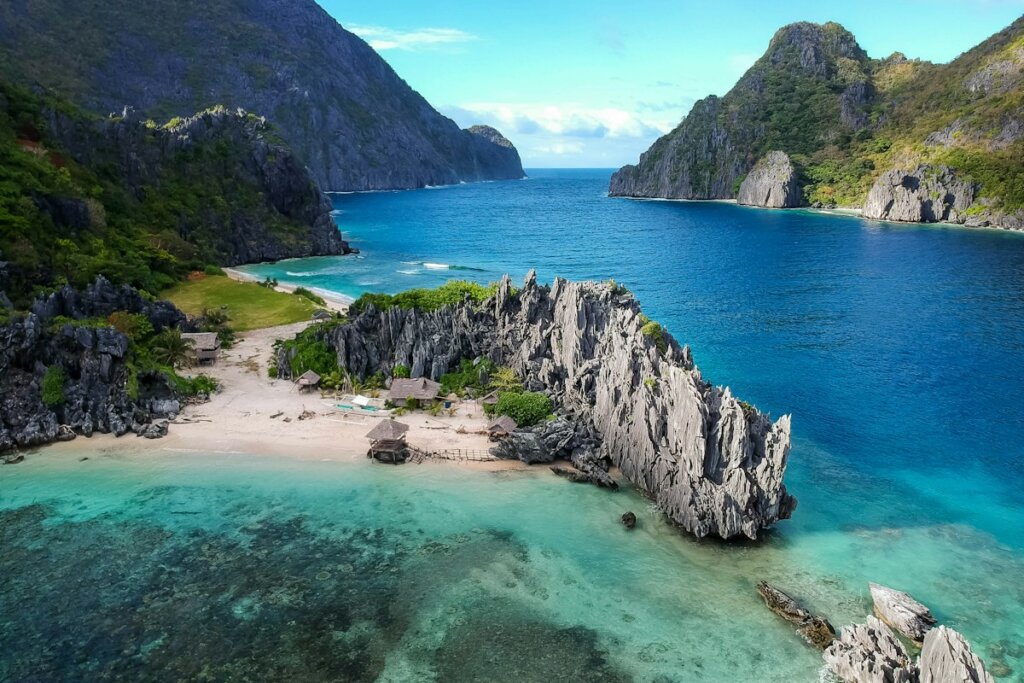
- Scenery: Fishing against the backdrop of the Bacuit Archipelago’s limestone towers is an experience no other destination can replicate
- Marine recovery: The El Nido Marine Reserve’s strict protection since the 1990s has allowed fish populations to recover dramatically — the spillover effect benefits fishing in adjacent waters
Target Species in El Nido
Giant Trevally (GT)
The GT is El Nido’s most sought-after sport fish. These powerful predators prowl the edges of coral reefs, limestone drop-offs, and current-swept channels throughout the Bacuit Archipelago. They are famously aggressive surface feeders and will smash poppers, stickbaits, and large flies with explosive strikes. GT fishing near El Nido’s limestone walls — casting poppers along cliff edges as the sun rises — is a world-class experience.
- Best technique: Surface popping and stickbaiting on spinning gear (PE 4–8, 60–100lb leader)
- Best time: Early morning, incoming tide, November–May
- Typical size: 5–30kg; specimens over 40kg are possible in undisturbed areas
Dorado (Mahi-Mahi)
Dorado are abundant in El Nido’s offshore waters, particularly along weed lines and current breaks beyond the archipelago. They are spectacular fighters and among the best eating fish in the sea. Trolling skirted lures or pitching live bait near floating debris produces consistent results.
- Best technique: Trolling, live bait under floating debris
- Best season: October–March
- Typical size: 3–15kg
Wahoo
Wahoo are among the fastest fish in the ocean and one of the great sport fish of Philippine waters. Found in the blue water beyond the archipelago, wahoo are typically targeted by high-speed trolling with skirted lures or konaheads. The strike is explosive and the first run is breathtaking.
- Best technique: High-speed trolling (12–18 knots) with skirted lures
- Best season: October–February (northeast monsoon)
- Typical size: 5–25kg
Sailfish and Marlin
The deep waters off Palawan’s northwest coast host sailfish and black/blue marlin, with the season aligned with the northeast monsoon (October–March). Dedicated billfish charters operate out of El Nido for anglers targeting these premier sport fish. Catch-and-release is strongly encouraged.
- Best technique: Trolling live bait or rigged dead baits on outriggers
- Target areas: Beyond the archipelago in blue water, following current lines
Yellowfin Tuna
Yellowfin tuna are present in El Nido’s offshore waters year-round, with the best action during the northeast monsoon season. Chunking and live baiting near surface schools produces exciting fishing, and chumming can attract large schools to the boat.
Grouper and Snapper (Reef Fishing)
For anglers interested in bottom fishing, El Nido’s reefs — particularly outside the marine reserve’s core zones — hold substantial populations of coral grouper, leopard coral grouper, red snapper, and mangrove jack. Bottom fishing with live bait or soft plastics on the reef edges produces consistent results and excellent table fare.
Fishing Regulations in El Nido
El Nido is a marine protected area, and fishing regulations are strictly enforced:
- Commercial fishing: Strictly prohibited within the El Nido Marine Reserve boundaries
- Sport fishing: Permitted in designated areas outside the marine reserve core zones — confirm current boundaries with your charter operator
- Banned gear: Net fishing, cyanide, dynamite, and spearfishing with tanks are all illegal
- Catch-and-release: Strongly encouraged for billfish and GT; increasingly the standard practice for responsible sport fishing in El Nido
- Size limits: Minimum size limits apply for several species under Philippine fisheries regulations
Always hire a licensed local charter operator — they know current regulations and fishing boundaries, and their presence protects you from inadvertent violations.
Sport Fishing Charters in El Nido
Sport fishing charters in El Nido can be arranged through:
- Your hotel concierge: Many higher-end hotels maintain relationships with local boat operators for fishing charters
- El Nido pier operators: Several bangka boat operators offer fishing charters as an alternative to standard island-hopping tours
- Dedicated fishing guides: A small number of guides specialize in sport fishing and are known to the fishing community — ask at dive shops or fishing-oriented guesthouses
What to discuss when booking a charter:
- Target species and fishing style (popping/jigging vs trolling vs bait fishing)
- Whether the operator has appropriate tackle or if you should bring your own
- Fuel costs for offshore runs (can be significant — confirm what’s included)
- Catch policy (keep or release; filleting service if keeping)
Local Fishing Culture in El Nido
Beyond sport fishing, El Nido has a rich traditional fishing culture that predates tourism by generations. The wooden outrigger bancas that serve as island-hopping tour boats were originally — and many still are — fishing vessels. The town’s morning fish market (near the main pier) offers a window into this heritage.
Traditional fishing methods still practiced around El Nido include:
- Hook and line fishing: Small-scale handlining from bancas at dawn and dusk
- Fish traps: Bamboo fish traps set on reef edges
- Shore casting: Local anglers fish from rocky points and limestone ledges around El Nido town in the evening
Respectful interaction with local fishing families is welcomed — the fishing heritage of El Nido is as much a part of the destination’s identity as its beaches and lagoons.
Best Time of Year to Fish in El Nido
| Season | Months | Conditions | Best For |
|---|---|---|---|
| Northeast Monsoon (Amihan) | Nov–Mar | Calm seas, clear water, NE winds | Offshore fishing — dorado, wahoo, billfish, tuna |
| Transition | Apr–May | Light variable winds, calm | GT popping, inshore flats, reef fishing |
| Southwest Monsoon (Habagat) | Jun–Sep | Rougher seas, limited offshore access | Sheltered inshore areas, reef fishing on calm days |
| Transition | Oct | Improving conditions | Beginning of offshore season |
What to Bring for a Fishing Charter
- Light tackle (for popping/jigging): PE 4–6 spinning rod, 60–80lb braid, 80–100lb fluorocarbon leader; large surface poppers and stickbaits in the 120–180mm range
- Trolling gear: 30–50lb class trolling rod; most charter operators provide basic trolling tackle
- Sun protection: Full-coverage sun shirt (UPF50+), polarized sunglasses, wide-brim hat — tropical fishing sun is intense
- Reef-safe sunscreen
- Water and snacks: Bring more than you think you need for offshore trips
- Seasickness medication: If you have any susceptibility — offshore conditions can be choppy
Frequently Asked Questions
Can I fish in El Nido’s lagoons and marine reserve?
No. The lagoons and core zones of the El Nido Marine Reserve are strictly off-limits to all fishing. Sport fishing is permitted in the waters outside the marine reserve boundaries — your charter operator will know the current boundaries.
Do I need a fishing license in El Nido?
Foreign sport anglers fishing in Philippine waters do not currently require individual fishing licenses for recreational fishing from a licensed charter vessel. However, the charter vessel itself must be licensed. Always fish with a legitimate licensed operator.
What is the best species to target for a first-time El Nido fishing trip?
GT popping is the most exhilarating and iconic El Nido fishing experience for experienced anglers. For beginners or those fishing primarily for table fare, reef fishing for grouper and snapper in the shallower areas outside the reserve is productive, exciting, and provides excellent eating.
Plan Your El Nido Fishing Trip
Combine a sport fishing charter with a full El Nido itinerary — plan your fishing day for the first or last full day of your trip, with island-hopping tours filling the days in between. Our 5-day El Nido itinerary has space to include a fishing charter day. For accommodation, check our best hotels in El Nido — many have concierge services that can arrange fishing charters directly. And for more El Nido activities, see our guides to island hopping tours and snorkeling vs scuba diving.