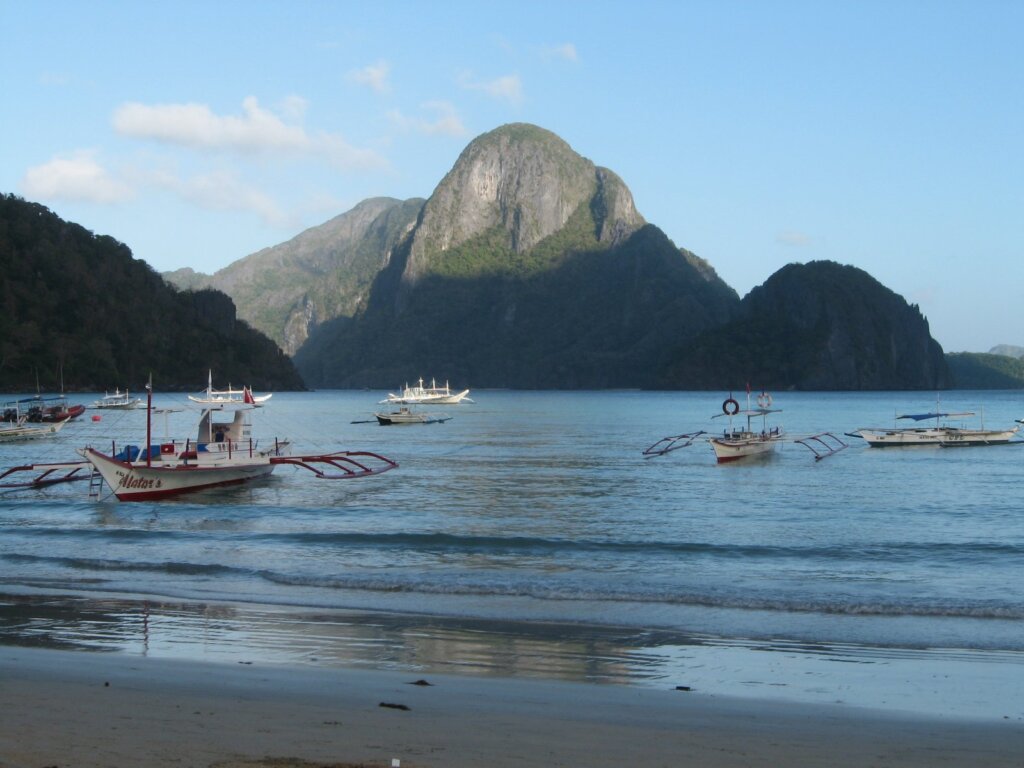
TL;DR: El Nido is very doable for blind and low-vision travelers if you book a private island-hopping boat, stay in Corong-Corong or Lio rather than the town’s busiest lanes, and arrange a sighted guide or tricycle driver for the whole stay. The hardest parts are wet boat landings and uneven streets, not the sights themselves.
Most El Nido guides assume you will judge the trip by what you see: turquoise lagoons, limestone cliffs, sunsets over Bacuit Bay. This guide focuses on El Nido specifically for blind and low-vision travelers (and the friends or partners traveling with them) who want to know what the place actually feels, sounds and moves like, where the physical obstacles are, and how to plan around them. Our unique angle: we rate each experience by its non-visual payoff and its navigation difficulty, so you can build an itinerary that is rich rather than merely “accessible.”
According to the World Health Organization, at least 2.2 billion people live with some form of near or distance vision impairment, yet tropical island destinations rarely publish practical guidance for them. El Nido is no exception, so the tips below come from how the town actually works on the ground.
- What Makes El Nido Challenging (and What Doesn’t)
- Getting There: Flights, Vans and Arrival Assistance
- Where to Stay: Choosing a Base You Can Learn Quickly
- Island Hopping Without Sight: Which Tours Reward Other Senses
- Experiences That Shine for Non-Visual Travelers
- Getting Around Town Safely
- Rights, Discounts and Support in the Philippines
- Sample 4-Day Itinerary for Low-Vision Travelers
- Key Takeaways
- Frequently Asked Questions
What Makes El Nido Challenging (and What Doesn’t)
El Nido Poblacion (the town proper) is compact, which is good news: most restaurants, dive shops and tour desks sit within a 10–15 minute walk. The challenges are physical rather than conceptual:
- Sidewalks are inconsistent. Many lanes have no sidewalk at all, and where they exist they are interrupted by steps, drainage covers, parked scooters and shop displays.
- Tricycles and scooters share every road. Traffic is slow but constant, and horns are used as a courtesy signal rather than a warning, which can be confusing at first.
- Beach landings are wet. Island-hopping boats (bangkas) usually anchor in knee- to thigh-deep water, and you climb a narrow wooden ladder or plank to board.
- Tactile and audio infrastructure is minimal. Expect no tactile paving, few braille signs and no audio announcements outside the airport.
What is not a problem: people. Filipino hospitality is famously hands-on, and boat crews, hotel staff and tricycle drivers will readily offer an arm, describe surroundings or carry gear when asked. A clear, friendly request (“Can you guide me to the boat ladder, please?”) almost always gets an enthusiastic yes.
Getting There: Flights, Vans and Arrival Assistance
You have two realistic routes. The direct option is flying into Lio Airport (code ENI; see our Palawan airport codes guide) on AirSWIFT, the small carrier that serves El Nido from Manila and a few other hubs. The terminal is tiny and open-air, which makes it far easier to navigate than a big airport, and staff will walk you from the aircraft steps to the arrival area if you request special assistance at booking.
The cheaper route is flying into Puerto Princesa (PPS) and taking a 5–6 hour shared or private van north. For low-vision travelers we strongly recommend a private van: you control rest stops, the driver can help with bags, and you avoid the scramble of identifying your shared-van pickup in a crowded terminal. When booking any flight, request the airline’s assistance service in advance; Philippine carriers such as Philippine Airlines list special-assistance options on their sites.
Where to Stay: Choosing a Base You Can Learn Quickly
Your base matters more than your room category. You want a place where the route from your door to food and transport is short, flat and repeatable.
| Area | Navigation difficulty | Non-visual atmosphere | Best for |
|---|---|---|---|
| Poblacion (town) | Medium–high: busy lanes, steps, scooters | Lively: music, market sounds, street food smells | Travelers with a sighted companion who want everything nearby |
| Corong-Corong | Medium: one main road, quieter beach path | Calm surf, sunset bars, less traffic noise | Low-vision travelers wanting quick tricycle access to town |
| Lio Estate | Low: planned paths, flatter layout, near airport | Quiet, breezy, long sandy beach | Independent cane users who value predictable walkways |
| Nacpan / remote resorts | Low on-site, high off-site | Very quiet, waves and wind dominate | Relaxation-focused stays with all meals at the resort |
When you email hotels, ask three specific questions: Are there steps between the room and reception? Is the bathroom floor level with the room (no curb)? Can staff orient me on arrival with a walkthrough? Answers to these tell you far more than any “accessible room” label. Travelers with mobility needs as well should also read our wheelchair accessibility guide.
Island Hopping Without Sight: Which Tours Reward Other Senses
The classic tours (A, B, C and D) are built around viewpoints, but several stops are memorable without any visual input. Book a private boat if you can; shared tours run on tight schedules with 15–25 passengers, and crews have less time to guide each person on and off. Our group vs private tour comparison breaks down the cost difference.
- Big Lagoon (Tour A): The echo inside the cliffs, the sudden drop in wind and the change from salty chop to glassy water are vivid. Kayaking tandem with a guide is ideal.
- Small Lagoon (Tour A): Entry is through a narrow gap in the rock; you can feel the cliff walls nearby and hear water slap against them. See our Big Lagoon vs Small Lagoon comparison for logistics.
- Cudugnon Cave (Tour B): A small crawl-in entrance opens into a cool chamber; tactile and atmospheric, but requires careful guidance over rocks.
- Snorkel stops: Even with no usable vision, floating over a reef with a guide holding your hand and describing fish can be magical, and many reefs are noisy with crackling shrimp.
Tell the crew at the start that you are blind or low vision. Ask them to (1) describe the boat layout, (2) call out waves before they hit, and (3) station one person at the ladder for every boarding. Reef shoes are essential, since landings can include sharp coral rubble.
Experiences That Shine for Non-Visual Travelers
Some El Nido activities are arguably better when you are not distracted by the view:
- Cooking classes: Smell, taste and texture dominate. Our cooking class guide lists hands-on options where you handle ingredients from the market.
- Firefly and mangrove boat trips: Low-vision travelers with some light perception often still enjoy the glow, and the night sounds of the mangrove are immersive. See our mangrove tour guide.
- Paraw sailing: A traditional outrigger sail is all wind, rope tension and spray; ask the crew to let you hold a line. Details in our paraw sailing guide.
- Massage and spa: Widely available, affordable and fully tactile.
- Waterfalls: Nagkalit-kalit Falls has a jungle walk with river crossings; only attempt with a dedicated guide, but the roar and cool pool are rewarding.
Getting Around Town Safely
The single best investment is a regular tricycle driver. On day one, ask your hotel to recommend someone and negotiate a daily or multi-day rate. A familiar driver learns your routines, waits outside restaurants and keeps your number for pickups, which removes most of the friction of hailing rides in traffic.
If you walk with a white cane, sweep wide: drainage gaps along the town lanes are common. Walk on the side facing traffic where there is no sidewalk. Phone navigation apps work for general direction, but pins in El Nido can be off by 20–50 meters, so confirm destinations with a person. Mobile data from local SIMs works in town; signal drops on many islands.
Money: Philippine banknotes differ in size slightly and in color, but not enough to identify easily by touch. Fold bills by denomination as you receive them, and pay with exact or near-exact amounts when possible. Card acceptance is limited, so carry cash.
Rights, Discounts and Support in the Philippines
The Philippines has an accessibility law, Batas Pambansa Blg. 344, which requires certain accessibility features in public buildings, though enforcement in small provincial towns is uneven. Persons with disabilities who hold a Philippine PWD ID can access statutory discounts on many goods and services; foreign visitors generally do not hold this ID, so do not count on the discount. The National Council on Disability Affairs is the national body for disability policy if you need official information.
For medical needs, El Nido has a municipal hospital and private clinics; our medical and emergency guide covers where to go. Bring spare glasses, magnifiers, chargers and any eye medications, as specialized optical supplies are not sold locally.
Sample 4-Day Itinerary for Low-Vision Travelers
- Day 1: Arrive, hotel orientation walkthrough, meet your tricycle driver, sunset drinks in Corong-Corong where the surf is gentle and the beach path is simple.
- Day 2: Private Tour A with tandem kayaking in Big Lagoon and a guided snorkel. Early start to avoid crowds; see morning vs afternoon departures.
- Day 3: Market-to-table cooking class in the morning, massage in the afternoon, firefly boat after dark.
- Day 4: Paraw sail or a quiet beach day at Lio, then depart.
Key Takeaways
- Book private boats and a private van; shared formats rush boarding and pickups.
- Choose Lio or Corong-Corong for predictable walking routes; Poblacion is busiest.
- Hire one tricycle driver for your whole stay to remove daily navigation stress.
- Tell every crew up front and ask for a dedicated person at boat ladders.
- Prioritize tactile, sound-rich activities: lagoon kayaking, cooking, paraw sailing, spa.
- Carry spare vision aids and cash folded by denomination.
Frequently Asked Questions
Is El Nido safe for blind travelers?
Yes, with planning. The main risks are uneven streets, traffic and wet boat landings rather than crime. A sighted guide, private boat and regular tricycle driver make it manageable.
Can I bring a guide dog to El Nido?
Guide dogs require Philippine import permits from the Bureau of Animal Industry and acceptance by your airline and hotel. Arrange this months in advance and confirm each boat operator will take the dog.
Which El Nido island tour is best for low-vision travelers?
Tour A on a private boat is usually best, because Big Lagoon and Small Lagoon offer strong sound and touch experiences and the boat transfers are short.
Do El Nido hotels have braille or accessible rooms?
Very few have braille signage. Instead, ask hotels about step-free routes, level bathroom floors and a staff orientation walkthrough on arrival.
Do foreign blind travelers get PWD discounts in the Philippines?
Statutory PWD discounts are tied to a Philippine-issued PWD ID, which most foreign visitors do not hold, so plan your budget without them.
About the Author
This guide was compiled by the El Nido Hotels Ranking editorial team, with input from local operators and ongoing on-the-ground updates.
Featured photo: Micluna via Wikimedia Commons (CC BY-SA 4.0).