
If your partner dives and you don’t, book a dive shop that welcomes snorkel ride-alongs for at least one day, use the other dive mornings for a shared lagoon tour or a beach day, and keep the last 24 hours before your flight dive-free so you can end the trip together.
El Nido is one of the few places in the Philippines where a mixed couple — one certified diver, one person who would rather stay on the surface — can both have a great trip without either one feeling like a spectator. The reefs of Bacuit Bay are shallow, the boats are slow and social, and many of the best dive sites sit right next to the islands that snorkelers and tour groups visit anyway.
This guide focuses on non-divers specifically for travelers whose partner, friend or family member is coming to El Nido mainly to scuba dive. It is not a dive-site guide and it is not a general things-to-do list. Instead, it answers the practical questions mixed pairs actually argue about: should the non-diver go on the dive boat, what to do on the mornings you are apart, how to plan around no-fly rules, and how to split the budget fairly.
The unique angle here is scheduling. Most dive days in El Nido follow a predictable rhythm (morning departure, two dives, back by mid-afternoon), so once you understand that rhythm you can design a trip where you spend afternoons, sunsets and at least half of your boat days together.
- How a Typical El Nido Dive Day Works
- Option 1: Ride Along on the Dive Boat as a Snorkeler
- Option 2: Book Your Own Activity on Dive Mornings
- Option 3: Try a Discover Scuba Experience Together
- Planning Around No-Fly Rules and Rest Days
- Where to Stay and How to Split the Budget
- Key Takeaways
- Frequently Asked Questions
How a Typical El Nido Dive Day Works
Before you plan your own days, understand your partner’s. Most El Nido dive centers in town and in Corong-Corong run a two-dive morning trip. Guests usually meet at the shop around 7:30–8:30 a.m., get fitted, walk to the beach and board a traditional outrigger (bangka) dive boat. The first dive is typically around 9:00–9:30 a.m., followed by a surface interval of about an hour, a second dive, and a return to town between 1:00 and 3:00 p.m.
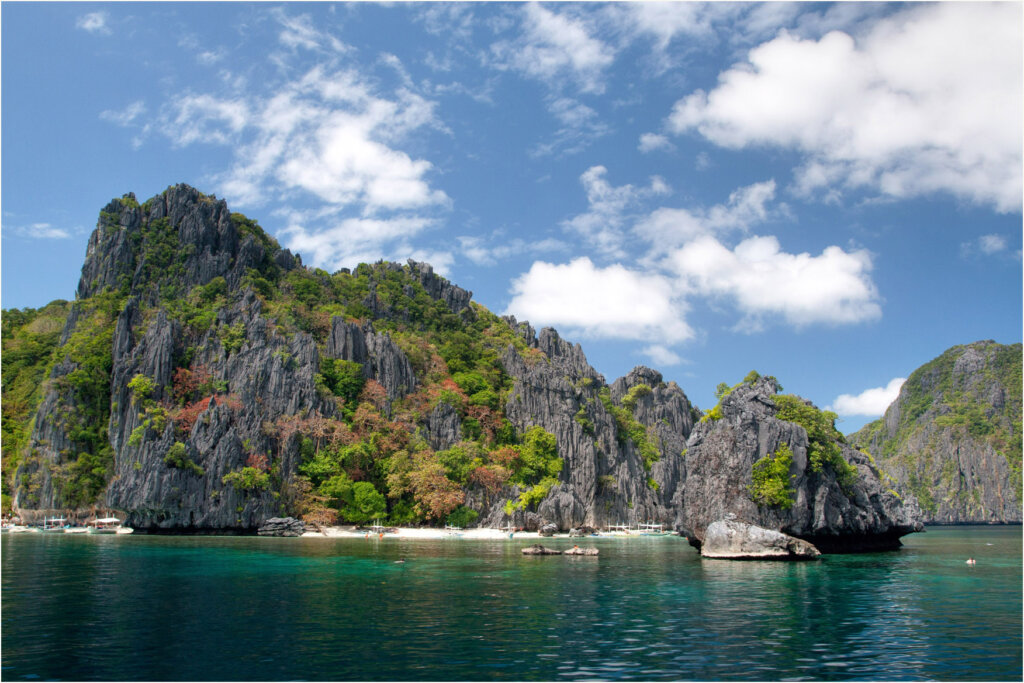
Popular sites such as South Miniloc, Twin Rocks, Helicopter Island and the Dilumacad tunnel are inside Bacuit Bay, which means dive boats rarely go far. Surface intervals are often spent anchored in calm water near a beach or a limestone wall — the same scenery tour boats visit. That geography is good news for non-divers: the dive boat itself can be a decent day out.
Some shops also offer three-dive days, night dives and full-day trips to more distant sites. Those are the days to plan a fully separate activity, because a ride-along non-diver will spend a long time waiting.
Option 1: Ride Along on the Dive Boat as a Snorkeler
Many El Nido dive shops accept non-diving companions on the boat for a reduced fee, usually including snorkel gear and lunch or snacks. Ask specifically whether the shop welcomes “snorkelers” or “ride-alongs” — policies vary and some shops cap the number of non-divers so the boat does not get crowded.
The best ride-along days are the ones where the dive sites are shallow and close to shore. At sites with sandy slopes and coral gardens, a snorkeler on the surface can often see the same turtles, reef fish and coral heads the divers see, just from above. Deep wall dives and current-swept pinnacles are less fun from the surface, so ask the shop which day of the week has the shallower plan.
A few practical rules for a good ride-along day:
- Bring your own rash guard and reef-safe sunscreen — you will be in the sun for four or more hours. See our guide to reef-safe sunscreen rules in El Nido.
- Stay close to the boat and follow the boat crew’s instructions; dive boats watch the divers’ bubbles, not wandering snorkelers.
- If you wear glasses, read our tips on prescription snorkel masks in El Nido before you go.
- Bring a book or a dry bag with a phone for the dive time when you are not in the water.
Option 2: Book Your Own Activity on Dive Mornings
If you get restless sitting on a boat, use your partner’s dive mornings for something that does not fit a diver’s schedule anyway. Because dive trips end in the early afternoon, you can choose half-day activities that bring you back by lunch.
Good solo or separate-morning options include a land tour to Nacpan Beach, a kayak rental from Corong-Corong, a cooking or yoga class in town, a massage, or a slow café morning. If you want to try something underwater without committing to a course, a guided snorkel trip is a great middle ground. Many travelers also use this time for an island-hopping tour that the diver has no interest in repeating.
The comparison table below summarizes the most realistic choices for a non-diver on a dive day.
Non-Diver Options on a Dive Day: Quick Comparison
| Option | Time Together | Typical Cost Level | Best For |
|---|---|---|---|
| Snorkel ride-along on the dive boat | High (surface intervals, lunch) | Low–moderate | Shallow-site days, confident swimmers |
| Separate island-hopping tour | None until afternoon | Low | Seeing lagoons the diver skips |
| Land tour / Nacpan Beach | None until afternoon | Low | Beach lovers, non-swimmers |
| Discover Scuba try dive | High (if done together) | Moderate–high | Curious non-divers |
| Spa, yoga or café morning | None until afternoon | Low–moderate | Rest days, poor weather |
| Kayak or SUP rental | None until afternoon | Low | Active travelers who like independence |
Option 3: Try a Discover Scuba Experience Together
A “try dive” — called Discover Scuba Diving in the PADI system and by similar names at other agencies — lets a non-certified person dive under direct instructor supervision in shallow water, usually after a short briefing and a pool or shallow-water skills session. Some couples find that one shared try dive is the highlight of their trip: the non-diver gets a taste of what the fuss is about, and the diver gets to share the reef.
Read the official program overview on PADI’s website before booking so you know what the experience involves, and expect to fill out a medical questionnaire. If you answer “yes” to certain conditions, you will need a doctor’s sign-off, which is hard to get in El Nido — so check before you travel. Our fit-to-dive medical checklist explains this in more detail.
There is no obligation to continue after a try dive. If you do not enjoy it, you have lost one morning, not a whole course fee.
Planning Around No-Fly Rules and Rest Days
The single most important scheduling rule for mixed pairs is the post-dive flying interval. Divers Alert Network guidance, summarized on DAN’s website, generally recommends a minimum surface interval of 12 hours before flying after a single no-decompression dive and 18 hours after multiple dives per day or multiple days of diving. Many divers simply keep the last full day before a flight dive-free.
That rule is a gift for the non-diver: the final day of the trip is guaranteed shared time. Plan your best shared activity — a private boat, a sunset dinner, or the island-hopping tour you have both been saving — for that last day.
Divers also benefit from a rest day in the middle of a longer trip. On a seven-night stay, a common pattern is two dive days, a shared day, two more dive days, then two shared days. It keeps the diver fresh and avoids the non-diver feeling left behind for a whole week.
Weather matters too. During the northeast monsoon (amihan), wind can change which sites are diveable and which tours run. Check PAGASA forecasts and our best time to dive in El Nido guide, and keep your shared days flexible.
Where to Stay and How to Split the Budget
Location decides how easy this trip will be. Staying in El Nido town or Corong-Corong puts you a short walk or tricycle ride from most dive shops, cafés and tour departure points, so the non-diver is never stuck far from everything while the diver is out. Remote resorts are beautiful but can leave a non-diver isolated on dive mornings unless the resort runs its own activities. Our list of El Nido dive resorts and hotel bases for divers helps narrow it down.
On budget, diving is the expensive part. Fun dives in El Nido are usually priced per two-dive day and cost several times more than a shared island-hopping tour, plus equipment rental if the diver does not bring gear. A fair approach many couples use is: the diver pays for diving, the non-diver pays for an equivalent “treat” (a massage, a private tour upgrade, a nicer dinner), and shared costs are split evenly. Do not forget that all visitors pay the municipal environmental fee and that dive insurance is a separate cost — see our comparison of DAN vs travel insurance for El Nido.
Key Takeaways
- Most El Nido dive trips run from early morning to early afternoon, so afternoons and sunsets are naturally shared time.
- Ask dive shops directly whether they accept snorkel ride-alongs and which day has the shallowest sites.
- Use dive mornings for activities the diver would skip anyway, such as a land tour or a separate island-hopping route.
- A shared Discover Scuba try dive is a low-commitment way for the non-diver to see the reef underwater.
- Keep the final day before your flight dive-free — it is both safer for the diver and guaranteed together time.
- Stay in town or Corong-Corong so the non-diver has easy access to cafés, tours and transport on dive days.
Frequently Asked Questions
Can a non-diver go on a dive boat in El Nido?
Often yes. Many dive shops allow non-diving companions to join as snorkelers for a reduced fee, but policies and boat capacity vary, so ask when booking and confirm what is included.
Is snorkeling from a dive boat worth it?
It depends on the sites. Shallow coral gardens and sandy slopes are great from the surface, while deep walls and pinnacles are less rewarding. Ask the shop which day has the shallower plan.
How long should my partner wait before flying after diving?
Divers Alert Network generally recommends at least 12 hours after a single no-decompression dive and 18 hours after repetitive dives or multi-day diving. Many divers keep the full last day dive-free.
Do I need to be a strong swimmer for a try dive?
You should be comfortable in water and able to follow instructions, but you do not need to be an advanced swimmer. You will complete a medical questionnaire, and some conditions require a doctor’s approval.
What can a non-diver do in El Nido on bad-weather days?
Rainy or windy days are good for spa treatments, cafés, cooking classes or a land tour. Dive trips may still run in sheltered sites, so plan indoor activities near town.
About the Author
This guide was compiled by the El Nido Hotels Ranking editorial team, with input from local operators and ongoing on-the-ground updates.