
This guide focuses on one evening ritual travelers romanticize but rarely research: the beach bonfire in El Nido, Palawan. It is written specifically for visitors who want a fire-lit night by the water and want to do it responsibly, without falling foul of the rules that protect this fragile stretch of coast. The honest answer is that a classic DIY bonfire is more restricted here than most people expect, but there are excellent, legitimate ways to enjoy a fire on the beach — and knowing the difference keeps your night magical rather than problematic.
- Can You Have a Bonfire on El Nido Beaches?
- The Rules and Environmental Considerations
- Your Bonfire Options at a Glance
- Best Beaches and Spots for an Evening Fire
- Organized Bonfire Dinners and Beach Parties
- DIY Bonfire: How to Do It Responsibly
- Safety Around Fire and Water
- What to Bring
- Alternatives if Fires Are Not Allowed
- When to Plan Your Bonfire Night
- Making It Memorable Without Harming the Beach
- Frequently Asked Questions
Can You Have a Bonfire on El Nido Beaches?
Not freely, and that surprises many first-time visitors. El Nido sits inside a protected area, and its beaches are ecologically sensitive, so lighting an unregulated open fire on any beach you please is not permitted the way it might be back home. Rules vary from beach to beach and are often set by the resort, barangay, or landowner that manages a given stretch of sand. The practical result is that most legitimate beach fires in El Nido are organized ones — arranged by a resort, restaurant, or tour operator that has permission — rather than spontaneous driftwood fires. Always ask before you strike a match; assuming it is allowed is the fastest way to a fine or an uncomfortable conversation with local authorities.
The Rules and Environmental Considerations
Permission and permits
Because the coastline is managed and protected, permission is the first rule of any El Nido beach fire. On resort or private beaches, ask the property directly; many will happily set up a fire for guests or point you to a permitted spot. On public beaches, check with the barangay or the municipal tourism office, since regulations change and some areas prohibit fires outright. The Department of Environment and Natural Resources oversees protected areas nationwide and publishes conservation guidance at denr.gov.ph; when in doubt, the environmentally cautious choice is also the legally safe one.
What never to burn
If you do have a permitted fire, burn only clean, dry wood provided or approved for the purpose. Never burn plastic, painted or treated wood, or trash, and never leave balloons or single-use plastics on the beach — they are a serious hazard to marine life and are discouraged across the bay. The Leave No Trace principles, summarized at lnt.org, are the right mindset: whatever you bring to the sand, you carry back out.
Your Bonfire Options at a Glance
There is more than one way to get your fire-lit beach night, and the best choice depends on how much effort you want to spend. This table compares them.
| Option | How it works | Effort | Best for |
|---|---|---|---|
| Resort bonfire | Property arranges it for guests | Low | Convenience, safety |
| Organized beach dinner | Restaurant or operator hosts | Low | Groups, couples |
| Beach bar with fire show | Fire dancers and firepits | None | Nightlife, atmosphere |
| Permitted DIY fire | You arrange with permission | High | Self-sufficient travelers |
| Fire-free alternative | Lanterns, stargazing, no flame | Low | Eco-minded nights |
Best Beaches and Spots for an Evening Fire
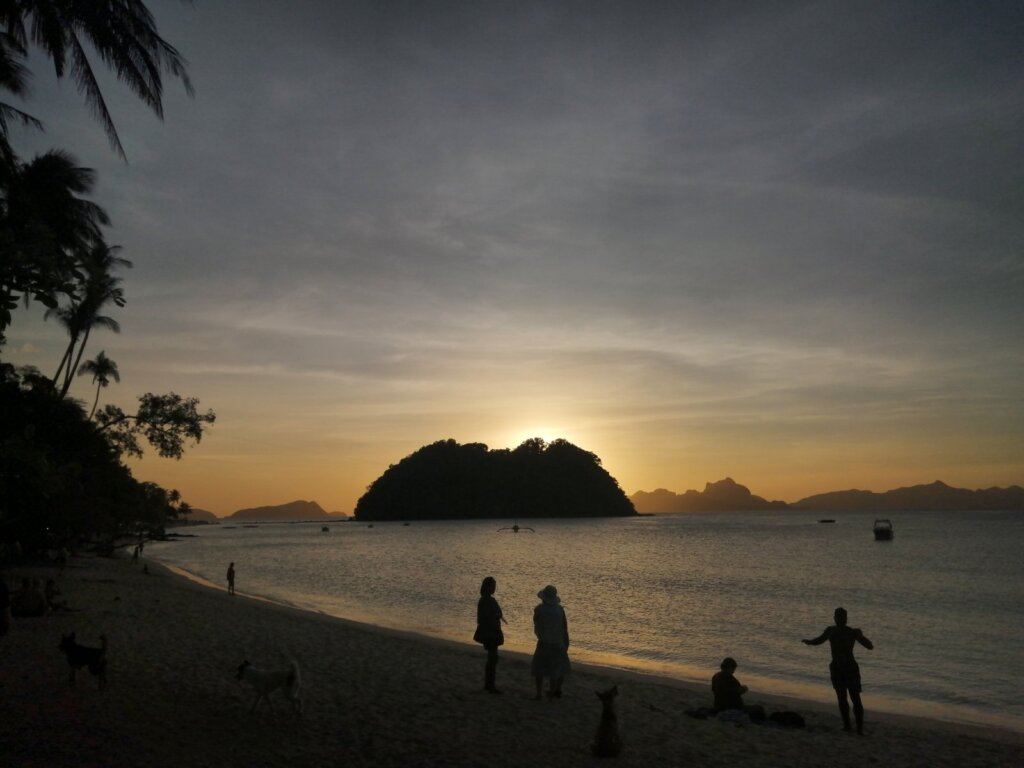
The most reliable fire-lit evenings happen on the resort-managed beaches outside the town center, where properties can set up a controlled fire or firepit for guests with the right permissions. The main town beach and the popular outer beaches are lively at sunset and some of their beach bars incorporate firepits and fire dancing into the night. Wherever you go, the golden hour beforehand is half the experience — the same dramatic skies featured in our roundup of the best El Nido photo spots. Time your evening around the sunset and stay for the stars; away from town lights, the night sky over Bacuit Bay is superb.
Organized Bonfire Dinners and Beach Parties
The easiest and most responsible way to enjoy a fire is to let someone who already has permission host it. A number of resorts and restaurants run beachfront dinners with a fire as the centerpiece, and these range from intimate candle-and-fire dinners for couples to livelier beach parties with music. For a romantic evening, a private fire-lit dinner pairs beautifully with the setting — if the occasion is bigger, our El Nido marriage proposal guide shows how to make it truly private. For a social night out with firepits, drinks, and fire dancers, our El Nido bars and nightlife guide points you to the venues with the best atmosphere after dark.
DIY Bonfire: How to Do It Responsibly
If you have secured genuine permission for a small fire, keep it modest and meticulous. Build it well back from the vegetation line and away from any nesting areas, keep it small and contained, and never leave it unattended. Bring your own approved firewood rather than stripping driftwood or breaking branches, since even fallen wood plays a role in the beach ecosystem. Keep water or sand on hand to extinguish the fire completely, and douse it fully before you leave — a warm bed of embers can reignite. When it is out and cold, scatter nothing and pack out every trace, from bottle caps to food scraps. Responsible DIY is possible, but it is real work, which is why most travelers opt for an organized fire instead.
Safety Around Fire and Water
A beach at night mixes fire, alcohol, and open water, which deserves respect. Keep the fire a safe distance from where people sit, and never let children play near the flames unsupervised. Alcohol and nighttime swimming are a dangerous combination anywhere, and doubly so on an unfamiliar coast with currents you cannot see in the dark — save the swim for daylight. If you are new to the area, our overview of whether El Nido is safe for tourists covers the wider precautions worth knowing. Watch the weather too, since evening squalls roll through; the national service PAGASA is the forecast to check before committing to an outdoor night.
What to Bring
For an organized fire, you barely need anything beyond warm-ish layers for the sea breeze and cash for food and drinks, since venues supply the rest. For a permitted DIY fire, bring approved firewood, a lighter and natural fire-starter, drinking water, a trash bag to pack everything out, a headlamp for the walk back, and a bucket for extinguishing. Insect repellent is wise after dark, and a light jacket takes the edge off the breeze once the sun is gone. Skip the disposable plates and single-use plastics entirely — reusable containers keep the beach clean and are increasingly the local expectation.
Alternatives if Fires Are Not Allowed
If no permitted fire is available on the night you want it, you lose nothing by going flame-free. A beach picnic under the stars, a lantern-lit dinner, or simply lying on the sand watching the Milky Way is every bit as memorable and leaves no impact at all. Many travelers find that stargazing away from town lights becomes the highlight of their trip. Planning your visit for the drier, clearer months makes these evenings far more reliable; our guide to the best time to visit El Nido explains when the skies cooperate. The magic of an El Nido night is the setting itself — the fire is optional.
When to Plan Your Bonfire Night
Timing shapes the whole evening. The dry season from roughly December to May brings calmer weather and clearer skies, which means fewer cancellations and better stargazing once the flames die down. During the wetter months, evening rain and stronger winds can make outdoor fires impractical or unsafe, and organized dinners may move indoors at short notice. Within any given day, aim to start around sunset so you catch the golden hour first and settle in as the stars appear. Weekends and peak-season nights are busier, so if you want a quieter, more intimate fire, a midweek evening is your friend. Book organized dinners a day or two ahead in high season, since the best beachfront tables and private setups fill quickly once word gets around.
Making It Memorable Without Harming the Beach
The most memorable El Nido nights are the ones that leave the beach exactly as they found it. Bring a small speaker at a considerate volume rather than a booming sound system, string up rechargeable lights instead of releasing lanterns or balloons, and share the space courteously with other travelers and locals enjoying the same shore. If you are marking a special occasion, a simple setup — good food, a modest fire or lantern, and the natural drama of the bay — beats anything elaborate. Take a moment away from the glow of the fire to look up; the density of stars over El Nido genuinely surprises people. When you leave, do a final sweep with your headlamp for anything dropped in the sand. That quiet diligence is what keeps these beaches worth returning to, and it is the real etiquette of an El Nido night.
Frequently Asked Questions
Are beach bonfires allowed in El Nido?
Not freely. El Nido is a protected area, so open fires are restricted and rules vary by beach. Most legitimate beach fires are organized by resorts or operators with permission, so always ask first.
How can I have a fire on the beach in El Nido?
The easiest way is to join an organized bonfire dinner or beach party hosted by a resort or restaurant that already has permission, or visit a beach bar with firepits and fire shows.
Can I build my own bonfire in El Nido?
Only with genuine permission from the resort, barangay, or landowner. If permitted, keep it small, burn only approved wood, never leave it unattended, and extinguish and pack out everything.
What should I not burn on an El Nido beach?
Never burn plastic, treated or painted wood, or trash, and never leave balloons or single-use plastics behind. They harm marine life and violate the area conservation rules.
What can I do instead of a bonfire?
Stargazing away from town lights, a lantern-lit beach dinner, or a night picnic are memorable, low-impact alternatives that need no fire and are reliable in the clearer dry-season months.