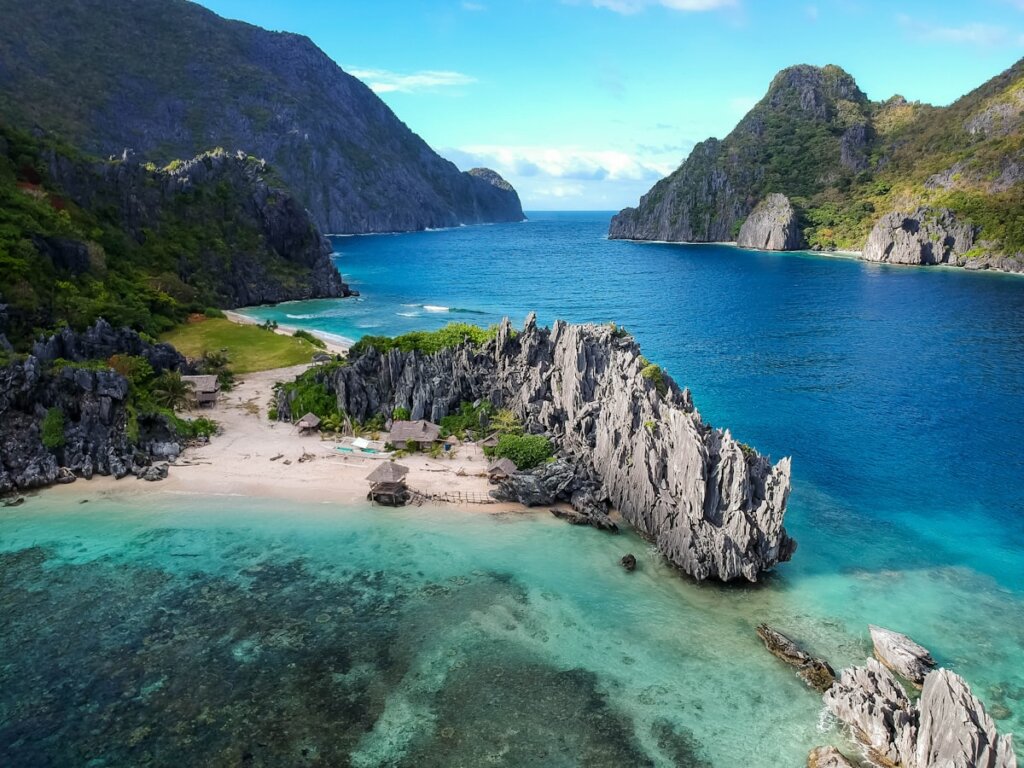

February and March are two of El Nido’s finest months — sitting in the heart of the dry season with the best weather, calmest seas, and excellent visibility for snorkeling and diving. February brings the Chinese New Year surge and Valentine’s Day romance-seekers; March brings spring break travelers and the pre-Easter peak. This guide covers what to expect in El Nido during February and March 2026.
- El Nido in February & March: Weather Overview
- Why February & March Are El Nido’s Best Months
- February in El Nido: Chinese New Year & Valentine’s Day
- March in El Nido: Hot Season Begins
- Island Hopping in February & March
- February vs March: Which Is Better?
- Budget Expectations for February & March
- Frequently Asked Questions: El Nido in February & March
El Nido in February & March: Weather Overview
| Factor | February | March |
|---|---|---|
| Season | Peak dry season (Amihan) | Late dry season / start of hot season |
| Average rainfall | 10–30mm (very dry) | 20–50mm (still mostly dry) |
| Rain pattern | Rare — isolated brief showers possible | Occasional afternoon showers returning |
| Wind | Gentle northeast trades (Amihan) 10–20 km/h | Amihan weakening; calmer, hotter days |
| Sea conditions | Excellent — all tours fully operational | Excellent — best conditions of the year |
| Temperature | 25–30°C | 27–33°C (getting hot) |
| Water temperature | 27–28°C | 28–30°C |
| Visibility (snorkeling/diving) | 20–30m (peak clarity) | 20–30m (peak clarity) |
| Tourist crowds | High — Chinese New Year + Valentine’s surge | Very high — spring break, Easter buildup |
| Accommodation prices | Peak rates; CNY dates highest | Peak rates throughout |
Why February & March Are El Nido’s Best Months
February and March represent El Nido at its absolute natural best:
- Perfect weather: Essentially zero rain, gentle Amihan breezes, clear blue skies from sunrise to sunset. These are the days of the travel-brochure photographs.
- Peak underwater visibility: 20–30m visibility at Shimizu Island and the dive sites — the clearest water of the entire year, ideal for snorkeling and scuba diving.
- Calmest seas: All four island hopping tours operate every day. Tour C, the most weather-sensitive route, runs reliably with flat seas on the open-water passages.
- Comfortable temperatures in February: The Amihan northeast trades keep February temperatures at 25–30°C — warm but not oppressive. March begins to warm up (27–33°C) as the hot season approaches.
- Vibrant reefs: The sustained dry season means minimal runoff and sediment — the coral at Shimizu and Tapiutan is at its most vivid and clear.
February in El Nido: Chinese New Year & Valentine’s Day
Chinese New Year (Late January–Mid February)
Chinese New Year is one of the biggest travel surges in El Nido. Travelers from mainland China, Hong Kong, Taiwan, and the Philippines’ large Chinese-Filipino community create a significant demand spike — typically lasting 10–14 days around the CNY dates. In 2026, Chinese New Year falls on January 29 — meaning the holiday travel surge runs approximately January 27–February 8.
During CNY week:
- Island hopping shared tours run at full capacity (12–15 people)
- Ferry bookings (El Nido–Coron) can sell out 2–3 weeks ahead
- Nacpan Beach has more visitors than usual but remains less crowded than the Tour A stops
- Accommodation should be booked 2–3 months in advance for CNY dates
Valentine’s Day in El Nido (February 14)
El Nido is a popular Valentine’s Day destination — the combination of stunning scenery, intimate lagoons, and romantic beach settings makes it a natural honeymoon and couples’ destination. The private island resorts (El Nido Resorts Pangulasian and Miniloc) are particularly sought-after for Valentine’s, often fully booked by November.
For couples visiting around Valentine’s Day:
- Book private boat Tour A: The Big and Small Lagoons are extraordinarily romantic without a shared tour crowd. A private boat (₱6,000–₱10,000) is the Valentine’s Day upgrade that genuinely transforms the experience.
- Sunset at Corong-Corong: The Amihan-season sunsets in February are consistently spectacular — clear skies, warm golden light, and the limestone island silhouettes make for a perfect end to the day.
- Dinner reservation: La Plage (French-Filipino), Altrove (Italian), and the El Nido Resorts restaurants book up for Valentine’s — reserve 2–3 weeks ahead.
March in El Nido: Hot Season Begins
March is El Nido’s hottest month — temperatures regularly reach 32–34°C in the afternoon, and the lack of Amihan wind from mid-March onward can make midday feel oppressive. However, the sea conditions remain excellent and visibility is peak. How to manage the March heat:
- Schedule outdoor activities in the morning. Island hopping tours depart at 8am — perfect. By the time you return at 4pm, you can retreat to air-conditioned accommodation or a beachside bar.
- Prioritize water-based activities. Snorkeling, swimming in the lagoons, and paddleboarding are all more enjoyable than land activities in March heat. The water temperature (28–30°C) is perfect.
- Stay near the water. Town beach and Nacpan Beach have constant breeze off the sea that makes the heat manageable. Inland activities (waterfall hike) are much hotter in March.
- Book accommodation with air conditioning. A fan room that was fine in January can feel unbearable in late March. Check that your room has functioning aircon.
Holy Week / Easter in March (if applicable)
Holy Week (Semana Santa) is the Philippines’ biggest domestic travel period. When Easter falls in March (as it does in some years), El Nido experiences its second-biggest crowd surge of the year — comparable to Christmas. In 2026, Easter Sunday falls on April 5, meaning Holy Week runs March 29–April 5. The final week of March 2026 will be very busy:
- Book accommodation for March 26–April 5, 2026 at least 3–4 months in advance
- Private boat tours strongly recommended during Holy Week
- Some businesses may close on Good Friday (April 3) — check with tour operators
- Ferry tickets El Nido–Coron should be booked 4–6 weeks ahead for Holy Week
Island Hopping in February & March
| Tour | Feb/March Reliability | Notes |
|---|---|---|
| Tour A (Big & Small Lagoon) | ⭐⭐⭐⭐⭐ Perfect | Flat seas, peak visibility, ideal kayaking conditions |
| Tour B (Caves & Sandbars) | ⭐⭐⭐⭐⭐ Perfect | Snake Island sandbar at its best in calm conditions |
| Tour C (Hidden Beach & Matinloc) | ⭐⭐⭐⭐⭐ Perfect | Flat open-water passages, Hidden Beach swim-through in ideal conditions |
| Tour D (Cadlao Lagoon) | ⭐⭐⭐⭐⭐ Perfect | Flat, clear lagoon conditions — best sea turtle visibility of the year |
February and March are the only months where all four tours reliably operate at their absolute best. Tour C in particular — usually the most weather-dependent — runs with flat seas and excellent conditions on virtually every day of these two months. If you’re planning to do all four tours, February or March is your window.
February vs March: Which Is Better?
| Factor | February | March |
|---|---|---|
| Temperature | 25–30°C — ideal | 27–33°C — hot, especially afternoons |
| Wind | Gentle Amihan breezes — pleasant | Weakening trades — can be still and humid |
| Rainfall | Near zero | Near zero, with slight uptick late March |
| Sea conditions | Excellent | Excellent (best of the year) |
| Underwater visibility | Peak (20–30m) | Peak (20–30m) |
| Crowds | High (CNY + Valentine’s surge) | Very high (spring break + Easter) |
| Prices | Peak throughout | Peak throughout |
| Overall verdict | Best weather + comfortable temperatures | Best sea conditions; can be hot on land |
Verdict: February is slightly preferable — the Amihan breezes keep it comfortably cool while maintaining the same excellent sea and sky conditions as March. March is still outstanding but the increasing heat makes land activities (waterfall hike, Twin Beaches viewpoint climb) less enjoyable. Either month delivers the quintessential El Nido experience.
Budget Expectations for February & March
| Category | Standard Feb/March Price | CNY / Holy Week Surcharge |
|---|---|---|
| Dorm bed | ₱600–₱900/night | ₱900–₱1,400/night |
| Budget private room | ₱1,500–₱2,500/night | ₱2,500–₱4,000/night |
| Mid-range hotel | ₱3,000–₱6,000/night | ₱5,000–₱9,000/night |
| Shared island hopping tour | ₱1,500–₱1,800/person | Same (tours don’t surge price) |
| Private boat (Tour A) | ₱6,000–₱10,000/boat | ₱8,000–₱12,000/boat |
| Restaurants | ₱400–₱900/person | Same (no significant surcharge) |
Frequently Asked Questions: El Nido in February & March
Is February a good time to visit El Nido?
February is one of El Nido’s best months. The dry season is fully established, temperatures are a comfortable 25–30°C with gentle Amihan breezes, seas are flat, and all four island hopping tours operate at their best. Visibility underwater reaches 20–30m — the clearest of the year. The main consideration is peak-season crowds (especially during Chinese New Year) and prices. Book accommodation 2–3 months ahead for February dates.
Is March a good time to visit El Nido?
March is excellent for water activities — the calmest seas of the year with peak underwater visibility, all tours operating perfectly, and vibrant coral conditions. The trade-off is the heat (27–33°C, increasingly humid by late March) which makes land activities less comfortable. If you’re coming primarily for island hopping, snorkeling, and diving, March is outstanding. If you want to mix beach activities with hikes and exploration, February’s cooler temperatures are preferable.
How crowded is El Nido in February?
February is one of the busiest months — particularly around Chinese New Year and Valentine’s Day (February 14). Shared tours run at full capacity, popular restaurants require reservations, and accommodation should be booked 2–3 months ahead. Outside CNY and Valentine’s week, mid-February is busy but manageable. A private boat tour (₱6,000–₱10,000) eliminates the crowd issue on island hopping days.
Is El Nido hot in March?
Yes — March is one of El Nido’s hotter months, with afternoon temperatures of 30–33°C and weakening sea breezes as the Amihan trades diminish. Early mornings (for island hopping tours) and evenings remain comfortable. Midday is the hottest period — plan to be on the water or in air-conditioned accommodation from noon to 3pm. Pack light, breathable clothing and stay well hydrated.
When is Chinese New Year in El Nido 2026?
Chinese New Year 2026 falls on January 29. The associated travel surge in El Nido typically runs from approximately January 27 through February 8. If you’re visiting during this period, book accommodation at least 2–3 months in advance and consider private boat tours rather than shared to avoid overcrowded tour groups.