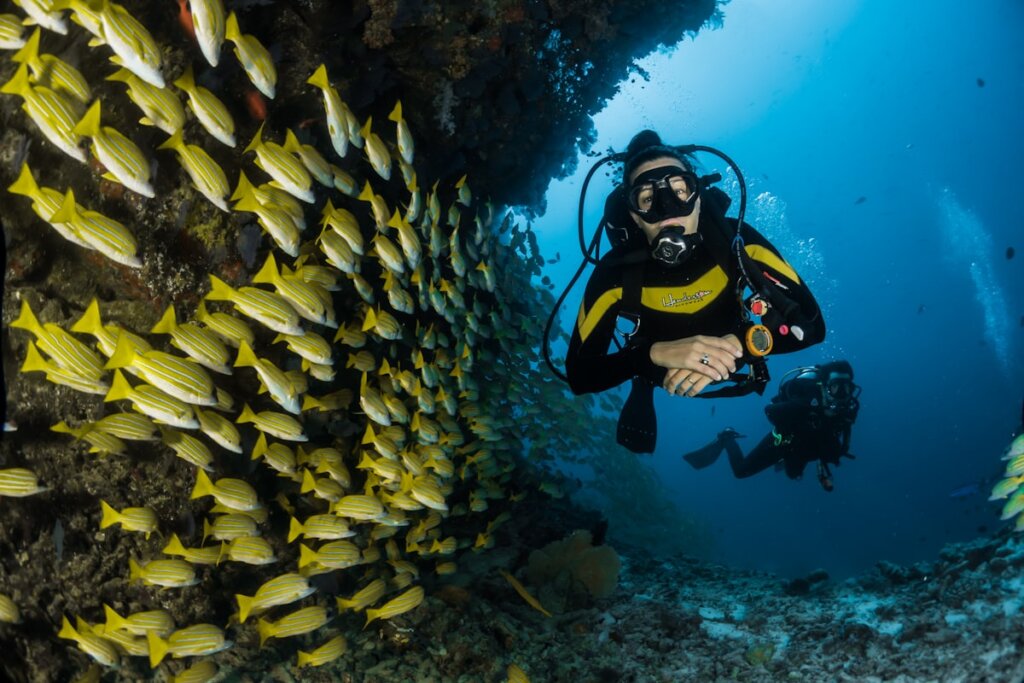

El Nido’s clear, sheltered Bacuit Bay makes it a natural playground for breath-hold diving, yet most visitors only ever see it through a snorkel. This guide focuses on freediving specifically for confident swimmers who want to move beyond surface snorkeling without committing to scuba tanks. You will learn what a beginner course involves, which types of sites work best, how conditions change through the year, and the safety habits that matter far more than any piece of gear.
- What Freediving Actually Is (and Is Not)
- Beginner Courses: What to Expect
- Types of Sites and What Suits a Beginner
- Best Time of Year for Freediving in El Nido
- Essential Gear for Beginners
- Safety Rules You Should Never Skip
- Combining Freediving With Your El Nido Itinerary
- Practical Budget and Booking Tips
- Training at Home Before You Arrive
- Frequently Asked Questions
What Freediving Actually Is (and Is Not)
Freediving means diving on a single breath, with no tank and no regulator. Recreational freedivers typically explore depths of 5 to 20 meters, while competitive athletes go much deeper. For a beginner on holiday, the goal is not depth. It is learning to relax, equalize your ears efficiently, and dive with a buddy who watches you from the surface.
It differs from snorkeling in one important way: you spend your time below the surface, moving slowly and quietly. Fish tend to stay closer to a calm, still diver than to a splashing snorkeler, so many people report seeing more marine life once they learn even the basics. It also differs from scuba, because there is no gas to breathe at depth and no decompression obligation in the same sense, but that does not make it risk-free.
Why the Bacuit Bay area suits beginners
Many sites inside the bay are protected from open-ocean swell by limestone islands, so water is often flat and visibility can be good on calm days. Shallow reef shelves, sandy patches and gentle drop-offs give you room to practice at 3 to 8 meters before considering anything deeper.
Who should think twice
Anyone with uncontrolled asthma, heart or lung conditions, recent ear or sinus infections, or who is pregnant should speak to a doctor before breath-hold diving. Nervous swimmers are better served by a pool session first, if one is available through a course provider.
Beginner Courses: What to Expect
International agencies such as PADI Freediver and other freediving organizations offer entry-level courses worldwide. A typical beginner program combines classroom theory, confined-water or shallow open-water practice, and several supervised open-water dives. Course length is commonly two to three days, though schedules vary by operator.
Because El Nido is primarily a scuba and island-hopping destination, freediving instruction may be limited. Availability changes with instructor presence and season, so message operators in advance instead of assuming a course can be booked on arrival. If nothing suits your dates, ask a local dive shop whether an instructor can supervise a private session, and confirm their certification and safety equipment.
- Theory: breathing physiology, equalization, and how blackouts happen
- Breathing technique: relaxation, breathe-up and recovery breathing
- Dive skills: duck dive, finning, equalizing head-first and free-immersion pulls
- Safety: buddy system, surface watch and rescue drills
- Certification: entry level usually allows diving to about 10 to 20 meters with a buddy, depending on the agency
Types of Sites and What Suits a Beginner
Rather than memorising named spots, learn to read the conditions. Ask your instructor or boat captain which locations are sheltered on the day you dive, because wind direction decides which side of an island is calm.
| Site type | Typical depth | Current / swell | Best for |
|---|---|---|---|
| Sheltered lagoon edge | 2 to 8 m | Low | First open-water sessions |
| Fringing reef shelf | 4 to 12 m | Low to moderate | Skills practice and marine life |
| Gentle drop-off wall | 8 to 20 m | Moderate | Certified beginners with a guide |
| Open channel between islands | 10 m+ | Moderate to strong | Experienced divers only |
| Sandy bay with seagrass | 2 to 6 m | Low | Relaxation drills and duck-dive practice |
Best Time of Year for Freediving in El Nido
Generally, the drier months from roughly December to May offer calmer seas and better visibility, with March to May often the warmest and clearest. The wetter season, commonly June to November, brings more wind, rain and occasional cancelled boat trips. Check the PAGASA weather service and your operator before committing to a dive day.
Water temperature is comfortable year-round for most people. A thin 1 to 3 mm wetsuit or a rash guard helps because you spend long, still periods in the water and cool down faster than you would while swimming laps. If you tend to feel cold, choose the thicker option. Also read our notes on tide times in El Nido because tidal flow affects visibility and current near channels.
Essential Gear for Beginners
Good gear makes learning easier, but it does not need to be expensive. Focus on fit, not brand.
Low-volume mask
A low-volume mask sits close to the face, so you use less air to equalize it on the way down. Try several shapes until one seals without straps pulled tight.
Long fins and a snorkel
Longer freediving fins move more water with less effort. Bring your own if you are picky about fit, or ask what the operator provides. A simple J-shaped snorkel is enough for surface breathing.
Weight belt and suit
Neutral buoyancy at your target depth matters. Instructors usually adjust weights for you. Avoid using scuba weights in a way that pulls you down too fast.
Safety Rules You Should Never Skip
Most freediving accidents are preventable and are related to blackouts near the surface, often caused by hyperventilation or diving alone. Treat these rules as non-negotiable.
- Never dive alone. Always have a trained buddy watching you from the surface.
- Never hyperventilate before a dive. Relaxed, slow breathing is safer.
- Keep your dives conservative. Ascending and surfacing are the moments of highest blackout risk.
- Do not freedive after scuba diving the same day without professional advice.
- Respect the marine environment. Do not touch coral, chase turtles or stand on reef.
- Follow local rules for protected areas and pay any environmental fees, explained by the Philippine Department of Tourism and local authorities.
Combining Freediving With Your El Nido Itinerary
Most travelers arrive in El Nido for island-hopping. You can mix both activities without much fuss. Book a standard boat tour for your first day, use it to gauge sea conditions, then arrange a private outing or course session for a calmer morning. If you get seasick easily, our seasickness guide explains how to prepare, and note that jellyfish can appear in some months, so read our jellyfish season guide before you plan long still sessions in the water.
If you are traveling from another Palawan destination, compare options in our El Nido vs Coron comparison, because wreck-heavy Coron and reef-and-lagoon El Nido reward different diving styles.
Practical Budget and Booking Tips
Prices for courses and guided sessions change from operator to operator, so treat any number you see online as a starting point and ask for a written quote. Also ask what is included: gear rental, boat fees, insurance, photos and certification card fees.
Book early in peak months, which are typically December to April. Read recent reviews, confirm the instructor holds a current certification, ask about the instructor to student ratio and check that the boat carries oxygen and a first-aid kit. Carry cash for small purchases, as digital payment coverage on the water is unreliable, and keep your phone in a dry bag. Staying connected on land is easier with the advice in our SIM card and mobile data guide.
Finally, build in a rest day between intensive dive days. Your ears, sinuses and energy levels will thank you, and relaxation is the key to better dives.
Training at Home Before You Arrive
You can arrive better prepared with a little work at home. Practice relaxed diaphragmatic breathing for a few minutes daily, since calm breathing is the foundation of every good dive. Learn the Frenzel or hands-free equalization technique from a qualified instructor or reputable course material, because equalization problems are the most common reason beginners cut sessions short.
Swimming fitness matters too. Aim to swim comfortably for 200 to 300 meters without stopping, and practice duck dives in a pool. Avoid breath-hold training alone in water, even at home, because the blackout risk exists in a pool exactly as it does in the sea. Train with a friend who knows what to watch for.
Lastly, plan your health basics: drink water, avoid alcohol the night before, sleep well and skip heavy meals right before diving. A relaxed body holds breath more comfortably than a stressed one.
- Two weeks out: start relaxation breathing practice
- One week out: get a pool session with a buddy or coach
- Three days out: check gear fit, defog mask and pack a rash guard
- Day before: hydrate, rest and confirm meeting time and boat
Frequently Asked Questions
Can I try freediving in El Nido without prior experience?
Yes, as long as you can swim comfortably and are healthy. Beginner courses and introductory sessions start in shallow water with a certified instructor and a safety buddy. Availability varies by season, so contact operators before your trip.
How deep do beginners dive?
Entry-level certification generally trains you to dive to roughly 10 to 20 meters, depending on the agency. During your first sessions you will likely stay at 3 to 8 meters while you learn equalization and relaxation.
Is freediving safer than scuba diving?
Neither is risk-free. Freediving carries a risk of blackout, which is why buddy supervision is essential. Scuba carries risks related to gas supply and decompression. Proper training and conservative habits reduce risk in both activities.
Do I need to bring my own equipment?
Not necessarily. Many operators provide masks, fins and wetsuits. If you have a low-volume mask or long fins that fit you well, bringing them is a good idea because comfort improves learning.
What is the best month for clear water?
Conditions are usually best in the drier months, roughly December to May, but visibility depends on recent weather, tides and wind. Ask your operator for daily conditions instead of relying only on the calendar.
Can I freedive on an island-hopping tour?
You can snorkel and do relaxed shallow dives on many tours, but organized tours are not designed for training. For real freediving practice, arrange a private boat or a dedicated session with an instructor.