
El Nido is remote by Philippine standards, and its medical infrastructure reflects that. The town has a basic rural health unit and a small private clinic, but serious medical emergencies require evacuation to Puerto Princesa — 4–6 hours away by road or under an hour by medical evacuation aircraft. Preparing for health contingencies before you travel is not excessive caution — it’s standard responsible travel planning for any remote destination. This guide covers everything you need to know about health and medical facilities in El Nido in 2026.
Medical Facilities in El Nido
Clinics and Health Units
| Facility | Type | Services | Hours |
|---|---|---|---|
| El Nido Rural Health Unit (RHU) | Government health unit | Basic primary care, maternal health, immunisations | Mon–Fri, 8am–5pm |
| El Nido Community Hospital | Small district hospital | Basic emergency care, minor procedures, X-ray | 24 hours (limited overnight staff) |
| Private clinics (several) | Private general practice | Consultations, wound care, basic diagnostics | Typically 9am–6pm |
Important limitations: El Nido’s medical facilities can handle minor injuries, infections, gastroenteritis, and basic wound care. They cannot reliably manage serious trauma (diving accidents, road accidents, severe allergic reactions), cardiac emergencies, or conditions requiring surgery, imaging (CT/MRI), or intensive care. For any condition beyond basic treatment, evacuation to Puerto Princesa is required.
Nearest Full-Service Hospital
Ospital ng Palawan (Puerto Princesa): The provincial government hospital, located in Puerto Princesa city. This is the nearest facility with surgical capacity, intensive care, and specialist services. Travel time from El Nido: 4–6 hours by road, or approximately 45 minutes by light aircraft (Cessna medical evacuation).
Immaculate Conception Medical Center (Puerto Princesa): A private hospital with broader specialist services than the government hospital, including orthopaedics, cardiology, and 24-hour emergency care.
Pharmacies in El Nido
El Nido has several small pharmacies (botika) stocking basic over-the-counter medications, prescription antibiotics, and common travel health supplies. Coverage is adequate for routine needs but limited compared to city pharmacies.
What You Can Find in El Nido Pharmacies
- Basic pain relief (paracetamol, ibuprofen)
- Antihistamines (cetirizine, loratadine)
- Oral rehydration salts (ORS)
- Antidiarrhoeals (loperamide)
- Common antibiotics (amoxicillin, ciprofloxacin — available OTC in the Philippines)
- Antifungals (for swimmer’s ear, skin infections)
- Basic wound care supplies (antiseptic, dressings, bandages)
- Insect repellent (DEET-based; reef-safe options are harder to find — bring from Manila)
What Is Hard to Find in El Nido
- Prescription medications for chronic conditions (bring sufficient supply from home)
- Specialised prescription drugs (bring everything you need)
- Quality sunscreen (reef-safe or high-SPF) — buy in Puerto Princesa or bring from home
- Contact lens solutions and supplies
- Specific branded medications — generics available but specific brands may not be stocked
Advice: Stock up on all medications and health supplies in Puerto Princesa before travelling to El Nido. The SM City mall in Puerto Princesa has a full pharmacy and a Mercury Drug store with comprehensive stock.
Emergency Contacts in El Nido
| Service | Contact | Notes |
|---|---|---|
| El Nido Police Station | (048) 723-0050 | Located on main road in El Nido Town |
| El Nido Fire Station | (048) 723-0026 | Also first responders for accidents |
| El Nido Community Hospital | (048) 723-0001 | Emergency intake 24/7 (limited) |
| Philippine Coast Guard El Nido | (048) 723-0120 | Maritime emergencies and sea rescue |
| National Emergency Hotline | 911 | Nationwide emergency line |
| Palawan Medical Center (PPS) | (048) 433-2412 | For referrals and evacuation coordination |
Medical air evacuation: Several operators provide medical evacuation flights between El Nido and Puerto Princesa. Your travel insurance provider’s emergency line should be your first call in a serious medical emergency — they coordinate evacuation logistics and payment directly. This is why travel insurance is essential for El Nido.
Common Health Risks in El Nido
Dehydration and Heat-Related Illness
The most common health issue affecting El Nido visitors is dehydration. Full days of island hopping in tropical heat (30°C+), combined with sun exposure, swimming, and alcohol, can cause rapid dehydration. Symptoms include headache, dizziness, dark urine, and fatigue. Prevention is straightforward: drink 2–3 litres of water per day minimum, carry water on all tours, and recognise that the symptoms of a “hangover” the morning after heavy drinking in the tropics are primarily dehydration — treat with ORS, rest, and water before resuming activity.
Traveller’s Diarrhoea
Stomach bugs are the second most common issue. Food hygiene in El Nido has improved significantly in recent years, but the risk of traveller’s diarrhoea remains higher than in developed countries. Risk reduction:
- Drink bottled or purified water only — tap water in El Nido is not safe to drink
- Eat at busy restaurants with high turnover — food that sits is higher risk
- Be cautious with raw seafood (kinilaw) from any source you’re unsure of
- Carry oral rehydration salts (ORS) — the most important treatment for diarrhoea is rehydration, not antidiarrhoeals
- Pack loperamide for situations where you need to suppress symptoms temporarily
Sunburn and Sun-Related Skin Damage
El Nido’s tropical latitude means UV index values regularly reach 10–12 (extreme) between 10am and 3pm. Water reflection increases UV exposure by up to 25%. A single full day on an island-hopping tour without adequate sun protection can cause severe sunburn. Apply SPF50+ reef-safe sunscreen every 2 hours and wear a rash guard or UV-protective clothing for extended water-based activities.
Cuts and Coral Injuries
Coral cuts are among the most common injuries in El Nido — even minor grazes on coral can become seriously infected in tropical conditions. If you sustain a coral cut:
- Clean thoroughly with clean fresh water as soon as possible
- Remove any embedded coral particles carefully
- Apply antiseptic (povidone-iodine is effective and available in El Nido pharmacies)
- Cover with a waterproof dressing and keep out of seawater until healed
- Seek medical attention if redness, swelling, or warmth develops around the wound within 24 hours — coral cuts can develop severe cellulitis rapidly in tropical heat
Mosquito-Borne Illness
Dengue fever is endemic in Palawan and El Nido — it is transmitted by the Aedes aegypti mosquito which bites primarily during daylight hours (dawn and dusk). There is no vaccine or specific treatment for dengue; prevention is the only strategy:
- Apply DEET-based insect repellent (30%+ DEET) during dawn and dusk hours
- Wear long sleeves and trousers at dawn and dusk
- Choose air-conditioned accommodation where possible — Aedes mosquitoes are less active in cool environments
- Seek immediate medical attention if you develop high fever (38.5°C+), severe headache, muscle and joint pain, or a rash 4–10 days after being bitten
Malaria risk in El Nido is very low (the species present in Palawan — P. vivax — is rarely fatal and responds to treatment), but consult your travel health physician before travelling regarding prophylaxis recommendations based on your itinerary.
Diving-Related Health Issues
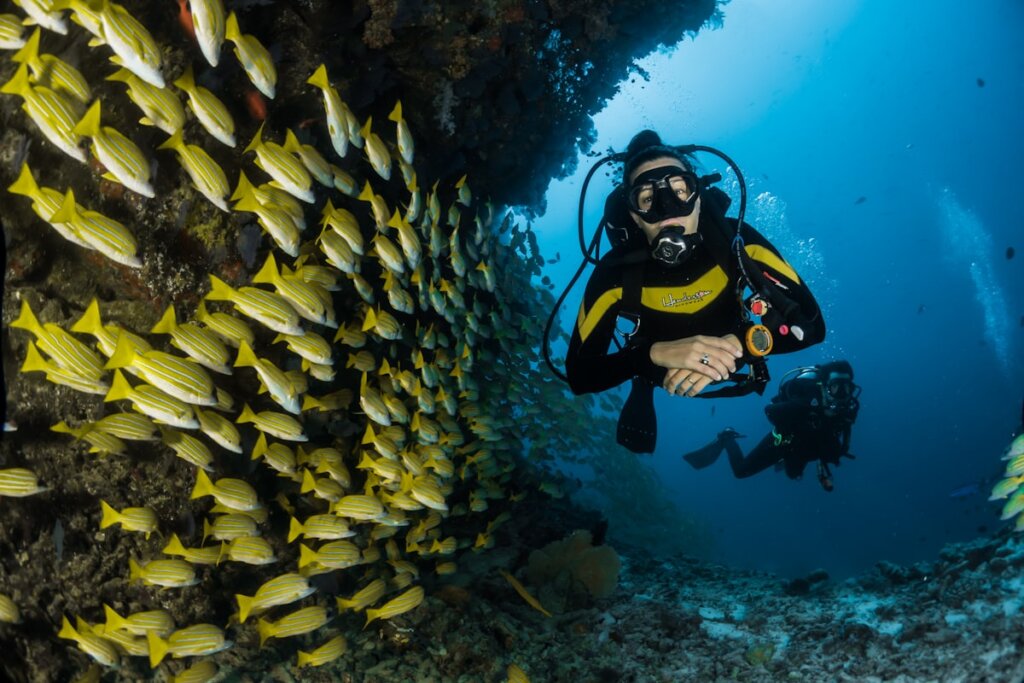
For scuba divers, decompression sickness (DCS or “the bends”) is the most serious risk specific to El Nido. The nearest hyperbaric (recompression) chamber is in Puerto Princesa — approximately 5 hours by road. This means any suspected DCS requires urgent evacuation. DCS prevention: always dive within your certification limits, ascend slowly (9 metres/minute maximum), complete safety stops, and avoid flying for at least 18 hours after your last dive. If in doubt, surface conservatively.
Travel Health Preparation
Recommended Vaccinations
| Vaccine | Recommendation | Notes |
|---|---|---|
| Hepatitis A | Strongly recommended | Food and water-borne; highly effective vaccine |
| Typhoid | Recommended | Food and water-borne; especially for longer stays |
| Hepatitis B | Recommended | Blood and body fluid-borne; standard course |
| Tetanus/diphtheria/pertussis | Ensure up to date | Important given coral cut risk |
| Japanese encephalitis | Consider for rural/long stays | Consult travel health physician |
| Rabies | Consider for extended/adventurous travel | Dogs and bats present in El Nido area |
Consult a travel health clinic or physician at least 4–6 weeks before departure for personalised vaccination advice.
Travel Insurance (Essential)
Travel insurance with emergency medical evacuation cover is essential for El Nido — not optional. A medical evacuation from El Nido to Puerto Princesa by light aircraft costs ₱80,000–150,000 (US$1,400–2,700). Emergency repatriation to your home country can cost tens of thousands of dollars. Ensure your policy covers:
- Emergency medical treatment
- Medical evacuation and repatriation
- Diving if you plan to scuba dive (many standard policies exclude diving)
- Adventure activities (island hopping, cliff jumping, etc.)
- Trip cancellation due to illness
Frequently Asked Questions
Is there a hospital in El Nido?
El Nido has a small community hospital and rural health unit that can handle basic emergencies, wound care, and minor illness. For serious conditions — trauma, cardiac emergencies, surgery, intensive care — patients must be evacuated to Puerto Princesa (4–6 hours by road, or ~45 minutes by medical air evacuation). Travel insurance with emergency evacuation cover is strongly recommended for all El Nido visitors.
Is it safe to drink the water in El Nido?
No — tap water in El Nido is not safe to drink. Drink bottled or purified water only. Most restaurants and hotels provide bottled water; refillable water stations are available in El Nido Town for budget travellers (₱5–10 per litre refill). Using a personal water purification system (LifeStraw, Sawyer filter, or UV pen) reduces plastic waste and cost.
Are there pharmacies in El Nido?
Yes — El Nido has several small pharmacies (botika) stocking basic over-the-counter medications, common antibiotics, oral rehydration salts, and wound care supplies. However, stock is limited compared to city pharmacies. Bring a full supply of any prescription medications you need, and stock up on sunscreen, reef-safe options, and specialist supplies in Puerto Princesa before travelling north to El Nido.