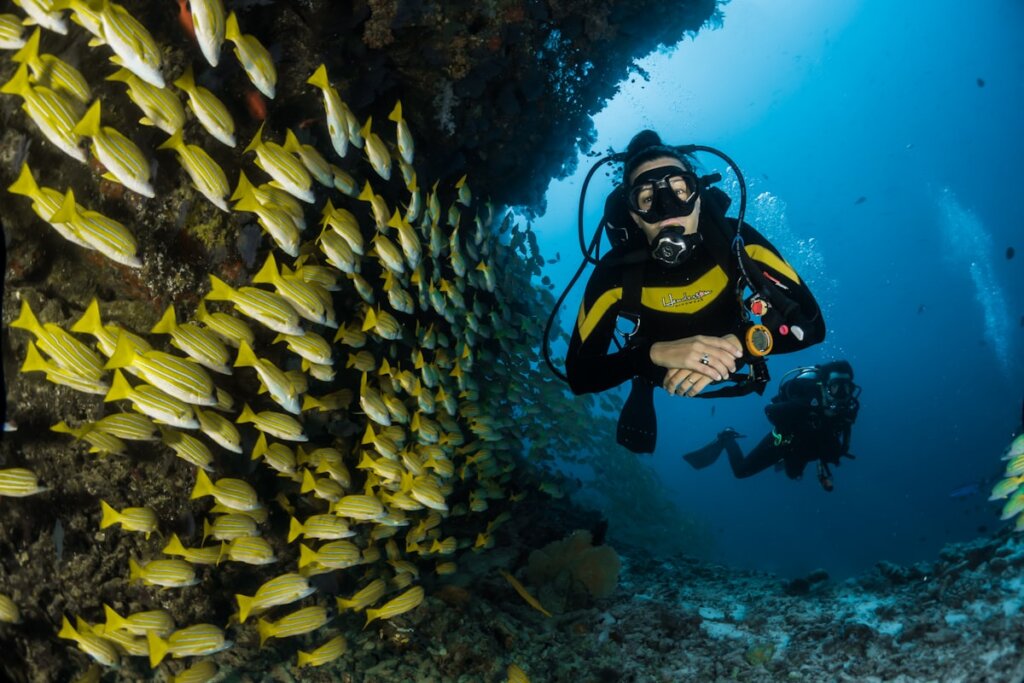

March is one of El Nido’s most popular months — and for excellent reason. The dry season is at its peak, seas are reliably calm, and the turquoise lagoons are at their most vivid and photogenic. The trade-off: March is also one of the busiest and most expensive months to visit, particularly around Holy Week (Semana Santa). This guide tells you exactly what to expect.
El Nido March Weather at a Glance
- Season: Peak amihan (dry northeast monsoon)
- Average temperature: 28–33°C (82–91°F) — March is one of the warmest months
- Rainfall: Very low — among the driest months of the year
- Sea conditions: Calm to slight — all tours run reliably
- Wind: Light northeast trade winds, beginning to ease toward month’s end
- Visibility: Excellent — 15–25m+ underwater; lagoon colors at their most saturated
- Humidity: Rising toward month’s end as the season begins to shift
March Highlights: What Makes It Special
- Best underwater visibility of the year — the cumulative dry months produce exceptional water clarity by March
- Consistent perfect weather — blue skies and calm seas day after day; no weather anxiety on boat days
- Vibrant colors — the turquoise of Big Lagoon against dry-season blue skies is at its most photogenic
- All activities available — every tour, dive site, and sailing route is fully operational
- Holy Week (Semana Santa) — if you embrace Filipino culture, the Easter celebrations are unique and moving
Holy Week in El Nido (Semana Santa)
Holy Week (the week before Easter) is the most significant holiday in the Philippines and falls in late March or early April. In 2026, Easter falls on April 5, making Holy Week March 29 – April 4.
What this means for travelers:
- El Nido becomes extremely crowded — both domestic Filipino tourists and international visitors arrive simultaneously
- Accommodation prices spike to their annual peak, often 50–100% above standard rates
- Flights sell out completely; ferries and vans fill weeks ahead
- Island-hopping tours run full boats every departure; shared tours have maximum capacity
- Restaurants have waits; some run out of popular dishes by evening
If you’re visiting during Holy Week: book every element — flights, accommodation, and tours — at least 3 months in advance. No exceptions. Arriving without a reservation during Easter week in El Nido is inadvisable.
Crowds & Prices in March
| Period | Crowds | Budget Guesthouse | Mid-Range Hotel |
|---|---|---|---|
| Early March (1–15) | High | ₱1,500–₱2,500/night | ₱4,000–₱7,000/night |
| Late March (16–28) | Very high | ₱2,000–₱3,500/night | ₱5,000–₱10,000/night |
| Holy Week (29 Mar–4 Apr) | Extreme | ₱3,000–₱5,000/night | ₱8,000–₱15,000+/night |
Activities in March
Island Hopping
All four tours run daily with zero cancellation risk. March is when the lagoons look their absolute best — crystal clarity, saturated blue-green colors, and strong light for photography. The downside is the crowds: Big Lagoon in March at 10am is a parade of bangkas. Book a private boat and depart at 7am — this is when March shines for those with budget to spare. See our Tour A guide for what to expect.
Diving
March offers some of the best diving conditions of the year. Visibility peaks, manta rays are spotted at certain sites, and sea turtles are abundant at Helicopter Island and Twin Rocks. Book dive trips in advance — instructors are fully booked in peak season. See our diving certification guide if you want to get qualified.
Sailing
The northeast trade winds are still blowing in early-to-mid March, making this one of the last reliable months for sailing the El Nido–Coron passage before the winds shift in April–May. Book yacht charters months ahead — they fill completely in March.
Beaches
Nacpan Beach and Las Cabanas are at their peak beauty but also busier than at any other time. Go early (before 9am) or late afternoon (after 4pm) to have the sand largely to yourself. Duli Beach in the far north remains relatively uncrowded even in peak season.
Tips for Visiting El Nido in March
- Book 3–6 months ahead — for Holy Week, even longer
- Start every tour at 7am — the early advantage is dramatic in peak season
- Private boats are worth the premium — splitting a ₱6,000 private bangka 4 ways is ₱1,500/person — similar to a shared tour but infinitely better experience
- Stay in Corong-Corong — 10 minutes south of the main strip, noticeably calmer
- Avoid Holy Week if crowds stress you — early March (1–15) is quieter and still has identical weather
- Carry sunscreen obsessively — March sun is intense; the combination of direct sun + water reflection burns quickly
- ATMs run out — bring extra cash from Puerto Princesa or Manila
March vs February vs April: Which is Best?
| Month | Weather | Crowds | Value | Verdict |
|---|---|---|---|---|
| February | Excellent | High | Poor–moderate | Slightly less crowded than March |
| March | Outstanding | Very high | Poor | Best weather, hardest to book |
| April | Very good (early), transitional (late) | Moderate (post-Easter) | Moderate | Good compromise after Holy Week |
Final Verdict: March in El Nido
March delivers El Nido at its meteorological finest. If you can secure accommodation and flights well in advance and don’t mind sharing the lagoons with many others, it’s a genuinely extraordinary time to visit. Avoid Holy Week if crowds are a concern — early March (before the 20th) gives you peak conditions with a marginally more manageable tourist volume.
See also: El Nido in January | El Nido in February | Best Hotels in El Nido | Best Time to Visit El Nido