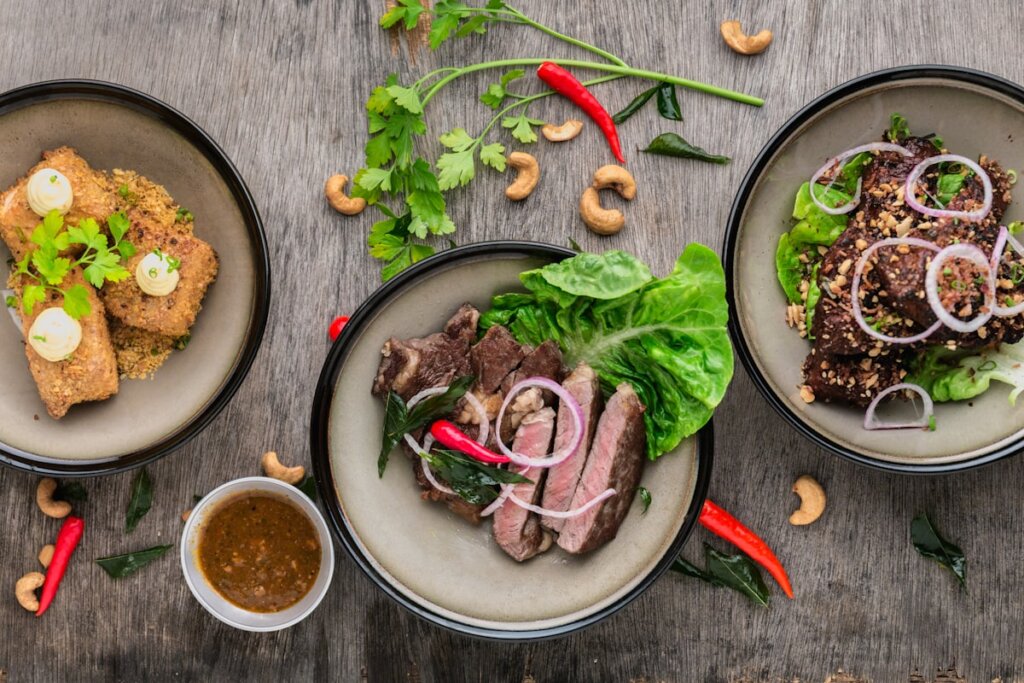

After a week of grilled fish, adobo and garlic rice, many travellers start craving something different. Maybe it is the bubbling grill of Korean barbecue, a bowl of ramen after a rainy afternoon, or a sour-spicy Thai curry. El Nido is a small town, but its food scene has grown with its visitors, and Asian cuisines beyond Filipino food are now easy to find.
This guide focuses on Korean, Japanese and Thai food specifically for travellers from East and Southeast Asia who miss home flavours, and for anyone who wants a change from Filipino and Western menus during a longer stay. We cover what dishes you can realistically expect, typical 2026 price ranges, how authentic the food tends to be, and where in El Nido to look.
Our angle is honest expectations: we explain which dishes travel well to a remote island town (and which do not), so you order the right thing and avoid disappointment.
- Why Asian Food Has Taken Off in El Nido
- Korean Food in El Nido: Barbecue, Stews and Comfort Dishes
- Japanese Food: Ramen, Rice Bowls and Sushi
- Thai and Pan-Asian Kitchens
- Price and Authenticity Comparison
- Where to Look in El Nido
- Practical Tips: Payments, Allergies and Late-Night Cravings
- Frequently Asked Questions
Why Asian Food Has Taken Off in El Nido
Three trends drive El Nido’s growing Asian food scene. First, visitors from Korea, Japan, China and Taiwan are a significant part of Palawan’s tourism mix, and restaurants follow demand. Second, Filipinos themselves love Korean and Japanese food: the nationwide “samgyup” craze turned unlimited samgyeopsal barbecue into a weekend ritual in Manila, and domestic tourists bring that appetite to El Nido. Third, chefs and owners who moved to Palawan from elsewhere in Asia have opened small, personal restaurants.
The result is a mix of casual Korean grills, ramen and rice-bowl counters, a few sushi menus, and Thai or pan-Asian kitchens that tend to be popular with backpackers. Turnover is high in El Nido — restaurants open and close with the seasons — so we focus on dishes and areas rather than naming specific venues.
Korean Food in El Nido: Barbecue, Stews and Comfort Dishes
Korean food is the easiest of the three to find. Expect:
- Samgyupsal and Korean barbecue: Pork belly grilled at the table, with lettuce wraps, ssamjang and side dishes (banchan). Some places offer unlimited sets, others à la carte. Korean barbecue is a social meal, ideal for groups after a boat tour.
- Kimchi jjigae and doenjang jjigae: Hearty stews that are welcome on wet-season evenings.
- Bibimbap and rice bowls: A balanced option for lunch, often available with tofu for vegetarians.
- Korean fried chicken and tteokbokki: Popular snack dishes, sometimes served late.
- Korean convenience items: Minimarts in town often stock instant ramyeon, Korean snacks and soju.
Authenticity tip: barbecue and stews are usually the most faithful dishes because they rely on imported pastes and simple local pork. Banchan quantity and variety are often smaller than in Seoul.
Korean Barbecue Etiquette for First-Timers
If you have never done table-side Korean barbecue, a few habits make it more enjoyable. Let the meat cook fully before cutting it with the scissors provided; pork belly should be golden and crisp at the edges. Wrap a piece of meat in lettuce or perilla with a dab of ssamjang, a slice of garlic and a little kimchi, then eat it in one bite. Side dishes are usually refillable — ask politely rather than helping yourself from the kitchen. In unlimited sets, there is often a time limit (commonly 90 minutes to two hours) and a charge for excessive leftovers, so order in rounds instead of all at once.
Japanese Food: Ramen, Rice Bowls and Sushi
Japanese options in El Nido lean towards casual comfort food rather than fine dining.
- Ramen: Usually tonkotsu or shoyu styles. Broth quality varies widely; places that make broth daily are worth seeking out. A bowl of ramen after a rainy afternoon is a popular local treat.
- Donburi: Katsudon, gyudon and teriyaki chicken bowls are reliable and filling.
- Sushi and sashimi: Palawan’s local tuna and other fish can be very good, but sushi quality depends heavily on cold-chain handling. Order sashimi only where turnover is clearly high.
- Japanese-Filipino fusion: Some cafés serve maki rolls with mango or kani, a style popular across the Philippines.
If you love raw fish, consider the local equivalent: kinilaw, Filipino fish ceviche. Our guide to seafood and kinilaw spots explains where it is freshest.
Thai and Pan-Asian Kitchens
Thai dishes appear mostly at pan-Asian restaurants and backpacker-friendly cafés. Common menu items include pad thai, green and red curries, tom yum, massaman curry and Thai-style salads. Many of these kitchens also do Vietnamese spring rolls, Indonesian nasi goreng or Malaysian laksa.
Because some Thai ingredients (fresh galangal, kaffir lime leaves, Thai basil) can be hard to source consistently in remote Palawan, flavours may be adapted. Curries made from imported paste are usually solid; salads relying on very specific fresh herbs vary more. If you like heat, ask for “Thai spicy” — default spice levels are often toned down for a mixed international crowd.
Thai and pan-Asian menus are also among the friendliest for plant-based diets. For more meat-free choices, see our vegan and vegetarian restaurant guide.
Chinese and Filipino-Chinese Options
Chinese influence runs deep in Filipino cooking, and it shows up in El Nido as siopao (steamed buns), siomai (dumplings), lumpia and fried rice dishes sold at bakeshops and carinderias. These are cheap, quick snacks — siomai often comes four to a serving with chilli-garlic oil and calamansi. A few restaurants also do Cantonese-style stir-fries and sweet-and-sour fish, which make a good shared dinner for families. If you are travelling from mainland China, Hong Kong or Taiwan, do not expect regional cooking like Sichuan or Taiwanese beef noodle soup; menus tend to be Filipino-Chinese rather than regional Chinese.
Price and Authenticity Comparison
Typical 2026 price ranges for a main dish or set at casual to mid-range restaurants in El Nido. Beachfront and resort restaurants charge more; prices are indicative and change frequently.
| Cuisine | Signature dish | Typical price (PHP) | Authenticity (our view) | Best for |
|---|---|---|---|---|
| Korean | Samgyupsal set (per person) | 450–900 | High for grills and stews | Groups, post-tour dinners |
| Korean | Bibimbap or jjigae | 300–500 | Medium to high | Solo lunch, rainy days |
| Japanese | Ramen bowl | 350–550 | Varies by broth quality | Comfort food |
| Japanese | Sushi or sashimi platter | 450–1,200 | Depends on cold chain | Seafood lovers |
| Thai | Green curry or pad thai | 300–550 | Medium (herb substitutions) | Spice fans, vegetarians |
| Pan-Asian | Laksa or nasi goreng | 300–500 | Medium | Variety seekers |
For context, a Filipino meal at a local carinderia often costs under PHP 200, so Asian restaurant meals sit at the mid-range level in El Nido.
Where to Look in El Nido
- Town proper (Calle Hama, Serena Street, Rizal Street area): The densest cluster of restaurants, including most Korean grills and ramen spots. Easy to combine with sunset drinks; see our bars and nightlife guide.
- Corong-Corong: Sunset-facing restaurants with pan-Asian and fusion menus, a short tricycle ride from town.
- Lio Estate area near the airport: A planned dining and shopping zone with a more polished selection, convenient if you stay near Lio Beach.
- Cafés: Several coffee shops do rice bowls, Korean snacks and Japanese-style desserts. Start with our El Nido coffee shops list.
Before walking across town, check recent reviews on a map app — opening hours in El Nido shift with power outages, holidays and low season. Some restaurants close for a few weeks during the wettest months.
A Sample Three-Night Asian Food Plan
If you are in El Nido for a week and want to rotate cuisines without overspending, try this simple plan. On the night after your first island-hopping tour, book a Korean barbecue table with your group — the shared grill is perfect for swapping stories about the lagoons. Mid-week, when you are tired from the sun, go for a quiet bowl of ramen or a Japanese rice bowl in town. On your last night, choose a pan-Asian restaurant in Corong-Corong and time it for sunset, ordering a curry and a few small plates to share. Between those dinners, eat local: silog breakfasts, carinderia lunches and grilled seafood at night keep your budget balanced and give you a real taste of Palawan.
Remember that the Asian dining scene changes quickly, especially between high season (December to May) and the wet months. A restaurant that was busy during your friend’s visit last year may have moved or closed, so treat any recommendation — including ours — as a starting point and confirm on the day.
Practical Tips: Payments, Allergies and Late-Night Cravings
- Cash is still king: Many small restaurants prefer cash or GCash. Card acceptance is improving but not universal.
- Service charge: Some mid-range places add a service charge; check the bill before tipping extra.
- Allergies: Korean and Thai dishes often contain fish sauce, shrimp paste or sesame. Japanese broths may include pork or fish stock. State allergies clearly when ordering.
- Late night: Kitchens usually close earlier than bars. For a midnight snack, minimarts sell instant noodles, onigiri-style rice snacks and Korean ramyeon.
- Self-catering: If you have a kitchen, bring your favourite sauces from home or from a big supermarket in Puerto Princesa; specialist Asian ingredients are limited in El Nido.
Balancing cuisines is part of the fun. Mix one Asian dinner with local Filipino meals from the street food scene to get the full picture of how El Nido eats today.
For background on Thai cooking styles see the overview of Thai cuisine.
Frequently Asked Questions
Is there Korean barbecue in El Nido?
Yes. Korean barbecue, especially samgyupsal (grilled pork belly), is one of the easiest Asian cuisines to find in El Nido town proper. Expect roughly PHP 450–900 per person for a set in 2026, depending on the venue and whether it is unlimited.
Can I get ramen in El Nido?
Yes, several casual restaurants serve ramen, typically tonkotsu or shoyu styles. Broth quality varies, so check recent reviews and favour places that make broth daily.
Is sushi safe to eat in El Nido?
Generally yes at busy restaurants with good refrigeration. Because El Nido is remote, choose places with high turnover for raw fish and avoid sashimi if a restaurant looks quiet.
Are Asian restaurants in El Nido expensive?
They are mid-range by local standards. Main dishes typically cost PHP 300–550, while a Filipino carinderia meal may be under PHP 200.
Where are most Asian restaurants in El Nido?
Most are in the town proper around Calle Hama and Serena Street, with more options in Corong-Corong and the Lio Estate area near the airport.