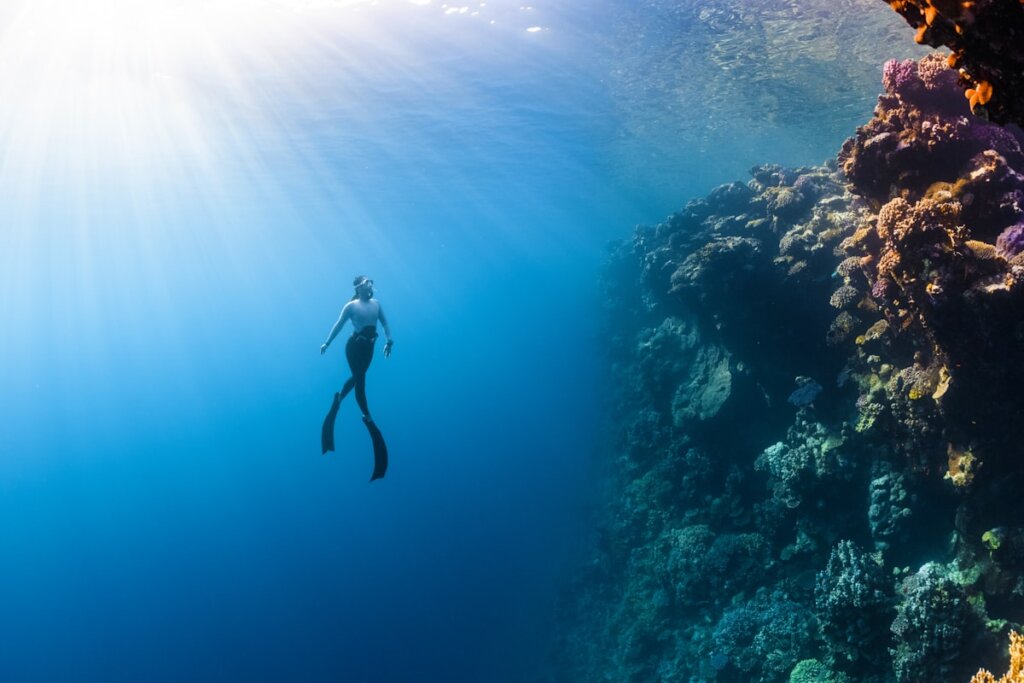

The Bacuit Bay Marine Sanctuary hosts one of the richest marine ecosystems in the Philippines — over 800 fish species, 100+ coral species, and critical habitat for sea turtles, manta rays, whale sharks, and reef sharks. This guide covers what you’ll encounter snorkelling and diving, where to see it, and the best season for each species.

Table of Contents
Sea Turtles — The Star Attraction
El Nido has two resident sea turtle species:
- Green sea turtle (Chelonia mydas): The most commonly sighted. Feeds on seagrass beds and algae in the shallow areas around the lagoons. Adult sizes of 80–120 cm shell length. Frequently seen resting on coral heads or feeding lazily on the reef.
- Hawksbill sea turtle (Eretmochelys imbricata): Identified by its narrow, bird-like beak. Feeds on sponges and soft corals. Slightly less common than green turtles but present at most snorkelling sites.
Where to see them: Big Lagoon and Shimizu Island (Tour A), Dilumacad Island / Helicopter Island (Tour C), Twin Rocks dive site. Sighting probability on Tour A: approximately 80–90% of trips in dry season.
Etiquette: Never touch, chase, or block a turtle’s path to the surface. Observe from 3+ metres distance. The turtles in El Nido are habituated to snorkellers — they’ll approach you if you stay calm and still.
Manta Rays — Seasonal Highlight
Oceanic and reef manta rays (Mobula birostris and Mobula alfredi) visit El Nido’s cleaning stations seasonally. Wingspans of 3–7 metres — encountering one underwater is a profound experience.
Season: February–April (peak), with some sightings October–November
Where: Cleaning stations at outer archipelago sites — ask dive operators for current activity. Twin Rocks and sites near Miniloc Island are most commonly cited.
How to see them: Join a dedicated manta dive trip with an operator who monitors cleaning station activity — PHP 3,000–5,000/person. Not guaranteed on standard tours.
Reef Sharks
- Blacktip reef shark (Carcharhinus melanopterus): Regularly sighted at Tour C snorkelling stops and outer reef sites. Shy, non-aggressive. Maximum 1.8m. Often seen patrolling reef edges at 5–10m depth.
- Whitetip reef shark (Triaenodon obesus): Usually resting on sandy patches between coral heads. Common at Miniloc Island and outer sites.
- Whale shark (Rhincodon typus): Occasional sightings at outer archipelago sites, particularly May–June. Not guaranteed, but El Nido’s outer waters are productive habitat.
Coral and Reef Life
Coral Coverage
El Nido’s reef health varies by site — protected sanctuary areas have excellent coverage (60–80% live coral in some areas), while sites near populated areas have some bleaching damage from past El Niño events. Best coral: Shimizu Island, Twin Rocks, Cadlao Lagoon reef, and outer archipelago sites.
Fish Species Highlights
- Giant clams (Tridacna gigas): Up to 1 metre wide at Tour C and Cadlao sites — iridescent mantles in blue, green, and purple
- Clownfish and anemones: 4+ clownfish species common throughout the bay — excellent for macro photography
- Nudibranchs: Extraordinary variety at South Miniloc Cathedral — seasoned divers rate El Nido among the Philippines’ best nudibranch sites
- Lionfish: Common at most sites — beautiful but don’t touch (venomous spines)
- Mantis shrimp: Found in sand patches between coral — look for their distinctive burrows
- Octopus: Masters of camouflage; most commonly spotted at dusk or dawn
- Schools of barracuda, surgeonfish, and fusiliers: Open-water schooling at most boat-side sites
Best Sites by Marine Life Target
| Target | Best Site | How to Access |
|---|---|---|
| Sea turtles | Big Lagoon / Shimizu Island | Tour A (shared or private) |
| Manta rays | Outer cleaning stations | Dedicated dive trip (seasonal Feb–Apr) |
| Reef sharks | Miniloc Island / outer reef | Guided dive |
| Giant clams | Tour C stops | Tour C snorkel |
| Nudibranchs | South Miniloc Cathedral | Guided dive (intermediate+) |
| Best coral coverage | Shimizu Island, Twin Rocks | Tour A / guided dive |
| Whale sharks | Outer Linapacan area | Charter (May–June, not guaranteed) |
Snorkelling vs Diving for Marine Life
El Nido’s snorkelling is genuinely outstanding — sea turtles, giant clams, reef sharks, and a dazzling fish population are all accessible at 1–5 metres depth. You don’t need to dive to see the best of El Nido’s marine life. Diving unlocks the walls, deeper reef structures, and niche species (nudibranchs, specific shark species) that snorkellers can’t reach. See our snorkelling guide and diving guide for specifics.
Conservation and Responsible Wildlife Watching
El Nido’s marine life is protected under the Bacuit Bay Marine Sanctuary designation. Rules that matter:
- Never touch or stand on coral — a moment’s damage takes decades to recover
- Use only reef-safe (zinc oxide) sunscreen — chemical sunscreens bleach coral
- Don’t chase, touch, or feed sea turtles, sharks, or any wildlife
- Don’t take shells, coral, or any living organism from the water
- Report anchor damage or coral damage by boats to the ecotourism office
For broader eco-tourism context, see the El Nido eco-tourism guide.
Frequently Asked Questions
What marine life can I see in El Nido?
El Nido’s Bacuit Bay Marine Sanctuary has sea turtles (green and hawksbill — commonly seen on Tour A), manta rays (seasonal, February–April), reef sharks (blacktip and whitetip), giant clams, nudibranchs, clownfish, schooling barracuda, and 800+ fish species. Snorkellers can see most of these at 1–5 metres depth without diving equipment.
Are there sharks in El Nido?
Yes — blacktip and whitetip reef sharks are regularly sighted at several sites in El Nido, particularly at outer reef edges and at Miniloc Island area. They are non-aggressive and typically shy — encounters are brief and at distance. Whale sharks are occasionally sighted at the outer archipelago (May–June), though not reliably enough to plan a trip around.
When is the best time to see manta rays in El Nido?
February–April is the peak manta ray season in El Nido — cleaning station activity is highest and sightings most reliable. Some operators report October–November activity as a secondary season. Manta ray sightings are not guaranteed on any trip; join a dedicated guided dive with an operator who actively monitors cleaning station activity.
Is El Nido good for snorkelling without diving?
Yes — El Nido is outstanding for snorkellers. Sea turtles, giant clams, reef sharks, clownfish, and abundant reef fish are all accessible at snorkelling depth (1–5m). Tour A and Tour C both have dedicated snorkelling stops with some of the best shallow-water marine life in the Philippines. You don’t need scuba certification to experience El Nido’s best marine life.
| Platform | Best For | El Nido Deals |
|---|---|---|
| Booking.com | Hotels, resorts, free cancellation | View deals → |
| Agoda | Best Asia prices, loyalty rewards | View deals → |
| Klook | Tours & activities | Browse tours → |