

El Nido is a remote destination — the nearest hospital with full surgical and emergency capabilities is in Puerto Princesa, a 5–6 hour drive away. Understanding the local medical situation before you travel, knowing what to pack in your health kit, and having the right travel insurance in place can make the difference between a minor inconvenience and a serious problem. This guide covers everything you need to know about health and medical care in El Nido, Palawan in 2026.
- Medical Facilities in El Nido
- Recommended Vaccinations for El Nido
- Malaria in El Nido / Palawan
- Dengue Fever
- Common Health Issues in El Nido & How to Handle Them
- What to Pack in Your Health Kit for El Nido
- Food & Water Safety
- Travel Insurance for El Nido — What You Need
- Emergency Contacts
- Frequently Asked Questions — El Nido Health & Medical
Medical Facilities in El Nido
El Nido town has limited but functional medical facilities adequate for minor to moderate health issues. For serious emergencies, evacuation to Puerto Princesa or Manila is required.
| Facility | Location | Capability | Notes |
|---|---|---|---|
| El Nido Municipal Health Center | Real Street, El Nido town | Basic primary care, minor injuries, wound care | Government facility; free or low-cost; limited hours |
| Private clinics (2–3 in town) | Calle Rizal area | General consultation, basic diagnostics, prescriptions | Faster service; fees apply; limited equipment |
| Pharmacy / Botika | Multiple on Calle Rizal | OTC and prescription medications | Good stock of common medications; open daily |
| Palawan Adventist Hospital (PPP) | Puerto Princesa (5–6 hrs) | Full hospital: surgery, ICU, X-ray, blood bank | Nearest full-capability facility |
| Ospital ng Palawan | Puerto Princesa (5–6 hrs) | Full government hospital | Government rates; can be busy |
| Manila hospitals | Manila (flight or 12+ hrs) | Full tertiary care, specialists | For complex cases requiring specialist treatment |
Key limitation: El Nido has no X-ray, CT scanner, or surgical theatre. Fractures, appendicitis, severe allergic reactions, diving injuries (decompression sickness), and cardiac events all require evacuation to Puerto Princesa or Manila. Travel insurance with emergency medical evacuation cover is not optional — it is essential.
Recommended Vaccinations for El Nido
Consult your travel medicine doctor or GP at least 4–6 weeks before departure to allow time for multi-dose vaccines and to assess your personal risk profile. The following are commonly recommended for travel to El Nido/Palawan:
| Vaccine | Recommendation | Notes |
|---|---|---|
| Hepatitis A | ✅ Strongly recommended | Transmitted via contaminated food/water; very common travel vaccine |
| Hepatitis B | ✅ Recommended | 3-dose series; standard for most international travellers |
| Typhoid | ✅ Recommended | Transmitted via contaminated food/water; higher risk in rural Philippines |
| Tetanus/Diphtheria/Pertussis | ✅ Up to date required | Check booster status — 10-year boosters standard |
| Measles/MMR | ✅ Ensure up to date | MMR outbreaks occur in Philippines; confirm immunity |
| Rabies (pre-exposure) | ⚠️ Consider for longer stays | Dogs and bats present in rural Palawan; 3-dose pre-exposure series |
| Japanese Encephalitis | ⚠️ Consider for rural/extended stays | Mosquito-borne; risk in agricultural areas near rice paddies |
| COVID-19 | ✅ Up to date recommended | Philippines entry requirements may change; check current rules |
| Influenza | ✅ Recommended | Year-round in tropical climates; standard annual vaccine |
Malaria in El Nido / Palawan
Palawan — including El Nido — is one of the few Philippine provinces with a documented malaria risk. This is important: the main islands (Cebu, Boracay, Bohol, Metro Manila) have negligible malaria risk, but Palawan is different.
Current risk assessment (2026):
- El Nido town and tourist areas: low risk — most malaria transmission occurs in rural, forested, and agricultural areas away from town
- Rural Palawan (inland villages, jungle trekking areas): moderate risk
- Species present: Plasmodium falciparum (can be severe) and P. vivax
Recommendations:
- Discuss malaria prophylaxis with your travel doctor — options include Atovaquone-proguanil (Malarone), Doxycycline, or Mefloquine. Your doctor will recommend based on your itinerary and health history.
- Use DEET-based insect repellent (30–50% DEET) on exposed skin, especially at dusk and dawn when Anopheles mosquitoes are most active
- Sleep under a mosquito net or in air-conditioned rooms (AC rooms are effectively mosquito-free)
- Wear long sleeves and long trousers in the evenings
- If you develop fever within 3 months of returning from Palawan, tell your doctor you visited a malaria-risk area
Dengue Fever
Dengue is the primary mosquito-borne illness concern in El Nido. Unlike malaria (transmitted at night), dengue is spread by Aedes aegypti mosquitoes which bite primarily during daylight hours — making standard evening mosquito precautions insufficient.
Prevention:
- Apply DEET repellent throughout the day, not just at dusk
- Wear long, light-coloured clothing during the day
- Stay in accommodations with screens on windows, or use a fan (mosquitoes avoid airflow)
- There is now a dengue vaccine (Dengvaxia) — discuss with your doctor if appropriate for you
Symptoms to watch for: sudden high fever (39–40°C), severe headache, pain behind the eyes, joint and muscle pain, rash. If you develop these symptoms during or after your trip, seek medical attention immediately and mention your travel history. Most dengue cases are self-limiting, but severe dengue can be life-threatening without monitoring.
Common Health Issues in El Nido & How to Handle Them
| Condition | Cause | Prevention | Treatment |
|---|---|---|---|
| Traveller’s diarrhoea | Contaminated food/water | Bottled water, careful food choices, hand hygiene | Rehydration salts; loperamide for symptomatic relief; antibiotics if severe (ciprofloxacin) |
| Sunburn | Intense tropical UV | SPF 50+ sunscreen, rash guard, shade during peak hours | Cool water, aloe vera, ibuprofen; severe burns need medical review |
| Heat exhaustion | Overexertion in heat | Hydration (3L/day), avoid peak sun, pace yourself | Shade, cool water, oral rehydration; heat stroke = medical emergency |
| Sea urchin spine | Stepping on urchin | Wear water shoes on rocky beaches | Remove visible spines; soak in warm water to dissolve; don’t squeeze — seek clinic if infected |
| Jellyfish sting | Contact with jellyfish tentacles | Avoid touching jellyfish; wear rash guard | Rinse with seawater (NOT fresh water); apply vinegar if available; antihistamine for itch |
| Fire coral burn | Touching fire coral | Don’t touch any coral | Wash with seawater; apply hydrocortisone cream; antihistamine if severe |
| Motorbike injury / road rash | Falls on rough roads | Helmet, appropriate speed, daylight riding | Clean wound thoroughly; antiseptic; clinic for deep wounds or suspected fracture |
| Ear infection (swimmer’s ear) | Prolonged water in ear canal | Dry ears thoroughly after swimming; tilt head to drain | Antibiotic ear drops from pharmacy; clinic if severe |
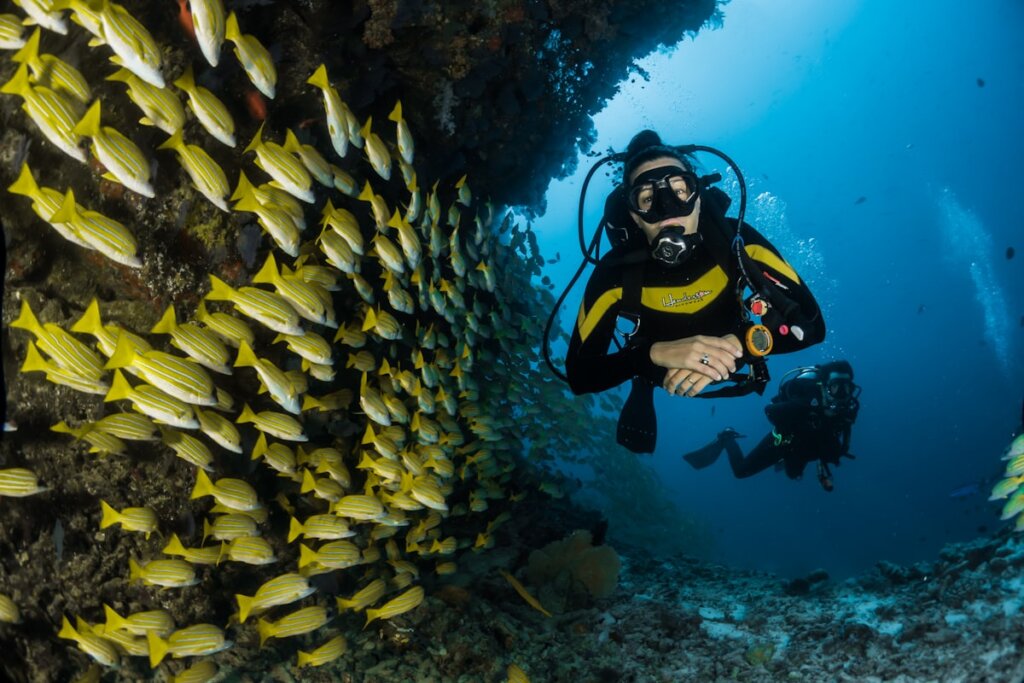
| Decompression sickness | Ascending too fast when diving | Follow dive tables; do safety stops; don’t fly within 18–24hrs | Medical emergency — 100% oxygen + immediate evacuation to nearest hyperbaric chamber (Puerto Princesa or Manila) |
What to Pack in Your Health Kit for El Nido
Many medications are available at El Nido pharmacies, but quality and stock vary. Bring a well-stocked personal kit to avoid scrambling for basics when you’re unwell.
| Item | Why Essential |
|---|---|
| DEET insect repellent (30–50%) | Dengue and malaria prevention — buy before arriving |
| Oral rehydration salts (ORS) | Diarrhoea, heat exhaustion; dehydration comes fast in tropics |
| Antidiarrhoeal (loperamide) | Traveller’s diarrhoea symptom control |
| Antibiotics (prescribed — ciprofloxacin or azithromycin) | Bacterial diarrhoea standby; get prescription from travel doctor |
| Antihistamine (cetirizine or loratadine) | Jellyfish stings, insect bites, allergic reactions |
| Paracetamol / ibuprofen | Pain, fever — widely available but bring your brand |
| Reef-safe SPF 50+ sunscreen | Hard to find in El Nido; critical for boat days |
| Antiseptic cream/spray (Betadine) | Cuts, coral abrasions, sea urchin wounds |
| Sterile wound dressings + plasters | First aid for cuts and abrasions |
| Hydrocortisone 1% cream | Fire coral burns, insect bite inflammation |
| Motion sickness tablets (cinnarizine) | Rough seas on Tour C/D boat trips |
| Malaria prophylaxis (if prescribed) | Start before arrival per your doctor’s instructions |
| Personal prescription medications (extra supply) | Bring more than you think you need — resupply impossible in El Nido |
Food & Water Safety
- Never drink tap water — use bottled water or the refill stations throughout El Nido town (₱5–10/litre). Use bottled water for brushing teeth if you’re sensitive.
- Ice in restaurants is generally made from filtered water at established restaurants — stick to known restaurants and avoid ice at street vendors if uncertain.
- Fresh seafood is generally safe at busy, reputable restaurants. Avoid seafood that looks or smells off, especially in heat.
- Fresh fruit is safe when you peel it yourself. Pre-cut fruit from market stalls carries more risk.
- Street food is generally fine at busy stalls with high turnover — avoid food that’s been sitting out in the heat.
- Hand hygiene — wash hands before eating; carry hand sanitiser for boat trips where washing facilities are absent.
Travel Insurance for El Nido — What You Need
This cannot be overstated: comprehensive travel insurance is essential for El Nido. The remote location means any serious medical emergency requires evacuation — which can cost USD $5,000–$50,000+ without insurance.
Minimum coverage requirements:
- Emergency medical expenses: minimum USD $100,000 (higher if doing adventure activities)
- Emergency medical evacuation: must be explicitly covered — this is the critical clause for El Nido
- Adventure activities cover: snorkeling, scuba diving (check diving depth limits), motorbike riding
- Trip cancellation and interruption
- Lost/stolen belongings
Important: If you plan to scuba dive, ensure your policy explicitly covers diving. Many standard policies exclude diving or cap it at recreational depths — check the fine print carefully.
Full guide: El Nido Travel Insurance Guide 2026
Emergency Contacts
| Service | Contact |
|---|---|
| Philippine emergency (police/fire/ambulance) | 911 |
| El Nido Municipal Health Center | Real Street, El Nido town |
| Palawan Adventist Hospital (Puerto Princesa) | +63 48 434 2794 |
| Philippine Coast Guard (maritime emergency) | +63 2 527 8481 |
| DAN Asia-Pacific (dive medical emergency) | +61 8 9442 9889 (24hr) |
| Your travel insurer’s emergency line | Save before travel — check your policy documents |
Frequently Asked Questions — El Nido Health & Medical
Is it safe to eat street food in El Nido?
Generally yes — El Nido’s local street food at busy, high-turnover stalls (banana cue, isaw, fresh fruit) is safe for most travellers. Apply standard food safety logic: look for busy stalls, freshly cooked food, and avoid items sitting out in heat. Your stomach may need 2–3 days to adjust to local bacteria regardless.
Is there a pharmacy in El Nido?
Yes — several pharmacies (botika) operate on Calle Rizal. They stock common medications including paracetamol, antibiotics, antihistamines, rehydration salts, antidiarrhoeals, and basic first aid supplies. Stock of specialty medications (specific brand-name drugs, specialty prescriptions) is limited — bring what you need from home.
What should I do if I have a medical emergency in El Nido?
For minor issues: go to the Municipal Health Center or a private clinic on Calle Rizal. For serious emergencies (suspected fracture, heart symptoms, severe allergic reaction, decompression sickness): call your travel insurer’s emergency line immediately — they coordinate evacuation. The van journey to Puerto Princesa takes 5–6 hours; air evacuation from Lio Airport is faster for critical cases.
Is the water safe to drink in El Nido?
No — tap water is not safe to drink. Use bottled water or the cheap refill stations throughout El Nido town (₱5–10/litre). These refill stations use filtered/purified water and are safe for drinking.
Do I need malaria medication for El Nido?
Discuss with your travel doctor. The risk in El Nido town itself is low, but Palawan province has documented malaria risk, particularly in rural and forested areas. Most travellers staying in El Nido town and doing standard island-hopping tours are considered low risk, but prophylaxis may still be recommended depending on your itinerary and the season. Your doctor will advise based on current outbreak data.