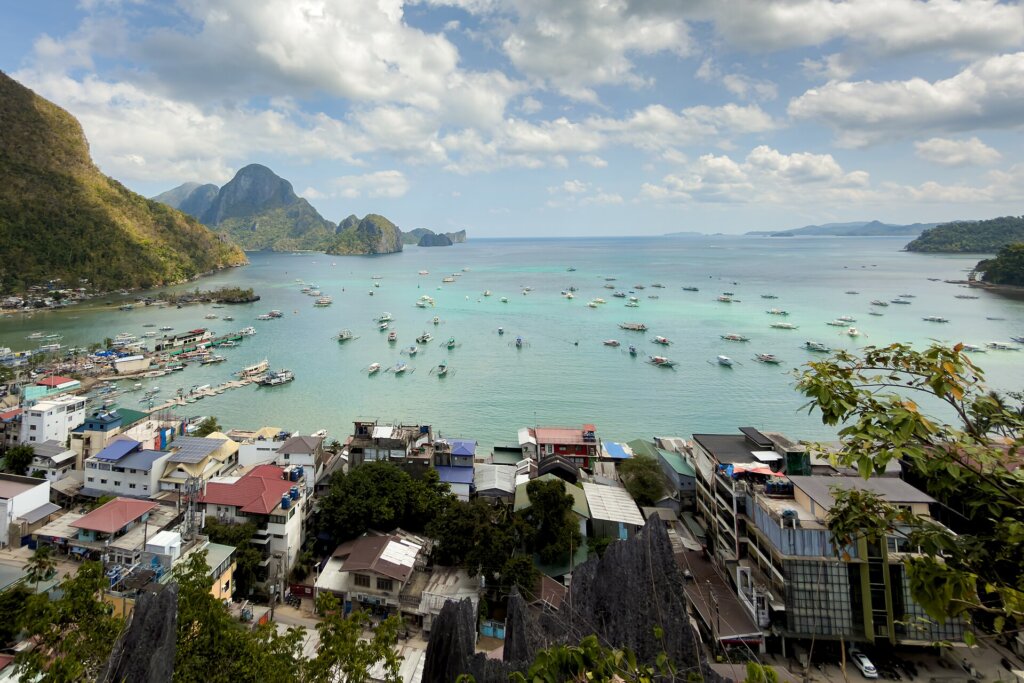
El Nido runs on UTC+8 year-round with no daylight saving, so Asia-Pacific teams overlap fully, Europe overlaps in your late afternoon (about 3 to 8 p.m.), and US teams are best handled with early calls from roughly 5 to 9 a.m.; book island tours on meeting-free days because lagoons have little signal.

El Nido is a dream workation base until your 9 a.m. stand-up turns out to be at 1 a.m. local time. Plenty of remote workers arrive with a good laptop, a SIM card and a café shortlist, then realize too late that the hardest part is not Wi-Fi but the clock. This guide focuses on time zones specifically for remote workers, freelancers and digital nomads who need to keep meetings with teams in North America, Europe, Australia or Asia while staying in El Nido.
Our unique angle: instead of another list of coworking cafés, we give you overlap windows by region, a sample daily schedule for each, and a plan for fitting island-hopping tours around your calls.
- El Nido’s Time Zone in One Paragraph
- Time Difference Table by Region
- Working With North America: The Early-Morning Strategy
- Working With Europe: The Easiest Long-Haul Overlap
- Working With Asia and Australia: Almost No Adjustment
- Sample Daily Schedules
- Fitting Island-Hopping Tours Around Calls
- Connectivity: Have a Backup Before You Book Calls
- Calendar Hygiene for Remote Workers Abroad
- Key Takeaways
- Frequently Asked Questions
- What time zone is El Nido in?
- What is the time difference between El Nido and New York?
- What is the time difference between El Nido and London?
- Can I work US hours from El Nido?
- Is there internet on El Nido island-hopping tours?
- Is El Nido good for digital nomads working with Asia?
- About the Author
- Explore our El Nido Rankings
El Nido’s Time Zone in One Paragraph
El Nido uses Philippine Standard Time (PST, which confusingly shares an abbreviation with US Pacific Standard Time). It is UTC+8 all year, and the Philippines does not observe daylight saving time. That means the gap to Europe and North America changes twice a year when those regions switch their clocks, while the gap to Singapore, Hong Kong, Taipei, Kuala Lumpur, Perth and mainland China stays at zero. For an authoritative reference, see the Philippine Standard Time entry and check live conversions on timeanddate.com.
To avoid confusion in calendar invites, write “Manila time” or “UTC+8” rather than “PST”.
Time Difference Table by Region
| Your team’s location | Difference from El Nido (northern winter) | Difference (northern summer) | Their 9 a.m. in El Nido |
|---|---|---|---|
| US Pacific (Los Angeles, Seattle) | El Nido 16 hours ahead | 15 hours ahead | 1:00 a.m. / 12:00 a.m. next day |
| US Eastern (New York, Toronto) | 13 hours ahead | 12 hours ahead | 10:00 p.m. / 9:00 p.m. |
| UK and Ireland (London) | 8 hours ahead | 7 hours ahead | 5:00 p.m. / 4:00 p.m. |
| Central Europe (Berlin, Paris) | 7 hours ahead | 6 hours ahead | 4:00 p.m. / 3:00 p.m. |
| India (Bengaluru) | 2.5 hours ahead | 2.5 hours ahead | 11:30 a.m. |
| Singapore, Hong Kong, Taipei | Same time | Same time | 9:00 a.m. |
| Tokyo, Seoul | 1 hour behind | 1 hour behind | 8:00 a.m. |
| Sydney, Melbourne | 3 hours behind (AEDT) | 2 hours behind (AEST) | 6:00 a.m. / 7:00 a.m. |
“Northern winter” here means roughly November to March, when the US and Europe are on standard time and Sydney is on daylight time. Switch dates differ between the US, Europe and Australia, so double-check during March, April, October and November.
Working With North America: The Early-Morning Strategy
US teams are the hardest to match. When it is 9 a.m. in New York, it is 9 or 10 p.m. in El Nido; when the US West Coast finishes its afternoon, El Nido is just waking up. Most remote workers choose one of two patterns:
- Early bird: take calls from about 5:00 to 9:00 a.m. El Nido time, which overlaps with the US afternoon of the previous day. Then you have the rest of the day free for tours, beaches and focused solo work.
- Night owl: work from about 9:00 p.m. to 1:00 a.m. to catch the US East Coast morning. This keeps your days fully free but can wreck your sleep and makes early boat departures (often around 8:00 to 9:00 a.m.) painful.
For most people the early-bird pattern is more sustainable. El Nido mornings are cool and quiet, sunrise is around 5:45 to 6:15 a.m. depending on the season, and you can finish calls in time for a late-morning swim.
Working With Europe: The Easiest Long-Haul Overlap
Europe is surprisingly manageable. The European morning lands in your late afternoon and evening. If your team starts at 9 a.m. in London, that is 4 or 5 p.m. in El Nido. You can spend the morning on tours or deep work, take calls from about 3:00 to 8:00 p.m., and still have dinner at a normal time.
The catch is sunset. Corong-Corong’s famous sunsets usually fall between about 5:30 and 6:15 p.m., right in the middle of the European morning. Block one or two sunset slots a week in your calendar and protect them.
Working With Asia and Australia: Almost No Adjustment
If your team is in Singapore, Hong Kong, Taipei, Kuala Lumpur, Shanghai or Perth, you are on the same clock. Tokyo and Seoul are only an hour ahead. Sydney and Melbourne are two or three hours ahead, so their afternoon wraps up around 2 or 3 p.m. El Nido time. This is the ideal setup for a longer workation: you can work a normal office day and simply swap island tours for weekends or take one tour day mid-week.
Teams in India are two and a half hours behind, so an Indian 10 a.m. meeting is 12:30 p.m. in El Nido, which fits comfortably around a morning outing.
Sample Daily Schedules
US-facing schedule
- 5:00 to 8:30 a.m.: calls and messages with the US afternoon
- 9:00 a.m. to 4:00 p.m.: tour, beach or deep work offline
- 5:30 p.m.: sunset
- Evening: light admin, early night
Europe-facing schedule
- 7:00 a.m. to 1:00 p.m.: tour or beach (morning tours return mid-afternoon, so choose shorter options on workdays)
- 2:00 to 3:00 p.m.: prep and focused work
- 3:00 to 8:00 p.m.: overlap with European morning
- Dinner after 8:00 p.m.
Asia-Pacific schedule
- 8:00 a.m. to 5:00 p.m.: normal office hours from a café or coworking space
- Sunset and dinner as usual
- Island-hopping tours on weekends
Fitting Island-Hopping Tours Around Calls
Standard El Nido group tours typically leave around 8:00 to 9:00 a.m. and return around 4:00 to 5:00 p.m. There is little or no reliable signal in many lagoons and on remote islands, so assume you are offline for the whole day. Practical tips:
- Book tours on days with no meetings, and set an out-of-office message even if you are only away for a day.
- Avoid tours the day before an important call if weather is uncertain; cancellations can push your tour to the next day.
- Consider half-day or private options on workdays so you control the return time.
- Carry a power bank and download documents before you leave in case you need to check something on the boat.
Connectivity: Have a Backup Before You Book Calls
El Nido’s internet has improved, with fiber in parts of town and satellite connections at many cafés and resorts, but brownouts and outages still happen. Always have a second connection ready: a local SIM with data from a different network than your accommodation, plus a café with a generator. Our guides to coworking and Starlink cafés, the best cafés for remote work and SIM and eSIM options explain your choices. If you are planning a full working week, our one-week workation plan pulls it all together.
For power interruptions, the regional grid operator in Palawan and your accommodation’s social media page usually announce scheduled outages; a quick check each evening can save a missed meeting. General official information on the Philippines is available at the Department of Tourism’s philippines.travel.
Calendar Hygiene for Remote Workers Abroad
- Set your laptop and phone to “Asia/Manila” so invites display correctly.
- Add a second time zone (your team’s) to your calendar view.
- Write times in UTC or with explicit city names in messages.
- Re-check recurring meetings in the weeks when the US, Europe or Australia change clocks; the Philippines does not.
- Share a simple “office hours” note with your team so they know when you are reachable.
With a clear overlap window, a backup connection and protected tour days, El Nido works well as a remote base for a week or a month.
Key Takeaways
- El Nido is UTC+8 all year; write “Manila time” or “UTC+8”, not “PST”, in invites.
- US teams: early-bird calls around 5 to 9 a.m. are more sustainable than late nights.
- Europe: overlap from about 3 to 8 p.m., which clashes with sunset, so protect a few sunset slots.
- Asia-Pacific teams need almost no adjustment; save tours for weekends.
- Island-hopping days are offline days; schedule them with no meetings and set an out-of-office.
- Always have a backup connection on a different network before important calls.
Frequently Asked Questions
What time zone is El Nido in?
El Nido uses Philippine Standard Time, UTC+8, all year. The Philippines does not observe daylight saving time.
What is the time difference between El Nido and New York?
El Nido is 13 hours ahead of New York in the northern winter and 12 hours ahead when the US is on daylight saving time.
What is the time difference between El Nido and London?
El Nido is 8 hours ahead of London in winter and 7 hours ahead during British Summer Time.
Can I work US hours from El Nido?
Yes, but you will need very early mornings or late nights. Many remote workers take calls from about 5 to 9 a.m. local time to overlap with the US afternoon.
Is there internet on El Nido island-hopping tours?
Signal is limited or absent in many lagoons and islands. Treat tour days as offline days.
Is El Nido good for digital nomads working with Asia?
Yes. Teams in Singapore, Hong Kong, Taipei and Perth are on the same time, so you can keep normal office hours.
About the Author
This guide was compiled by the El Nido Hotels Ranking editorial team, with input from local operators and ongoing on-the-ground updates.