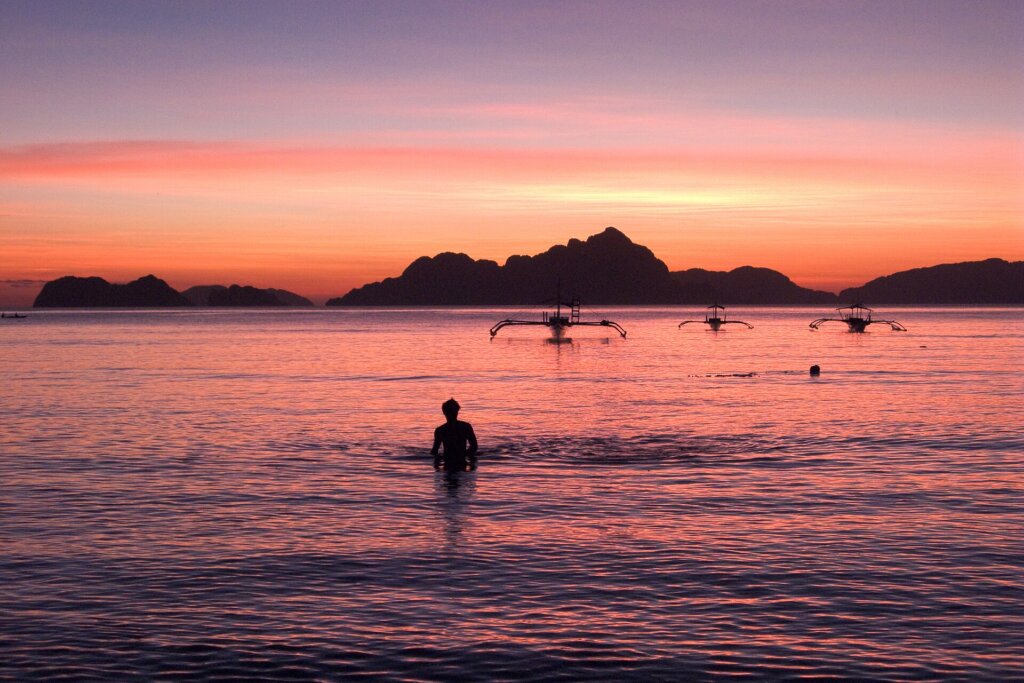

A seven-hour boat day near the equator is a different sunburn test from an afternoon on a beach towel. This guide focuses specifically on sunscreen timing for travelers on full-day island hopping tours in El Nido, where reflection off the water, repeated swimming and shade-free decks combine to wear protection down fast. You will get an hour-by-hour plan, quantities, product comparisons and tips for protecting the reefs you came to see.
Why Boat Days Burn Faster Than Beach Days
Water reflects a significant share of ultraviolet light back at you, so the sun reaches your skin from above and below. On a boat, you also tend to forget the places a sunscreen applicator skips: the tops of your feet, the back of your knees, your ears and the part in your hair. Add salt spray, sweat and repeated swimming, and a single morning application often wears thin by late morning.
El Nido sits at about eleven degrees north of the equator, which means the sun is high and strong for much of the year. Cloud cover can disguise it; ultraviolet rays pass through thin clouds easily, so an overcast sky is not permission to skip protection. Before you travel, check daily ultraviolet index forecasts on weather.com and plan your gear accordingly.
If you are building a full kit for the trip, our island hopping packing list shows where sun protection fits alongside everything else.
Who Is Most at Risk
Fair-skinned travelers, children, people taking photosensitizing medications and anyone arriving from a cloudy climate are the most vulnerable. A first-day burn can also set the tone for the rest of your trip, making later tours uncomfortable. Health bodies such as the World Health Organization publish ultraviolet index guidance that explains why a high reading calls for shade, clothing and sunscreen together rather than lotion alone.
Do not forget the eyes. Strong glare can cause discomfort and, over years, damage. Wear sunglasses with ultraviolet protection and a strap that keeps them from sinking if a wave catches you by surprise.
The Hour-by-Hour Reapplication Plan
The golden rule is to reapply at least every two hours, and immediately after swimming or heavy sweating, even if the label says water resistant. Water resistance claims typically last 40 or 80 minutes under test conditions, and real life is harsher. Use this table as a template and adjust to your own tour schedule.
| Time | Activity | Action | Amount Guide |
|---|---|---|---|
| 7:30 a.m. | Before leaving the hotel | Apply full-body sunscreen, let it absorb | About a shot glass for the body |
| 9:30 a.m. | First lagoon swim | Reapply to face, neck, shoulders after drying | Two finger lengths for the face |
| 12:00 p.m. | Beach lunch | Full reapplication, include ears and feet | Same as morning |
| 2:00 p.m. | Snorkel stop | Wear a rash guard, protect exposed skin | Light top-up |
| 3:30 p.m. | Return crossing | Final reapplication on face and hands | Small amount |
Set phone alarms for your reapplication times, and keep your sunscreen in a shaded, easy-to-reach pocket of your bag rather than at the bottom. If you carry a waterproof bag, the sizing advice in our 2026 packing list helps you keep the bottle within reach.
Adapting the Plan to Your Tour
Half-day tours need fewer reapplications but follow the same logic. Apply before departure, again at the first beach, and once more before the return crossing. If your boat day starts at sunrise or ends at sunset, shift the schedule so your heaviest applications cover the high-sun window between roughly ten in the morning and three in the afternoon. On cloudy or rainy days, keep the schedule anyway; the cost of one extra application is tiny compared with a burn.
Remember that sweat and seawater can wash away product on your forehead and nose first. Carry a small stick-style sunscreen for quick touch-ups on those areas, because it is cleaner to use with wet hands and easy to slip into a pocket.
How Much Sunscreen Is Enough?
Most people use roughly half as much as the amount tested for the stated SPF number. A practical measure is about two milligrams per square centimeter, which works out to approximately a shot glass for the whole body and two finger lengths for the face and neck. Apply in thin layers, wait a few minutes, and then add a second layer to the most exposed areas.
The Often-Missed Spots
- Tops of the ears and the back of the neck
- Tops of the feet and ankles
- Lips, using a balm with SPF
- Scalp and hair parting, or wear a hat
- Back of the knees and inner arms
A friend can help with your back before you board, because it is the area you cannot see and the one that suffers most when you float face-down while snorkeling.
Helping Children and Teens
Children rarely sit still to be coated, so apply sunscreen before they get dressed, then add a rash guard and hat. Give them a stick for their own touch-ups and make reapplication a game tied to boat events: every time the engine stops, everyone applies. Kids who help with the routine learn it, and you spend less time chasing them down the deck with a bottle.
Mineral vs Chemical Sunscreen for Reef Swimmers
Mineral formulas use zinc oxide or titanium dioxide and sit on the skin surface, while chemical formulas absorb ultraviolet light through organic compounds. Both can work when used correctly. For tropical marine environments, many destinations encourage mineral options with non-nano particles and fewer additives, and some regions regulate specific ingredients. Rules change, so ask your hotel or tour operator about the current local expectations.
Environmental guidance for Palawan protected areas comes from agencies such as the Department of Environment and Natural Resources, and tour guides often remind visitors to avoid heavy lotions before snorkeling. The most effective low-impact approach is also the simplest: cover up with long sleeves or a rash guard, then use sunscreen on exposed skin only.
Quick Comparison
Mineral products may leave a white cast and need more rubbing, but they protect immediately. Chemical products blend in more easily but need around fifteen to twenty minutes to become effective, so apply them before you leave the hotel. Whichever you pick, buy it before your trip, because imported brands in El Nido can be expensive and the selection is limited.
Whichever type you choose, store the bottle out of direct heat. Sunscreen left on a sunny deck can degrade, separate or lose strength. Check the expiry date, and replace any bottle that smells odd or has changed texture.
Clothing and Gear That Reduce Reapplication
Sunscreen is just one layer of protection. A long-sleeve rash guard with ultraviolet protection factor rating, leggings or board shorts, a wide-brim hat with a chin strap, and polarized sunglasses cut your exposure dramatically. Cover the areas you cannot easily reapply to, such as your back and shoulders, and save lotion for the face, neck, hands and feet.
On long routes like those compared in our Tour C vs Tour D guide, shade is limited at many stops, so consider bringing a lightweight sarong or a packable umbrella. For wildlife-focused days, such as the ones described in our dolphin spotting guide, you may spend long stretches standing on deck, which makes a hat and sleeves even more valuable.
Packing a Sun-Care Mini Kit
Keep everything in one small pouch: a sunscreen bottle sized for the day, a stick for the face, SPF lip balm, a small bottle of aloe gel, a microfiber towel and a spare hat clip. Put the pouch in the top of your bag so it is the first thing you reach for, not the last. Sharing the kit with your group is fine, but label bottles so they do not wander off at the beach. A tidy kit means people actually use it, and a used kit is the whole point of a plan.
Treating Sunburn If It Happens Anyway
If you do burn, get out of the sun, cool the skin with a cool (not icy) shower or compress, and drink extra water. Apply a fragrance-free moisturizer or aloe gel, and avoid petroleum-based products on fresh burns because they can trap heat. Take an over-the-counter pain reliever if suitable for you, and rest your skin from direct sun for a day or two.
Seek medical advice for blistering over large areas, fever, chills, severe headache or confusion, which can signal heat illness. In remote parts of a tour, tell the guide immediately so you can be moved to shade. If the burn happens alongside scrapes from rocks or coral, see our coral cuts first aid guide for wound care, and remember that broken or blistered skin needs extra protection from further sun exposure.
Finally, after any burn, be conservative on the days that follow. Plan a shaded activity such as a market visit or a cafe afternoon, and return to the water only with full coverage and a lower-exposure schedule. Your skin heals faster when it is not asked to repeat the same stress immediately.
Frequently Asked Questions
How often should I reapply sunscreen on an El Nido boat tour?
At least every two hours, and right after swimming, toweling off or heavy sweating.
Does SPF 50 mean I can skip reapplication?
No. Higher SPF improves protection slightly, but it still wears off with time, water and sweat.
Is sunscreen allowed in the lagoons?
Rules and guidance vary, so follow your guide’s advice. Wearing a rash guard reduces how much lotion enters the water.
Can I buy sunscreen in El Nido town?
Yes, but selection is limited and prices are often higher. Bring your preferred brand from home.
What SPF is best for tropical beaches?
Choose a broad-spectrum SPF 30 to 50 and focus on correct application and reapplication more than on the number.
Final Thoughts
Good sun protection on a boat day comes down to timing, quantity and coverage. Apply early, reapply every two hours, cover the spots people forget, and wear a rash guard to cut your lotion use. With a simple schedule on your phone, you can enjoy every lagoon without paying for it later.