
El Nido has no certified halal restaurant, and pork is present in a large share of Filipino cooking. That combination puts off some Muslim travellers before they even look at flights — which is a shame, because El Nido is one of the easier destinations in the Philippines to eat comfortably in. This guide focuses on practical halal-conscious eating specifically for Muslim visitors on a short island-hopping trip, where most meals are boat lunches, seafood and breakfast buffets rather than restaurant dinners.
- The Honest Starting Point: No Certification Here
- What Is Naturally Safe on an El Nido Menu
- Vegetarian Menus as a Practical Workaround
- Boat Tour Lunches: The Part You Have to Plan
- Prayer, Facilities and Practicalities
- Modesty, Beaches and Local Norms
- Where to Stock Up
- A Sample Week of Halal-Conscious Eating
- Useful Filipino Phrases When Ordering
- Frequently Asked Questions
The Honest Starting Point: No Certification Here
Formal halal certification in the Philippines is administered through bodies recognised by the National Commission on Muslim Filipinos, and certified establishments cluster in Mindanao, Metro Manila and a handful of tourist centres. El Nido is not among them. What El Nido has instead is a large number of small, owner-run kitchens where you can ask direct questions and get direct answers, plus a seafood-dominant local cuisine that avoids the main problem ingredient by default.
Practically, most Muslim travellers here work on a halal-conscious rather than halal-certified basis: choosing seafood and vegetable dishes, avoiding pork and pork-derived seasonings, skipping alcohol in cooking, and accepting that shared fryers and grills exist. If your practice requires certification, El Nido will not meet it, and it is better to know that before booking than to discover it on arrival.
What Is Naturally Safe on an El Nido Menu
Bacuit Bay’s food culture is built on fish. That works strongly in your favour.
| Dish | What it is | Halal-conscious status | Ask about |
|---|---|---|---|
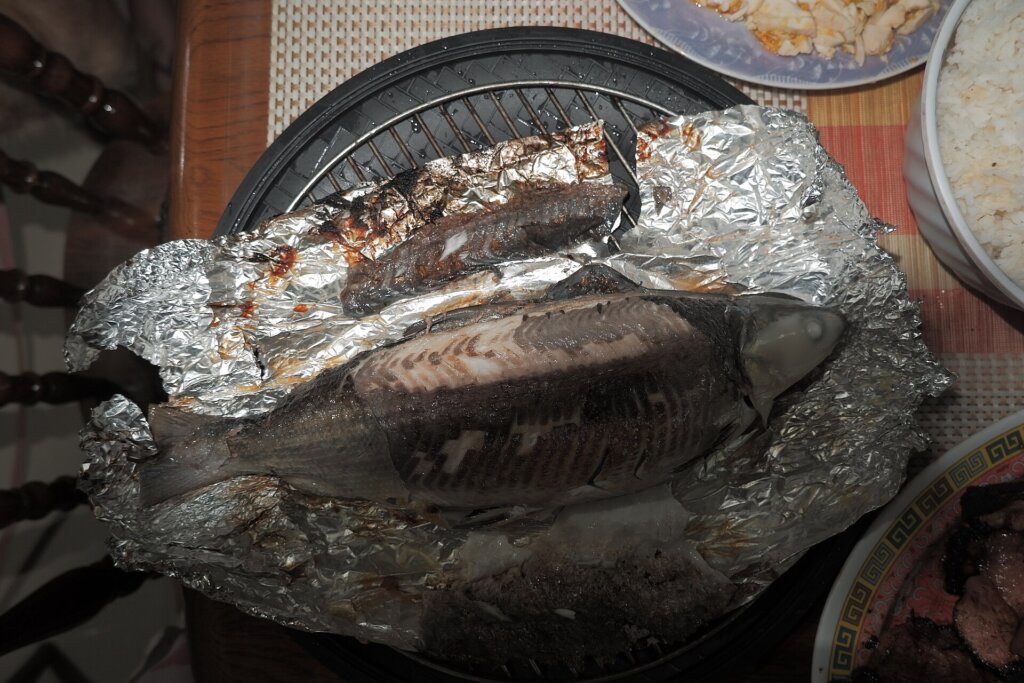
| Inihaw na isda | Grilled whole fish | Generally fine | Shared grill with pork |
| Kinilaw | Raw fish cured in vinegar and calamansi | Generally fine | Occasional use of pork broth |
| Sinigang na hipon | Sour tamarind shrimp soup | Generally fine | Pork-based stock |
| Ginataang gulay | Vegetables in coconut milk | Generally fine | Bagoong or pork bits added |
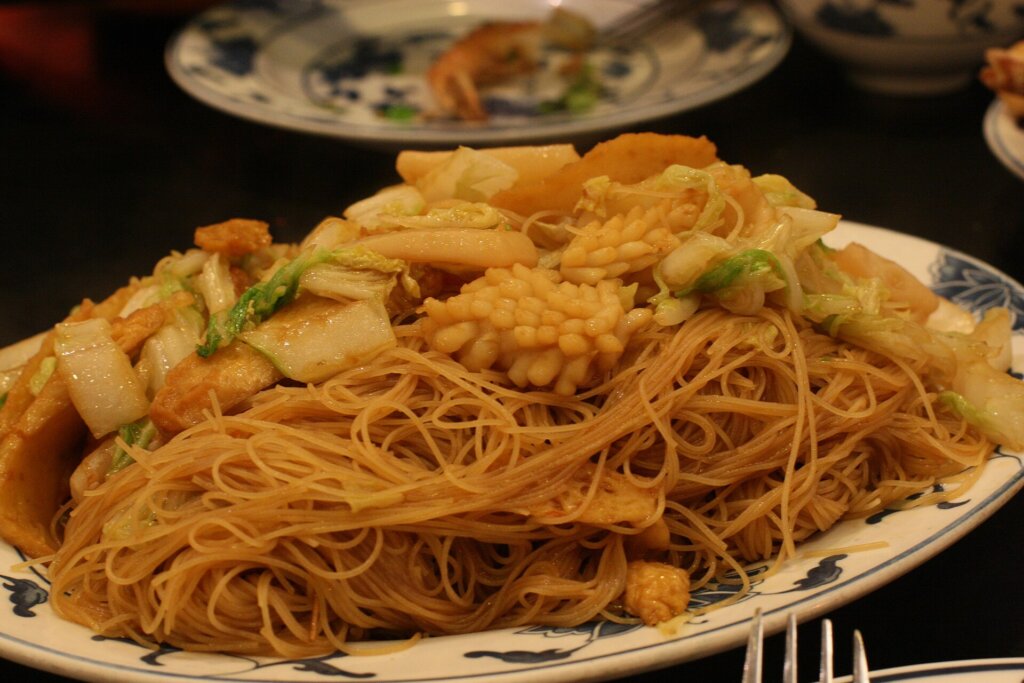
| Pancit bihon | Stir-fried rice noodles | Check | Almost always contains pork |
| Adobo | Braised meat in vinegar and soy | Check | Chicken adobo fine; pork version common |
| Lechon / sisig / longganisa | Roast pork, pork cheek, sausage | Avoid | – |
The seafood-first approach also happens to be how most visitors eat here anyway. Our guides to kinilaw and grilled seafood in El Nido and the best restaurants in El Nido cover the places where fish is the main event rather than a side option.
Vegetarian Menus as a Practical Workaround
El Nido has an unusually strong plant-based scene for a town of its size, driven by long-stay European and Korean visitors. For Muslim travellers this is the most reliable shortcut available: a fully vegetarian kitchen removes the pork question entirely, and usually the shared-fryer question along with it.
These kitchens also tend to be the most used to dietary questions, which makes conversations easier. Our El Nido vegan and vegetarian restaurant guide lists the established options. Combining vegetarian kitchens for dinners with grilled-seafood places for lunches covers a full week without repetition.
Boat Tour Lunches: The Part You Have to Plan
Every island-hopping tour in El Nido includes a beach lunch cooked by the crew, and this is where the halal-conscious traveller has the least control. The standard spread is grilled fish, grilled chicken, rice, seaweed salad, eggplant, and fresh fruit — mostly fine. The complications are that pork liempo appears on some operators’ menus, everything is cooked on one grill, and the serving is communal.
Handle it at booking, not on the beach. When you reserve a tour, tell the operator you do not eat pork and ask them to confirm in writing. Most El Nido operators accommodate this easily because they already handle vegetarian and shellfish-allergy requests daily. If you want stricter separation, ask whether the crew can grill your fish first, before any pork touches the grate — a reasonable request that costs them nothing. Our Tour A guide explains how the day is structured and when lunch is served, which helps you judge how long you will be away from other food options.
For wider country-level context on Muslim travel in the Philippines, the Philippine Department of Tourism publishes guidance on Muslim-friendly accreditation, though coverage in Palawan remains limited outside Puerto Princesa.
Prayer, Facilities and Practicalities
El Nido town does not have a mosque. The nearest established Muslim communities and prayer facilities are in Puerto Princesa, roughly five to six hours away by van, and in Roxas on the same highway. In practice, visitors pray in their rooms, and this works fine — but a few details are worth planning.
- Qibla direction. From El Nido, Mecca lies roughly west-northwest. Offline apps handle this; do not rely on hotel wifi.
- Prayer times shift little. Palawan sits near the equator, so daylight hours stay fairly stable year-round — useful when planning around boat departures.
- Tour days are long. Boats leave around 09:00 and return near sunset. Praying on a beach or on deck is normal and unremarkable here; nobody will comment.
- Water for wudu. Boats carry fresh water for rinsing. Bottled water is universally available on land.
- Ramadan travel. Fasting through a full island-hopping day in Palawan heat is demanding. If your trip falls in Ramadan, consider inland and beach days rather than boat days, and book accommodation with a kettle.
Modesty, Beaches and Local Norms
The Philippines is a conservative country in many respects, and El Nido’s beaches are relaxed but not revealing by international resort standards. Swimming in a rash guard, leggings or a burkini attracts no attention at all — plenty of Filipina visitors swim fully covered for sun protection, so covered swimwear reads as ordinary rather than unusual.
Two practical notes. Reef-safe sun protection matters in Bacuit Bay, which sits inside a managed protected seascape under the Philippine Department of Environment and Natural Resources; long sleeves do the same job as sunscreen with less impact. And quick-drying fabric is worth prioritising, because covered swimwear in high humidity takes a long time to dry — relevant if your room has only a fan, as our comparison of aircon versus fan rooms in El Nido explains.
Where to Stock Up
El Nido’s markets and minimarts carry enough to cover breakfasts and snacks independently: bread, eggs, instant noodles, canned tuna and sardines, fresh fruit, dates in some shops, and a reasonable range of imported goods. Labels on Philippine packaged food list ingredients in English, which makes checking for pork derivatives and gelatin straightforward. Our El Nido markets guide covers opening hours and what each market does best.
A useful habit: buy your boat-day snacks on land the evening before. Tour lunches are fixed, island kiosks are limited, and having your own dates, nuts and fruit removes any pressure to eat something you are unsure about while stuck on a beach four islands from town.
A Sample Week of Halal-Conscious Eating
The easiest way to see that this works is to lay out an ordinary El Nido week. Nothing below requires a special kitchen or an awkward conversation.
| Day | Breakfast | Lunch | Dinner |
|---|---|---|---|
| Arrival | Hotel eggs, fruit, bread | Minimart supplies on the road | Grilled fish at a beachfront grill |
| Tour A | Hotel eggs and rice | Boat lunch, pork-free confirmed | Vegetarian kitchen in town |
| Rest day | Cafe, fruit and coffee | Kinilaw and rice | Indian or Middle Eastern restaurant |
| Tour C | Bread and fruit from the market | Boat lunch, pork-free confirmed | Seafood barbecue, chicken or fish |
| Nacpan day | Hotel breakfast | Beach shack grilled fish | Vegetarian kitchen |
| Departure | Own supplies | Airport or van-stop snacks | – |
The only two meals in that week requiring any advance arrangement are the boat lunches, and both are handled by a single message when you book the tours.
Useful Filipino Phrases When Ordering
English is widely spoken across El Nido, so these are a courtesy rather than a necessity — but they remove ambiguity, particularly at small beach kiosks and market stalls where the cook may not be the person taking your order.
- Walang baboy, please — no pork, please. The single most useful phrase here.
- May baboy ba ito? — does this contain pork?
- Walang alak — no alcohol.
- Isda lang — fish only.
- Gulay lang — vegetables only.
- Anong sabaw? — what stock is this? Useful for sinigang and noodle soups, where pork broth is the common hidden ingredient.
One cultural note worth carrying: Filipino hospitality means staff will often try to say yes. Asking “does this have pork?” reliably gets a more accurate answer than asking “this is pork-free, right?” — phrase questions openly rather than as something to be agreed with, and you will get better information.
Frequently Asked Questions
Is there any certified halal restaurant in El Nido?
No. There is no formally certified halal establishment in El Nido town. Most Muslim visitors eat halal-consciously by choosing seafood and vegetarian kitchens and asking about pork-based stocks and shared grills.
Can island-hopping tours provide pork-free lunches?
Yes, and most operators do this routinely. Request it when you book rather than on the day, and ask for written confirmation. You can also ask the crew to grill your fish before any pork goes on.
Is there a mosque in El Nido?
No. The nearest established prayer facilities are in Puerto Princesa, about five to six hours away by van. Visitors pray in their accommodation or on the beach, which is entirely unremarkable locally.
Is alcohol used in Filipino cooking here?
Rarely in traditional local dishes, which rely on vinegar, soy sauce, calamansi and coconut milk. It appears more often in Western and fusion restaurants, so ask at those.
Is a burkini acceptable on El Nido beaches?
Completely. Covered swimwear is common among Filipino visitors for sun protection, and nobody treats it as unusual.
What should I bring that is hard to find locally?
Dates outside Ramadan, specific halal-certified snacks, and any medication in gelatin capsules you would rather substitute. Everything else — fruit, nuts, canned fish, bread, eggs — is easy to buy in town.