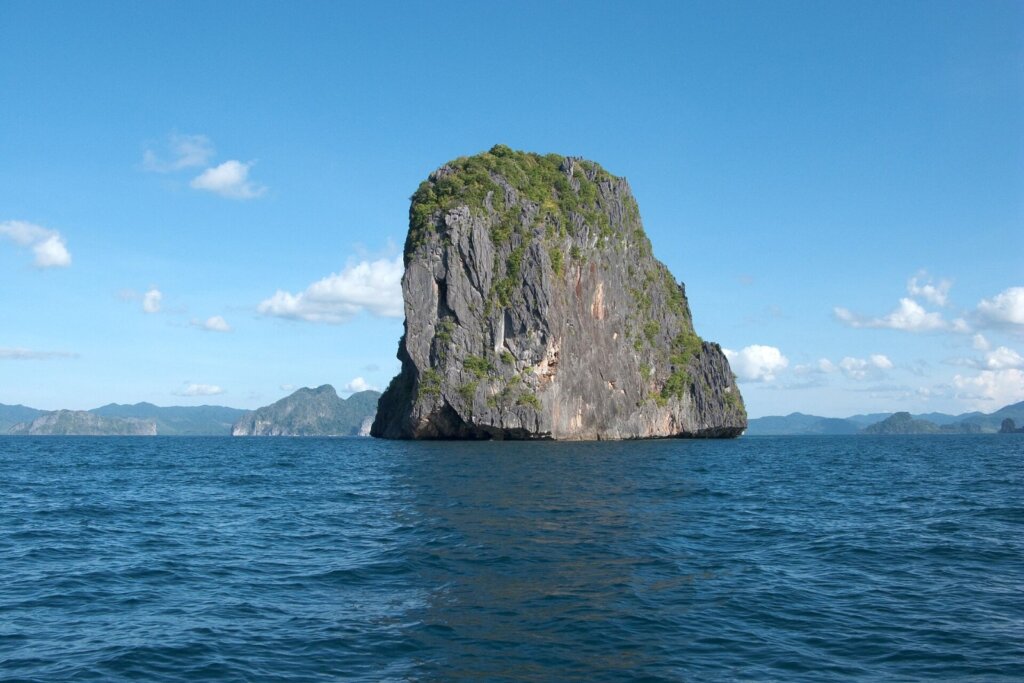

Tour D is El Nido’s quiet tour. No crowded lagoon queues, no famous sandbar — just a handful of beaches around Cadlao Island and the coastline near town. Two of those stops, Pasandigan Beach and Natnat Beach, regularly confuse travelers because they appear side by side in tour descriptions with almost no detail.
This guide focuses on Pasandigan vs Natnat Beach specifically for Tour D travelers and private-charter planners who want to know how the two stops differ, where to spend more time, and which one suits swimmers, snorkelers, families and photographers. For the full route, prices and inclusions, see our complete Tour D guide.
Stops on every El Nido tour can change with weather and operator, and Tour D is the most flexible of all the lettered tours. Treat the details below as typical, not guaranteed, and confirm the day’s plan with your boat crew.
Where Pasandigan and Natnat Fit on Tour D
Tour D usually circles the Cadlao Island area just offshore from El Nido town. A typical itinerary includes Cadlao Lagoon, Paradise Beach, Pasandigan Beach, Natnat Beach and Bukal Beach, with lunch at one of the beach stops. Because travel distances are short, Tour D spends more of its time on sand and less on the boat than Tours A, B or C.
Natnat Beach sits along the shore of Cadlao Island, the large, forested island you can see from El Nido town. Pasandigan is a smaller, more enclosed beach on the same general route. Both are reached by boat, both have very limited or no facilities, and both look their best in the clearer, calmer months of the northeast monsoon. Our guide to Cadlao Island and Cadlao Lagoon covers the island itself in more depth.
Pasandigan vs Natnat at a Glance
Here is the side-by-side comparison most travelers want. Conditions vary with tide and season, so use it as a general guide.
| Feature | Pasandigan Beach | Natnat Beach |
|---|---|---|
| Size and feel | Smaller, cove-like, more enclosed | Longer, more open stretch of sand |
| Best activity | Short swims, snorkeling near rocks, quiet photos | Lounging, walking, swimming, group lunch |
| Shade | Limited; cliffs and trees give some cover at certain hours | Some tree shade at the back of the beach |
| Crowd feel | Feels busy quickly when two boats arrive | Spreads crowds out better |
| Families with small kids | Good if calm; watch for rocks | Usually easier — more room to play |
| Photography | Framed cove shots with limestone | Wide beach shots with Cadlao’s forest behind |
| Facilities | Very limited or none | Very limited or none |
The short version: Pasandigan is the intimate stop, Natnat is the spacious one. If your group wants to spread out and relax, push for more time at Natnat. If you want a quick, pretty swim and a cove photo, Pasandigan delivers.
Pasandigan Beach: The Cove Stop
Pasandigan’s appeal is its sense of enclosure. Limestone and greenery hem in a small strip of sand, so the water often feels calm and sheltered on good days. It is a natural spot for a short swim between longer stops.
- Snorkeling: the rocky edges are where you are most likely to see fish. Visibility depends on recent weather. Bring your own mask if you care about fit — see our rent or bring snorkel gear comparison.
- Footwear: the entry can include rocks and broken coral. Water shoes are a good idea.
- Timing: because it is small, Pasandigan feels best when your boat has it to itself. Ask your captain whether visiting it first or last avoids the overlap with other boats.
Pasandigan is not the place for a long picnic or a game of beach volleyball. Think of it as a twenty- to forty-minute swim stop.
Natnat Beach: The Room-to-Breathe Stop
Natnat offers more of what people picture when they think of a Palawan island beach: a long ribbon of pale sand, clear shallow water and the dark green slopes of Cadlao Island rising behind. It is often the stop where crews set up lunch, although that varies by operator.
- Swimming: the gentle, sandy entry makes Natnat comfortable for less confident swimmers and children, as long as conditions are calm.
- Walking: you can stroll along the shore and find your own patch of sand even when other boats are beached.
- Shade: trees at the back of the beach provide some relief at midday. Still, bring reef-safe sunscreen and a hat.
- Views: on clear days you get wide views back toward the mainland and neighboring islands.
If your group is mixed — some snorkelers, some readers, some nappers — Natnat keeps everyone happy.
Which One Should You Prioritize?
On a regular group Tour D you will usually visit both, so “prioritize” really means where you want to linger. On a private charter you can plan your time explicitly. Our recommendations:
- Families with young children: spend extra time at Natnat. More space, sandier entry.
- Snorkelers: stretch your time at Pasandigan’s rocky edges, and ask the crew about the best snorkel spot on the day.
- Photographers: visit Pasandigan in softer morning light for cove shots, and Natnat in the afternoon when the light warms the sand.
- Couples looking for quiet: Pasandigan when it is empty is magical; Natnat is the safer bet for privacy when boats are around.
- Travelers comparing tours: if neither beach excites you, read Tour C vs Tour D to see whether a more dramatic route suits you better.
Also consider combining a Tour D beach day with our roundup of El Nido’s best beaches to see how these two stack up against mainland options like Nacpan.
Group Tour vs Private Charter for These Two Beaches
On a shared Tour D, your crew balances the whole boat’s interests, so time at each stop is fixed loosely around the group and around lunch. That usually works fine, but it means you might get only a short window at Pasandigan if another boat is already there, or a long lunch at Natnat when you would rather be snorkeling.
A private charter changes the equation. You can ask the captain to reach Pasandigan before the group boats, swim and photograph the cove while it is empty, then move to Natnat for a long, unhurried lunch in the shade. Families often find this rhythm far more relaxed, and photographers get both morning and afternoon light. Private boats cost more, so they make the most sense for groups of four or more splitting the price.
Whichever you choose, tell your crew early what matters most to you. Tour D crews are usually flexible, and a simple request at the start of the day — “more time to snorkel” or “longer at the big beach, please” — often shapes the schedule more than travelers expect.
What to Pack for Both Stops
Because neither beach has reliable facilities, pack as if you will be self-sufficient: at least a liter of water per person, reef-safe sunscreen, a hat, water shoes for Pasandigan’s rocks, a mask and snorkel, a light cover-up for shade-less stretches, and a dry bag for phones and cash. Take all rubbish back to the boat.
Weather, Season and Safety Notes
Tour D’s sheltered route means it sometimes operates when other tours are cancelled, but it is never immune to weather. Coast guard advisories decide whether boats sail, and forecasts from PAGASA, the national weather agency, drive those decisions.
- Northeast monsoon (roughly November to April): usually the clearest water and calmest conditions around Cadlao, ideal for both beaches.
- Southwest monsoon (roughly June to October): more rain and swell; water clarity drops after storms and some stops may be shortened.
- Currents: even calm-looking water can have currents off the points. Stay within sight of your boat crew.
- Protected area rules: both beaches fall within the El Nido-Taytay Managed Resource Protected Area. Do not take shells, sand or coral, and do not stand on reef. The Department of Environment and Natural Resources oversees the area, and background on the municipality is on Wikipedia’s El Nido page.
Bring water, a dry bag, sunscreen, and cash for small purchases in case a vendor is present, though you should not count on it.
Bottom Line
Pasandigan and Natnat are not rivals so much as two halves of the Tour D experience. Pasandigan gives you a small, sheltered cove for a quick swim and a striking photo. Natnat gives you space, softer entry and a lazy-afternoon feel. If you can only stretch one stop, choose Natnat for groups and families, and Pasandigan for snorkelers and quiet-seeking couples. Either way, Tour D’s short boat transfers mean you spend your day in the water rather than on the boat — which is exactly why many repeat visitors call it their favorite El Nido tour.
Frequently Asked Questions
Are Pasandigan Beach and Natnat Beach on the same tour?
Yes. Both are typical stops on El Nido Tour D, which circles the Cadlao Island area. Exact stops can change with weather and operator.
Which is better for kids, Pasandigan or Natnat?
Natnat is usually easier for young children because it is longer, more open and has a sandier entry. Pasandigan is smaller and can have rocks at the water’s edge.
Which beach has better snorkeling?
Pasandigan’s rocky edges are generally the better bet for spotting fish, but visibility depends on recent weather. Ask your crew where snorkeling is best on the day.
Is there food or a restroom at either beach?
Facilities are very limited or absent at both. Lunch is normally provided by your tour crew, so bring water, sunscreen and a dry bag.
Can I visit Pasandigan and Natnat on a private boat?
Yes. A private charter following the Tour D route lets you choose how long to stay at each beach, which is ideal for families or photographers.
When is the best time of year to visit these beaches?
The northeast monsoon, roughly November to April, usually brings the calmest water and best clarity around Cadlao Island.