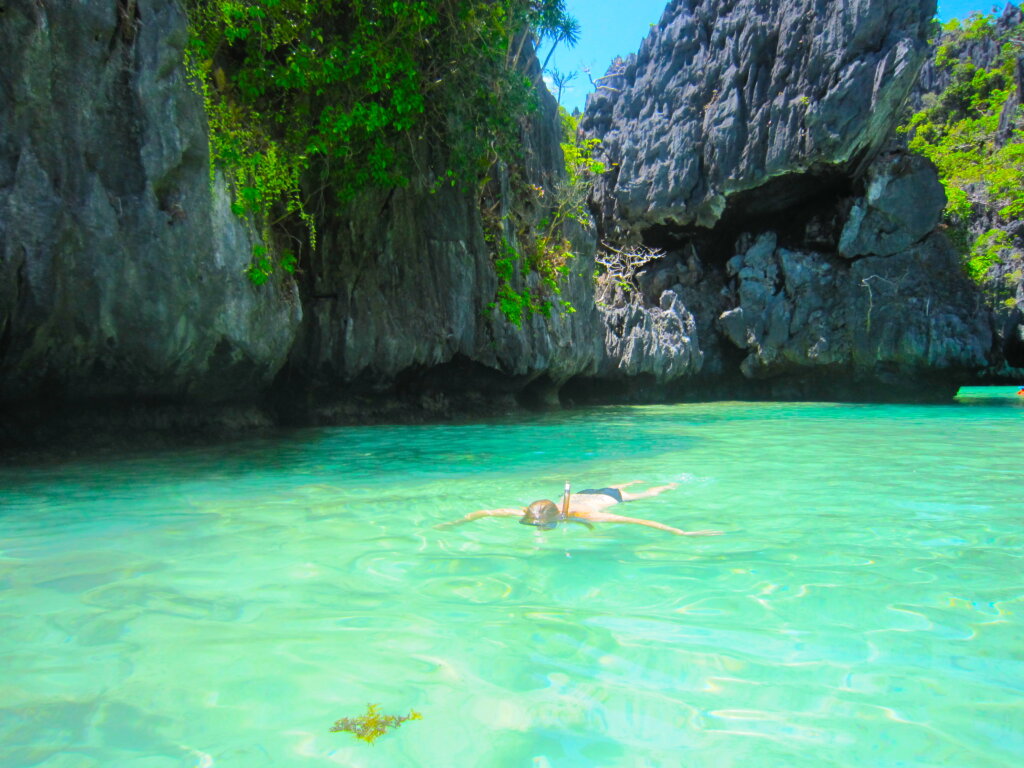

Pinagbuyutan Island is the postcard image of El Nido: a solitary limestone tower crowned with coconut palms, rising straight out of Bacuit Bay’s clear water. Often glimpsed on the horizon from town, this striking islet is a favorite stop on island-hopping tours and one of the most photographed spots in all of Palawan. This guide covers where Pinagbuyutan is, how to visit, what to do once you arrive, and the best time to catch it at its finest.
What makes Pinagbuyutan special?
Pinagbuyutan stands apart from the clustered islands of Bacuit Bay, giving it a lone-sentinel silhouette that photographers love. Sheer karst cliffs form its core, softened at the top by a fringe of palm trees, while a small white-sand beach at its base offers a landing spot and a place to swim. The contrast of grey rock, green palms, and turquoise sea is quintessential El Nido.
Because it sits toward the outer bay, the water around Pinagbuyutan is often exceptionally clear, and the island makes a stunning foreground for sunset and sunrise shots alike.
How to visit Pinagbuyutan Island
Pinagbuyutan appears on several island-hopping itineraries, most commonly Tour A and Tour B, and sometimes on custom private routes. Group joiner boats leave El Nido town each morning, and the island is usually a beach-and-swim stop rather than a snorkeling-focused one. To learn how the standard routes differ, see our comparison of El Nido Tour A versus Tour C.
For photographers who want golden-hour light on the island, a private charter is the way to go, since group tours run on a fixed midday schedule. Our guide to island hopping versus a private boat charter explains how a charter unlocks sunrise and sunset visits.
The beach at the base
A narrow strip of white sand wraps part of the island, giving visitors a place to land, wade, and relax beneath the palms. The swimming is easy in the shallows, and the towering cliff behind you makes for dramatic photos. Shade is limited, so the palm fringe is prime real estate on sunny days.
Pinagbuyutan compared to other iconic stops
El Nido has several signature landscapes. The table sets Pinagbuyutan alongside other must-see sites so you can balance your itinerary.
| Site | Signature feature | Main activity | Typical tour |
|---|---|---|---|
| Pinagbuyutan | Lone palm-topped tower | Beach, photos, swim | Tour A / B |
| Big Lagoon | Cathedral-like cliffs | Kayaking | Tour A |
| Small Lagoon | Enclosed emerald pool | Kayak, swim | Tour A |
| Snake Island | Curving sandbar | Viewpoint, swim | Tour B |
If lagoons are your priority, weigh up Big Lagoon versus Small Lagoon before booking. Pinagbuyutan, by contrast, is about the iconic island profile and a relaxed beach stop rather than paddling into enclosed waters.
Best time to visit
The dry season from December to May brings the calm, clear conditions that make Pinagbuyutan shine, with flat seas and vivid water color. Midday tours deliver the brightest turquoise, but early morning offers softer light and fewer boats. During the rainy season, June to October, the island is still beautiful between showers, though rougher water can affect landings. Pinagbuyutan is also a celebrated sunset subject; for more golden-hour ideas, see the best sunset spots in El Nido.
Practical tips
Bring reef-safe sunscreen, water, and a hat, since shade is scarce on the small beach. A waterproof phone case or floating strap protects your camera during the wade ashore. If photography is your goal, position the palm-topped peak against the open sea for the classic composition, and shoot early before the light hardens. Respect the island by taking all trash with you and avoiding contact with any coral near the shallows. Snorkelers should note that Pinagbuyutan is more of a beach stop than a reef site; for the best underwater spots, check diving versus snorkeling in El Nido.
FAQ
Which tour goes to Pinagbuyutan Island?
Pinagbuyutan is most often included on El Nido Tour A and Tour B, and can be added to private charters. It is usually a beach and swim stop.
Can you swim at Pinagbuyutan Island?
Yes. A small white-sand beach at the base has shallow, calm water that is easy for swimming and wading beneath the palm-topped cliffs.
Why is Pinagbuyutan so famous?
Its lone, palm-crowned limestone tower rising from clear water is one of El Nido’s most iconic and photographed landscapes, visible even from town.
What is the best time to photograph Pinagbuyutan?
Early morning offers soft light and calm water, while sunset silhouettes the island beautifully. The dry season provides the clearest conditions.
The geology behind El Nido’s karst islands
Pinagbuyutan’s dramatic profile is the product of millions of years of geology. The limestone that forms El Nido’s islands began as ancient coral reefs and marine sediment, compacted over eons and later uplifted by tectonic forces. Rain and seawater, slightly acidic, then slowly dissolved the rock, carving the sheer cliffs, caves, and jagged ridgelines that define the Bacuit archipelago today. Pinagbuyutan is a classic example of a karst tower, an isolated pinnacle left standing as the surrounding stone eroded away. The palms on top took root in pockets of soil that gathered in the weathered summit. Understanding this process adds a layer of appreciation: the island you are photographing is a snapshot of an ongoing, incredibly slow act of natural sculpture.
Building a full day around Pinagbuyutan
Since Pinagbuyutan is a stop rather than a destination, it works best as one highlight within a well-rounded island-hopping day. On Tour A it pairs with the famous lagoons and Seven Commandos Beach; on Tour B it joins Snake Island and Cudugnon Cave. Either way, treat Pinagbuyutan as your scenic and swimming break, and bring a proper camera or a well-charged phone to capture its silhouette from multiple angles as your boat approaches and departs. The changing perspective as you circle the island is part of the magic. If you have the flexibility of a private charter, ask to slow down here for photos, because rushing past this icon is the one regret many visitors mention afterward.
What to bring and know before you go
A visit to Pinagbuyutan calls for the standard island-hopping kit plus a few extras. Pack reef-safe sunscreen, plenty of water, and a hat, because shade is limited on the small beach. A dry bag keeps your phone and cash safe during the wade ashore, and water shoes protect against rocky patches at the shoreline. Since the island sits toward the open bay, conditions can change with the wind, so listen to your boat crew about swimming limits on rougher days. Booking-wise, confirm with your operator that Pinagbuyutan is on your chosen route, as itineraries occasionally vary. With clear water, an unforgettable silhouette, and an easy beach, it consistently ranks among the most memorable single stops of any El Nido island-hopping day.