TL;DR: Advanced Open Water in El Nido takes about two days and five adventure dives (Deep and Navigation are compulsory), lets you dive to 30 m, and typically costs around PHP 18,000 to 26,000 in 2026; book the Deep dive for a calm morning between November and June.
This guide focuses on how to complete your Advanced Open Water course in El Nido specifically for newly certified divers who want to go deeper, dive more confidently and keep exploring Bacuit Bay. If you finished your Open Water course recently, or you are returning to diving after a break, this is the course that turns you from a student into an independent diver.
Our unique angle: instead of listing every dive shop, we break down how to plan the five dives around El Nido conditions, which electives make the most of local sites, and what to ask before you pay.
- What the Advanced Open Water Course Includes
- Best El Nido Dive Sites for Each Adventure Dive
- How to Plan Your Two-Day Course in El Nido
- Costs in 2026 and What Should Be Included
- Safety, Insurance and Choosing an Instructor
- Frequently Asked Questions
- How long does the Advanced Open Water course take in El Nido?
- How much does Advanced Open Water cost in El Nido in 2026?
- Can I do Advanced Open Water straight after my Open Water course?
- What is the maximum depth after Advanced Open Water?
- Which adventure dives are best in El Nido?
- Is PADI or SSI better for Advanced Open Water in El Nido?
- Key Takeaways
- Ready to Go Deeper in El Nido?
What the Advanced Open Water Course Includes
The PADI Advanced Open Water Diver course is built around five Adventure Dives. Two are compulsory: Deep, where you learn to plan and manage dives to around 30 metres, and Underwater Navigation, where you practise compass and natural navigation. You then choose three electives. SSI offers a similar structure under the name Advanced Adventurer, as explained on the SSI website.
There is no big final exam. Each adventure dive comes with a short knowledge review, usually done through eLearning before you arrive or with your instructor between dives. That makes the course relaxed and practical, and much of the learning happens underwater. Many divers say it is the most enjoyable course they ever take, because the stress of learning basic skills is behind them and every dive has a clear, fun purpose.
Prerequisites
- Open Water Diver certification or an equivalent from another agency.
- Minimum age 12 (Junior Advanced Open Water for ages 12 to 14).
- A completed medical questionnaire; some answers require a doctor sign-off before diving.
- Comfort with basic skills such as mask clearing and buoyancy control. If it has been a while, book a dive refresher first.
Best El Nido Dive Sites for Each Adventure Dive
El Nido is well suited to Advanced Open Water because sites are short boat rides from town and offer a mix of walls, slopes, tunnels and reef flats. Your dive center will pick sites based on the day’s wind and current, but these pairings are common.
| Adventure Dive | Typical El Nido site type | Why it works |
|---|---|---|
| Deep (compulsory) | Walls and slopes near South Miniloc or Twin Rocks | Gradual slopes let you descend in a controlled way with a clear reference |
| Underwater Navigation (compulsory) | Sandy patches near Helicopter Island | Flat sand and easy landmarks make compass work simple |
| Peak Performance Buoyancy | Shallow coral gardens | Fragile coral makes good trim and hovering important |
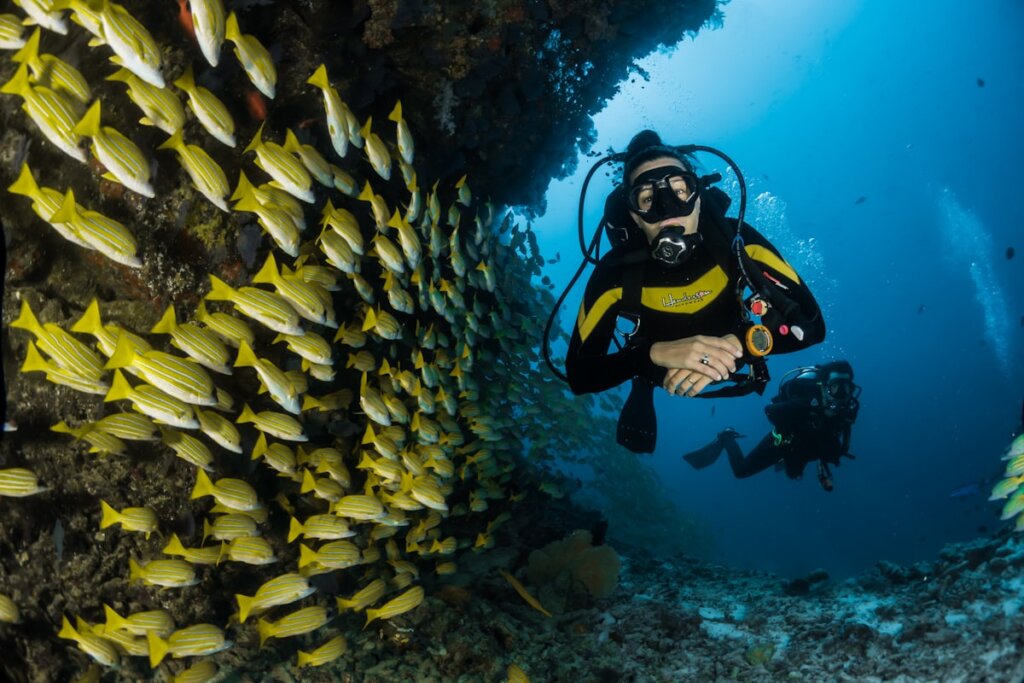
| Fish Identification | Reef slopes with schooling fish | High fish diversity, from fusiliers to parrotfish and angelfish |
| Underwater Naturalist | Mixed reef and seagrass | Chances of turtles, nudibranchs and cuttlefish |
| Underwater Photography | Calm, shallow sites | Good light and patient subjects for beginners |
For a fuller overview of what is underwater, see our El Nido scuba diving guide. Before any dive, read up on reef hazards such as stonefish and cone snails so you know what not to touch.
How to Plan Your Two-Day Course in El Nido
Most dive centers run Advanced Open Water over two days with two or three dives per day. A typical plan looks like this:
- Before you arrive: sign up for eLearning, finish the Deep and Navigation knowledge reviews and pack your logbook or dive app login.
- Day one, morning: the Deep dive, scheduled first while you are fresh and the sea is usually calmest. Your instructor may show you colour loss at depth and compare a simple task at the surface and at 25 to 30 metres.
- Day one, afternoon: Underwater Navigation, often on a shallower site, followed by your first elective.
- Day two: two more electives, then logging dives and processing your digital certification card.
- Day three or later: fly out only after the no-fly window, which is at least 18 hours after repetitive dives under most guidelines.
If you are combining the course with island hopping, put the tours before your dive days or on rest days, and never schedule deep dives on the same day as a flight. Our guide to flying with dive gear also covers baggage limits on small planes to Lio Airport.
Costs in 2026 and What Should Be Included
Advanced Open Water prices in El Nido vary with group size, boat type and whether equipment is included. Use these indicative 2026 ranges to compare offers.
| Item | Typical range | Notes |
|---|---|---|
| Full course (5 dives) | PHP 18,000 to 26,000 | Usually includes boat, instructor and gear |
| eLearning or materials fee | Often extra, paid to the agency | Check before booking to avoid double paying |
| Marine park or environmental fees | A few hundred pesos per day | Sometimes collected separately |
| Nitrox surcharge | Per tank, if offered | Optional; requires a Nitrox certification |
| Dive insurance | Annual or trip-based | Strongly recommended |
Ask for the full price in writing, including fees, and confirm whether payment by card is possible or whether you need cash. Our ATM and cash guide explains withdrawal limits in town.
Safety, Insurance and Choosing an Instructor
Deep dives raise the stakes slightly, so safety planning matters more than price. The nearest recompression facilities are a long way from El Nido, which is why dive accident insurance from providers such as Divers Alert Network (DAN) is worth having. Compare options in our DAN vs travel insurance guide.
When choosing an instructor, ask these questions:
- What is the maximum group size per instructor for the Deep dive?
- Do you carry oxygen and a first aid kit on every boat?
- Which sites will you use if the wind changes?
- Can I choose my three electives, and are any priced differently?
- How do you handle seasickness or ear problems mid-course?
Good dive centers will answer clearly and will not pressure you to dive if you are unwell. Weather also matters: the calmest seas are usually from roughly February to May, while December and January can bring stronger northeast winds that push boats to sheltered sites. Check the forecast from PAGASA before committing to your course dates.
Common Mistakes to Avoid
- Diving hungover or dehydrated. El Nido nightlife is fun, but alcohol and heat increase your risk on deep dives. Drink plenty of water and get a full night of sleep before day one.
- Ignoring ear problems. If you cannot equalize comfortably, tell your instructor and abort the descent. Forcing it can cause a barotrauma that ends your trip.
- Booking flights too tightly. Leave at least a full day between your last dive and your flight, especially on small aircraft out of Lio Airport.
- Skipping sunscreen etiquette. Use reef-friendly sunscreen and a rash guard on the boat to protect both your skin and the coral.
- Choosing electives you will never use. Pick skills that match how you plan to dive in future, whether that is photography, buoyancy or night diving.
- Chasing the cheapest price. A small saving is not worth crowded groups or tired equipment. Look at reviews, ask to see the gear and favor shops that brief every dive carefully.
Frequently Asked Questions
How long does the Advanced Open Water course take in El Nido?
Most El Nido dive centers run it over two days, usually two or three boat dives per day, with short knowledge reviews in the evening or between dives. Some can fit it into a day and a half if conditions and group size allow.
How much does Advanced Open Water cost in El Nido in 2026?
Expect roughly PHP 18,000 to 26,000 including boat dives, instructor, equipment rental and the digital certification fee. Always check whether the environmental and marine park fees, Nitrox and the eLearning fee are included.
Can I do Advanced Open Water straight after my Open Water course?
Yes. You can start Advanced Open Water as soon as you are certified as an Open Water diver, and many people continue directly in El Nido. If your last dive was more than six to twelve months ago, a short refresher dive is recommended first.
What is the maximum depth after Advanced Open Water?
PADI Advanced Open Water divers are recommended to dive no deeper than 30 metres. Junior Advanced Open Water divers aged 12 to 14 have a lower limit, so check the agency guidance if you are diving with children.
Which adventure dives are best in El Nido?
Beyond the compulsory Deep and Underwater Navigation dives, Peak Performance Buoyancy, Fish Identification, Underwater Naturalist and Underwater Photography suit El Nido well because of its reefs, walls and abundant marine life.
Is PADI or SSI better for Advanced Open Water in El Nido?
Both are internationally recognized and accepted by dive centers worldwide. SSI calls its equivalent Advanced Adventurer. Choose based on the instructor, group size and schedule rather than the agency logo.
Key Takeaways
- Advanced Open Water is five adventure dives, two of which (Deep and Underwater Navigation) are compulsory.
- In El Nido the course usually runs over two days and costs about PHP 18,000 to 26,000 in 2026.
- Plan the Deep dive on a calm morning and avoid flying within 18 hours after your last dive.
- Choose electives that suit El Nido, such as Peak Performance Buoyancy, Fish ID and Underwater Naturalist.
- Ask dive centers about group size, marine park fees, Nitrox and insurance before paying.
- Get dive insurance such as DAN cover, because the nearest hyperbaric chamber is far from El Nido.
Ready to Go Deeper in El Nido?
Advanced Open Water is the most useful next step for anyone who caught the diving bug on their first course. In El Nido you earn it on real reefs and walls, with turtles and schooling fish as a bonus. Compare two or three dive centers, ask the right questions about group size and fees, and plan your flights around the no-fly window. For more planning help, read our El Nido dive sites map and our dive shop guide.
About the Author
This guide was compiled by the El Nido Hotels Ranking editorial team, with input from local operators and ongoing on-the-ground updates.