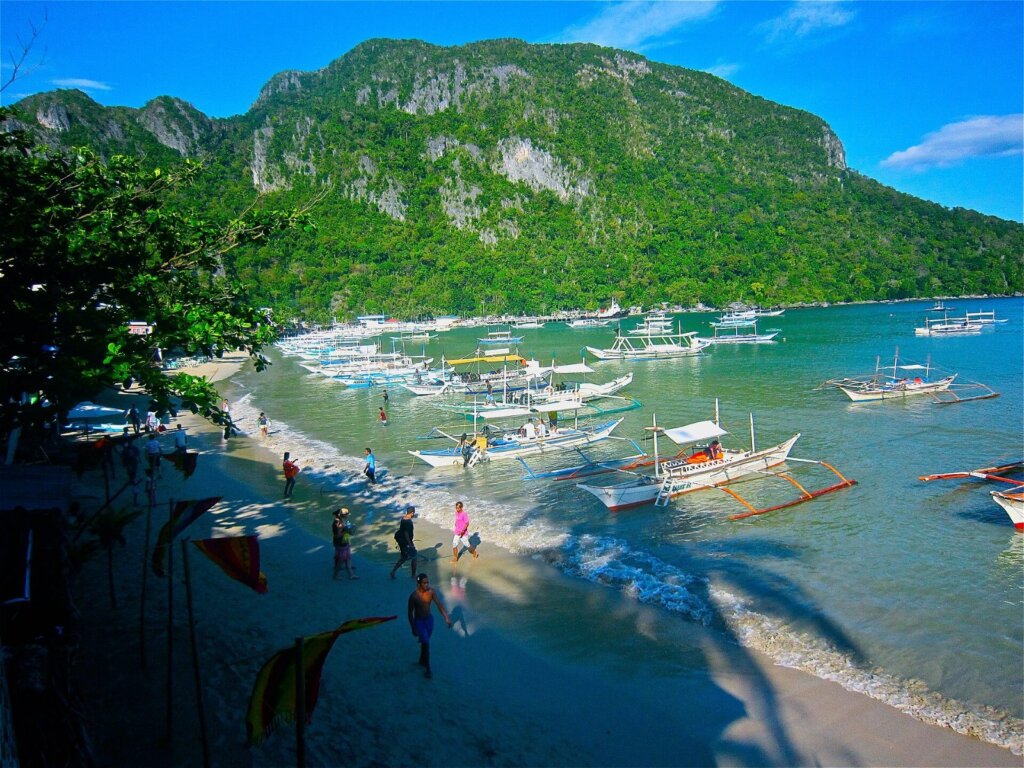
Booking El Nido between June and November means accepting that weather may rearrange your plans. This guide focuses on a flexible booking strategy specifically for travelers who want the lower prices and greener scenery of typhoon season without risking money on trips that cannot run, with practical steps for flights, rooms, tours and insurance.
What Typhoon Season Actually Means for El Nido
The Philippine typhoon season is generally considered to run from June to November, with peak activity from August to October. Palawan sits west of the main storm tracks and is struck less often than Luzon or the Visayas, but passing systems and the southwest monsoon can still bring heavy rain, rough seas and strong winds. The national weather service PAGASA publishes daily bulletins and cyclone warnings, and they are the primary source you should trust over social media rumours.
In practice, the main disruptions are cancelled island tours, delayed flights and slow road transfers. Our flight delay guide for typhoon season covers the aviation side, while this article concentrates on how to book so that a cancellation costs you as little as possible.
Booking Options Compared
| Booking type | Flexibility | Typical price | Risk in typhoon season | Best for |
|---|---|---|---|---|
| Non-refundable room | None | Lowest | High | Fully flexible travelers with insurance |
| Free-cancellation room | High until a deadline | Slightly higher | Low | Most travelers |
| Pay-at-property booking | High | Standard | Low | Last-minute planners |
| Date-change voucher | Medium | Standard | Medium | Travelers with open dates |
| Prepaid tour package | Varies by operator | Discounted | Medium to high | Short trips only |
Rooms: Pay for Flexibility, Not for Hope
The cheapest rate is rarely the best value in the wet months. A free-cancellation booking costs a little more, yet it protects the whole room cost if a storm forces you to change plans. Read the cancellation deadline carefully, because some policies lock in 48 or 72 hours before arrival, which may be before the forecast is clear. Where possible, prefer properties that allow date changes without penalty.
Negotiating directly can also help. Many small hotels will agree to free rebooking if you message them in advance, and our guide to negotiating low-season hotel rates explains how to ask politely. Keep every agreement in writing, preferably through chat or email, so there is a record if staff change.
Tours: Book Late and Stay Flexible
Island tours are the most weather-dependent part of an El Nido trip. Operators cancel when the coast guard or local authorities suspend sailing, and you may be offered a refund or reschedule. Avoid paying in full far in advance, and book once you can see the forecast. For the process of checking whether boats are allowed to leave, read our guide on how to check boat tour advisories.
Plan Tours Early in the Stay
Schedule your must-do tour on your first or second day, not your last. If it is cancelled, you still have time to try again. Leave your final day as a buffer instead of a fixed excursion, especially if you have a flight out.
Keep an Indoor Plan Ready
A list of backup activities makes cancelled days less frustrating. Cafe time, a cooking class, a massage, a market visit or a movie night all work. Our ideas in rainy nights and indoor things to do are a good starting point.
Flights, Transfers and Buffer Days
If you must catch an international flight, do not book the same-day connection from El Nido. Build in at least one spare night in Puerto Princesa or Manila, because delays and cancelled sectors are more common in storm months. Road transfers can also be slow after heavy rain, with landslides and flooded sections occasionally closing the route, a risk detailed in our guide to landslides and flooded roads.
Check airline policies for rebooking waivers when a storm is forecast, and monitor the Civil Aviation Authority of the Philippines for airport advisories. Keep proof of every cancellation, because you will need it for refunds and insurance.
Insurance and Money Safeguards
Travel insurance is more valuable in typhoon season than in the dry months, but only if you buy it correctly. Policies typically exclude storms that were already named when you purchased, so buy as soon as you book. Look for cover for trip cancellation, curtailment, delay and extra accommodation. Our travel insurance guide explains what to check.
Use a credit card for prepayments when possible, since card issuers sometimes offer protection if a service cannot be delivered. Keep a small reserve of cash for extra nights, taxis and meals, because ATMs and card terminals can fail during power outages and bad weather.
What To Do When a Storm Is Forecast
Contact your accommodation and transport providers early, before queues form. Follow PAGASA signals, charge devices and power banks, stock water and snacks, and keep documents in a waterproof bag. Move away from low-lying beachfront areas if authorities advise it, and follow local instructions. Do not attempt boat trips against official advice; no photo is worth the risk.
How Wind Signals Affect Your Plans
PAGASA uses numbered wind signals to describe expected conditions. At lower levels, small boats are usually restricted, while at higher levels sea travel stops entirely and flights may be cancelled. Treat any signal as a reason to hold off on non-essential movement, and expect operators to follow coast guard orders without exception. After the storm passes, wait for official clearance because swells and debris can linger for a day or two.
A Sample Flexible Itinerary
Imagine a six-night trip in September. Book the first night in a free-cancellation room, and add the rest as refundable stays. Plan your main island tour for day two, a lighter activity for day three, and keep days four and five open for rebooking or a second tour if the first is cancelled. Reserve the last night in a room close to your transport hub, and keep your flight home at least a day after your last planned activity. This structure means any single cancellation can be absorbed without panic or additional spending.
Communicating With Hotels and Operators
Good communication is the cheapest insurance. Message your hotel a few days before arrival, confirm your booking, and ask about their weather policy. Keep a screenshot of every confirmation. If a storm is forecast, ask early about rebooking options rather than waiting until the last moment, when staff are busy. Operators are usually more generous with travelers who are polite, patient and reasonable, and most would rather reschedule than refund a rushed booking.
Official Sources Worth Bookmarking
Beyond weather bulletins, keep the NDRRMC website handy for disaster updates, and follow local government announcements for suspensions of sea travel. Your hotel front desk is often the fastest source of local news, since staff know which routes are open and when boats have resumed. Download offline maps and screenshots of key bookings before you travel, because mobile data may drop at precisely the moment you need it most.
What Changes for Families and Older Travelers
Families with young children and older travelers should be more conservative. Choose rooms with reliable power and water, stay close to medical facilities, avoid long road transfers on stormy days, and carry spare medication for at least two extra days. A short, comfortable stay with generous buffers is better than a packed itinerary that falls apart when weather arrives.
Packing for Wet-Season Surprises
Pack as if every day might be wet. A quick-dry towel, a light rain jacket, a dry bag for electronics and documents, spare socks and sandals with good grip will serve you better than a large suitcase of clothes. Bring a small first-aid kit, a headlamp for power cuts and a charged power bank. Our rainy season packing list goes through the details item by item, and it is worth printing or saving before you leave home.
Is Typhoon Season Still Worth It?
For many travelers, yes. Prices are lower, beaches are emptier and the landscape is green. The key is to treat the booking as a flexible plan rather than a fixed schedule. Choose refundable rooms, delay big payments, schedule weather-sensitive activities early, add buffer days and buy insurance on the day you book. With those habits, the worst case becomes an inconvenience rather than a financial loss.
If you prefer less risk, shift your dates toward the edges of the season, such as June or late November, when the odds are better. Compare month-by-month conditions in our sea conditions by month guide and decide how much uncertainty you are comfortable with. Either way, plan with humility toward the weather, and El Nido will repay you with quiet beaches and dramatic skies.
Frequently Asked Questions
When is typhoon season in El Nido?
The Philippine typhoon season runs roughly from June to November, with activity most intense from August to October. Palawan is struck less often than the northern and eastern Philippines, but storms and monsoon enhancement can still cancel boats and flights.
Should I book non-refundable rates in typhoon season?
Generally no. Choose free-cancellation or date-change rates, or pay a small premium for flexibility. Non-refundable deals only make sense if your dates are fully flexible or your insurance covers weather disruption.
What are PAGASA wind signals?
PAGASA issues Tropical Cyclone Wind Signals from 1 to 5 to indicate expected wind strength in an area. At higher signals, sea travel is usually suspended and flights may be cancelled.
Does travel insurance cover typhoon cancellations?
Many policies cover weather disruption, but only if you buy before the storm is named and read the exclusions. Check whether your policy covers cancellation, delay and accommodation costs.
How many buffer days should I add?
Add at least one spare night before an international flight and one flexible day inside the trip. Two buffer days is safer in the peak months of August to October.