
El Nido Photography Guide 2026: Best Spots, Golden Hours & Tips
El Nido is one of the most photogenic destinations in Southeast Asia — limestone karst formations rising from turquoise lagoons, white-sand beaches, and spectacular sunsets make for extraordinary images at every turn. Whether you shoot on a smartphone or a full-frame camera, this complete 2026 photography guide will help you capture El Nido at its best.
Best Photography Spots in El Nido
1. Big Lagoon (Miniloc Island)
The Big Lagoon is the signature shot of El Nido — towering limestone walls reflected in impossibly turquoise water. Best photography conditions:
- Best time: 9–10 AM when morning light hits the lagoon walls directly
- Shot type: Wide angle to capture the full scale of the karst cliffs; kayak-level shots for dramatic perspective
- Tip: Hire a kayak and paddle to the interior — the deepest part of the lagoon has the most dramatic framing
- Accessible via Tour A
2. Taraw Cliff Viewpoint
For the classic aerial-style view of El Nido town and Bacuit Bay, hike to the top of Taraw Cliff. It is a challenging 45-minute climb, but the panoramic view from the top is extraordinary.
- Best time: Sunrise (around 5:30–6:30 AM) for golden light on the islands
- Equipment: Bring a tripod for long-exposure sunrise shots
- How to get there: Start from El Nido town. Guides available at the base. Entry fee ₱200.
3. Las Cabanas Beach at Sunset
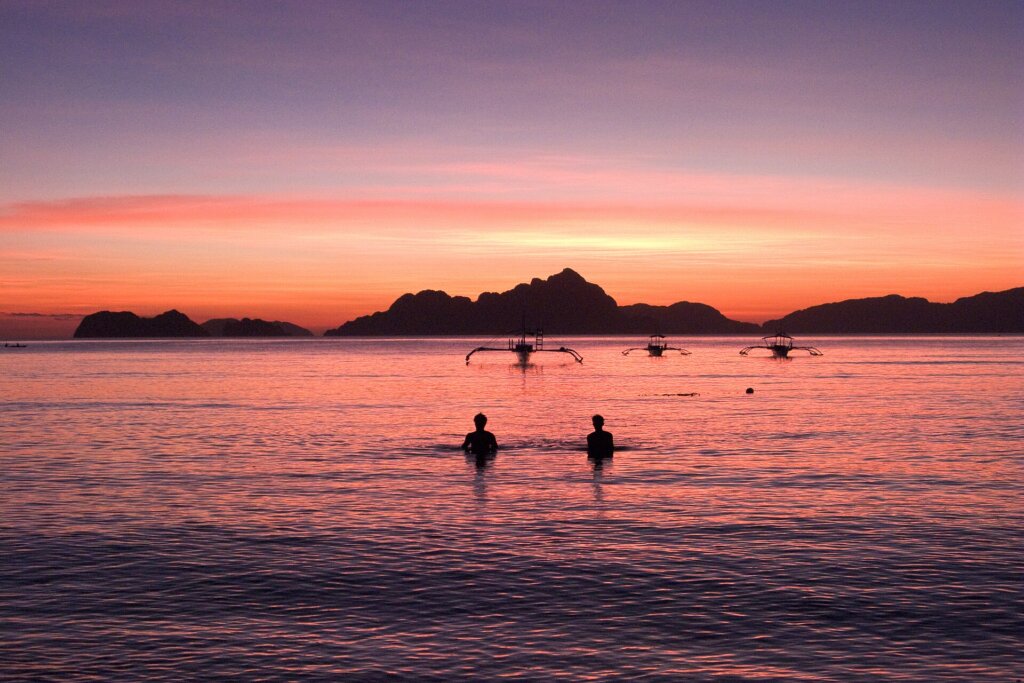
Las Cabanas Beach faces west and offers some of the most dramatic sunset silhouettes in the Philippines — limestone karsts outlined against a fiery orange sky. The zip-line structure at the beach also makes for a unique compositional element.
- Best time: 30 minutes before sunset (typically 6:00–6:30 PM in dry season)
- Shot type: Silhouette photography — expose for the sky and let foreground go dark
- Getting there: 5-minute tricycle ride from El Nido town
4. Small Lagoon
While the Big Lagoon gets all the attention, the Small Lagoon has equally stunning photo potential — the passage through the narrow rock opening makes for a dramatic compositional shot looking back at the open sea.
- Best time: Late morning when the sun is overhead and the interior is fully lit
- Tip: Position yourself inside looking out toward the opening — the backlit water creates a brilliant teal glow
5. Nacpan Beach
One of the Philippines’ most beautiful beaches. The 4km sweep of white sand with palm trees and turquoise water makes for classic tropical beach photography, especially at golden hour.
- Best time: Early morning (6–8 AM) for empty beach shots with soft light
- Tip: Walk to the northern end of Nacpan for the double-beach viewpoint connecting Nacpan and Calitang beaches
6. Snake Island (Pinagbuyutan Island)
Accessible via Tour B, Snake Island features a stunning S-shaped sandbar connecting two islands — one of El Nido’s most distinctive shapes, best seen from above.
- Ideal for drone photography (if drones permitted on tour)
- On foot at low tide, you can walk along the sandbar for great shots
7. El Nido Town from the Water
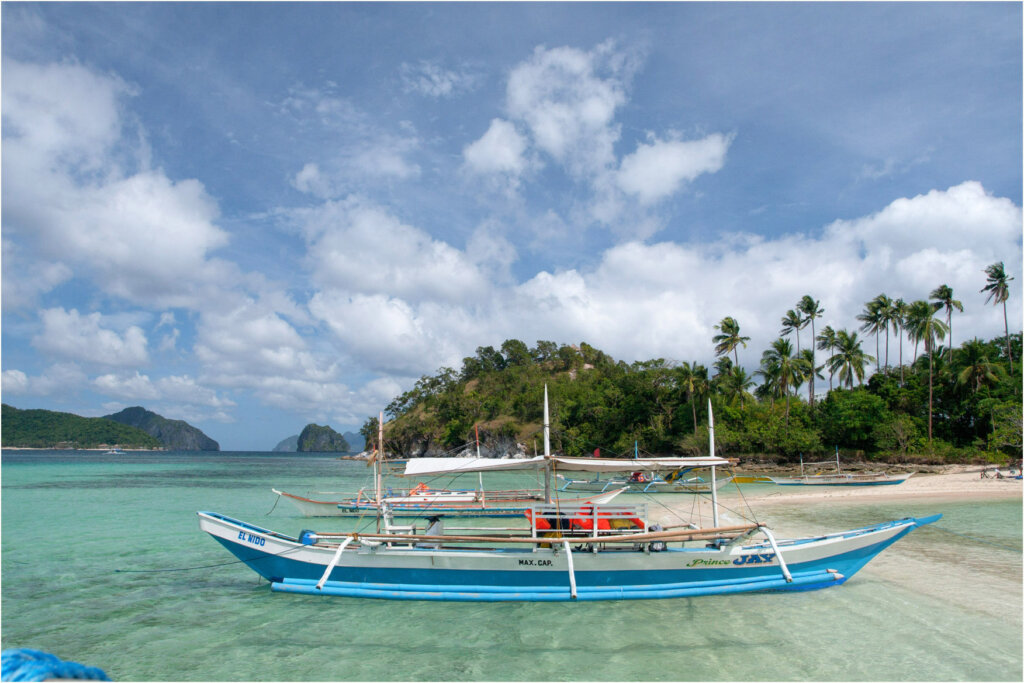
Shooting El Nido town from a boat at dawn — with the limestone hills and colorful bancas in the foreground — gives you an image you will not find in any stock library. Best captured during the first light of day before tours depart.
Golden Hour Times in El Nido
- Sunrise: 5:45–6:30 AM (November–April); 5:30–6:15 AM (May–October)
- Sunset: 5:45–6:15 PM (November–January); 6:00–6:30 PM (March–May)
- Best sunset locations: Las Cabanas Beach, Corong-Corong Beach, from a boat on Bacuit Bay
- Best sunrise locations: Taraw Cliff, Nacpan Beach north end, El Nido pier
Underwater Photography in El Nido
El Nido’s underwater world is equally photogenic. The best conditions are November–May with 15–25m visibility.
- Snorkeling photography: GoPro or Insta360 with a red filter for color correction at depth; shoot between 10 AM–2 PM for best light penetration
- Best snorkeling photo spots: Shimizu Island (Tour A), Helicopter Island reef (Tour C), Matinloc Island
- Diving photography: South Miniloc wall, Cathedral cave interior at Cudugnon
- Tips: Use a wide-angle lens or dome port; shoot upward to get light rays; approach marine life slowly
Drone Photography Rules in El Nido
El Nido has strict rules about drone use that you must know before bringing your drone:
- Drones require a permit from the El Nido Tourism Office (apply in advance)
- Flying over protected marine areas (lagoons, dive sites) is generally prohibited
- Some resorts allow drone use on their private property with advance notice
- Commercial drone use requires additional permits from the Civil Aviation Authority of the Philippines (CAAP)
- Snake Island and Nacpan Beach are among the more drone-friendly locations — confirm locally before flying
- Always check current regulations before your trip as rules change frequently
Best Camera Gear for El Nido
Smartphones
- El Nido’s light is so good that even smartphone cameras produce stunning images in good conditions
- Use a waterproof case or Moment Case with add-on wide angle lens for better lagoon shots
- iPhone 15 Pro and Samsung S24 Ultra perform exceptionally well in daylight conditions here
Action Cameras
- GoPro Hero 12 / Insta360 X4: Ideal for water activities — compact, waterproof, great for POV island hopping footage
- Red filter or magenta filter recommended for underwater color correction
Mirrorless / DSLR
- Bring a waterproof dry bag — boats splash and humidity is high
- Lens recommendation: 16–35mm wide angle for lagoons and landscapes; 70–200mm telephoto for wildlife (monitor lizards, hornbills)
- UV filter essential to protect the front element from salt spray
Photography Tips for El Nido Island Hopping
- Waterproof everything: Bring a dry bag for your camera gear — boats splash constantly and sudden rain is possible
- Shoot from the bow: Ask your boatman if you can sit at the front of the banca for dynamic approach shots of islands
- Arrive early at stops: First boats into the lagoon get clean shots without other tourists in frame
- Polarizing filter: Cuts glare on the water and makes the turquoise colour even more vibrant — essential for tropical water photography
- Shoot RAW: The light in El Nido can be harsh midday — RAW files give you much more latitude in post-processing
- Look for reflections: Inside the lagoons, calm mornings create perfect mirror reflections of the karst walls
Best Time of Year for Photography in El Nido
- November–February: Ideal — clear skies, calm seas, dramatic light. February is especially good with low haze.
- March–April: Still excellent, but hotter and sometimes hazy
- May: Transition month — some dramatic storm clouds for moody shots
- June–October: Wet season — dramatic clouds and monsoon light can be incredible for moody photography, but island hopping may be limited
Where to Stay for Photography Access
For photographers, location matters. Consider:
- El Nido town: Walking distance to the pier for early morning departures and Taraw Cliff access
- Corong-Corong: Great for sunset bay shots and SUP photography on calm mornings
- Las Cabanas area: Walk to sunset beach without a tricycle
Check our El Nido hotel rankings to find well-located accommodation for your photography trip. Planning a longer stay? Read our El Nido 7-Day Itinerary to build in time for golden hour shoots at multiple locations.