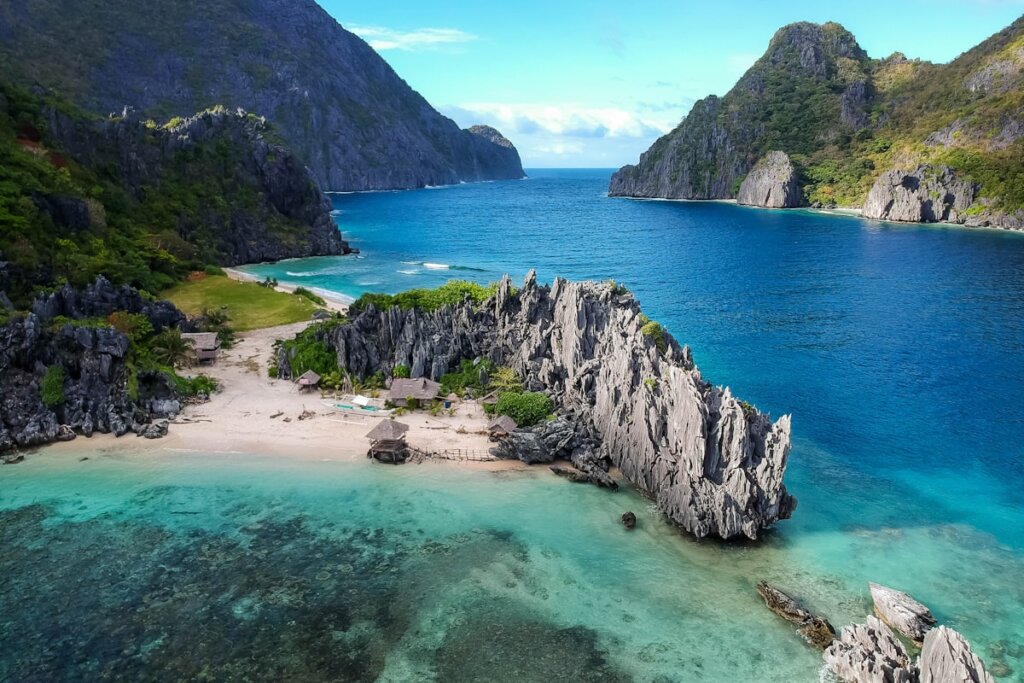

Two of Asia’s most photographed seascapes share the same raw ingredient: limestone. Vietnam’s Ha Long Bay and the Philippines’ Bacuit Bay around El Nido both feature jagged karst towers rising straight out of the sea, and both regularly appear on “most beautiful places in the world” lists. Yet the travel experience in each could hardly be more different.
This guide focuses on El Nido vs Ha Long Bay specifically for travelers who love dramatic limestone scenery and can only fit one of the two into a 2026 trip. Instead of a generic “which is better” verdict, we compare what you actually do on the water, what the sea is like for swimming, how the seasons line up, and what each costs per day, so you can match the destination to your travel style.
- The Quick Verdict: Cruise Scenery vs Swim-and-Snorkel Scenery
- Geology: Why Both Places Look Like Another Planet
- Side-by-Side Comparison Table
- On the Water: Island Hopping vs Overnight Cruising
- Seasons and Weather: Planning Around Monsoons
- Costs: A Realistic Daily Budget
- Who Should Choose Which?
- Responsible Travel in Both Bays
- Frequently Asked Questions
The Quick Verdict: Cruise Scenery vs Swim-and-Snorkel Scenery
If you want to look at karst from the comfort of a ship deck, with cave visits, kayaking and a cooking demo thrown in, Ha Long Bay is the more polished, easier-to-reach option. If you want to be in the scenery, jumping off a bangka into clear turquoise water, snorkeling over coral and lying on white-sand coves between cliffs, El Nido wins clearly.
The underlying reason is water. Ha Long Bay sits in the shallow Gulf of Tonkin, fed by rivers carrying sediment, so the sea is usually jade-green and visibility is limited. Bacuit Bay faces the open South China Sea (West Philippine Sea) and, in the dry season, often has visibility good enough to see reef fish from the boat. That single difference shapes everything else about the two trips.
Geology: Why Both Places Look Like Another Planet
Both bays are drowned karst landscapes: thick limestone that was dissolved by rainwater into towers, pinnacles and caves, then partly flooded as sea levels rose after the last Ice Age. Ha Long’s formations are inscribed by UNESCO for both their scenic beauty and their geological value, and in 2023 the site was extended to include the neighboring Cat Ba archipelago (UNESCO World Heritage listing).
El Nido’s limestone is older and more weathered into sharp, razor-edged cliffs. We explain the science in detail in our Bacuit Bay karst geology guide, but the short version is this: Ha Long feels like a vast field of thousands of rounded towers, while El Nido feels like a tighter cluster of taller, more vertical islands with beaches and lagoons tucked into them.
- Ha Long Bay: roughly 1,600 islands and islets across a very large bay; many are small pillars with no landing points.
- Bacuit Bay (El Nido): around 45 islands and islets, many with beaches, lagoons and snorkel sites you can step onto.
Side-by-Side Comparison Table
| Factor | El Nido (Bacuit Bay) | Ha Long Bay |
|---|---|---|
| Main experience | Day-trip island hopping by bangka, swimming, snorkeling, kayaking lagoons | Overnight cruise, scenic sailing, caves, kayaking, floating villages |
| Water clarity | Often clear turquoise in dry season; good snorkeling | Usually green and murky; limited swimming appeal |
| Beaches | Dozens of white-sand coves (Seven Commandos, Helicopter, Nacpan) | Few small beaches, mostly man-made or crowded (Ti Top) |
| Access from capital | 1h20 flight Manila to El Nido, or flight to Puerto Princesa plus 5–6h van | About 2.5–3h by expressway from Hanoi |
| Best months | Late November to May (dry season) | October to December and March to May |
| Typical tour cost | Group tour around PHP 1,400–2,000 plus environmental fee | Day cruise around USD 40–80; 2D1N cruise roughly USD 120–400+ |
| Accommodation style | Town guesthouses, beach resorts, private island resorts | Cruise cabins, or hotels in Ha Long City / Cat Ba |
| Crowd feel | Busy lagoons at peak times; quieter far-flung islands | Hundreds of boats on main routes; quieter in Lan Ha Bay |
Prices are 2026 estimates and vary by operator, season and group size.
On the Water: Island Hopping vs Overnight Cruising
El Nido: lettered tours and private bangkas
El Nido runs on standardized day tours (A, B, C and D), each visiting four or five stops such as the Big and Small Lagoons, Secret Lagoon, Hidden Beach and Shimizu Island. You leave from the town beach around 9 am, eat a grilled-seafood lunch on an island and return before sunset. Our Tour A, B, C and D comparison breaks down which stops suit which travelers, and if you want flexibility you can book a private boat charter to dodge the crowds.
Ha Long Bay: the cruise model
In Ha Long the default is a one- or two-night cruise on a wooden junk-style ship. Days include sailing between towers, visiting caves such as Sung Sot, kayaking around floating fishing communities and watching sunset from the deck. Swimming stops exist, but most people swim briefly rather than snorkel. Many travelers now choose cruises into neighboring Lan Ha Bay, which has fewer boats and slightly clearer water.
The trade-off: Ha Long’s cruise model is comfortable and requires little planning, but you see the karst largely from a distance. El Nido is more hands-on and physical, but you get to touch, swim through and walk on the scenery.
Seasons and Weather: Planning Around Monsoons
The two bays have almost opposite “good” seasons in places, which matters if your dates are fixed.
- El Nido: The northeast monsoon (amihan) brings dry, sunny weather from roughly late November to May, with calm seas peaking from March to May. The southwest monsoon (habagat) from June to October brings rain, rougher seas and occasional tour cancellations. Check the PAGASA weather bureau before you go, and see our guide to reading El Nido sea forecasts.
- Ha Long Bay: Summer (June to September) is hot and humid with typhoon risk, when cruises can be suspended by the authorities. Winter (January to February) is cool, damp and often misty. The sweet spots are October to December and March to May.
So if you are traveling in December, both are viable. In July or August, both carry weather risk, though El Nido’s tours run more often than you might expect and Ha Long’s cruises are cancelled only when storms threaten.
Costs: A Realistic Daily Budget
El Nido has become one of the pricier destinations in the Philippines, while Ha Long is good value by global standards but can be expensive if you choose a luxury cruise.
| Daily budget (per person) | El Nido | Ha Long Bay |
|---|---|---|
| Budget | USD 45–70 (dorm or fan room, group tour, local eateries) | USD 35–60 (Cat Ba hostel, day cruise) |
| Mid-range | USD 100–180 (boutique hotel, private tour some days) | USD 120–220 (mid-range 2D1N cruise, all meals) |
| Luxury | USD 400–1,200+ (island resort, full board) | USD 300–700+ (luxury cruise suite) |
One hidden cost in El Nido is the environmental fee charged to visitors of the protected area; see our environmental fee guide. In Ha Long, entrance fees for the bay and caves are usually bundled into the cruise price.
Who Should Choose Which?
Choose El Nido if you…
- Want to swim, snorkel and laze on beaches as much as you want to sightsee.
- Are happy with a short domestic flight or a long van ride.
- Like the idea of combining karst with diving, freediving or a multi-day expedition boat trip toward Coron.
- Prefer a laid-back beach-town base with sunset bars and seafood.
Choose Ha Long Bay if you…
- Want the scenery with minimal effort, including for older family members.
- Are already touring Vietnam and want to combine the bay with Hanoi’s food scene.
- Enjoy cave visits, cultural stops and the novelty of sleeping on a boat among the towers.
- Care more about the view than about water quality for swimming.
If you are still torn between El Nido and another island destination, our comparison of El Nido vs Bali and El Nido vs Coron may help you narrow it down further. For an official overview of Vietnam’s side, the Vietnam National Authority of Tourism has practical visitor information.
Responsible Travel in Both Bays
Both bays are under pressure from tourism. Ha Long has battled plastic waste and the impact of coal and industry along its shore, and has introduced rules restricting single-use plastics on cruise boats. El Nido sits inside the El Nido–Taytay Managed Resource Protected Area, which limits visitor numbers at sensitive sites such as the Small Lagoon and enforces rules about touching coral and feeding fish. Review the protected area rules for visitors before you go, and use mineral-based reef-safe sunscreen. The Palawan Council for Sustainable Development publishes environmental policies for the province.
Whichever bay you choose, small choices add up: refill a water bottle instead of buying plastic, pick operators that collect their own waste, and avoid standing on coral when you swim.
Frequently Asked Questions
Is El Nido or Ha Long Bay better for swimming?
El Nido is far better for swimming and snorkeling. Its water is usually clear turquoise in the dry season, while Ha Long Bay tends to be green and murky because of shallow, sediment-rich water.
Can I visit Ha Long Bay as a day trip like El Nido island hopping?
Yes. Day cruises from Ha Long City run about six to eight hours, but the transfer from Hanoi adds around five to six hours round trip, so most travelers prefer a one-night cruise.
Which is cheaper, El Nido or Ha Long Bay?
At the budget level they are similar. Mid-range travelers often find Ha Long slightly better value because cruise prices include meals and activities, while El Nido accommodation has become expensive in peak season.
When is the best time to visit both on one trip?
December and March to April work well for both destinations, offering dry weather in El Nido and comfortable, relatively clear conditions in Ha Long Bay.
Are there more crowds in El Nido or Ha Long Bay?
Ha Long Bay sees far more boats overall, but El Nido’s small lagoons can feel crowded at peak hours. In both places, starting early or booking private tours helps you avoid the busiest moments.
Featured image: Vyacheslav Argenberg via Wikimedia Commons (CC BY 4.0)