
Walk past any bakery in El Nido town and you will notice it: trays of violet bread rolls, purple ice cream in the freezer and halo-halo crowned with a scoop of deep mauve jam. That colour comes from ube, the purple yam that Filipinos have turned into the country’s most photogenic dessert ingredient.
This guide focuses on ube desserts specifically for sweet-toothed travellers and families spending a few days in El Nido who want a local treat between island-hopping tours. We list seven ube desserts you can realistically find in town, what each costs, where to look, and, our unique angle, how to tell real ube from the purple food colouring and flavouring that dominate tourist cafés.
What Is Ube?
Ube (pronounced OO-beh) is the purple yam, Dioscorea alata, a tuber grown across the Philippines. Botanically it is not the same as purple sweet potato or taro, though all three get confused on menus. Cooked ube has a mellow, nutty, almost vanilla-like flavour with a faint earthiness. Its natural colour ranges from lavender to deep violet. The Dioscorea alata entry on Wikipedia covers its botany, and the ube halaya article explains its most famous preparation.
Ube grows on Palawan, but much of what reaches El Nido kitchens arrives as frozen grated ube, ready-made halaya in jars, or flavouring extract from Manila. That matters for taste, which we cover below.
Why Ube Matters in Filipino Food Culture
Ube is more than a trend. For generations it has been a fiesta and holiday ingredient: halaya is traditionally made in big batches for Christmas and town fiestas, stirred for hours over a low flame by family members taking turns. That labour is part of its meaning, which is why a homemade jar given as a gift carries real weight. In the past decade, ube has also become a global export, appearing in doughnuts and lattes far from the Philippines, often in brighter colours than anything you would find in a Filipino grandmother’s kitchen. Eating it in El Nido gives you the chance to taste the everyday version, closer to how locals actually enjoy it: a scoop on halo-halo, a warm roll from the corner bakery, a spoonful straight from the jar.
The 7 Ube Desserts to Try in El Nido
1. Ube halaya (purple yam jam)
The foundation of almost every other ube dessert. Grated ube is cooked slowly with coconut milk, condensed milk and butter until it becomes a thick, glossy paste. Eaten on its own with a spoon, spread on bread or used as a topping. Look for it in small tubs at bakeries, at the public market and in pasalubong (souvenir food) shelves. A good halaya is dense and slightly grainy, not gelatinous.
2. Halo-halo with ube
The Philippines’ signature shaved-ice dessert: crushed ice layered with sweet beans, jellies, banana, jackfruit, leche flan and evaporated milk, topped with a scoop of ube halaya and often ube ice cream. On a hot afternoon after a beach day, nothing beats it. The Halo-halo entry lists typical ingredients. In El Nido you will find it at carinderias, snack stalls and Filipino restaurants; it is a seasonal favourite in the hot months of March to May.
3. Ube cheese pandesal
A modern classic that went viral across the Philippines: soft purple bread rolls filled with a cube of melted cheese and sometimes extra halaya. Sweet-salty and best eaten warm in the morning. Neighbourhood bakeries in town bake batches early, and they often sell out before 9:00.
4. Ube ice cream
Filipino ice cream (sorbetes) in ube flavour is sold from small pushcarts, in local cafés and in tubs at convenience stores. Pushcart “dirty ice cream” is usually served in a cone or a small bread bun, an unusual and very local combination. Café versions are creamier and more expensive.
5. Ube crinkles and ube cookies
Soft, crackled cookies rolled in powdered sugar. Easy to carry on a boat tour in a sealed bag and popular as pasalubong to bring home. Check the ingredients if you want real ube rather than flavouring.
6. Ube leche flan or ube cake
Restaurants and some cafés serve layered desserts: a base of ube cake or halaya topped with a creamy caramel leche flan. Rich enough to share. You will also find ube chiffon or roll cakes by the slice at bakeries.
7. Ube with macapuno (and ube turon)
Macapuno is a mutant coconut with soft, jelly-like flesh, and its pairing with ube appears in cakes, ice cream and bread. Occasionally street stalls fry ube-filled turon (spring-roll wrapped banana), a crunchy twist on the standard banana version covered in our street food guide.
Comparison Table: Prices and Where to Find Each
| Dessert | Where to look | Best time | Typical price (PHP) | Travel-friendly? |
|---|---|---|---|---|
| Ube halaya | Bakeries, market, pasalubong shelves | Any time | 120–300 per jar or tub | Yes, if sealed |
| Halo-halo with ube | Carinderias, snack stalls, restaurants | Hot afternoons | 90–220 | No, eat on the spot |
| Ube cheese pandesal | Neighbourhood bakeries | Early morning | 15–40 per piece | Yes, same day |
| Ube ice cream | Pushcarts, cafés, convenience stores | Afternoon | 30–180 | No |
| Ube crinkles | Bakeries, cafés | Any time | 20–60 per piece | Yes |
| Ube leche flan / cake | Restaurants, cafés | After dinner | 120–280 per slice | No |
Prices are 2026 ranges observed across El Nido’s town proper and Corong-Corong; resort cafés will charge more.
Real Ube vs Ube Flavouring: How to Tell
This is the part most dessert lists skip. Because fresh ube is expensive and seasonal, many commercial products rely on ube flavouring (a vanilla-like extract) and violet food colouring. Neither is harmful, but the taste is noticeably different. Here is how to judge:
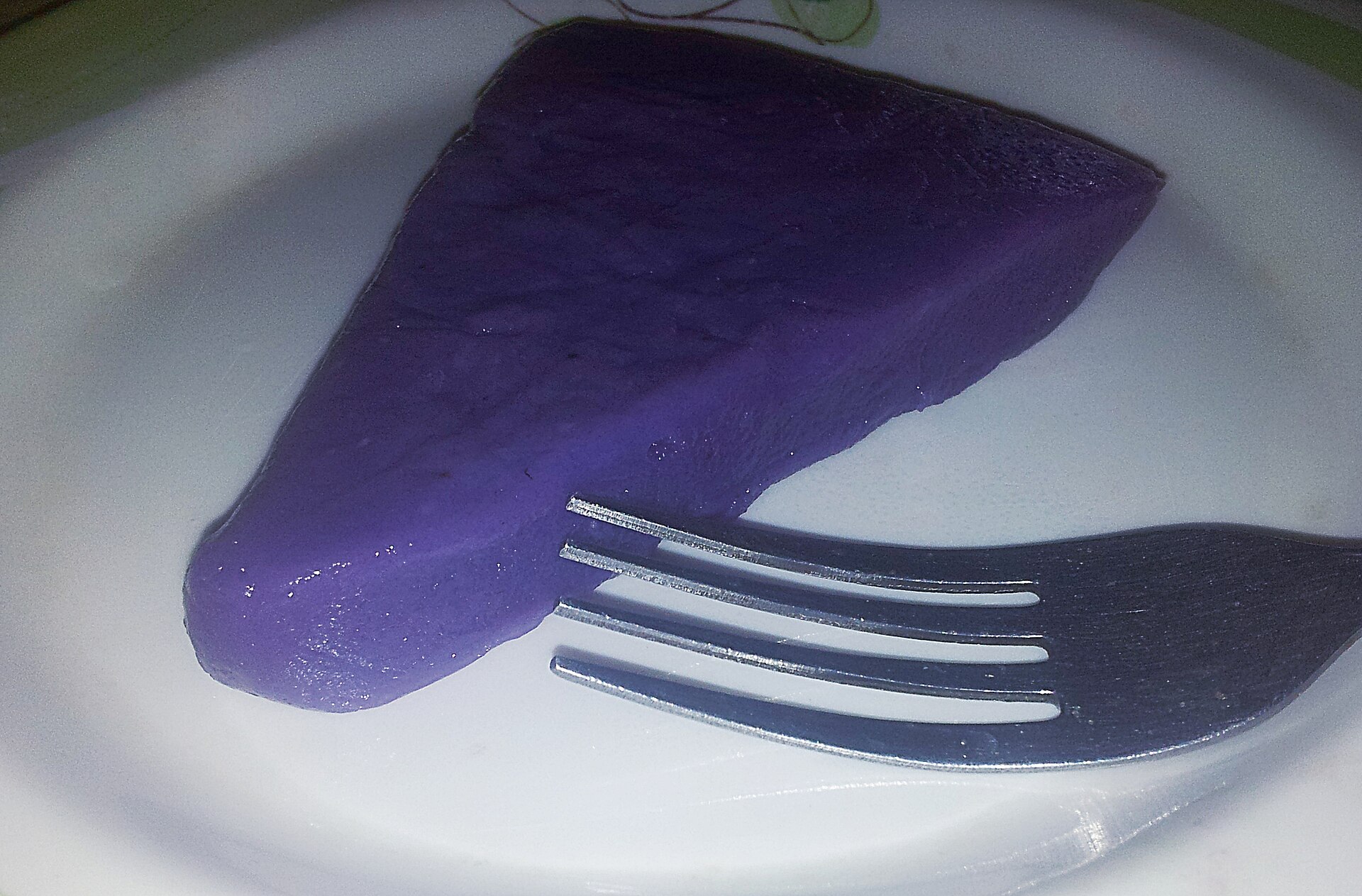
- Colour. Real ube is a soft, slightly greyish lavender to deep purple. Neon or electric violet usually means added colouring.
- Texture. Real halaya has a fine graininess from the grated tuber. Smooth, jelly-like purple paste is often mostly starch and colour.
- Flavour. Real ube tastes nutty and earthy with sweetness on top. Flavouring tastes of vanilla and sugar with little depth.
- Labels. On packaged items, check whether “ube” or “purple yam” appears near the top of the ingredient list, or whether it reads “ube flavour” and a colour code.
- Ask. Bakers in El Nido are usually happy to tell you whether they use fresh, frozen or flavoured ube. “Totoong ube ba ito?” means “Is this real ube?”
Building an Ube Afternoon Around Your Itinerary
Tours in El Nido return between 16:00 and 17:00, which lines up neatly with merienda, the Filipino afternoon snack. A simple plan: shower, walk to a bakery for ube pandesal and crinkles, then head to a snack stall for halo-halo before sunset. On rest days, combine a market visit (see our El Nido markets guide) with a halaya tasting, or pair ube ice cream with a mango shake from our fruit shakes guide.
If you have children with you, ube desserts are an easy win: the colour is a novelty, the flavour is mild, and portions are small. Families planning a rest-day schedule may find our guide to carinderias and local eateries useful for cheap meals before dessert.
Bringing Ube Home as Pasalubong
Pasalubong is the Filipino custom of bringing food gifts back from a trip. Ube halaya in sealed jars and boxed ube crinkles or polvoron are the most practical choices. A few practical points:
- Domestic flights. Halaya is a paste, so on many airlines it counts as a liquid or gel in hand luggage. Pack jars in checked baggage, wrapped in clothing.
- International customs. Many countries restrict dairy and fresh plant products. Commercially sealed, labelled products are easier to declare. Check your home country’s rules before buying.
- Shelf life. Homemade halaya without preservatives lasts only a few days unrefrigerated. Buy it on your last day.
- Heat. Keep cookies and pastries out of direct sun on van transfers; the ride to Puerto Princesa takes five to six hours.
Dietary Notes for Ube Lovers
Most ube desserts contain dairy (condensed milk, butter, cheese) and many contain gluten (pandesal, cookies, cakes). Halaya made only with coconut milk is occasionally available and is dairy-free; ask. Halo-halo includes evaporated milk and leche flan made with egg, but some stalls will skip the milk for you. Vegans should focus on ube made with coconut milk and ask carefully, since condensed milk is the default. Ube itself is naturally gluten-free and, as a root vegetable, a decent source of fibre, though desserts are, of course, mostly sugar.
One final tip: El Nido’s heat can melt ice cream and halaya-topped desserts in minutes. Eat halo-halo quickly, stirring everything together (halo-halo literally means “mix-mix”), and order ice cream in a cup rather than a cone if you are walking. With that, you are ready to add a purple layer to your El Nido trip.
Frequently Asked Questions
Is ube the same as taro?
No. Ube is purple yam (Dioscorea alata). Taro (gabi) is a different plant with pale, speckled flesh. Some menus outside the Philippines mix them up, but in El Nido ube always means purple yam.
Where can I buy ube cheese pandesal in El Nido?
Neighbourhood bakeries in El Nido town proper bake it early in the morning. Go before 9:00, because popular batches sell out quickly.
How much does halo-halo cost in El Nido?
In 2026 expect around PHP 90 to 150 at carinderias and snack stalls, and up to about PHP 220 at sit-down restaurants and cafés.
Can I take ube halaya on a plane?
On domestic flights halaya is usually treated as a gel in hand luggage, so pack jars in checked baggage. For international flights, check your destination’s food import rules.
Are ube desserts vegan?
Usually not, since most use condensed milk, butter or cheese. Some halaya is made with only coconut milk; ask the baker directly.