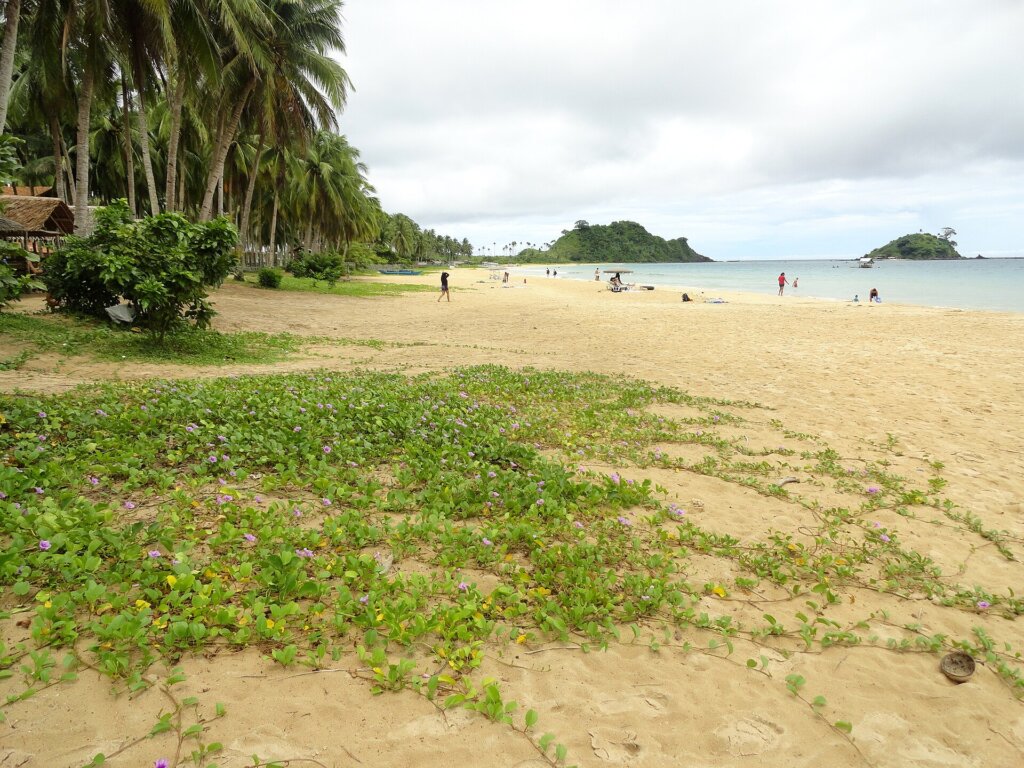
Choose Nacpan Beach for an easy, swimmable four-kilometre strip of golden sand within about an hour of town; choose Duli Beach if you want real surf from roughly November to March and are happy to trade convenience for solitude.
Nacpan and Duli are the two big open-ocean beaches on El Nido’s mainland, and they get confused constantly. Both face the open water rather than sheltered Bacuit Bay, both have long sweeps of sand backed by palms, and both require a land trip out of town. But they deliver very different days. This guide focuses on Duli vs Nacpan specifically for travellers with one free land day who need to pick just one beach — whether you are a first-time surfer, a family that wants calm water, or a photographer chasing empty sand.
Our unique angle: instead of treating each beach in isolation, we compare them on the five things that actually decide a good beach day — access, water conditions, crowds, facilities and cost — and then match each beach to a traveller type and a season.
Duli vs Nacpan at a Glance
Before diving into detail, here is the side-by-side summary our editorial team uses when readers ask which beach to pick.
| Factor | Nacpan Beach | Duli Beach |
|---|---|---|
| Distance from El Nido town | Roughly 17–20 km north | Roughly 30+ km northeast |
| Typical travel time | 45–60 minutes by tricycle or scooter | About 1–1.5 hours; last stretch is rougher road |
| Beach length | About 4 km of golden sand | Shorter cove-style bay, about 1–2 km |
| Best for | Swimming, families, sunset, first-timers | Surfing, solitude, longer stays |
| Wave conditions | Usually gentle to moderate; bigger in amihan | Consistent surf in the northeast monsoon |
| Crowds | Busy around midday in peak season | Quiet most of the year |
| Food and facilities | Several beach bars, huts and shops | A handful of small resorts and a surf shack |
| Signature extra | Twin-beach viewpoint over Nacpan and Calitang | Surf lessons and board rental |
In short, Nacpan is the crowd-pleaser and Duli is the specialist. If you have only a single day and no surf ambitions, Nacpan almost always wins. If you are coming specifically to surf, Duli is the only serious option on this part of the coast — see our full El Nido surfing guide for board sizes and lesson pricing.
Getting There: Roads, Time and Transport Options
Access is the single biggest difference between these two beaches, and it shapes the rest of your day.
Nacpan Beach access
Nacpan sits north of El Nido town along the main road toward Bucana. The road is paved for most of the way, with a short final section that can be dusty in the dry season and muddy after heavy rain. Most visitors arrive by private tricycle hire (negotiate a round-trip price with waiting time), by rented scooter, or by joining a shared van that bundles Nacpan with a waterfall or the Bucana viewpoint. The drive is short enough that you can leave after breakfast and still be back in town for an early dinner.
If you would rather wake up on the sand, the small village of Bucana has simple guesthouses and glamping-style stays within walking distance — our Bucana village stays guide covers the options.
Duli Beach access
Duli is further out and less direct. After leaving the national road you follow a secondary road that becomes rougher and steeper as you approach the coast. Confident scooter riders can make it in good weather, but many visitors prefer a tricycle with an experienced local driver or a pickup arranged through their accommodation. After rain, the last stretch can become slippery, so check conditions the day before and allow extra time.
Because of the travel time, Duli works best as an overnight trip rather than a quick half-day. Our Duli Beach stays guide compares the small resorts and surf lodges near the bay.
Transport cost tips
- Agree on the total round-trip fare and waiting time before you leave town.
- Bring cash: card payments and ATMs are not available at either beach.
- For scooters, wear a helmet and carry a rain jacket — afternoon showers are common outside the dry season.
- Download offline maps; mobile signal drops in patches along both routes.
Water Conditions: Swimming vs Surfing
Both beaches face open water, which means conditions change with the monsoon. Understanding the two seasonal winds is the key to choosing well. The northeast monsoon, known locally as amihan, generally blows from around November to March and pushes swell onto north- and east-facing coasts. The southwest monsoon, habagat, generally dominates from around June to October and brings more rain to western Palawan. You can follow the official seasonal outlooks on PAGASA, the Philippine weather bureau.
Nacpan in the water
For most of the year, Nacpan offers gentle to moderate waves and a sandy bottom that slopes gradually — ideal for wading, bodyboarding and casual swimming. During strong amihan days, though, the shore break can get punchy and currents can pull along the beach. Swim near other people, stay out of the water when red flags or local warnings are posted, and keep children within arm’s reach. Our ocean currents and swimming safety guide explains how to spot a rip.
Duli in the water
Duli is the area’s best-known surf break precisely because it catches amihan swell. When the northeast monsoon is running, you can expect consistent rideable waves, with beginner-friendly whitewater on the inside and bigger sets further out on good days. In the calmer months, Duli can go almost flat, which turns it into a quiet swimming beach — but that is not why most people make the trip. If you are learning, book a lesson with a local instructor who knows the channels and the reef sections at the ends of the bay.
A practical rule: if your main goal is swimming, Nacpan is the safer, easier bet in every season. If your goal is surfing, plan Duli for the amihan months and check a forecast service such as Windy before committing to the drive.
Crowds, Vibe and Photography
Nacpan’s atmosphere
Nacpan is famous, and in peak season (roughly December to May) that shows around midday, when vans from town arrive together. The good news is that four kilometres of sand absorbs a lot of people. Walk ten or fifteen minutes away from the main entrance in either direction and you will usually find open space. Early mornings and late afternoons are noticeably quieter, and sunset across the long beach is one of the best on the mainland.
For photographers, the signature shot is the viewpoint above the beach that shows Nacpan and neighbouring Calitang as a pair of curved bays separated by a narrow strip of land. Go in the morning for softer light behind you, or in late afternoon for warm tones.
Duli’s atmosphere
Duli feels like a different era of El Nido. There are only a few small resorts, a surf shack or two, and long stretches of nobody. The crowd is mostly surfers, long-stay travellers and couples looking for quiet. Evenings are dark and starry, with little light pollution. If you value solitude above convenience, Duli delivers in a way Nacpan no longer can in high season.
The trade-off is that you need to be more self-sufficient: bring water, sun protection and any snacks you might want, and do not expect a wide choice of restaurants.
Food, Facilities and Costs
Nacpan has a strip of beach bars, small restaurants and huts renting loungers and shade. You can buy fresh coconuts, grilled seafood, rice meals and cold drinks, and there are basic restrooms and showers at several establishments for a small fee. Prices are a little higher than in town but still reasonable.
Duli’s facilities are mostly attached to its handful of resorts. Non-guests can often order meals or drinks, but menus are limited and opening hours can be irregular in low season. Surfboard rental and lessons are typically offered through a local surf shop; ask your accommodation to confirm availability before you set off.
| Expense | Nacpan (typical) | Duli (typical) |
|---|---|---|
| Round-trip tricycle from town | Moderate | Higher, due to distance and road |
| Lounger or hut rental | Widely available | Limited; mostly resort-based |
| Meal at a beach bar | Many choices | Few choices |
| Surf lesson | Occasionally available | Main activity in amihan season |
Because prices change seasonally, treat these as relative comparisons rather than fixed rates, and confirm current costs locally.
Which Beach Fits Your Trip?
Choose Nacpan if…
- You have a single free day between island-hopping tours.
- You are travelling with children or non-confident swimmers.
- You want food, drinks and loungers without planning ahead.
- You want a classic sunset and the twin-beach viewpoint photo.
Choose Duli if…
- You are visiting between roughly November and March and want to surf.
- You prefer empty beaches and are happy to stay overnight.
- You are comfortable on rough roads or will hire an experienced driver.
- You want a slow, off-grid feel rather than a beach-club scene.
Can you do both?
Technically yes, but not comfortably in one day. The routes split early, and squeezing both in means spending more time in a vehicle than on sand. A better plan is Nacpan as a day trip from town and Duli as a separate overnight. If you also want to compare Nacpan with another nearby option, read our Nacpan vs Las Cabanas comparison.
Responsible Visiting
Both beaches sit outside the busiest tourism zone, which makes them more fragile in some ways. Pack out all rubbish, avoid single-use plastics, and use reef-safe sunscreen. Do not stand on coral at the reef ends of Duli. Respect private resort areas and ask before photographing local residents. El Nido collects an environmental fee for visitors to its protected areas; learn more about the municipality and the wider Bacuit Bay ecosystem on Wikipedia’s El Nido overview and on the Philippine Department of Tourism website. Our general Duli Beach guide also has more background on the bay itself.
Key Takeaways
- Nacpan is closer (about an hour), longer (about 4 km) and better for swimming and families.
- Duli is further and rougher to reach but is El Nido’s main surf beach in the amihan months.
- Walk away from Nacpan’s main entrance to escape midday crowds.
- Treat Duli as an overnight trip; bring cash, water and supplies.
- Check monsoon forecasts before going — conditions at both beaches change with the season.
- Do not try to do both in one day; split them across separate trips.
Frequently Asked Questions
Is Nacpan or Duli better for first-time visitors?
Nacpan is usually better for first-time visitors because it is closer to town, easier to reach, has more food and facilities, and is generally calmer for swimming.
When is the surf season at Duli Beach?
Surf at Duli is most consistent during the northeast monsoon (amihan), roughly November to March. Outside those months the bay can be calm or nearly flat.
Can I visit Nacpan and Duli on the same day?
It is possible but not recommended. The routes split early and you would spend most of the day in transit. Visit Nacpan as a day trip and Duli as an overnight.
Is it safe to ride a scooter to Duli Beach?
Experienced riders can make it in dry weather, but the final stretch is rough and can be slippery after rain. Less confident riders should hire a local tricycle driver.
Are there ATMs at Nacpan or Duli?
No. Withdraw enough cash in El Nido town before leaving, as card payments are rarely accepted at either beach.
About the Author
This guide was compiled by the El Nido Hotels Ranking editorial team, with input from local operators and ongoing on-the-ground updates.