
Nacpan Beach and Las Cabanas Beach both sit within a short ride of El Nido town, yet they deliver very different days out. This guide focuses on the practical trade-offs between the two specifically for travelers deciding where to spend a single free afternoon, rather than repeating generic “top beaches” lists you have already read.
Quick Answer: Nacpan Beach vs Las Cabanas Beach
If you want a long, wild stretch of sand with room to walk and fewer buildings in view, Nacpan Beach is the stronger pick. If you want an easy, no-hassle sunset with a beach bar cocktail in hand and a tricycle ride under fifteen minutes, Las Cabanas Beach wins. Nacpan rewards travelers willing to spend more time and money reaching it; Las Cabanas rewards travelers who want convenience without sacrificing a genuinely pretty view.
Getting There and Access
Las Cabanas Beach is the easier of the two by a wide margin. It sits roughly 4 kilometers south of El Nido town, reachable by tricycle in about 10 to 15 minutes for around 150 to 250 PHP each way, or by rented motorbike in under 20 minutes. The road is paved for most of the route, and tricycles run throughout the day and into the evening, which matters if you are staying for sunset.
Nacpan Beach is a longer trip. It lies about 17 to 20 kilometers north of town, and the drive takes 45 minutes to over an hour depending on road conditions, which can turn rough and muddy after rain. A round-trip tricycle hire typically runs 800 to 1,200 PHP, since drivers usually wait for you rather than picking up return fares. Renting a scooter and riding yourself is common among independent travelers, but the unpaved sections require caution, especially for less experienced riders.
Sand, Water, and Scenery Compared
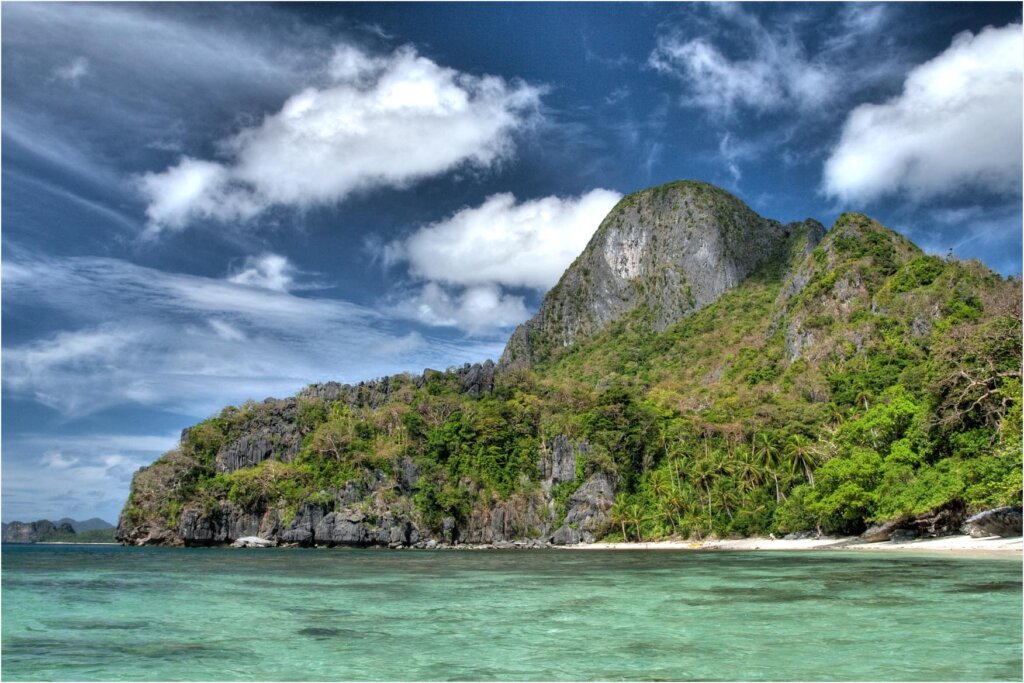
Nacpan is a four-kilometer arc of pale golden sand backed by coconut palms, with almost no development interrupting the view in either direction. The bay curves gently, the sand is soft underfoot, and the water is generally calm near shore, though a modest shore break appears further out. It forms one half of the “Twin Beaches,” connected by a short, steep hike over a headland to the quieter Calitang Beach next door.
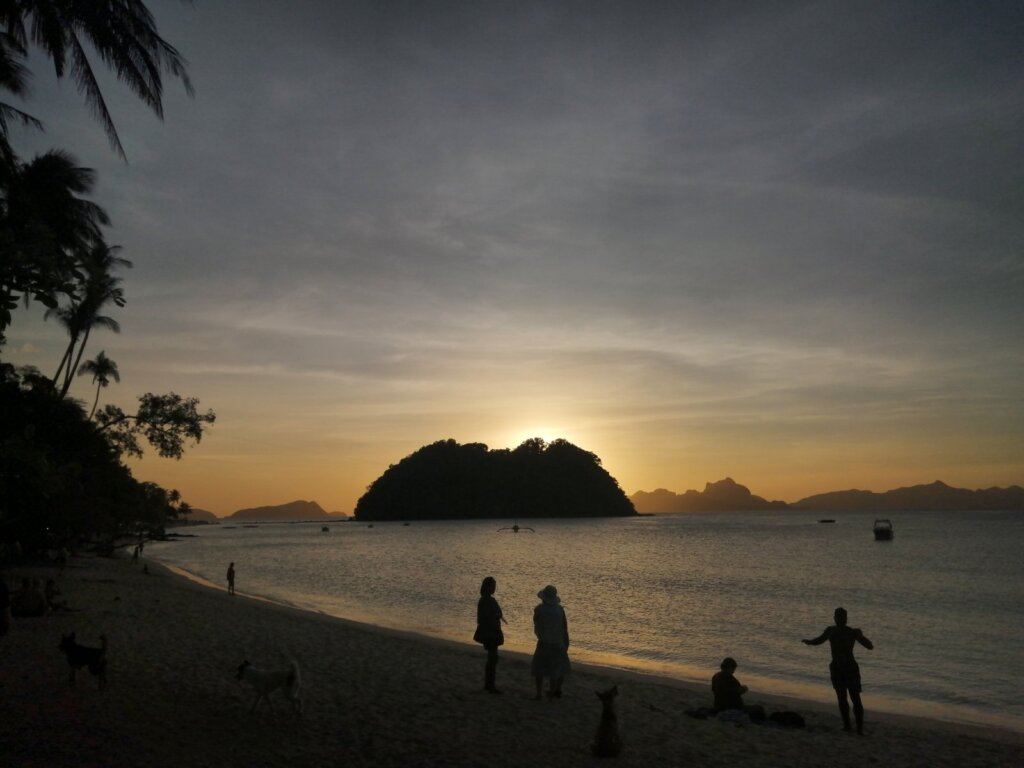
Las Cabanas is shorter and narrower, with a more sheltered cove feel. The sand is coarser in places, and the beachfront is lined with small resorts, cottages, and a scattering of restaurants, so the natural backdrop shares space with low-key development. What Las Cabanas lacks in raw scale it makes up for with a clear view of Pinagbuyutan Island offshore, which turns into the star of the show at sunset.
Sunset Views and Best Time to Visit
Las Cabanas has the more famous sunset in El Nido. Pinagbuyutan Island sits almost directly in the sunset sightline from several beachfront bars, and the combination of an accessible beach, cold drinks, and a dramatic silhouette has made it the default sunset stop for many visitors. Arrive by 4:30 or 5:00 p.m. to claim a good seat, since the beach fills up in the final hour before dusk, particularly from November through April when skies are driest.
Nacpan’s sunset is quieter and less structured, since there are far fewer permanent seating areas, but the open horizon and empty sand make for a more solitary, unfiltered view. Midday is Nacpan’s strongest window overall, when the tide is typically favorable for a swim and the light show the full length of the bay. Whichever beach you choose, checking conditions before you go is worth the extra five minutes.
Crowds, Vendors, and Atmosphere
Las Cabanas draws a steady flow of day-trippers and sunset visitors, especially during high season, and vendors selling grilled corn, fresh coconuts, and souvenirs are a regular presence. It has a sociable, slightly touristy energy that some travelers enjoy and others find a little busy.
Nacpan sees fewer visitors overall because of the longer drive, and the sheer length of the beach spreads people out even on busier days. Vendors are present near the main access point but thin out quickly as you walk further along the sand. If solitude is part of what you are looking for in a beach day, Nacpan delivers it more reliably.
Combining Either Beach With a Boat Tour Day
Neither beach is included in the standard lettered island-hopping tours (A, B, C, and D) that cover Bacuit Bay’s lagoons and islands, so getting to Nacpan or Las Cabanas means arranging separate land transport rather than booking a boat seat. Several tour operators in town run a combined northern loop that stops at Nacpan, Calitang, and sometimes Duli Beach in a single half-day trip, which is worth asking about if you would rather not negotiate a private tricycle yourself. Las Cabanas, being so close to town, rarely appears on organized tours at all, since it is simple enough to reach independently whenever you like.
If you are also planning to see the bay by boat, it makes sense to treat Nacpan and Las Cabanas as land-based add-ons around your island-hopping day rather than trying to squeeze everything into one itinerary. A common pattern is Las Cabanas for sunset on your arrival evening, then Nacpan as a full northern excursion later in the trip when you have a full day free. Compare the lettered tours themselves in our Tour A vs B vs C vs D breakdown if you have not settled on one yet.
Nacpan vs Las Cabanas: Side-by-Side Comparison
| Factor | Nacpan Beach | Las Cabanas Beach |
|---|---|---|
| Distance from town | ~17-20 km (45-70 min) | ~4 km (10-15 min) |
| Typical round-trip cost | 800-1,200 PHP by tricycle | 300-500 PHP by tricycle |
| Beach length | ~4 km, wide and open | Shorter, cove-like |
| Development | Minimal, mostly natural | Small resorts and beach bars |
| Best for | Long walks, quiet, photography | Sunset drinks, convenience |
| Signature view | Open bay and coconut groves | Pinagbuyutan Island at sunset |
Which Beach Should You Choose?
Both beaches are worth seeing if your schedule allows, but most travelers are choosing between them for a single afternoon rather than fitting in both. Think about how you actually like to spend a beach day, how much driving you are willing to do, and whether a cold drink within arm’s reach matters more to you than having the sand mostly to yourself, then let that answer drive the decision rather than a generic “must-see” ranking.
For Families and First-Time Visitors
Las Cabanas is the lower-friction choice. The short ride means less time in a hot tricycle with restless kids, and the beachfront restaurants offer a safety net if anyone gets hungry, tired, or sunburned faster than expected.
For Photographers and Solitude Seekers
Nacpan’s open, undeveloped sweep of sand photographs beautifully in soft morning or late afternoon light, and the lower visitor numbers make it easier to compose a shot without strangers in frame. Pair the trip with a stop at Calitang Beach next door for two backdrops in one outing.
For Budget Travelers
Las Cabanas is cheaper to reach and does not require a long tricycle wait-and-return arrangement. If Nacpan is on your list but your budget is tight, consider joining a shared van tour that bundles Nacpan with other northern stops to split the transport cost.
Whichever you pick, bring reef-safe sunscreen, cash for tricycle fares and vendors, and check the tide times before you go, since a low tide at Las Cabanas can expose a wider stretch of sand while a high tide narrows it considerably. Comfortable water shoes or reef booties also make the walk from the road to the sand more comfortable at both beaches. For a third option nearby, the shorter Nat Nat Beach guide covers a beach you can visit without a boat and closer to town.
Seasonality affects both beaches similarly. The dry months from roughly December to May bring the calmest seas and easiest road conditions to Nacpan, while the wetter months from June to November can make the unpaved sections slippery, according to general guidance from the Philippine Department of Tourism. For a fuller seasonal breakdown before you lock in dates, see our best time to visit El Nido guide. Marine and coastal areas around El Nido, including these beaches, fall under regulations enforced by the Department of Environment and Natural Resources, so pack out any trash you bring in and avoid removing shells or coral. If you want a broader climate picture before booking flights, weather.com publishes month-by-month averages for Palawan that are worth a quick check.
Frequently Asked Questions
Is Nacpan Beach or Las Cabanas Beach better for swimming?
Both are generally safe for casual swimming in calm conditions, but Las Cabanas’ cove shape offers slightly more shelter. Always check for posted warnings and avoid swimming during rough weather or strong onshore winds at either beach.
Can I visit both beaches in one day?
It is possible but tiring, since they sit in opposite directions from town. Most travelers pair Nacpan with other northern stops like Calitang Beach, and treat Las Cabanas as a separate, shorter outing, often timed around sunset.
Do I need to pay an entrance fee at either beach?
Neither beach currently charges a general entrance fee, though parking or small facility fees can apply at some resorts along Las Cabanas. Confirm current rates locally, as fees can change.
Is the road to Nacpan Beach safe for scooters?
Experienced riders manage it without issue in dry conditions, but the unpaved stretches become slick after rain. Less confident riders may prefer hiring a tricycle with a driver instead.
Which beach has better food options?
Las Cabanas has more beachfront restaurants and bars directly on the sand. Nacpan has a smaller cluster of local eateries near the main access point, so bring snacks and water if you plan to stay for hours.