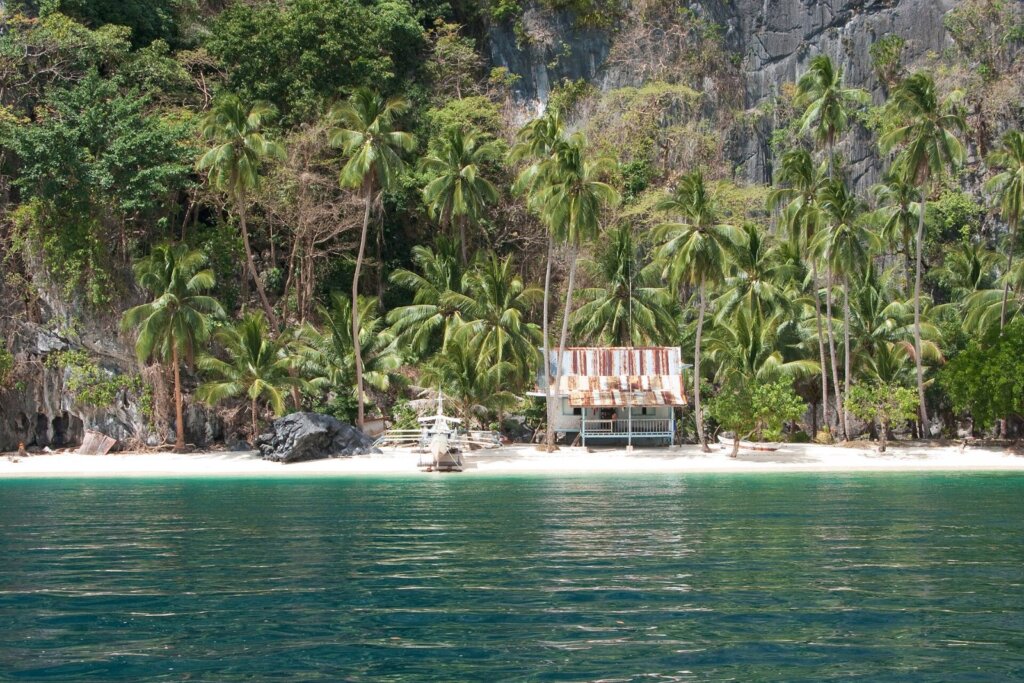
When strong northeast (amihan) winds hit El Nido, the west-facing beaches along Bacuit Bay — Corong-Corong, Marimegmeg and Caalan — plus the enclosed lagoons usually stay the calmest; in southwest (habagat) winds, look east to Sibaltan or head inland to a waterfall.
Few things deflate an El Nido holiday faster than waking up to whitecaps, a cancelled boat tour and a beach full of churning sand. Wind is a normal part of life on Palawan’s northern tip, and it shifts with the two monsoons. The trick is knowing which way each beach faces so you can go where the land blocks the wind. This guide focuses on sheltered swimming spots specifically for travellers stuck with a windy or choppy day — especially those whose island-hopping tour has just been called off.
Our unique angle is simple geography: instead of ranking beaches by beauty, we rank them by how well they hide from each monsoon wind, then tell you exactly when to switch to a backup plan on land.
- How Wind Direction Decides Your Beach Day
- Quick Comparison: Six Sheltered Spots
- 1. Corong-Corong Beach
- 2. Marimegmeg (Las Cabanas) Beach
- 3. Caalan Beach
- 4. Big and Small Lagoon on Miniloc Island
- 5. Sibaltan Beach
- 6. Nagkalit-kalit Falls (Freshwater Backup)
- Timing and Packing for a Windy Beach Day
- Safety Rules for Windy Days
- A Simple Windy-Day Decision Plan
- Key Takeaways
- Frequently Asked Questions
How Wind Direction Decides Your Beach Day
El Nido sits at the northern end of mainland Palawan, with Bacuit Bay opening to the west and south-west, and the open Sulu Sea along the east coast. Two seasonal wind patterns dominate the year:
- Amihan (northeast monsoon) — generally from around November to March. Cool, steady winds blow from the north-east. Beaches facing north and east catch waves; beaches tucked on the western, bay-facing side tend to be calmer.
- Habagat (southwest monsoon) — generally from around June to October. Wetter winds blow from the south-west, pushing chop into Bacuit Bay. East-coast beaches and inland spots tend to be the better fallback.
Between the monsoons, especially around April and May, winds are often light and almost every beach is swimmable. For official wind signals and advisories, check PAGASA; our explainer on PAGASA wind signals for El Nido travellers explains what each level means for boats. For hour-by-hour wind arrows, a tool such as Windy is handy — see our comparison of weather apps for El Nido.
Quick Comparison: Six Sheltered Spots
| Spot | Best in | Distance from town | Good for | Shelter rating |
|---|---|---|---|---|
| Corong-Corong Beach | Amihan | Short tricycle ride | Easy swim, sunset | High in NE wind |
| Marimegmeg (Las Cabanas) | Amihan | About 15 minutes | Families, long walks | High in NE wind |
| Caalan Beach | Amihan | Walkable from town | Quiet dip, snorkel near rocks | Medium–high |
| Big & Small Lagoon | Amihan (if boats run) | Boat tour | Kayaking, flat water | Very high once inside |
| Sibaltan Beach | Habagat | Over an hour by road | Calm east-coast swim | High in SW wind |
| Nagkalit-kalit Falls | Any season | Under an hour plus a hike | Freshwater swim | Wind-proof |
1. Corong-Corong Beach
Corong-Corong is a long, bay-facing beach just south of El Nido town, lined with guesthouses, small resorts and sunset bars. Because it faces west into Bacuit Bay, the land behind it blocks a lot of the northeast wind during amihan. On a windy morning, the water here is often noticeably flatter than at the northern beaches.
The bottom is shallow and partly rocky in places, so water shoes help at low tide. Many island-hopping boats also moor here, which means you can sometimes switch to a shorter, calmer route if your original tour was cancelled. Our Corong-Corong neighbourhood guide covers where to eat and stay.
2. Marimegmeg (Las Cabanas) Beach
Marimegmeg, widely known as Las Cabanas, is a few kilometres south of town and faces west across the bay. It is one of the most reliable amihan escapes: wide sand, gentle water most days, beach bars, and some of the best sunsets on the mainland. The quieter stretches at either end are worth the short walk if the main beach is busy.
In habagat, however, Marimegmeg takes wind and chop straight off the bay, so save it for the northeast monsoon. More detail is in our Marimegmeg Beach guide.
3. Caalan Beach
Caalan is a small, rocky-edged beach on the edge of town, reachable on foot. It faces the bay and is partially protected by the headland, so on amihan days it can be a quick, calm escape without hiring any transport. The water near the rocks offers some modest snorkelling when visibility is good.
It is small, and there is not much shade at midday, so arrive early or late. Read our Caalan Beach guide for the walking route.
4. Big and Small Lagoon on Miniloc Island
The famous lagoons are naturally sheltered: towering limestone walls enclose them, so once you are inside, the water is usually mirror-flat even when the bay outside is lumpy. The catch is getting there. Tour boats only sail when the coast guard and municipal tourism office allow it, and on rougher days routes may be shortened or switched.
During amihan, the western Bacuit Bay routes are often the ones that keep running, while routes that cross more exposed water may be suspended. If your tour is cancelled entirely, read our guide to refunds and rebooking after a weather cancellation. For a full seasonal view, see which tours run during amihan.
5. Sibaltan Beach
Sibaltan is on El Nido’s east coast, facing the Sulu Sea rather than Bacuit Bay. That orientation flips the logic: during habagat, when south-west winds churn the bay side, Sibaltan is often the calmer option. It is a quiet village beach with a few homestays and a slower pace, ideal if you want to swim without fighting chop.
It is more than an hour away by road, so it works best as a full-day or overnight trip. During amihan, Sibaltan can be windier, so it is mainly a habagat refuge.
6. Nagkalit-kalit Falls (Freshwater Backup)
When every coastline looks rough, go inland. Nagkalit-kalit Falls is a series of small cascades and pools reached by a jungle trek that involves river crossings. Wind matters very little under the forest canopy, and the pools are refreshing after the walk. Hire a local guide at the trailhead; the path can be muddy and slippery after rain, and water levels rise quickly during heavy downpours.
Wear shoes with grip, bring insect repellent and leave valuables in a dry bag. If rain is heavy and continuous, skip the trek altogether — flash flooding is a real risk in narrow river valleys.
Timing and Packing for a Windy Beach Day
Best time of day
Wind in El Nido often follows a daily rhythm. Mornings are frequently the calmest part of the day, with breezes building toward early afternoon and sometimes easing again near sunset. If the forecast shows a borderline day, aim to be in the water between about 7 and 10 a.m., take a long lunch in the shade, and return for a late-afternoon swim if conditions settle. This pattern is not guaranteed — a passing squall can arrive at any hour — but it improves your odds noticeably.
Tides matter too. At very low tide, shallow beaches such as Corong-Corong expose rocks and seagrass, which makes swimming awkward even when the water is flat. Check a tide table and favour mid to high tide for the easiest entry.
What to bring
- A light windbreaker or rash guard — wind and spray can make even warm days feel chilly.
- Water shoes for rocky or seagrass-covered entries.
- A waterproof phone pouch and a dry bag for electronics.
- Sunglasses with a strap, since gusts love to steal them.
- A sarong or quick-dry towel that can double as a windscreen on the sand.
- Snacks and water, as some small beach stalls close early on quiet, windy days.
Pitching your spot behind a boulder, boat or row of palms makes a surprising difference. Sandblasting is the most common windy-day complaint, and a little natural cover solves most of it.
Safety Rules for Windy Days
Sheltered does not mean risk-free. Even on calmer beaches, strong wind days can bring stronger currents, debris in the water and sudden squalls.
- Never swim alone on a windy day, and stay within your depth.
- Watch for local warnings or red flags and follow resort staff advice.
- Avoid kayaking or paddleboarding beyond the shelter of headlands — offshore winds can push you out quickly.
- Reapply sunscreen; cool wind makes it easy to underestimate sunburn.
For a month-by-month view of swell and visibility, see our guide to El Nido sea conditions by month. General background on El Nido’s geography and climate is on Wikipedia, and national travel advisories are posted by the Department of Tourism.
A Simple Windy-Day Decision Plan
- Check the wind direction and strength on a forecast app.
- Ask your tour operator whether your route is confirmed; boats need clearance to sail.
- If the wind is from the north-east, head to Corong-Corong, Marimegmeg or Caalan.
- If the wind is from the south-west, consider Sibaltan or an inland waterfall.
- If rain is heavy, switch to a café, massage or cooking class in town and try again tomorrow.
Building a buffer day into your itinerary is the best insurance. Travellers who schedule their main island-hopping tour early in the trip rather than on their last day almost always get a second chance when the wind cooperates.
Key Takeaways
- Know the monsoon: amihan (roughly Nov–Mar) blows from the north-east; habagat (roughly Jun–Oct) from the south-west.
- In amihan, west-facing Bacuit Bay beaches — Corong-Corong, Marimegmeg, Caalan — are usually calmest.
- In habagat, try east-coast Sibaltan or an inland waterfall instead.
- The lagoons are flat inside, but only if boats are cleared to sail.
- Swim early in the morning and at mid to high tide for the easiest conditions.
- Keep a buffer day so a cancelled tour does not ruin your trip.
Frequently Asked Questions
Which El Nido beach is calmest during amihan?
West-facing beaches along Bacuit Bay, such as Marimegmeg (Las Cabanas) and Corong-Corong, are usually the calmest during the northeast monsoon.
Do El Nido island-hopping tours run on windy days?
Tours only sail with clearance from the coast guard and tourism office. On windy days some routes may be shortened, switched or cancelled entirely.
Where should I swim in El Nido during habagat?
During the southwest monsoon, the bay side can get choppy. East-coast beaches such as Sibaltan, or inland waterfalls like Nagkalit-kalit, are better options.
Is it safe to kayak on a windy day in El Nido?
Only within sheltered water close to shore. Avoid paddling beyond headlands, where offshore winds can quickly push kayaks out to sea.
What time of day is calmest in El Nido?
Mornings are often the calmest, with wind building toward early afternoon. Aim to swim between about 7 and 10 a.m. on borderline days.
About the Author
This guide was compiled by the El Nido Hotels Ranking editorial team, with input from local operators and ongoing on-the-ground updates.