TL;DR: Book all-inclusive (or full board) only if you are staying on a private island resort where leaving costs a boat ride; in El Nido town, Corong-Corong or Lio, room-only or bed-and-breakfast almost always gives better value and better food.
El Nido has an unusual hotel market. A handful of exclusive island resorts in Bacuit Bay sell packages where meals, transfers and daily activities are bundled into one nightly rate, while the vast majority of mainland hotels, from boutique guesthouses to hillside resorts, sell rooms with or without breakfast and leave the rest to you. The question of which plan to choose is therefore less about preference and more about geography.
This guide focuses on the meal-plan decision specifically for couples, families and first-time visitors who are comparing a package rate against a cheaper room-only rate and want to know which one actually saves money once boat tours, restaurant meals and transfers are added up. We break down what each plan typically includes, where the hidden costs sit, and how to calculate your own break-even point.
What “All-Inclusive” Actually Means in El Nido
The term is used loosely. In Mexico or the Caribbean, all-inclusive usually means unlimited food and drinks at a large resort. In El Nido, it more often means one of three things:
- Full board: breakfast, lunch and dinner are included, but drinks (especially alcohol) are charged separately.
- Package or “inclusive” rate: meals plus airport or port transfers, and sometimes a set number of guided activities such as kayaking, snorkeling trips or island excursions.
- Half board: breakfast plus either lunch or dinner, common at mid-range resorts outside town.
Before comparing prices, read the inclusions line by line. A rate labelled “all-inclusive” that excludes the boat transfer from the mainland, or that limits activities to one per day, may be worth far less than it appears. Check, too, whether the government environmental fee for the protected area is included or collected separately.
Context helps here. El Nido sits inside the El Nido–Taytay Managed Resource Protected Area, and the municipality caps visitor numbers at popular lagoons and beaches. That regulatory backdrop shapes how resorts package activities: island resorts often hold their own permits and run private boat trips on schedules that avoid the shared-tour rush, which is a real benefit you are paying for inside an inclusive rate.
Where Each Plan Makes Sense
Location is the single biggest factor. El Nido’s accommodation splits into roughly four zones, and the logic changes in each one. (For a full breakdown of the neighborhoods, see our El Nido barangay guide.)
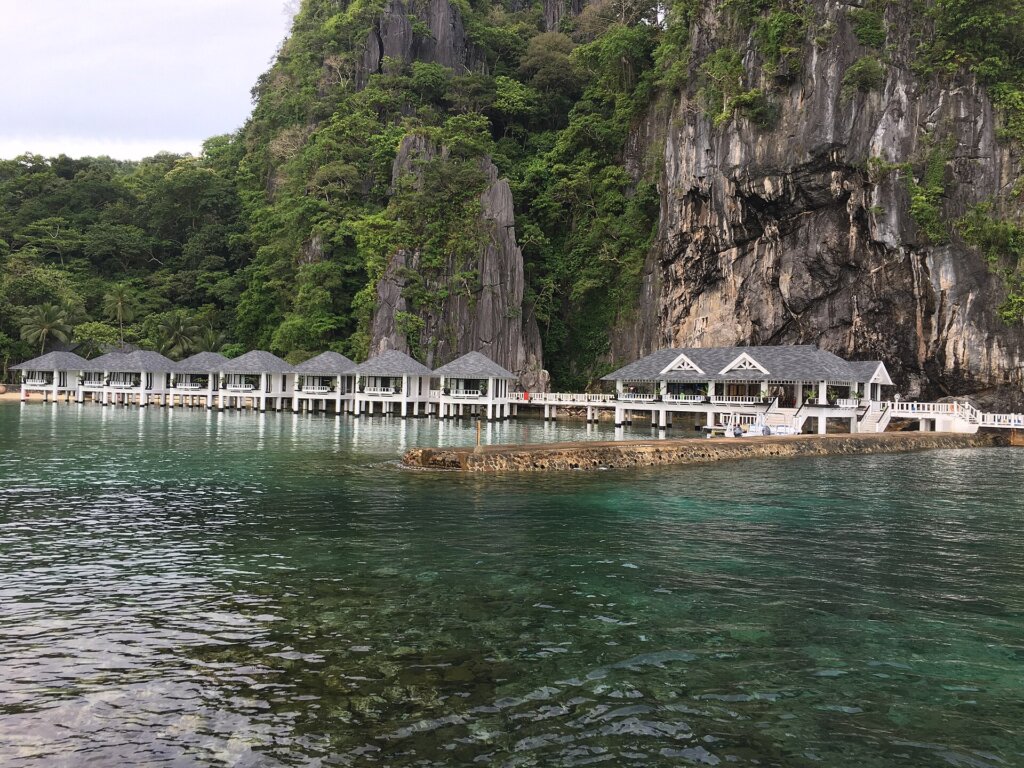
Private island resorts: If your resort sits on its own island in Bacuit Bay, every restaurant meal outside the property requires a boat. Packages here are not a luxury add-on; they are practically the only sensible option, and many island resorts only sell inclusive rates for that reason.
El Nido town (Poblacion): Dozens of restaurants, cafés, bakeries and street-food stalls sit within walking distance. Room-only or bed-and-breakfast wins almost every time.
Corong-Corong and Caalan: A short tricycle ride from town, with a strip of sunset-facing restaurants on the beach. Bed-and-breakfast plus eating out is the usual choice.
Lio Estate and Nacpan area: Lio has its own walkable cluster of restaurants, so room-only works. Remote resorts near Nacpan or Duli are more isolated; half board can make sense if you dislike tricycle rides after dark.
Transport also changes the math. Tricycles are the main way to move between zones, and fares rise after dark and for longer runs such as Lio or Nacpan. If you are staying 20 to 40 minutes from town and expect to come back for dinner every night, those return rides add up quickly, and a half-board plan suddenly looks more attractive. Our El Nido transport guide covers typical fares and how to arrange rides.
Side-by-Side Comparison
The table below summarizes the trade-offs travelers ask us about most often.
| Factor | All-Inclusive / Full Board | Room-Only or B&B |
|---|---|---|
| Best location | Private island resorts, remote beaches | Town, Corong-Corong, Lio |
| Budget predictability | High – most costs paid upfront | Lower – spending varies daily |
| Food variety | Limited to one or two resort menus | Hundreds of restaurants and cafés |
| Island hopping tours | Often private resort trips, included or discounted | Shared or private tours booked separately |
| Drinks | Often excluded or limited | Pay as you go, usually cheaper in town |
| Flexibility | Low – meals tied to resort schedule | High – eat anywhere, any time |
| Typical value for families | Good if kids eat a lot and you stay put | Good if you like to explore |
How to Calculate Your Break-Even Point
The simplest way to decide is to price both options for your actual itinerary rather than comparing headline nightly rates.
- Get the room-only rate for the same room category and dates.
- Estimate your daily food spend. In El Nido town, a casual Filipino meal can be very affordable, while dinner at a popular beachfront restaurant with drinks costs considerably more. Build a realistic per-person daily figure for breakfast, lunch, dinner and snacks.
- Add activities you would actually do. Shared island hopping tours (Tours A, B, C and D) are sold per person and usually include a packed lunch on the boat, which means you skip a restaurant lunch on tour days. Our island hopping cost guide lists current price ranges.
- Add transfers from the airport or bus terminal if the package includes them.
- Compare the totals. If the inclusive rate is within roughly 10–15% of your DIY total and you value convenience, the package is reasonable. If it is far higher, go room-only.
One frequently missed detail: on island hopping days you will be on a boat from morning to late afternoon, so a full-board lunch at the resort goes unused. Three tour days on a five-night stay can erase much of the value of a full-board plan on the mainland.
A worked example makes the logic clearer. Imagine a couple staying five nights in Corong-Corong, joining two shared island hopping tours and spending one day on a private boat. On three of five days, lunch is already covered on the boat. That leaves five breakfasts (often included with B&B), two lunches and five dinners to pay for. Unless the full-board supplement is very small, paying for those twelve meals individually will usually come out cheaper, and you get to choose where you eat. Now flip the scenario to an island resort: the boat ride to town and back for each dinner would cost more than the meals themselves, so the package wins easily.
Food Quality and Dietary Needs
Resort kitchens on private islands tend to be good, because they know guests eat there every day. Many rotate menus and will accommodate vegetarian, gluten-free or allergy requirements with notice. Still, after four or five nights, even a strong menu can feel repetitive.
In town, the variety is the draw: Filipino grilled seafood, Italian wood-fired pizza, Middle Eastern, vegan cafés and fresh fruit shakes are all within a few blocks. Travelers with specific dietary needs often find more options on the mainland than at a single resort kitchen, though they need to do more research.
If you are torn, a hybrid approach works well: book bed-and-breakfast, then pay for one or two special dinners at your hotel (sunset set menus are common) and eat out the rest of the time.
Questions to Ask Before You Book
Send these questions to the property or check them in the rate details before paying:
- Are non-alcoholic drinks, coffee and bottled water included at all meals?
- Is the boat or van transfer included, and is it shared or private?
- Which activities are included, how many per day, and are any weather-dependent?
- Is the environmental (eco-tourism development) fee included?
- Are children charged a reduced meal rate, and from what age?
- What happens to unused meals if you join an outside tour?
- Are service charge and VAT included in the quoted price? Philippine hotels commonly add both.
Payment logistics matter too. Some smaller restaurants in El Nido prefer cash or e-wallets; see our guide to GCash payments in El Nido if you plan to eat out a lot. For room choice within your budget, our explainer on hotel room types helps decode category names.
For official information on travel requirements and destination updates, check the Philippine Department of Tourism before you go, and review the weather outlook from PAGASA, the national weather bureau. Weather matters for this decision: during the wetter months from roughly June to October, rough seas can cancel tours for a day or two, and guests on room-only plans in town have more fallback options than guests marooned at a remote resort without meal coverage.
Key Takeaways
- Island resorts: inclusive or full-board packages are usually the practical choice because every outside meal requires a boat.
- Town, Corong-Corong and Lio: room-only or bed-and-breakfast gives better value and far more variety.
- Island hopping days include a boat lunch, so full-board lunches on the mainland often go unused.
- Always confirm whether drinks, transfers, the environmental fee, VAT and service charge are included.
- Calculate a break-even figure for your real itinerary instead of comparing headline nightly rates.
- A hybrid plan – B&B plus one or two hotel dinners – suits most mainland stays.
Frequently Asked Questions
Are there true all-inclusive resorts in El Nido?
A few private island resorts in Bacuit Bay sell inclusive packages that bundle meals, transfers and some activities. Unlimited-drinks resorts in the Caribbean style are rare, so check what beverages are covered.
Is full board worth it in El Nido town?
Rarely. Town has a dense restaurant scene within walking distance, and island hopping tours include lunch, so full-board meals often go unused.
Do island hopping tours include food?
Most shared tours A to D include a buffet-style lunch on board or on a beach, plus drinking water. Private tours can be customized.
Can I add meals later if I book room-only?
Usually yes. Most hotels let you pay for breakfast or dinner on the spot, though prices may be higher than a pre-booked plan.
Are service charge and VAT included in quoted rates?
Not always. Many Philippine hotels add a 10% service charge and 12% VAT. Ask whether the rate is “net” or “plus plus” before booking.
About the Author
This guide was compiled by the El Nido Hotels Ranking editorial team, with input from local operators and ongoing on-the-ground updates.