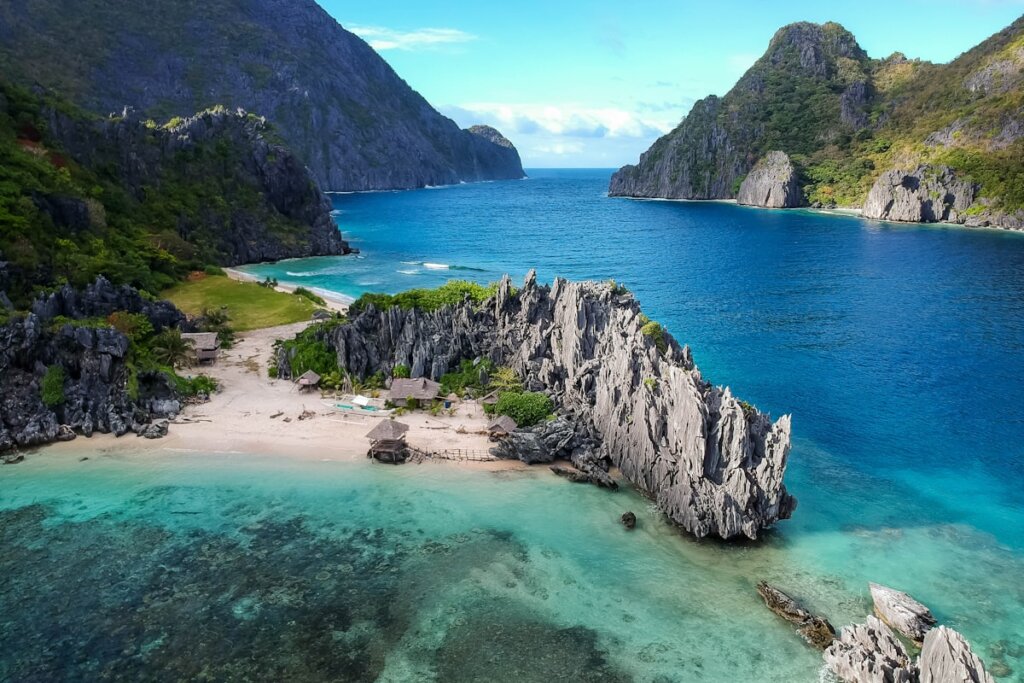

August is deep in El Nido’s rainy season — it’s one of the wettest months of the year and carries the highest typhoon probability in the Philippine calendar. That said, many travellers visit El Nido successfully in August every year by planning smartly, staying flexible, and knowing exactly what they’re signing up for. This guide gives you an honest, data-driven picture of what to expect.
| Factor | August in El Nido |
|---|---|
| Season | Peak wet season / southwest monsoon |
| Average high temperature | 30°C (86°F) |
| Average low temperature | 24°C (75°F) |
| Average rainfall | 400–500mm (20–24 rain days) |
| Humidity | 88–92% |
| Typhoon risk | Moderate–high (most storms track east but generate swell) |
| Sunshine hours | 2–4 hours/day average |
| Sea conditions | Often rough on west coasts; lagoons accessible on calm days |
| Crowd level | Very low — absolute low season |
| Hotel prices | 50–65% below peak season rates |
| Overall verdict | ⭐⭐½ Only for flexible, adventurous travellers |
- August Weather Data
- Typhoon Reality Check
- Why Visit El Nido in August? (The Genuine Upside)
- Tours That Still Operate in August
- Accommodation and Prices in August
- What to Pack for El Nido in August
- Rainy Day Activities in El Nido
- August vs Other Months: Is August Worth It?
- Frequently Asked Questions: El Nido in August
August Weather Data
August is El Nido’s most extreme weather month. The southwest monsoon (Habagat) is at its peak intensity — sustained southwest winds push persistent swell onto exposed western coasts, and rainfall totals of 400–500mm over the month mean rain is a near-daily reality rather than an occasional shower.
Week-by-Week August Conditions
| Period | Weather | Sea Conditions | Tour Availability |
|---|---|---|---|
| Early August (1–10) | Heavy rain, strong winds | Often rough | 40–60% of scheduled tours run |
| Mid August (11–20) | Highly variable — some clear windows | Moderate on calm days | 50–70% run on good weather windows |
| Late August (21–31) | Gradually improving toward September | Calmer than early August | 60–75% availability |
Typhoon Reality Check
El Nido sits on the far western edge of the Philippines — most typhoons track through the central and eastern islands (Leyte, Samar, eastern Luzon) and make landfall well east of Palawan. However, even a typhoon making landfall hundreds of kilometres away on Luzon generates strong swells, sustained rain, and wind in Palawan. A direct typhoon hit on Palawan is rare but not impossible.
What to realistically expect in August:
- 3–6 days per month where tour bangkas are grounded due to sea state exceeding safe operating conditions (≥ Force 5)
- 2–3 days of heavy continuous rain (not just afternoon showers) — possible power outages and flooding of low-lying streets
- Possible flight disruptions if weather is severe — always book flexible/refundable airfares for August travel
- 10–14 days of reasonable conditions where island hopping is possible, particularly to the sheltered lagoons
Monitor PAGASA (Philippine Atmospheric, Geophysical and Astronomical Services Administration) and Typhoon2000.ph in the 5–7 days before travel and throughout your stay. The Joint Typhoon Warning Center provides the most detailed track forecasts for Western Pacific systems.
Why Visit El Nido in August? (The Genuine Upside)
Despite the challenges, August has a loyal following among experienced travellers. The reasons are real:
- Prices are at their absolute lowest: 50–65% off peak season rates in most guesthouses. Budget accommodation (dorms, fan rooms) is available for ₱250–400/night — comparable to mainland Southeast Asia prices.
- Zero crowds: Lagoon tours run with 4–6 people instead of the 20–30 of peak season. You’ll have the Big Lagoon almost entirely to yourself on a good morning.
- Green season beauty: The hills, cliffs, and jungle are a vivid, saturated green that’s simply not available in the dry season. Waterfalls appear on the limestone formations. The dramatic stormy skies create extraordinary photographic light.
- Authentic local atmosphere: El Nido town reverts to a working fishing village. Restaurants are uncrowded, locals are relaxed and welcoming, and the island feels like itself rather than a tourist hub.
- Underwater life: Rain flushes nutrients into the bay, increasing plankton and the fish that feed on it. Marine life inside the protected lagoons is particularly active. Water temperature (28–30°C) is warm and comfortable.
Tours That Still Operate in August
On calm days (expect 10–14 per month on average), most island-hopping tours operate with modifications:
- Tour A (lagoons and Secret Beach): Most reliably available — the Big Lagoon and Small Lagoon are naturally sheltered from open-ocean swell by surrounding limestone karsts. This is your safest bet for guaranteed island hopping in August.
- Tour C (Helicopter Island): Usually runs on moderately calm days — the route has some exposed sections but is manageable in moderate conditions.
- Tour B (caves): Usually runs on calm days — involves crossing more open water to reach the cave systems.
- Tour D: Most frequently cancelled in August — crosses the most exposed water and requires the calmest conditions. Don’t count on this tour running in August.
Strategy: Arrive with a 7–10 day window and plan lagoon tours on the first calm morning you get. Use rain days for town exploration, cooking classes, spa treatments, or the Taraw Cliff hike (mud adds adventure, not subtracted it).
Accommodation and Prices in August
August accommodation in El Nido is the most affordable of any month. No advance booking required — walk-in and negotiated rates are common practice.
| Type | August Price Range | Notes |
|---|---|---|
| Budget dorm | ₱250–450/night | Fan-cooled; shared bathroom |
| Private guesthouse room | ₱400–800/night | Air-conditioned options available |
| Mid-range hotel | ₱1,000–2,500/night | Pool access common at this price |
| Boutique/resort | ₱2,500–6,000/night | Often negotiable for multi-night stays |
For resort options and reviews, see our best hotels in El Nido guide. Corong-Corong (2km south of town) is a good option in August — quieter, slightly sheltered from town flooding, and still close to departure points.
What to Pack for El Nido in August
- Full waterproof jacket (non-negotiable): Not a light shower jacket — a proper waterproof shell. Rain in August can be horizontal and sustained.
- Waterproof sandals: Mud and puddles everywhere — regular sandals won’t cut it
- 2× dry bags: One for your daypack, one for camera/phone. Even on “calm” days, spray on the boat is significant
- Electrolyte sachets: 88–92% humidity is draining — replenish electrolytes, especially after active days
- Portable battery bank: Power outages during storms are common; an external battery keeps your phone charged for emergency contact and navigation
- Travel insurance with medical evacuation: Essential in August — typhoon season means medical evacuation scenarios are more plausible. Don’t visit without it.
- Flexible return tickets: Book changeable fares for your departure — weather delays are a real possibility
Full kit list at our El Nido packing guide 2026.
Rainy Day Activities in El Nido
When tours are cancelled, El Nido offers more than you might expect:
- Filipino cooking class: Several operators offer half-day classes — learn to make kinilaw, adobo, and sinigang
- Town exploration: El Nido’s town hall, local market, and harbour are walkable and interesting
- Taraw Cliff hike: Actually more atmospheric in the rain — dramatic clouds, lush greenery, cooler temperatures
- Spa and massage: Many El Nido guesthouses offer affordable massage (₱500–800/hour). A good option for a weather-cancelled afternoon.
- Local restaurants: Use rainy days to eat well at the local carinderia and night market (which operates even in rain) — El Nido’s food scene is genuinely excellent
- Snorkelling in the bay: On calm rain days (rain without swell), snorkelling directly off El Nido beach is still good
August vs Other Months: Is August Worth It?
| Month | Weather | Crowds | Price | Best For |
|---|---|---|---|---|
| February | Excellent | Moderate-High | High | Guaranteed conditions |
| May | Variable | Low | Medium-Low | Value, fewer crowds |
| July | Poor-Variable | Very Low | Low | Budget, authenticity |
| August | Poor | Very Low | Lowest | Maximum value, adventures |
| September | Variable | Very Low | Low | Wet season improving |
| November | Very Good | Low | Medium | Best shoulder season |
For the full seasonal comparison, see our best time to visit El Nido guide and our July travel guide.
Frequently Asked Questions: El Nido in August
Is it safe to visit El Nido in August?
Yes — El Nido is generally safe to visit in August with proper preparation. The main risks are typhoon-related disruptions (flight delays, tour cancellations, possible power outages) rather than personal safety threats. Travel insurance with weather cancellation coverage and flexible return tickets are essential. Monitor weather forecasts closely and avoid travelling to El Nido in the days directly before a typhoon warning for your area.
Can you go island hopping in El Nido in August?
Yes, but with flexibility. On calm days (expect 10–14 per month), morning island-hopping tours operate — particularly Tour A to the Big Lagoon and Small Lagoon, which are naturally sheltered. Arrive with a 7–10 day window so you have multiple opportunities to catch good conditions. Tour D (most exposed route) is frequently cancelled in August.
What is the typhoon risk in El Nido in August?
Direct typhoon hits on El Nido/Palawan are rare since most Philippine typhoons track through the central and eastern islands. However, major typhoons affecting Luzon generate strong swells and heavy sustained rain in Palawan even without direct impact. Expect 3–6 days per August where sea conditions are too dangerous for island hopping. Monitor PAGASA forecasts daily during your stay.
What are the cheapest months to visit El Nido?
August and September are the cheapest months to visit El Nido, with accommodation 50–65% below peak season rates. July is also very affordable. If you want budget prices with better weather, November is the best shoulder month — significantly cheaper than December–April with far more reliable conditions than July–September.