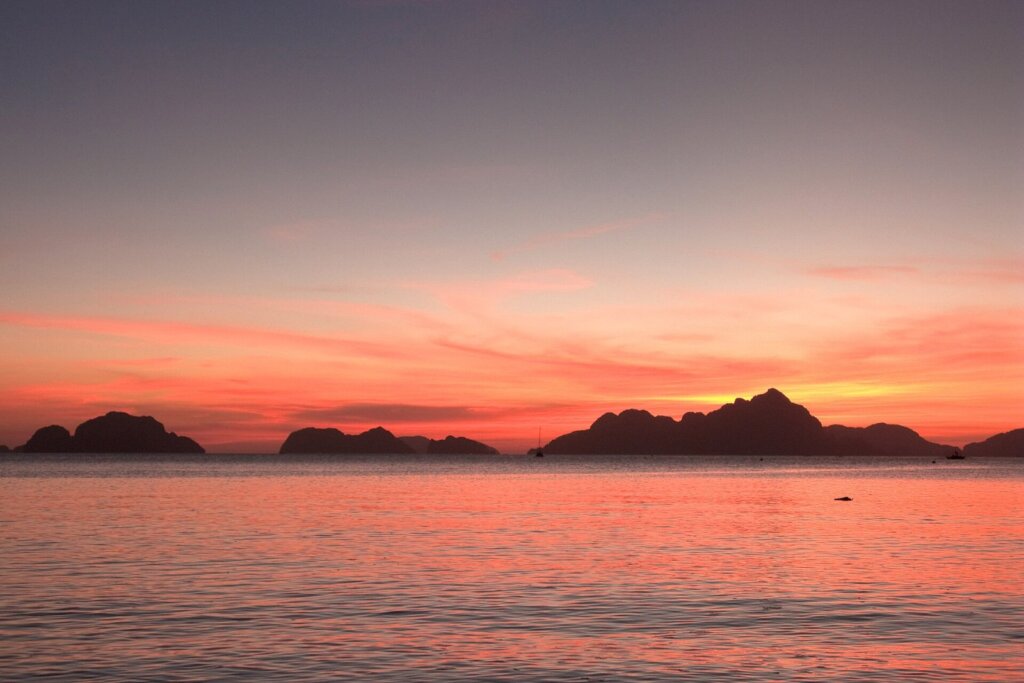
TL;DR: Early risers get El Nido’s calmest seas, emptiest beaches and softest light before 9 a.m.; night owls get the best sunsets, the night market and a livelier town after dark. Both can enjoy the same tours, but they should plan land activities, meals and rest at opposite ends of the day.
Most El Nido itineraries assume everyone wants the same day: breakfast, a 9 a.m. island-hopping boat, sunset drinks, bed. In reality, travellers run on very different body clocks, and El Nido rewards both types if you plan around them. This guide focuses on structuring your days specifically for travellers who know they are either natural early risers or committed night owls, and for couples or friend groups who are one of each. We compare what each schedule gets right, where it struggles, and how to build a hybrid plan so nobody spends the trip exhausted or bored.
El Nido sits close to the equator, so day length does not swing much through the year. Sunrise generally falls around 5:45 to 6:15 a.m. and sunset around 5:40 to 6:25 p.m. Our sunrise and sunset times by month gives the details, and you can cross-check daily times on timeanddate.com for nearby Puerto Princesa.
Why Your Body Clock Matters More in El Nido
In a big city, your schedule mostly affects which restaurants are open. In El Nido, it affects sea conditions, crowd levels, light for photos and how hot you feel. Three local patterns make timing important:
- Morning seas are often calmer. Wind tends to build during the day, which is why many operators like to leave in the morning. The national weather agency PAGASA publishes marine and wind forecasts if you want to check.
- Midday is intense. UV levels peak between roughly 10 a.m. and 3 p.m. most of the year. See our sunburn and UV guide.
- Tours cluster at the same hours. Most shared tours leave between 8:30 and 9:30 a.m., which means popular lagoons and beaches fill up at roughly the same time each day.
Once you understand these rhythms, you can either ride them (the early riser approach) or deliberately step out of them (the night owl approach).
The Early Riser Plan: Make the Most of 5:30 to 11 a.m.
If you wake naturally before 6 a.m., El Nido gives you a quiet, cool window that most visitors never see.
Sample early riser day
- 5:30 a.m. Walk to the beach in El Nido town or Corong-Corong for sunrise over the limestone cliffs. The light is soft and the bay is often glassy.
- 6:15 a.m. Swim or paddle before boat traffic picks up. Stand-up paddleboard and kayak rentals sometimes open early; ask the day before.
- 7:00 a.m. Early breakfast at your hotel or a cafe that opens early.
- 8:30 a.m. Join your island-hopping tour. Ask your operator whether the boat can reach the most popular lagoon first, or reverse the route, to beat the crowd.
- 4:30 p.m. Back in town. Shower, nap, early dinner.
- 8:30 p.m. Lights out, ready for another early start.
What early risers do best
Early risers win on photography (golden hour at sunrise with no one in the frame), calm-water activities, and beach time at road-accessible beaches like Nacpan before day-trippers arrive. They also cope better with the heat, because they do their walking before the sun is high.
Where early risers struggle
Many restaurants and cafes in town open later, so breakfast options before 7 a.m. can be limited. Early risers also miss the town’s evening energy, including the night market and live music, unless they schedule one late night on purpose.
The Night Owl Plan: Own 4 p.m. to Midnight
Night owls do not need to force 5 a.m. alarms. El Nido’s late afternoon and evening are arguably its most social, atmospheric hours.
Sample night owl day
- 8:00 a.m. Wake up with just enough time for coffee before the boat.
- 9:00 a.m. Island-hopping tour, ideally a route with lots of swimming so you wake up in the water.
- 4:30 p.m. Return, rest for an hour.
- 5:30 p.m. Sunset at Las Cabanas Beach or Corong-Corong.
- 7:00 p.m. Street food at the El Nido night market.
- 9:00 p.m. Live music or a beach bar. Our nightlife guide covers the main areas.
- 11:30 p.m. On a clear night away from town lights, try some stargazing.
What night owls do best
Night owls get the full sunset experience, more dining choice, and the social side of El Nido. They are also better suited to land days that start late, such as a mid-morning scooter ride to Nacpan followed by sunset.
Where night owls struggle
Island-hopping tours rarely leave after 10 a.m., so night owls must accept at least a few earlier mornings. Late nights before boat days can make seasickness worse; read our seasickness tips if you are prone to it.
Side-by-Side Comparison
| Factor | Early Riser | Night Owl |
|---|---|---|
| Best light for photos | Sunrise, empty beaches | Sunset, warm tones |
| Sea conditions for paddling | Often calmer in early morning | Can be choppier by late afternoon |
| Crowds at road-accessible beaches | Very low before 8 a.m. | Moderate at sunset spots |
| Food options | Limited before 7 a.m. | Widest choice, night market |
| Heat exposure | Lower, active before peak sun | Higher if walking at midday |
| Social life | Quiet, early nights | Bars, live music, meeting people |
| Best extra activity | Sunrise paddle, viewpoint walk | Stargazing, night market |
The Hybrid Plan for Mixed Couples and Groups
If you are travelling with someone on the opposite clock, avoid forcing one schedule on the whole group. A few simple rules keep everyone happy:
- Anchor the day on the shared tour. Island-hopping is the one activity that happens at a fixed time; everyone attends.
- Split the edges. The early riser takes sunrise solo; the night owl takes the late bar or stargazing session solo or with new friends.
- Meet at sunset. Sunset is the natural overlap: early enough for the early riser, early enough in the evening for the night owl.
- Alternate land days. On non-boat days, let the early riser plan the morning and the night owl plan the evening.
- Protect sleep before boat days. Agree that the night before a tour is a quieter night, which also lowers seasickness risk.
Choosing a central place to stay helps here. A hotel in town or Corong-Corong lets the night owl walk home late, while the early riser can still reach the water quickly. Check the tides too, because low tide can change how pleasant a sunrise swim is; our tide guide explains how.
Three-Day Plans for Each Type
Here is how the two schedules play out over a typical three-day stay, assuming good weather and one land day.
Early riser: three days
Day 1: Arrive, check in, and walk the town beach at sunset to get your bearings. Early dinner and early night. Day 2: Sunrise paddle, then Tour A for the lagoons. Back by late afternoon for a nap and simple dinner. Day 3: Leave for Nacpan Beach by scooter or tricycle around 6:30 a.m. so you have the sand almost to yourself, return before midday heat, and spend the afternoon at your hotel pool or a shaded cafe.
Night owl: three days
Day 1: Arrive, sleep in, and head to Las Cabanas for sunset followed by the night market. Day 2: Keep the night before quiet, join Tour C for snorkelling, then take a long rest and a late dinner with live music. Day 3: A slow brunch, a mid-morning ride to a road-accessible beach, an afternoon swim, and sunset at Corong-Corong before a final night out.
Adjusting for the season
In the dry months, both plans work as written. In the wet season, afternoon showers are common, so early risers have an advantage: mornings are more often clear, and you can finish outdoor activities before the rain. Night owls in the wet season should keep a covered venue in mind for evenings and check the forecast before committing to a beach sunset. Whichever type you are, give yourself at least one unscheduled half-day so a cancelled boat or a late night does not derail the whole trip.
Key Takeaways
- El Nido’s sunrise and sunset times stay fairly stable all year, so you can plan around roughly 6 a.m. and 6 p.m.
- Early risers get calm water, cooler air and empty beaches; night owls get sunsets, food and nightlife.
- Shared island-hopping tours leave around 9 a.m., so night owls should still plan a few earlier nights.
- Mixed groups should share the tour and sunset, then split the early and late edges of the day.
- Protect sleep the night before boat days to reduce fatigue and seasickness.
Whatever your clock, the bay of Bacuit looks different at every hour. Plan your days around when you feel best, not around a generic itinerary.
Frequently Asked Questions
What time is sunrise in El Nido?
Sunrise in El Nido usually falls between about 5:45 and 6:15 a.m., depending on the month. Day length changes little through the year because El Nido is close to the equator.
Can night owls skip morning island-hopping tours?
Not really. Most shared and private tours depart between 8:30 and 9:30 a.m. to use calmer morning seas, so night owls should plan a few earlier nights before boat days.
Where is the best place to watch sunrise in El Nido?
The town beach and the Corong-Corong shoreline are easy options. For sunsets, Las Cabanas Beach and Corong-Corong are the most popular spots.
Is El Nido good for nightlife?
El Nido has a relaxed nightlife scene with beach bars, live music and a night market. It is lively but smaller and quieter than major party destinations.
How should couples with different sleep schedules plan El Nido?
Share the island-hopping tour and sunset, then let the early riser enjoy sunrise activities and the night owl enjoy evening activities separately.
About the Author
This guide was compiled by the El Nido Hotels Ranking editorial team, with input from local operators and ongoing on-the-ground updates.