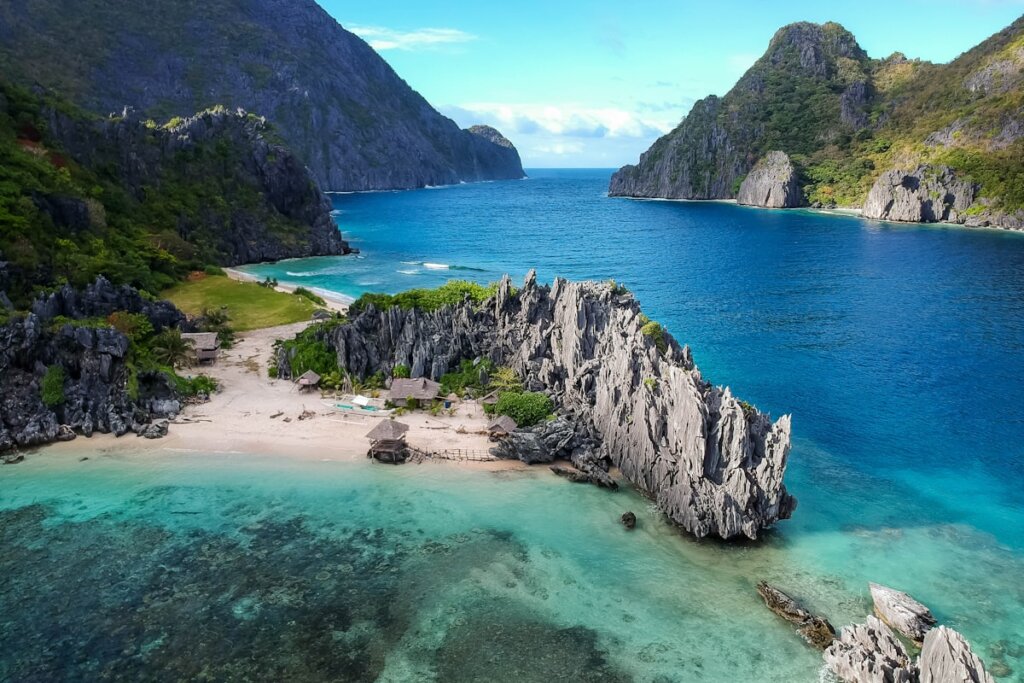

El Nido is famous for its limestone karst cliffs, turquoise lagoons, and world-class island hopping — but beneath the postcard scenery lies a rich and layered history stretching back tens of thousands of years. From some of the oldest human remains ever found in Southeast Asia to Spanish colonial rule, Japanese occupation, and a remarkable modern transformation from fishing village to eco-tourism destination, El Nido’s story is as compelling as its landscape.
- Prehistoric El Nido: The Tabon Cave Civilization
- The Cuyonon and Tagbanua: El Nido’s Indigenous Heritage
- Spanish Colonial Period (1565–1898)
- American Colonial Period (1898–1946)
- World War II and Japanese Occupation
- Post-War Development and the Fishing Era (1946–1980s)
- El Nido as an Eco-Tourism Destination (1990s–Present)
- El Nido Today: Balancing Heritage and Tourism
- Key Historical Sites to Visit in El Nido
- Planning Your El Nido Visit
- External Resources
Prehistoric El Nido: The Tabon Cave Civilization
The story of human habitation in Palawan begins with one of the most significant archaeological discoveries in Southeast Asian history. Tabon Cave, located on the southwest coast of Palawan near Quezon (about 150km south of El Nido), yielded human skull fragments and jawbones dating back approximately 47,000 years — among the oldest human remains found anywhere in Southeast Asia.
The “Tabon Man” (more accurately, Tabon Woman, based on skeletal analysis) represents evidence of a sophisticated prehistoric culture that inhabited Palawan’s cave systems during the Pleistocene era. These early inhabitants were skilled hunters and gatherers who used the island’s caves as shelters and burial sites. Hundreds of burial jars, tools, and ornaments have been recovered from Tabon Cave and surrounding sites, now housed in the National Museum of the Philippines.
The Bacuit Archipelago — the island group that forms modern El Nido — would have been inhabited by similar groups, using the limestone caves and coastal resources that remain defining features of the landscape today. The same karst formations that draw tourists now provided shelter, fresh water from cave springs, and abundant marine food sources for prehistoric communities.
The Cuyonon and Tagbanua: El Nido’s Indigenous Heritage
Before Spanish colonization, the El Nido area was home to two primary indigenous groups whose descendants still live in Palawan today:
The Tagbanua People
The Tagbanua are considered one of the oldest ethnic groups in the Philippines, with a culture and language distinct from the lowland Filipino majority. In El Nido, Tagbanua communities have traditionally inhabited the interior forests and coastal areas of the Bacuit Archipelago, living by fishing, gathering, and small-scale farming.
The Tagbanua possess one of the few surviving pre-colonial Philippine scripts — a syllabic writing system related to ancient Brahmic scripts from South Asia, evidence of early trade connections across the region. Today, Tagbanua communities in El Nido hold ancestral domain rights over significant portions of the Bacuit Archipelago, including areas around Coron Lake (in northern Palawan). Their traditional fishing rights and resource management practices are legally recognized under Philippine indigenous peoples law.
The Cuyonon People
The Cuyonon (from Cuyo Island, northeast of Palawan) were historically the dominant trading and fishing community in the El Nido area. Skilled seafarers, the Cuyonon established settlements throughout the Bacuit Archipelago and maintained trade networks with Borneo, China, and other Philippine islands. Much of El Nido’s fishing culture and many local family names trace back to Cuyonon heritage.
Spanish Colonial Period (1565–1898)
Spain claimed the Philippines in 1565 under Miguel López de Legazpi, but Palawan — remote, sparsely populated, and difficult to access — remained on the periphery of colonial administration for much of the Spanish era. The island was known to Spanish authorities primarily as a source of forest products (rattan, timber, beeswax) and as a strategic buffer against Moro (Muslim) raiders from Mindanao and Sulu.
El Nido itself was a minor settlement during the Spanish period. The town’s name is Spanish for “the nest” — a reference to the edible bird’s nests (swiftlet nests used in Chinese cuisine) harvested from the limestone cliffs of the Bacuit Archipelago. The bird’s nest trade was economically significant: Chinese merchants paid premium prices for the nests, and the harvesting rights were controlled by local elites and, later, colonial administrators.
The Spanish established a small garrison and mission in the El Nido area, but the town never grew into a significant colonial center. The rugged terrain, distance from Manila, and resistance from indigenous communities kept Spanish influence relatively limited compared to lowland Luzon and Visayas.
American Colonial Period (1898–1946)
Following Spain’s defeat in the Spanish-American War, the Philippines was ceded to the United States in 1898. American colonial administration brought significant changes to Palawan: land surveys, public schools, road construction, and the establishment of a penal colony at Iwahig (near Puerto Princesa) that became one of the largest in Asia.
El Nido remained a quiet fishing and farming community during the American period. The bird’s nest harvesting industry continued, and the town’s population grew slowly as migrants from the Visayas and other Philippine regions settled in Palawan. American administrators documented the Bacuit Archipelago’s extraordinary natural beauty, but large-scale tourism development was still decades away.
World War II and Japanese Occupation
Japan occupied the Philippines from 1942 to 1945, and Palawan witnessed some of the war’s most tragic episodes. The Palawan Massacre of December 14, 1944 — in which Japanese forces burned alive 139 American POWs at Puerto Princesa — is one of the most documented atrocities of the Pacific War. Only 11 prisoners escaped to tell the story.
El Nido itself saw limited direct combat but was affected by the broader disruption of the occupation: fishing was restricted, food was scarce, and many residents fled to the interior forests. The limestone caves of the Bacuit Archipelago — the same formations that attract tourists today — served as hiding places for civilians and guerrilla fighters during the occupation.
Post-War Development and the Fishing Era (1946–1980s)
After Philippine independence in 1946, El Nido developed primarily as a fishing community. The Bacuit Bay’s rich marine resources supported a growing population, and the town became known for its seafood — particularly the continued trade in edible bird’s nests, which remained a valuable export commodity.
The 1970s brought a significant development: Ten Knots Development Corporation (later El Nido Resorts) began developing the first eco-tourism resort in the Bacuit Archipelago. Miniloc Island Resort opened in 1982, marking the beginning of El Nido’s transformation from fishing village to tourism destination. The resort’s founders recognized the extraordinary natural value of the archipelago and pioneered a conservation-focused development model that would influence the entire region.
El Nido as an Eco-Tourism Destination (1990s–Present)
The 1990s saw El Nido gain international recognition as one of the Philippines’ premier natural destinations. The El Nido Marine Reserve was established to protect the Bacuit Archipelago’s coral reefs and marine biodiversity. Tourism infrastructure — guesthouses, restaurants, tour operators — grew rapidly in El Nido town.
The 2000s and 2010s brought explosive growth. El Nido appeared on international “best beaches” lists, travel magazines, and social media feeds, driving visitor numbers from thousands to hundreds of thousands annually. The town transformed from a sleepy fishing village into a bustling tourist hub with international restaurants, dive shops, and accommodation ranging from budget hostels to luxury resorts.
This growth brought challenges: reef damage from boat anchors and tourist activity, waste management issues, and concerns about the carrying capacity of the archipelago’s fragile ecosystems. The local government and national agencies have implemented visitor management measures, including entrance fees, tour group size limits, and designated anchor zones.
El Nido Today: Balancing Heritage and Tourism
Modern El Nido is a fascinating blend of its layered past. Tagbanua communities maintain ancestral domain rights and traditional fishing practices alongside the tourism economy. The bird’s nest harvesting industry — which gave the town its name — continues, with licensed harvesters scaling the same limestone cliffs that have been worked for centuries.
The town’s heritage is visible in its architecture (Spanish-era church foundations, traditional Filipino wooden houses alongside modern concrete structures), its food culture (Cuyonon fishing traditions reflected in the seafood-heavy local cuisine), and its relationship with the sea that has defined El Nido life for millennia.
For travelers interested in experiencing El Nido beyond the beaches, the history and heritage dimension adds a compelling layer to any visit. The El Nido Municipal Museum (small but informative) documents local history, and conversations with older residents reveal a living connection to the town’s pre-tourism past.
Key Historical Sites to Visit in El Nido
- El Nido Church (St. Francis of Assisi Parish): The town’s Catholic church, with foundations dating to the Spanish colonial period, remains the spiritual center of the community
- El Nido Municipal Museum: Small museum with artifacts and photographs documenting local history
- Bird’s Nest Cliffs: The limestone formations around the Bacuit Archipelago where swiftlet nests have been harvested for centuries — visible on any island hopping tour
- Tabon Cave (day trip): While not in El Nido itself, the UNESCO-tentative Tabon Cave complex near Quezon is accessible as a multi-day excursion for history-focused travelers
Planning Your El Nido Visit
Understanding El Nido’s history enriches the experience of its natural wonders. The limestone karst formations that make the lagoons so spectacular are the same formations that sheltered prehistoric humans, provided bird’s nests for centuries of trade, and hid civilians during wartime. The sea that draws island hoppers today fed fishing communities for millennia.
For practical planning, see our best time to visit El Nido guide, our complete island hopping tours guide, and our El Nido best hotels ranking for accommodation options across all budgets.
External Resources
- National Museum of the Philippines — Tabon Cave artifacts and Philippine prehistory
- Province of Palawan Official Website — local governance and heritage information