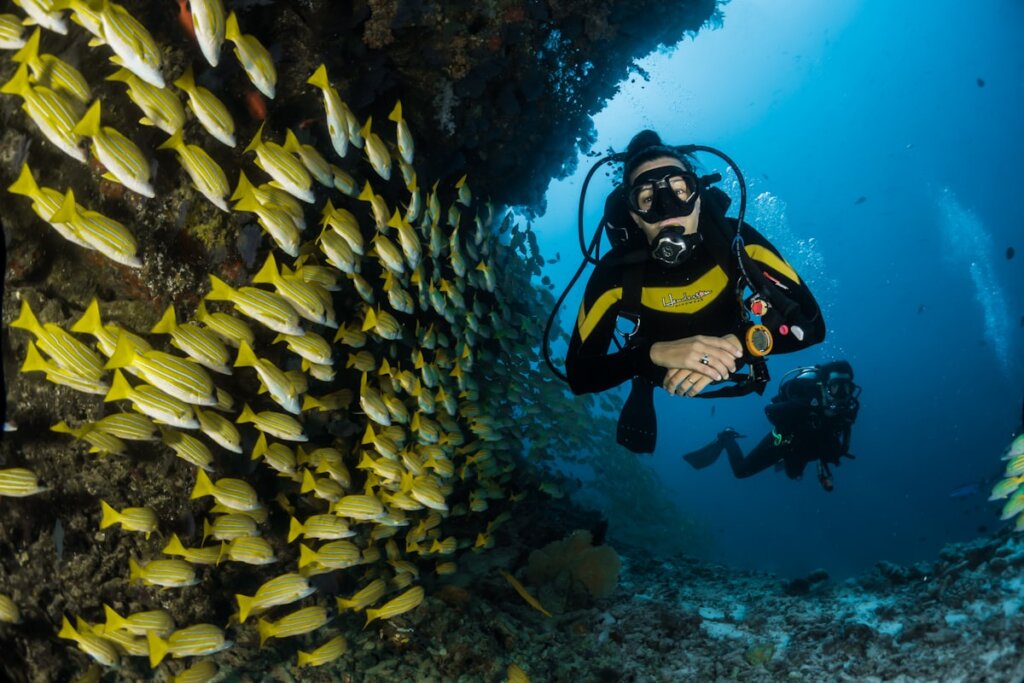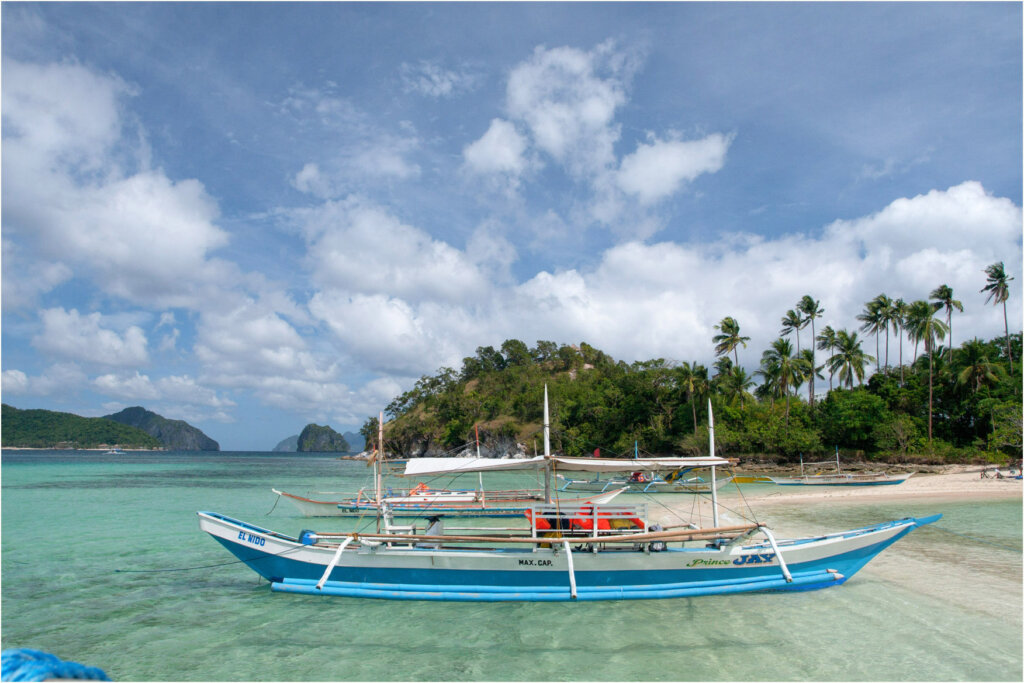

Bacuit Bay, the seascape that surrounds El Nido, is officially a Managed Resource Protected Area. According to the municipality of El Nido, its waters host 447 species of coral, 888 species of fish, 5 species of sea turtle, and 114 species of birds. For snorkelers, this translates into shallow, calm reef sites with the kind of marine life that’s been thinning elsewhere in the region.
This is a practical El Nido snorkeling guide: which spots are worth your time on each island hopping tour, what you’ll actually see, how to gear up, and the reef etiquette that keeps the bay healthy.
Why El Nido is a great place to snorkel
Most snorkeling sites are 1–4 m deep, water temperatures sit at 27–30°C year-round, and visibility is best in the dry season (November–May). The reefs that wrap the main islands are still in good shape, and on calm days you can drift over coral gardens within minutes of getting off the boat.
The best snorkeling spots in Bacuit Bay
Shimizu Island (Tour A)
Consistently rated among El Nido’s top snorkeling spots, Shimizu’s reef has intact table corals, sea fans, and dense schools of reef fish. Sea turtles turn up regularly. For a deeper dive into Shimizu and other reefs, see our El Nido snorkeling guide.
Helicopter Island / Dilumacad (Tour C)
Named for its profile from the water, Helicopter Island has calm shallows on its leeward side — 1–4 m deep, easy for beginners and kids. The reef tapers off the sand fast, which makes it ideal for nervous first-time snorkelers.
Hidden Beach & Secret Beach (Tour C)
Both sit around Matinloc Island. The beaches themselves are the headline, but the surrounding reef walls offer good fish-watching when the sea is calm. Tour C is more weather-sensitive than the others — see our snorkeling spots breakdown for cancellation patterns.
Cadlao Lagoon (Tour D)
On Cadlao Island, the largest in the archipelago, the lagoon’s calm shallows are beginner-friendly and reliably less crowded than the Tour A lagoons.
What about Big Lagoon and Small Lagoon?
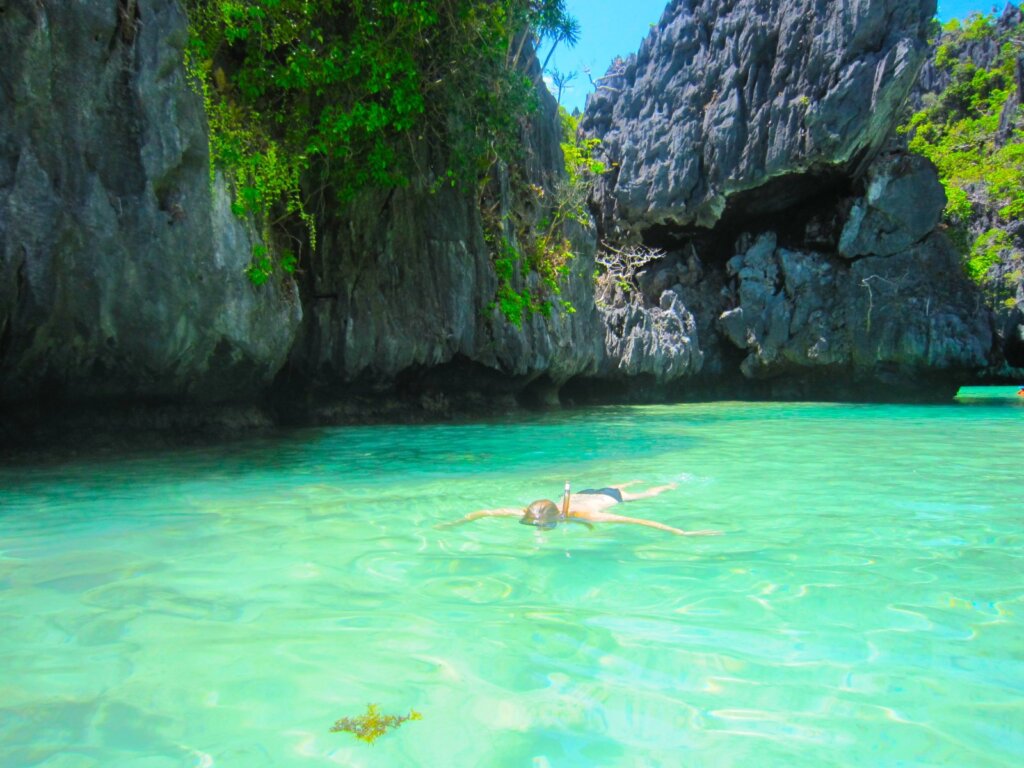
It’s a common misconception. Big and Small Lagoon are gorgeous, but the floors are mostly sand and silt; the views are about the karst geology, not the marine life. Treat them as kayak/swim sites and put your snorkeling energy on Shimizu, Helicopter, and Cadlao.
Snorkeling spots at a glance
| Spot | Tour | Depth / difficulty | Marine life highlights | Best for |
|---|---|---|---|---|
| Shimizu Island | Tour A | Shallow–medium / moderate | Table corals, sea fans, reef fish, occasional turtles | Experienced snorkelers |
| Helicopter Island | Tour C | Shallow / easy | Shallow coral gardens, small reef fish | Beginners, families |
| Hidden Beach | Tour C | Medium / moderate | Schools along outer rock walls | Adventurous snorkelers |
| Cadlao Lagoon | Tour D | Shallow / easy | Tropical fish in calm lagoon | Beginners, families |
| Big / Small Lagoon | Tour A | — | Geology, not marine life | Sightseeing, kayaking |
What you can expect to see underwater
Per El Nido’s environmental fee documentation, Bacuit Bay’s recorded biodiversity includes 447 coral species and 888 fish species. In practice, snorkelers commonly encounter:
- Reef fish: butterflyfish, damselfish, wrasses, angelfish, anemonefish (clownfish)
- Corals: table corals, branching Acropora, sea fans
- Larger animals: hawksbill sea turtles, cuttlefish, octopus, occasional small reef sharks
- Invertebrates: sea stars, sea urchins, anemones
Note: whale sharks are not reliably found in Bacuit Bay. Travelers chasing whale sharks should head to Oslob (Cebu) or Donsol (Sorsogon), not El Nido.
Gear and what to bring
- Snorkel kit: mask and snorkel are provided by tour operators, but bringing your own is more hygienic and gives a better fit. Fins are usually optional.
- Reef-safe sunscreen: avoid oxybenzone and octinoxate, which damage coral. A long sun shirt is even better.
- Dry bag: for phone, camera, cash.
- Underwater camera: a waterproof case for your phone works for most use cases.
- Cash: the ETDF (₱400, valid 10 days) and Big Lagoon’s ₱200 site fee are cash-only.
- After your day on the water, a sea-view stay helps you recover — see our El Nido accommodation guides.
Reef-friendly snorkeling etiquette
- Don’t stand on, kick, or grab coral. Damaged colonies take decades to recover.
- Don’t feed fish, don’t take shells or starfish home.
- Stick to reef-safe sunscreen, or skip sunscreen on torso/legs and wear a rash guard.
- Keep distance from turtles — observe, don’t chase or touch.
- If an operator violates protected-area rules, you can flag it to the Municipal Tourism Office.
Frequently asked questions
Can non-swimmers snorkel in El Nido?
Yes. Operators provide life vests, and the calmest reef sites (Helicopter Island, Cadlao Lagoon) are 1–2 m deep. Ask a guide to accompany you if you’re nervous.
When is the best time of year for snorkeling in El Nido?
The dry season, November through May, offers the calmest seas and clearest visibility. June–October is wetter, with more chance of cancelled Tour C days.
Do I need to pay extra for snorkeling?
Tour packages include snorkel gear and life vests. You’ll still owe the ETDF (₱400, 10 days) and the ₱200 site fee at Big Lagoon, which are mandatory regardless of activity.
Will I see sea turtles?
Often, but not guaranteed. Shimizu Island and Cadlao Lagoon are the most reliable for turtle sightings. Keep distance and avoid touching them.
What’s the difference between snorkeling, freediving, and scuba in El Nido?
Snorkeling is surface-level, no certification needed. Freediving is breath-hold diving — local operators offer intro courses. Scuba requires certification and tanks — see our El Nido dive sites guide for the dive scene.
Sources
- Municipality of El Nido — El Nido Collects Fees to Fund Environmental Protection
- Snorkeling Report — Snorkeling El Nido, Palawan – Tour A
- GetMyBoat — Best Snorkeling in El Nido
- Featured image: Pexels (CC0)