TL;DR: The best times to journal in El Nido are sunrise, the post-lunch heat lull and sunset; bring a small notebook in a zip bag, a waterproof pen, and use simple prompts like “three colours I saw today” to turn busy island-hopping days into memories you will actually keep.
El Nido days move fast. You are up early for a boat, swimming in four lagoons before lunch, back in town at sunset, and by day three the details are already blurring together. A travel journal slows that down. This guide focuses on travel journaling specifically for solo travelers, couples and slow travelers who want to remember El Nido in more depth than a camera roll can hold.
Our unique angle combines three things you will not find in a generic journaling article: real places in and around El Nido where you can sit undisturbed with a notebook, prompts written around the island-hopping rhythm, and practical tips for keeping paper, ink and electronics alive in tropical humidity.
- Why Journal on an El Nido Trip?
- 8 Calm Places to Journal in and Around El Nido
- 20 Journaling Prompts for Island Days
- What to Pack: A Humidity-Proof Journaling Kit
- Digital vs Paper Journaling in El Nido
- Creative Extras: Sketching, Postcards and Collecting
- Journaling Etiquette and Privacy
- Making It a Habit on a Busy Trip
- Key Takeaways
- Frequently Asked Questions
Why Journal on an El Nido Trip?
Photos capture what places looked like; writing captures what they felt like. The smell of grilled fish on the beach, the boatman’s joke at Shimizu Island, the moment the water turned from green to glassy blue at Big Lagoon: those are the details that fade first. Writing a few lines each day also naturally slows you down, which suits El Nido’s best moments, many of which happen when you are simply sitting still and watching the light change over Bacuit Bay.
Journaling does not need to be long or literary. Five minutes and a few bullet points are enough. Many travelers find it helps them process a long, stimulating day and sleep better, and it creates a keepsake that becomes more valuable every year.
8 Calm Places to Journal in and Around El Nido
| Spot | Best time | Atmosphere | Practical note |
|---|---|---|---|
| El Nido town beach (Bacuit Bay front) | Sunrise | Boats preparing, quiet water | Busier from 8 a.m. as tours depart |
| Marimegmeg (Las Cabanas) Beach | Late afternoon to sunset | Relaxed, golden light | Popular at sunset; arrive early for a quiet seat |
| Nacpan Beach | Midweek mornings | Long, open and uncrowded | Bring shade; little cover on parts of the beach |
| Corong Corong waterfront | Evening | Calmer than town, sunset views | Many cafes and bars with sea-facing seats |
| Your boat between stops | Midday | Gentle rocking, open views | Write short notes; keep notebook in a dry bag |
| A quiet town cafe | Afternoon heat lull | Air-conditioned or fan-cooled | Best for longer writing sessions |
| Ille Cave and Dewil Valley | Morning | Rice fields and karst scenery | Good for reflective, history-themed entries |
| Your hotel balcony | Night | Private, sounds of the town or jungle | Perfect for end-of-day reflections |
If you are an early riser, our sunrise spots guide pairs perfectly with a morning writing habit, and our early riser vs night owl day plans help you build quiet time into each day. For more ideas that cost nothing, see our free activities guide.
20 Journaling Prompts for Island Days
Morning prompts (before the boat)
- What do I hear right now, before the town wakes up?
- What am I most curious to see today?
- Describe the sky in three words.
- What did I dream about last night?
- One thing I want to notice that I usually rush past.
On the water
- The exact colour of the water at this stop, in my own words.
- Something the boat crew did or said that made me smile.
- A fish, coral or shape I saw while snorkeling.
- How does it feel to be this far from a screen?
- Which lagoon or beach would I return to, and why?
Evening reflections
- Three colours, three sounds and three tastes from today.
- The best thing I ate, and who I shared it with.
- A moment I want to remember in ten years.
- Something that surprised me about El Nido.
- Someone I met and what I learned from them.
Deeper prompts for slow days
- What does “paradise” actually mean to me, after seeing this place?
- How do locals live with tourism here, from what I have observed?
- What would I tell a friend planning their first trip?
- What did I worry about before the trip that turned out not to matter?
- A letter to myself, to open on my next birthday.
For prompts 16 and 17, reading about the town’s past in our El Nido history guide adds depth, especially if you visit archaeological sites like Ille Cave.
What to Pack: A Humidity-Proof Journaling Kit
- A small notebook (A6 or pocket size) with thicker paper; thin paper wrinkles fast in humidity.
- Zip-lock bags for the notebook, plus a few silica gel packets to absorb moisture.
- Pencils or gel pens that do not smudge; fountain-pen ink can bleed on damp paper. Pencils also work if the page gets wet.
- A waterproof notebook if you want to write on the boat; these are made for field researchers and sailors.
- Washi tape or a glue stick to add tickets, boat tour receipts, pressed flowers or tide tables.
- A dry bag for boat days, shared with your phone and sunglasses.
Humidity affects paper, cameras and electronics alike; our humidity and gear care guide explains how to keep everything dry, and our power bank guide covers charging if you prefer a digital journal.
Digital vs Paper Journaling in El Nido
Both work, and many travelers combine them. Paper has no battery, no notifications and a lovely tactile quality, and it encourages you to put the phone away. Digital journaling apps let you add photos, locations and voice notes instantly, which is handy on a moving boat when writing by hand is tricky. A good compromise is to jot quick notes or voice memos on your phone during the day and write a short paper entry each evening. If you journal digitally, back up your entries whenever you have Wi-Fi, as mobile data can be patchy on remote beaches.
A simple daily template
If blank pages intimidate you, use the same structure every day so entries take minutes. Start with the date, where you are sitting and the weather. Then write one line each for the best moment, the best food, a person you met and something you learned. Finish with one word that sums up the day. After a week, this template creates a surprisingly rich record of the trip, and it is easy to keep going even on exhausting tour days. Couples can share one journal and take turns, or each write a separate line on the same page, which often makes for funny and touching contrasts when you read it back at home.
Creative Extras: Sketching, Postcards and Collecting
You do not have to be an artist to sketch. Simple outlines of limestone islands, the curve of a banca’s outriggers or the shape of a lagoon are easy and surprisingly evocative. Watercolour pencils are light and work well with a little water. Sunset is a great time to sketch, especially from a paraw sunset sail.
Collecting small, legal keepsakes adds texture: a boat ticket, a restaurant business card, a leaf from your hotel garden. Do not take shells, coral or sand; follow Leave No Trace principles, and note that protected areas in El Nido prohibit removing natural materials. You can also write postcards; check current mail services with PHLPost before relying on them, as delivery from remote areas can be slow.
Journaling Etiquette and Privacy
When you write about people you meet, such as boat crews, hosts or other travelers, describe them kindly and avoid sharing personal details publicly if you later post your journal online. Ask before photographing people for your journal, especially children, and respect requests for no photos. In cafes, buy something if you plan to stay for a long writing session, and choose off-peak hours so you are not taking a table that others need at lunch or sunset.
Making It a Habit on a Busy Trip
The biggest obstacle is not inspiration but tiredness after a long boat day. Keep it small: commit to three bullet points before dinner, or a single sentence before bed. Tie journaling to something you already do, such as your morning coffee or the wait for sunset. On rest days, give yourself a longer session in a cafe. And if you miss a day, simply write two short entries the next morning; the goal is memories, not perfection. For more trip-planning context, the Philippine Department of Tourism is a good official starting point.
Key Takeaways
- Journal at sunrise, during the post-lunch heat lull or at sunset when El Nido is calmest.
- Use a small, thick-paper notebook in a zip-lock bag with silica gel, and pencils or gel pens.
- Simple prompts like “three colours, three sounds, three tastes” make five-minute entries easy.
- Combine quick phone notes during boat days with short paper entries in the evening.
- Collect tickets and receipts, never shells, coral or sand from protected areas.
Frequently Asked Questions
What is the best time to journal in El Nido?
Sunrise and sunset are the calmest and most inspiring times, and the hot early afternoon is ideal for a longer session in a shaded cafe.
How do I protect my notebook from humidity?
Keep it in a zip-lock bag with silica gel packets, choose thicker paper, and use pencils or gel pens that do not bleed on damp pages.
Can I journal on an island-hopping boat?
Yes, but keep entries short and store your notebook in a dry bag between stops. A waterproof notebook is ideal for writing on the water.
Is it okay to collect shells for my journal?
No. Protected areas in El Nido prohibit taking shells, coral and sand. Collect tickets, receipts and photos instead.
Should I use a paper or digital journal?
Both work. Many travelers take quick voice notes or photos during the day and write a short paper entry each evening.
About the Author
This guide was compiled by the El Nido Hotels Ranking editorial team, with input from local operators and ongoing on-the-ground updates.
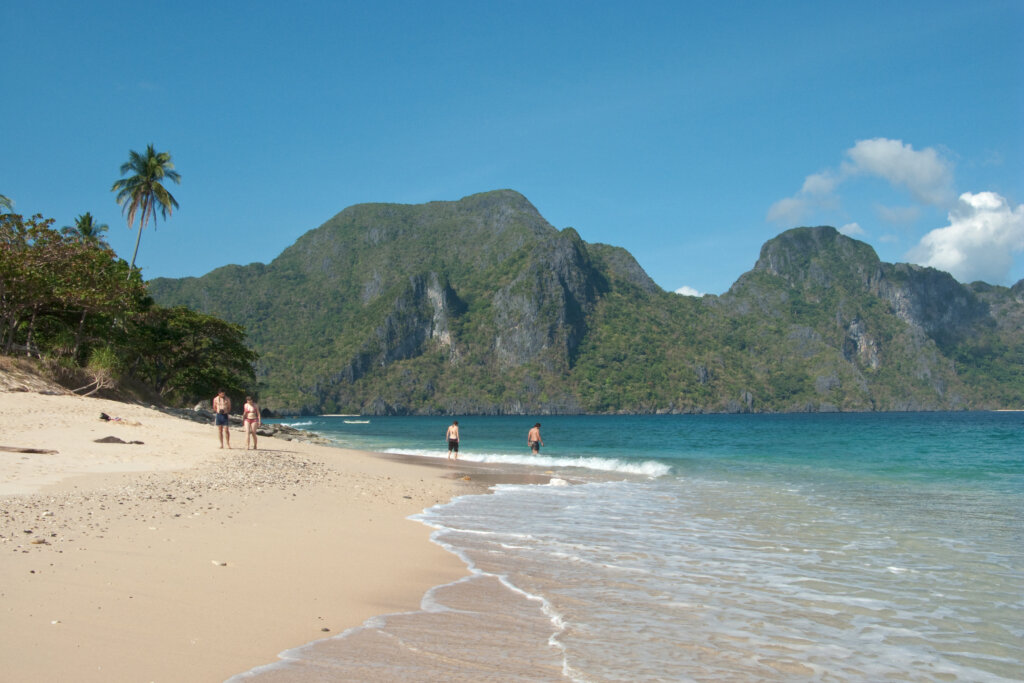
Featured image: Pinagbuyutan beach, El Nido via Wikimedia Commons (CC BY 2.0).