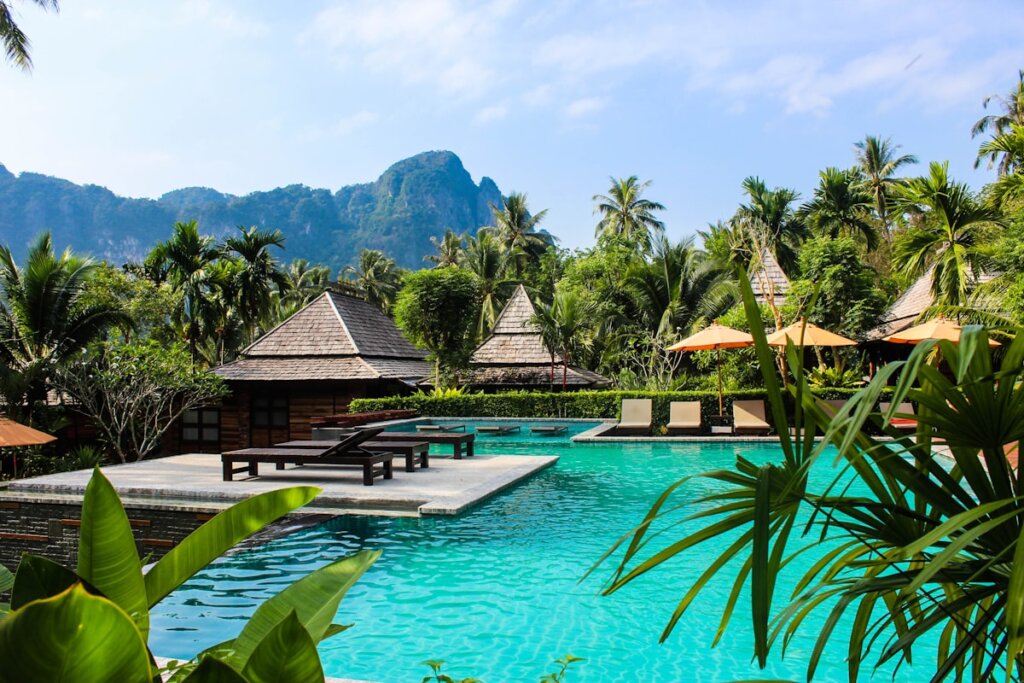

Between the beachfront resorts and the budget guesthouses sits a third kind of stay that shows up in many photos: the elevated cabin, treehouse or jungle-view bungalow tucked into greenery above the bay. This guide focuses on those nature-immersive stays specifically for couples and adventurous travelers who want to wake up among trees rather than beside a pool, while still knowing what trade-offs they are accepting. We cover the main types, comfort and bugs, power and connectivity, access, safety and a booking checklist. If you are still weighing the broader style of stay, see our glamping guide.
- What Counts as a Jungle-View Stay
- Comparison of Stay Types
- Comfort: Heat, Humidity and Air Conditioning
- Insects, Wildlife and Health
- Power, Water and Connectivity
- Access, Roads and Safety
- Noise and Privacy
- Booking Checklist
- Choosing the Right Season
- Who These Stays Suit Best
- What to Pack for a Nature Stay
- Eating and Daily Routine
- Cost and Value Considerations
- Final Advice
- Frequently Asked Questions
What Counts as a Jungle-View Stay
The phrase covers several building styles. A treehouse is raised on stilts or built around a tree, usually with timber or bamboo and an open veranda. A jungle bungalow sits on the ground but is surrounded by dense vegetation. A hillside cabin looks over the canopy toward the sea, and a glamping tent offers canvas walls with a proper bed. All of them put nature at the doorstep, which is the appeal and the challenge.
Because they are built with natural materials and often in less developed areas, they differ from standard hotel rooms. Walls may be thinner, windows may be screened rather than sealed, and the soundtrack includes birds, geckos and insects. Visitors who accept this tend to love the experience; those who expect a sealed, air-conditioned room can be disappointed.
Comparison of Stay Types
The table summarizes the typical trade-offs. It reflects general building styles rather than specific properties, so always confirm details with the host.
| Stay type | Atmosphere | Comfort level | Watch out for |
|---|---|---|---|
| Treehouse on stilts | Highly atmospheric, elevated views | Moderate | Stairs, open sides, insects |
| Jungle bungalow | Private and green | Moderate to high | Humidity, ground-level critters |
| Hillside cabin with sea glimpse | Quiet with distant views | Moderate to high | Steep approach roads |
| Glamping tent | Adventurous, simple | Basic to moderate | Heat, noise and weather exposure |
| Standard hotel room | Predictable | High | Less nature, more crowd |
Comfort: Heat, Humidity and Air Conditioning
The tropical climate is the main comfort variable. Trees provide shade and can keep a cabin cooler than a concrete box, but humidity is high, particularly in the wetter months. Many nature stays use fans rather than air conditioning to preserve the open-air feel and to reduce power consumption.
Think about whether you can sleep comfortably with a fan. Our air-con vs fan rooms comparison explains how to decide. If you are sensitive to heat, choose a property that offers at least a few hours of air conditioning or a well-ventilated design with a good mosquito net.
Insects, Wildlife and Health
Expect creatures. Geckos, frogs and a range of insects are normal in jungle settings, and mosquitoes or sandflies can be present, especially at dusk. Use repellent, wear long sleeves in the evening and make sure the bed has an intact net. Our guides on mosquito and dengue prevention and sandflies and insect bites explain what to pack and how to respond.
Keep food sealed in the room, since ants arrive quickly, and shake out shoes and clothing before use. Do not feed or handle wildlife. If you have allergies or are traveling with young children, ask the host about screens and any known problem areas before booking. Official health guidance is available from the Philippine Department of Health.
Power, Water and Connectivity
Remote properties can face intermittent electricity, limited hot water and weaker mobile signal. Some use solar panels or generators, which can mean quiet hours when power is limited. Ask whether there is power at night, how many outlets there are and whether the wifi reaches the room or only a common area.
Review our notes on power outages and brownouts and bring a power bank, a head torch and offline maps. If you need to work remotely, choose a more connected location instead. Bring your own drinking water or confirm the water source, since filtration practices vary.
Access, Roads and Safety
Jungle properties are often reached by unpaved paths or steep tricycle rides, and some require a walk in the dark. Ask how to arrive, whether a pickup is available and how late the last transfer runs. Rain can make roads muddy, so allow extra time and avoid arriving after dark in wet weather.
Elevated structures bring their own safety questions. Check railings, stair condition and whether children can fall through gaps. Keep a torch by the bed, because paths can be unlit. If anyone in your group has mobility concerns, review our accessibility guide before choosing a hillside cabin.
Noise and Privacy
Nature is not silent. Frogs after rain, insects at night and roosters before dawn are common, and thin walls mean you may hear neighbors. If you are a light sleeper, pack earplugs and request a room set apart from shared areas. On the plus side, jungle stays are usually away from the nightlife of the town center, which can make for peaceful evenings.
Privacy is often a selling point, but ask whether bathrooms are fully enclosed and whether windows have curtains. Open-air showers are charming in the right setting, though they are not for everyone.
Booking Checklist
Before you reserve, confirm the practical details in writing. This avoids surprises on arrival and helps you compare properties fairly.
- Are the walls and windows screened, and is there a mosquito net?
- Is there fan, air conditioning or both, and for how many hours?
- What are the power and water arrangements, including hot water?
- How far is it from the town center and the beach, and what transport is available?
- Is the path lit, and is it safe to walk at night?
- What are the check-in and check-out times? See our check-in and check-out guide.
- What is the cancellation policy if heavy rain affects access?
Choosing the Right Season
Dry-season months usually offer more comfortable conditions for open-air living, with less rain, easier road access and fewer mosquitoes. The wetter months bring lush scenery but also mud, humidity and the possibility of weather disruptions. Check forecasts from PAGASA and read our rainy season travel guide to decide whether the trade-offs suit you.
If you love storms and green scenery, the wet season can be atmospheric. If you want predictability, choose the drier months or a stay with sturdier construction.
Who These Stays Suit Best
Jungle and treehouse stays suit travelers who value atmosphere and quiet over convenience. Couples seeking a romantic hideaway, photographers who enjoy early light and nature lovers will probably appreciate them most. Families with small children, travelers with mobility issues and anyone who needs reliable air conditioning and fast internet may do better elsewhere.
A good compromise is to split your trip: spend a few nights in a nature stay for the experience, then move to a conventional hotel in town for the final nights when you need convenience for flights and transfers.
What to Pack for a Nature Stay
Packing smartly makes the difference between a charming stay and a frustrating one. Bring insect repellent, a small first-aid kit with antihistamine cream and plasters, and a head torch with spare batteries. A power bank keeps phones alive during outages, and a dry bag protects electronics from humidity and sudden rain.
Lightweight long sleeves and long trousers help in the evening, and quick-dry clothing suits the humidity. Pack sturdy sandals or shoes with grip for muddy paths, a reusable water bottle, and a few zip bags to keep food and valuables sealed. A small travel clothesline and a packable rain jacket are also useful when everything stays damp for longer than expected.
Eating and Daily Routine
Many remote stays offer simple breakfasts and may serve dinner on request, but kitchens can be small and menus limited. Ask whether meals are included, whether you need to order ahead and what the nearest restaurant is. If you are far from town, stock up on water, snacks and basics before heading out so you are not stuck after the shops close.
Plan your day around the light and heat. Early mornings are cool and full of birdsong, midday is best spent in the shade or at the beach, and evenings call for repellent and a torch. Treat the slower rhythm as part of the appeal rather than an inconvenience.
Cost and Value Considerations
Nature stays can be surprisingly affordable or quite expensive, depending on the build quality and location. A simple bamboo cabin may cost less than a hotel room in town, while a design-led treehouse with a view can command a premium. Compare what is included, such as breakfast, transfers and activities, before judging the price.
Remember to count transport costs if the property is far from town, and factor in the value of peace and scenery. Check current rates directly with the host or on booking platforms, since prices change with the season and demand.
Final Advice
A treehouse or jungle-view stay can be one of the most memorable parts of an El Nido trip when expectations match reality. Verify the facts, pack for insects and power quirks, plan transport carefully and choose the season wisely. With those steps, you gain the chance to sleep among the trees while still enjoying the bay by day.
Frequently Asked Questions
Are treehouse stays in El Nido comfortable?
They can be, but they are more rustic than standard hotels. Expect fans, nets and natural sounds.
Will there be mosquitoes?
Insects are common in green areas, so use repellent and make sure the bed has an intact net.
Is there reliable wifi and power?
It varies. Some remote properties have limited power or signal, so ask the host before booking.
Are these stays suitable for children?
It depends on the design. Check railings, stairs and safety, and consider a conventional room for very young kids.
How do I get to a jungle property?
Often by tricycle or private transfer on unpaved roads. Ask the host about pickup and late arrival.
Is the rainy season a bad time to stay?
Not necessarily, but roads can be muddy and weather may disrupt plans. Stay flexible.