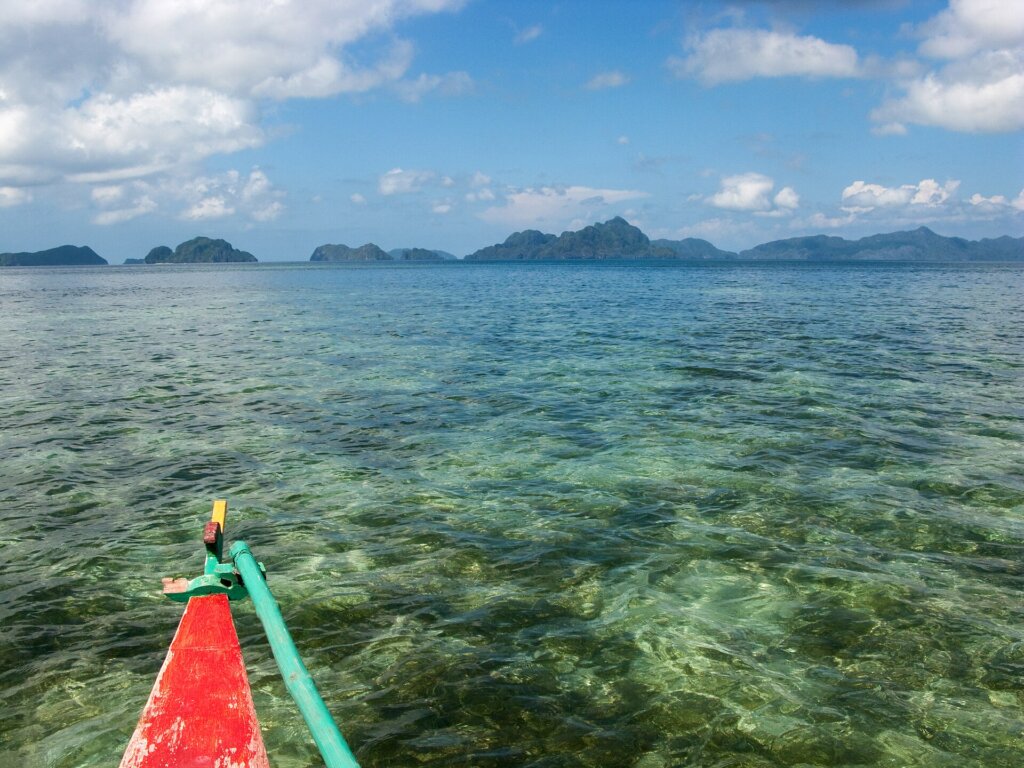
TL;DR: El Nido and Guilin are both world-class karst landscapes, but El Nido is “drowned” karst rising from a tropical sea — best for swimming and island hopping from November to May — while Guilin and Yangshuo are river and valley karst best explored by Li River cruise, bamboo raft, bike and hiking, ideally in autumn.
Few landscapes are as instantly recognisable as limestone karst: sheer, jagged towers of rock rising out of water or flat land. Two of Asia’s most famous examples are El Nido’s Bacuit Bay in the Philippines and the Guilin–Yangshuo region of southern China, whose Li River scenery is printed on the 20-yuan banknote. Both appear on bucket lists for photographers, climbers and nature lovers, yet the experience on the ground is very different.
This guide focuses on El Nido vs Guilin specifically for travellers who are drawn to karst scenery and want to choose one trip — photographers, hikers, climbers and couples who have seen both on social media and are not sure which suits their style. If you are also comparing other limestone destinations, see our El Nido vs Ha Long Bay and El Nido vs Phang Nga Bay guides.
El Nido vs Guilin at a Glance
| Factor | El Nido (Palawan) | Guilin & Yangshuo (Guangxi) |
|---|---|---|
| Type of karst | Drowned “sea karst” islands, cliffs and lagoons | Tower and cone karst along rivers and farmland |
| Signature experience | Island hopping and lagoon kayaking | Li River cruise, Yulong River bamboo raft |
| Swimming | Excellent, warm sea year-round | Limited; river swimming only in places, in summer |
| Best months | November–May | September–November (also April–May) |
| Hiking & climbing | Short climbs (Taraw Cliff when open), coastal trails | Extensive hiking, cycling and world-class sport climbing |
| Culture | Fishing villages, eco-tourism | Ancient towns, rice terraces, ethnic minority villages |
| Getting there | Fly via Manila to Lio or Puerto Princesa | Fly to Guilin or take high-speed rail from Guangzhou, Shenzhen or Hong Kong |
How the Karst Differs: Sea vs River
Both landscapes formed when thick beds of limestone were slowly dissolved by slightly acidic rainwater over millions of years, leaving towers, caves and steep cliffs. The difference is the setting.
In El Nido, the limestone was later partially submerged by rising seas, creating what geologists call drowned karst. The towers rise straight from turquoise water, and the sea has carved lagoons, caves and tiny beaches between them. Our Bacuit Bay geology guide goes deeper into the formation.
In Guilin, the karst sits inland on a broad river plain. The Li River and its tributaries wind between hundreds of towers (fenglin) and clustered peaks (fengcong), surrounded by rice paddies, villages and bamboo groves. UNESCO recognises Guilin as part of the “South China Karst” World Heritage site — see the UNESCO listing.
Visually, El Nido is about colour — white sand, emerald lagoons and blue water — while Guilin is about layers and mist, with towers fading into the distance like a classical Chinese ink painting.
Boat Trips: Island Hopping vs Li River Cruise
El Nido: regulated island-hopping tours (A, B, C and D) depart from El Nido town and Corong Corong each morning. A full day includes several stops for swimming, snorkelling and lunch on a beach, and Tour A includes the Big and Small Lagoons, where you can kayak between cliffs. Private boats let you set your own order and pace. Compare routes in our Tour A vs Tour B guide.
Guilin: the classic Li River cruise runs downstream from the Guilin area to Yangshuo, covering roughly 80 kilometres in around four to five hours. Many travellers prefer the shorter, more scenic Yangdi–Xingping section on a bamboo-style motor raft, which passes the viewpoint featured on the 20-yuan note. On the smaller Yulong River near Yangshuo, quieter bamboo rafts are poled by hand past old stone bridges.
The key difference: in El Nido the boat is a vehicle for getting into the water; in Guilin the boat is a moving viewing platform.
Hiking, Cycling and Climbing
Guilin and especially Yangshuo are a playground for active travellers. You can cycle flat country lanes between towers, hike to viewpoints such as Xianggong Hill at sunrise, climb Moon Hill’s natural arch, or join the international sport-climbing scene on hundreds of bolted routes. A day trip to the Longji (Dragon’s Backbone) rice terraces adds serious hill walking.
El Nido’s land-based activity is more limited. There are coastal walks, waterfalls inland, ziplining at Las Cabanas, and the steep Taraw Cliff via ferrata-style climb when it is open. Most active time, though, is spent kayaking, snorkelling, freediving or scuba diving — see our El Nido scuba guide.
Seasons and Weather
El Nido is tropical: the dry season from roughly November to May brings calm seas and sunshine, while the southwest monsoon from roughly June to October brings rain and occasional boat-tour cancellations. Sea temperatures stay warm all year. Check PAGASA forecasts before travel.
Guilin has a humid subtropical climate. Spring and early summer are wet and misty (beautiful for photography, less so for cycling), July and August are hot and humid with heavy downpours, autumn from September to November is generally the most pleasant, and winter is cool and grey. Note that Chinese national holidays — especially the October Golden Week — bring very large domestic crowds; our El Nido Chinese New Year guide explains how Chinese holiday peaks affect El Nido too.
- December–April: El Nido is at its best; Guilin is cool and quieter.
- September–November: Guilin’s prime season; El Nido transitions from wet to dry.
- June–August: both are hot and wet — Guilin’s rivers are fuller, El Nido’s seas rougher.
Costs, Access and Logistics
Guilin is well connected. Guilin Liangjiang International Airport has domestic and some international flights, and China’s high-speed rail links Guilin and Yangshuo to Guangzhou, Shenzhen and Hong Kong West Kowloon in a few hours. Many nationalities now benefit from expanded visa-free entry or transit policies for China, but rules differ by passport — check the National Immigration Administration or your nearest Chinese embassy before booking. Mobile payments (Alipay, WeChat Pay) dominate, so set them up in advance.
El Nido requires a flight to Manila followed by a domestic flight to Lio or Puerto Princesa — see Lio vs Puerto Princesa. Cash is king, and travellers should complete the free eTravel registration before arriving in the Philippines.
On cost, both can be good value. Guilin’s guesthouses and food are inexpensive outside holiday peaks, while Li River cruise tickets are a notable expense. El Nido’s shared island tours are fixed-price and affordable, but beachfront resorts and private-island stays push budgets up quickly.
Photography Tips for Each Destination
- El Nido: shoot lagoons in mid-morning when the sun is high enough to light the water; sunsets from Las Cabanas or Corong Corong; a polariser cuts glare on turquoise water. A waterproof case is essential on boats.
- Guilin: sunrise and misty mornings deliver the classic layered look; Xianggong Hill and Xingping are iconic spots; a telephoto lens compresses the layers of peaks.
- Drones: both destinations have rules on drone use. In El Nido, some protected areas and lagoons restrict drones; in China, airspace rules are strict and registration may be required.
Which Karst Trip Should You Choose?
There is no wrong answer here — both regions rank among the finest limestone landscapes on Earth. The right choice depends on how you like to spend your days: on the water in swimwear, or on foot and two wheels exploring valleys, villages and viewpoints. Use the quick rules below to decide, and remember that the season you can travel in often settles the question for you.
- Choose El Nido if you want beaches, swimming, snorkelling and lazy boat days in warm water, especially from December to April.
- Choose Guilin if you want hiking, cycling, climbing, river scenery and Chinese rural culture, especially in autumn.
- Photographers: Guilin for moody, layered compositions; El Nido for colour and aerials.
- Couples: El Nido for a romantic beach escape; Yangshuo for an active, boutique-guesthouse trip.
- Combine both: with two weeks, fly from Guilin via Guangzhou or Hong Kong to Manila, and finish with a beach week in El Nido.
Key Takeaways
- El Nido is drowned sea karst with lagoons and beaches; Guilin is inland river karst with farmland and villages.
- El Nido is the clear pick for swimming and snorkelling; Guilin is better for hiking, cycling and climbing.
- Best seasons: El Nido November–May, Guilin September–November.
- A Li River cruise is a scenic viewing trip; El Nido island hopping is a swim-and-explore day.
- Check visa, payment and drone rules for each country before you go.
Frequently Asked Questions
Is El Nido or Guilin better for karst scenery?
Both are world-class. El Nido’s karst rises from the sea with lagoons and beaches, while Guilin’s rises from rivers and farmland. Choose based on whether you prefer water-based or land-based exploration.
Can you swim in Guilin like in El Nido?
Not in the same way. Guilin is inland, so swimming is limited to some river spots in summer. El Nido offers warm-sea swimming and snorkelling year-round.
When is the best time to visit Guilin?
Autumn, from about September to November, is generally the most comfortable, with clearer skies. Spring is misty and green but wetter.
How many days do I need in El Nido versus Guilin?
Plan four to five nights in El Nido to cover two or three island tours plus a weather buffer, and three to four nights in Guilin and Yangshuo for the Li River, cycling and a rice-terrace day trip.
Can I combine El Nido and Guilin in one trip?
Yes. With about two weeks, you can travel from Guilin via Guangzhou or Hong Kong to Manila and then fly on to El Nido for a beach finish.
About the Author
This guide was compiled by the El Nido Hotels Ranking editorial team, with input from local operators and ongoing on-the-ground updates.