
Both El Nido and Moalboal promise memorable snorkelling, but they deliver it in very different ways. This guide focuses on snorkellers and casual divers choosing a single Philippine water destination, comparing scenery, marine life, cost, access and crowds. El Nido sells postcard lagoons and boat days, while Moalboal offers wildlife right from the beach. Read on to see which one suits your style.
Quick Verdict
Choose El Nido if you want dramatic limestone scenery, multiple snorkel stops in a day and a lively town with plenty of hotels and restaurants. Choose Moalboal if you want guaranteed marine life, shore access without a boat and a relaxed, budget-friendly backpacker feel. If you can afford the time, do both: Moalboal pairs with Cebu and Bohol, while El Nido belongs to a Palawan loop.
The key difference is the style of snorkelling. In El Nido you hop from lagoon to reef by boat, paying for the experience in a package. In Moalboal you walk into the water from the beach and swim out to a wall teeming with sardines, turtles and reef fish.
Snorkelling in El Nido
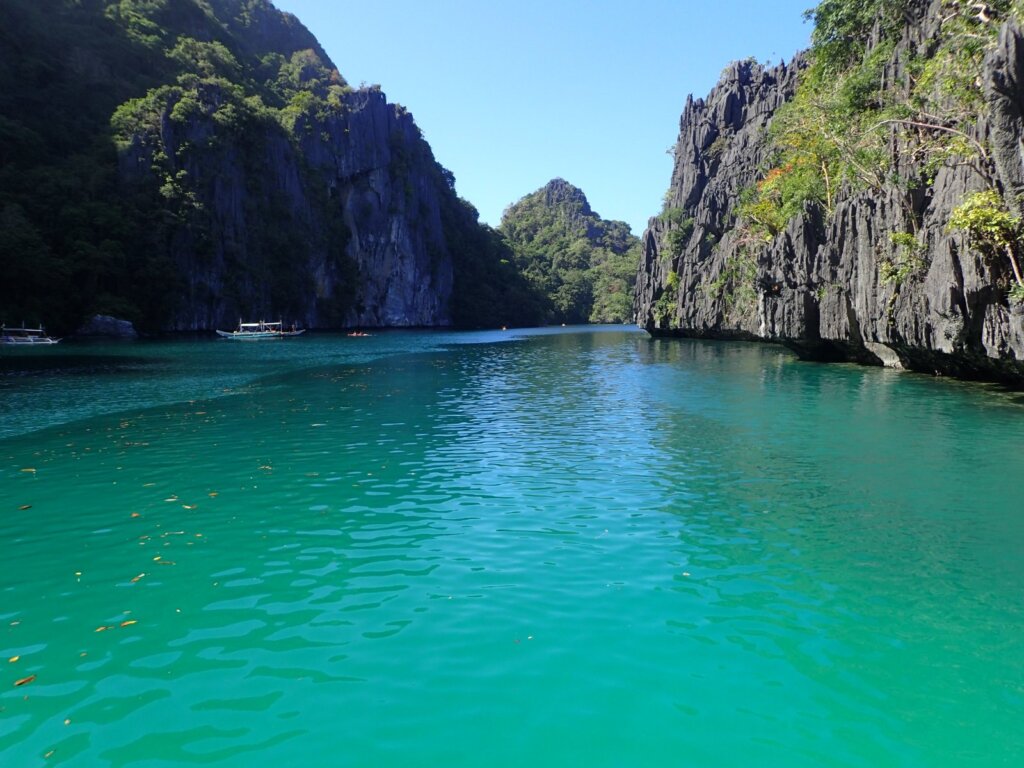
El Nido snorkelling is built around island hopping. Standard tours stop at four or five spots such as 7 Commando Beach, Cadlao Lagoon, Pinagbuyutan Island and Small Lagoon, with lunch on the sand. Water is clear, corals are mostly healthy near protected areas and you can spot parrotfish, giant clams, reef fish and the occasional turtle.
The scenery above and below the water is the main draw. Limestone cliffs rise straight out of turquoise shallows, and many snorkel sites sit in sheltered coves with calm conditions. If you want to compare tours in detail, see our Tour A vs Tour C breakdown.
The downsides are crowds at the most famous spots and the dependence on boats. Rough seas can cancel tours, and midday visits to popular lagoons are busy.
A typical El Nido snorkel day starts around 9 a.m. at the beach, with a boat crew handing out masks, fins and life vests. You make four or five stops, swim for twenty to forty minutes at each, and break for a grilled lunch on a sandbar. Most travellers are back in town by four in the afternoon, sunburnt and happy. Late-afternoon departures are sometimes offered for sunset snorkels, with fewer crowds.
Water temperature stays warm all year, usually around 27 to 30 degrees Celsius, so a thin rash guard is enough for most people. Visibility depends on recent rain and swell, and tends to be best in the dry months of February through May.
Snorkelling in Moalboal
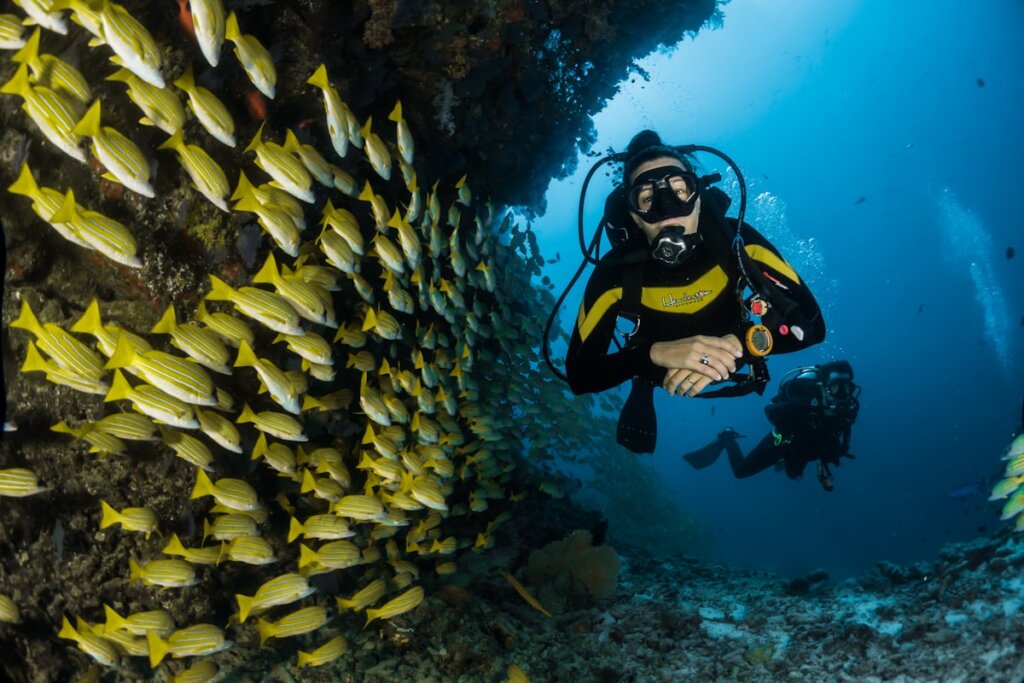
Moalboal sits on the southwest coast of Cebu island. Panagsama Beach is the hub, and just metres offshore a house reef drops into deep water. The famous attraction is the sardine run, a giant swirling ball of sardines that sits close to shore much of the year and attracts free divers and snorkellers. Sea turtles graze on seagrass nearby, and the wall is full of reef fish.
You can snorkel straight from the beach for free, which is a big advantage for budget travellers. Boat trips to Pescador Island and Lambug Beach add variety. The town itself is smaller, with guesthouses, dive shops and beach bars rather than the resort scale of El Nido.
Moalboal gets busy in dry months, and sardine behaviour can shift, so ask local dive shops for the current location. Respect marine life by keeping your distance and never touching or chasing the sardines or turtles. Read general snorkelling safety and etiquette at PADI.
A typical Moalboal day is looser. Wake early, walk to the beach, snorkel the sardine ball while the light is soft, then return for breakfast. After lunch you can rent a bangka to Pescador Island for a second reef, or head inland to Kawasan Falls for canyoneering. Because so much is available on foot, travellers often stay a week without ever booking a formal tour.
Head-to-Head Comparison Table
This table uses typical planning figures for a snorkel-focused trip.
| Factor | El Nido | Moalboal |
|---|---|---|
| Snorkel access | Boat tours, 1,200-1,500 PHP | Shore entry, mostly free |
| Marine life highlights | Coral gardens, lagoons, turtles | Sardine run, turtles, wall |
| Scenery | Limestone karst, lagoons | Beach town, coconut palms |
| Accommodation range | Budget to luxury | Budget to mid-range |
| Best season | Dec to May | Dec to May, year-round viable |
| Getting there | Fly to Puerto Princesa then van, or direct flights to El Nido | Fly to Cebu then 3-hour drive |
| Crowds | Heavy at lagoons | Moderate, concentrated at the reef |
In short, El Nido wins on scenery and variety of experiences, while Moalboal wins on wildlife-per-peso and spontaneity. Neither is a bad choice, and both can be extended into a longer island trip.
One more factor is the type of trip you want around the snorkelling. El Nido supports honeymoons, family holidays and upscale stays, with spa treatments, sunset bars and boutique resorts within walking distance of the beach. Moalboal suits solo travellers, divers and backpackers who want a casual evening scene and early nights before dawn swims. Matching the destination to your travel style often matters more than any single reef or lagoon, so think about how you want your evenings to feel as well as your days.
Cost, Access and Logistics
Moalboal is typically cheaper day to day. Accommodation ranges from dorms to mid-range resorts, and free shore snorkelling removes the cost of tours. El Nido charges environmental fees and boat prices, and its resorts scale up quickly. A one-week snorkelling trip in Moalboal might cost two-thirds of the same trip in El Nido.
Access differs too. Moalboal is about three hours by road from Cebu airport, which has many domestic and international flights. El Nido requires a flight to Puerto Princesa and a long van ride, or a direct flight to the local airport. Our El Nido getting there guide explains the options.
If you are comparing across the Philippines, our El Nido vs Bohol and El Nido vs Siargao pages help you place Moalboal in a wider itinerary.
Budget travellers should note that both places have affordable homestays, but the best-value beds in El Nido sell out first in peak months, while Moalboal rarely sells out entirely. Eating well is cheap in both, and local carinderia meals cost a fraction of beachfront restaurant prices.
Best Season and Weather
Both destinations enjoy their best conditions from December to May. El Nido faces a pronounced wet season and potential tour cancellations from July to October. Moalboal is less seasonal, with clear water much of the year, although typhoons can disrupt Cebu travel. Always check forecasts at weather.com and warnings from the national weather service before booking boat trips.
See our best time to visit El Nido for monthly details, including water visibility and rainfall.
For safety, never snorkel alone in deep water, avoid swimming near moving boats and apply sunscreen thirty minutes before you enter the water. Rinse your gear in fresh water after each trip, and keep a small first-aid kit with antiseptic and antihistamine cream for scrapes and stings.
Gear, Etiquette and the Final Choice
Whichever place you pick, bring a well-fitted mask, snorkel and fins, plus a rash guard and reef-safe sunscreen. Rental gear is available in both destinations, but quality varies. Never stand on coral, avoid touching marine life and do not feed fish. Conservation updates and rules are posted by the Department of Environment and Natural Resources at DENR.
Our El Nido packing list also works for Moalboal. Add a floating dry bag and a waterproof phone pouch, and carry cash because many beachfront stalls take no cards.
Free diving beginners should practise breathing and equalising in shallow water before heading to the sardine ball, and anyone prone to ear problems should avoid deep dives without training. Always snorkel with a buddy, wear a bright float or vest in boat lanes and listen to your guide about currents.
Pick El Nido for scenery, comfort, variety and packaged tours. Pick Moalboal for wildlife, spontaneity and low cost. If you love photography, El Nido gives wide dramatic landscapes, while Moalboal rewards close-up wildlife shots. If you travel with non-swimmers or children, El Nido boat tours with life vests are easier, while Moalboal reef drop-offs require stronger swimmers.
A good middle path is to spend four nights in each, starting with Moalboal for wildlife, then flying to Palawan for lagoons. Booking the two legs back to back, with a flight via Manila or a direct link when available, makes the combination realistic over ten days. Whichever you choose, book accommodation early in peak months and keep your plans flexible around weather.
Many travellers find the sardine run the more surprising experience and the lagoons the more photogenic one, so your best memory may depend on whether you value animals or architecture. Both are worth the trip, and neither disappoints when you approach it with realistic expectations and respect for the reef.
Frequently Asked Questions
Is Moalboal better than El Nido for snorkelling?
It is better for wildlife and shore access, while El Nido is better for scenery and boat-based variety. The best choice depends on your priorities.
When is the sardine run in Moalboal?
The sardine ball is visible most of the year, though location and size vary. Ask local dive shops for current conditions.
Can I snorkel in El Nido without a boat?
Some beaches near town have shore snorkelling, but the best sites are reached by boat tours.
Which is cheaper, Moalboal or El Nido?
Moalboal is generally cheaper because shore snorkelling is free and accommodation prices are lower.
Can I visit both on one trip?
Yes. Fly via Manila between Cebu and Puerto Princesa and allow at least ten days for a relaxed pace.