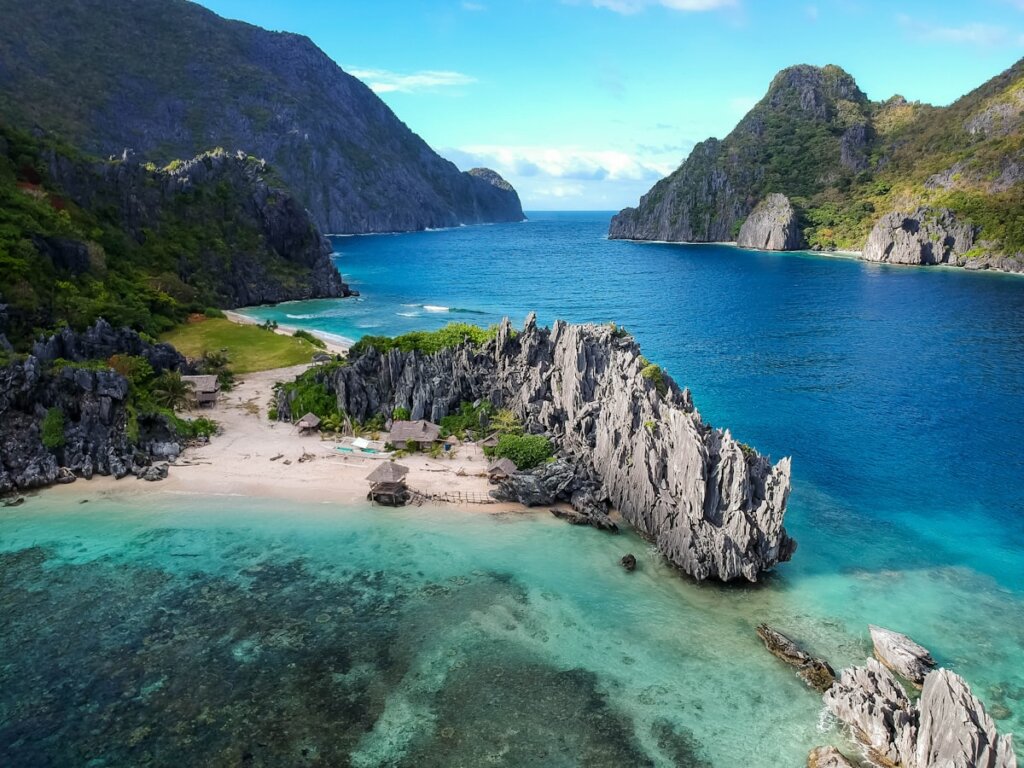


El Nido’s weather follows a clear two-season pattern — a dry season (November–May) with sunshine and calm seas, and a wet season (June–October) with rain, higher winds, and rougher water. But each month has its own character. This month-by-month guide tells you exactly what to expect so you can choose the right time for your trip.
Month-by-Month Breakdown
January ⭐⭐⭐⭐⭐
Weather: Peak dry season. Sunny with occasional brief afternoon clouds. Very low rain probability (2–3 rainy days typical).
Sea conditions: Calm, excellent visibility (20–25m) — best diving and snorkelling of the year.
Crowds: High — peak tourist season. Real Street busy, tours book out quickly.
Prices: Peak — accommodation up 30–50% vs shoulder season.
Verdict: Best weather, most expensive, busiest. Book everything 2–3 months ahead.
More details: El Nido in January guide
February ⭐⭐⭐⭐⭐
Weather: Excellent — probably the best single month of the year. Very dry, consistent sunshine, light winds.
Sea conditions: Exceptional — calmest seas and clearest water. Manta ray season at cleaning stations begins.
Crowds: High — Valentine’s season brings couples; Chinese New Year (varies) can spike demand.
Prices: Peak.
Verdict: Best overall conditions month. Honeymoon and romance-focused travel peak.
More details: El Nido in February guide
March ⭐⭐⭐⭐⭐
Weather: Excellent and transitioning — slightly warmer than January/February, still very dry.
Sea conditions: Still excellent. Manta ray season continues. Good snorkelling and diving.
Crowds: Decreasing from February peak — significantly better than January.
Prices: Shoulder season begins — accommodation drops 15–25% from peak.
Verdict: Best value month for ideal conditions. Fewer crowds than Feb, same weather.
More details: El Nido in March guide
April ⭐⭐⭐⭐
Weather: Hot and dry. Temperatures peak (32–35°C). Some humidity building. Still very little rain.
Sea conditions: Good — visibility slightly reduced as warmer water affects clarity at some sites. Still excellent for island hopping.
Crowds: Holy Week (Easter) brings a major domestic tourism surge — El Nido gets very busy. Outside Easter, crowds are moderate.
Prices: Easter week: peak pricing. Rest of April: shoulder.
Verdict: Excellent weather but avoid Easter week unless booked far in advance.
More details: El Nido in April guide
May ⭐⭐⭐⭐
Weather: Hot, occasional afternoon showers begin. Still predominantly dry (15–20 rainy days max). Mornings reliably clear.
Sea conditions: Good for most activities. Some afternoon chop as wind patterns shift. Morning tours optimal.
Crowds: Low — shoulder to off-season transition. Very manageable.
Prices: Low season rates begin — significant discounts available.
Verdict: Good weather, low crowds, lower prices. Best for independent travellers.
More details: El Nido in May guide
June ⭐⭐⭐
Weather: Rainy season begins. Rain is typically late-afternoon/evening rather than all day. Mornings often clear.
Sea conditions: Winds pick up, seas less predictable. Tours may run with modifications or occasional cancellations.
Crowds: Very low — some operators reduce schedules.
Prices: Low season — best rates of the year (30–50% below peak).
Verdict: Budget option with weather risk. Build in extra days for cancelled tours.
July–August ⭐⭐
Weather: Peak rainy season. More consistent afternoon and overnight rain. Typhoon risk increases (though El Nido’s geography provides some protection).
Sea conditions: Rough on many days — tour cancellations more frequent. Some operators close for maintenance.
Crowds: Minimal.
Prices: Lowest of the year.
Verdict: Generally not recommended unless you’re very budget-constrained and flexible. The waterfalls are impressive, inland activities work fine.
September–October ⭐⭐
Weather: Peak typhoon season for the Philippines. El Nido is relatively protected but significant storms still possible. Rain remains frequent.
Sea conditions: Often rough — plan for multiple cancelled tour days.
Crowds: Very low.
Prices: Lowest.
Verdict: Avoid for island-hopping focused trips. If visiting, focus on inland activities and budget for weather disruptions.
November ⭐⭐⭐⭐
Weather: Dry season begins — rains taper off rapidly. By mid-November, conditions are reliably good. Some inter-monsoon uncertainty in early November.
Sea conditions: Improving quickly. By late November, excellent conditions return.
Crowds: Building — early season tourists arrive. Still manageable in early November.
Prices: Low season until mid-November, then shoulder/peak rates resume.
Verdict: Late November is a sweet spot — good weather arriving, crowds not yet peak.
More details: El Nido in November guide
December ⭐⭐⭐⭐
Weather: Good dry season conditions — some Christmas/New Year rain risk but generally clear and sunny.
Sea conditions: Good — visibility improving throughout the month.
Crowds: Christmas and New Year: very high. Early December: more moderate.
Prices: Christmas/New Year week: highest of the year. Early December: shoulder rates.
Verdict: Early December is excellent. Christmas week requires advance booking of 3–4 months.
More details: El Nido in December guide
Quick Summary Table
| Month | Weather | Crowds | Price | Best For |
|---|---|---|---|---|
| January | ⭐⭐⭐⭐⭐ | High | Peak | Best conditions |
| February | ⭐⭐⭐⭐⭐ | High | Peak | Honeymooners, mantas |
| March | ⭐⭐⭐⭐⭐ | Medium | Shoulder | Best value |
| April | ⭐⭐⭐⭐ | Medium* | Shoulder | Avoid Easter week |
| May | ⭐⭐⭐⭐ | Low | Low | Budget + independence |
| June | ⭐⭐⭐ | Very Low | Lowest | Budget only |
| July–Aug | ⭐⭐ | Minimal | Lowest | Not recommended |
| Sep–Oct | ⭐⭐ | Minimal | Lowest | Inland activities only |
| November | ⭐⭐⭐⭐ | Low-Med | Low-Shoulder | Late Nov sweet spot |
| December | ⭐⭐⭐⭐ | High* | Shoulder-Peak | Early Dec; avoid Xmas |
* Christmas week and Easter are the two highest-demand periods — book 3–4 months ahead for these
Planning Resources
For complete itineraries matched to season: 3-day | 5-day | 7-day itineraries. For wet season specifically: El Nido wet season guide. For accommodation booking strategy by season: where to stay guide.
Frequently Asked Questions
What is the best month to visit El Nido?
February and March are the best months overall — February for absolute peak weather conditions (calmest seas, best visibility, manta ray season), March for the same excellent conditions with fewer crowds and lower prices. January is equally good weather-wise but at peak prices and crowds.
What months should I avoid El Nido?
July–October is the rainy season — rough seas frequently cancel island-hopping tours, and typhoon risk (September–October especially) is real. If you visit during this period, budget extra days for weather disruptions and focus on inland activities (waterfalls, viewpoints, birding) as backups.
Is El Nido busy in December?
Christmas week (December 23–January 2) is El Nido’s most crowded period alongside February peak season. Early December (1–20) is much more manageable with good weather. Book accommodation 3–4 months ahead for Christmas week — properties sell out completely.
When is the cheapest time to visit El Nido?
June–October (rainy/wet season) has the lowest prices — accommodation drops 30–50% below peak rates, and tours have more availability. The trade-off is weather uncertainty and frequent tour cancellations. May is the best budget option that still has predominantly good weather.