El Nido’s sun is strong. Between blinding white sand, reflective water and a boat deck with little shade, a single island-hopping day can leave first-time visitors badly burned. The classic debate is whether to rely on sunscreen or cover up with a rash guard. This guide focuses on sun protection choices specifically for snorkellers and island-hopping travellers spending full days on boats and beaches in El Nido.
We compare the two side by side on protection, practicality, cost and reef impact, then explain the combination that works best for most people.
Why El Nido Sun Protection Matters
The Philippines sits close to the equator, so the midday sun is almost directly overhead for much of the year. The UV index often reaches the “very high” or “extreme” range in the late morning and early afternoon. The World Health Organization recommends extra protection whenever the index is 3 or above, and during a typical El Nido tour you will be well above that for hours.
Three local factors increase exposure:
- Reflection. Water and pale sand reflect UV back at you, so shade alone is not enough.
- Floating face down. Snorkelling leaves your back, the backs of your legs and your neck pointing straight at the sun for long periods.
- Cooling breezes. On the boat, the wind makes you feel cool, so you do not notice burning until the evening.
Sunburn is not just uncomfortable. It can ruin the rest of your trip, and repeated burns raise long-term skin cancer risk. For broader heat safety, including hydration and heat exhaustion, read our El Nido heat and sun safety guide.
Rash Guard vs Sunscreen: Side-by-Side Comparison
| Factor | UPF 50+ rash guard | Sunscreen (SPF 30–50) |
|---|---|---|
| UV protection | Blocks about 98% of UV on covered skin | Strong if applied thickly and reapplied |
| Reapplication | None needed | Every 2 hours and after swimming |
| Coverage | Torso and arms; leggings add legs | Any exposed skin, including face and hands |
| Reef impact | Nothing washes off into the water | Some filters linked to coral harm |
| Cost over a trip | One-off purchase, lasts for years | Several bottles for a family on a long trip |
| Comfort | Cooling when wet; can feel warm on land | Can feel greasy and sting eyes |
| Extra benefits | Some protection from jellyfish and coral scrapes | None beyond UV |
| Weak spots | Face, neck, hands and feet exposed | Easy to miss spots or apply too thinly |
The comparison makes the answer clear: a rash guard wins on the body, while sunscreen fills the gaps that clothing cannot cover.
The Case for a Rash Guard
A rash guard is a close-fitting swim top, usually made from nylon or polyester with elastane. Look for a label stating UPF 50+, the highest standard rating for sun-protective fabric. UPF measures how much UV passes through the fabric: UPF 50 lets through only about one-fiftieth of the radiation.
For El Nido, the biggest advantage is that a rash guard keeps working all day. You do not need to remember to reapply between Small Lagoon and Secret Beach, and it cannot wash off when you jump off the boat. Long sleeves also protect the tops of your shoulders and upper back, the areas that burn worst while snorkelling.
Other benefits:
- Less sunscreen in the water. Covering your torso and arms can cut the amount of sunscreen you use by more than half.
- A barrier against stings and scrapes. A rash guard offers some protection from small jellyfish and accidental brushes with rock or coral. Our El Nido jellyfish guide explains when full coverage is most useful.
- Warmth. On breezy days a wet rash guard helps you stay comfortable between swim stops.
Pair it with swim leggings if you plan long snorkelling sessions. The backs of the knees and thighs are some of the most commonly burned spots on island-hopping tours.
How to choose the right rash guard
Not all swim tops are equal. When shopping before your trip, check these details:
- UPF rating on the label. A tested UPF 50+ rating is more reliable than vague “sun protective” marketing. A cotton T-shirt, by comparison, offers much less protection, especially when wet.
- Long sleeves and a high neck. Short sleeves leave the shoulders’ outer edges and forearms exposed, and a low neckline leaves the upper back open while you float face down.
- Snug but comfortable fit. A loose top billows in the water and rides up, exposing your lower back. A close fit stays in place when you dive under or climb a boat ladder.
- Light or bright colours. Bright colours make you easier for boat crews to spot in the water, which is a small but useful safety bonus in busy lagoons.
- Quick-drying fabric. A top that dries fast is more comfortable over lunch on the beach and packs easily for the next day.
Caring for it on the road
Rinse your rash guard in fresh water after every tour to remove salt and sand, then hang it in the shade to dry. Direct sun and chlorine gradually break down the elastic fibres. A well-kept rash guard lasts several seasons, which makes it far better value than the bottles of sunscreen it replaces. If you are travelling as a family, pack one per person plus a spare for younger children, who tend to get theirs soaked and sandy before the boat even leaves the beach.
The Case for Sunscreen
Sunscreen is still essential, because no rash guard covers your face, ears, neck, hands or feet. The key is using enough and reapplying it. Most people apply only a fraction of the amount used in lab testing, which means the real-world protection is far lower than the SPF number suggests. Aim for roughly a shot glass of lotion for the whole body, or about half a teaspoon for the face and neck.
The US Food and Drug Administration notes that water-resistant sunscreens are tested for either 40 or 80 minutes of water exposure. On a tour with several swim stops, that means reapplying after almost every swim.
Choose a broad-spectrum formula that protects against both UVA and UVB, with at least SPF 30. Stick-style sunscreens are handy for faces and ears on a boat, because they are quick to apply and less likely to run into your eyes.
Reef Impact: What Washes Off Matters
El Nido’s reefs are part of a protected area, and the sheer number of daily swimmers means small choices add up. Laboratory studies have linked certain chemical UV filters, particularly oxybenzone and octinoxate, to coral stress. The NOAA National Ocean Service recommends choosing sunscreens without these ingredients and covering up with clothing to reduce what enters the water.
If you do use sunscreen before swimming, a mineral formula based on non-nano zinc oxide is the most widely recommended option. Apply it at least 15–20 minutes before getting in so more of it binds to your skin. Our El Nido reef-safe sunscreen guide explains how to read labels and where to buy suitable products locally.
The Winning Combination for Island Hopping
For most travellers, the best approach is simple: cover first, then apply sunscreen only where clothing cannot reach. Here is a practical kit for a full day on the water:
- Long-sleeve UPF 50+ rash guard
- Swim leggings or long board shorts for long snorkelling sessions
- Mineral sunscreen for face, ears, neck, hands and the tops of feet
- Lip balm with SPF, since lips burn easily on boats
- A wide-brim hat or cap and polarised sunglasses for the boat rides
- A light long-sleeve shirt or sarong for lunch stops on shade-free beaches
Protect your feet as well. The tops of the feet burn quickly while snorkelling, and hot sand and sharp rocks are common on some beaches. Our comparison of water shoes, sandals and reef booties covers the best options. For a full packing list, see what to wear in El Nido.
Treating Sunburn If It Happens
Even careful travellers sometimes miss a spot. If you burn, get out of the sun, cool the skin with a cool shower or damp cloth, and apply a soothing moisturiser or aloe vera gel, which is sold in pharmacies and convenience stores in El Nido town. Drink plenty of water, since sunburn draws fluid to the skin’s surface. Avoid picking at peeling skin and keep the burned area covered on the next boat day.
Seek medical help for severe blistering, fever, chills, dizziness or confusion, which can signal sun poisoning or heat illness. The Skin Cancer Foundation has clear guidance on when a burn needs professional care. With a good rash guard and a little sunscreen discipline, though, most visitors avoid burns entirely and enjoy every day on El Nido’s spectacular water.
Frequently Asked Questions
Is a rash guard better than sunscreen for snorkelling in El Nido?
For the areas it covers, yes. A UPF 50+ rash guard blocks about 98 percent of UV, never needs reapplying and adds nothing to the water. Sunscreen is still needed for your face, neck, hands and any skin the rash guard leaves exposed.
How often should I reapply sunscreen on an island-hopping tour?
Reapply at least every two hours and after every swim or heavy sweating. Water-resistant sunscreens are tested for 40 or 80 minutes of water exposure, so on a tour with four or five swim stops you will realistically reapply several times.
Can I buy rash guards in El Nido?
Yes. Shops in El Nido town and near the beachfront sell rash guards and swim leggings, though choice of sizes and quality is limited. Buying one at home before the trip gives you better fit and a reliable UPF rating.
Is sunscreen harmful to El Nido coral reefs?
Some UV filters, particularly oxybenzone and octinoxate, have been linked to harm in coral studies. Choosing mineral sunscreens based on non-nano zinc oxide and covering more skin with clothing both reduce what washes into the water.
What should kids wear for sun protection in El Nido?
A long-sleeve rash guard, swim leggings or board shorts, a wide-brim hat on the boat and mineral sunscreen on the face and hands. Children burn quickly and often do not notice until it is too late.
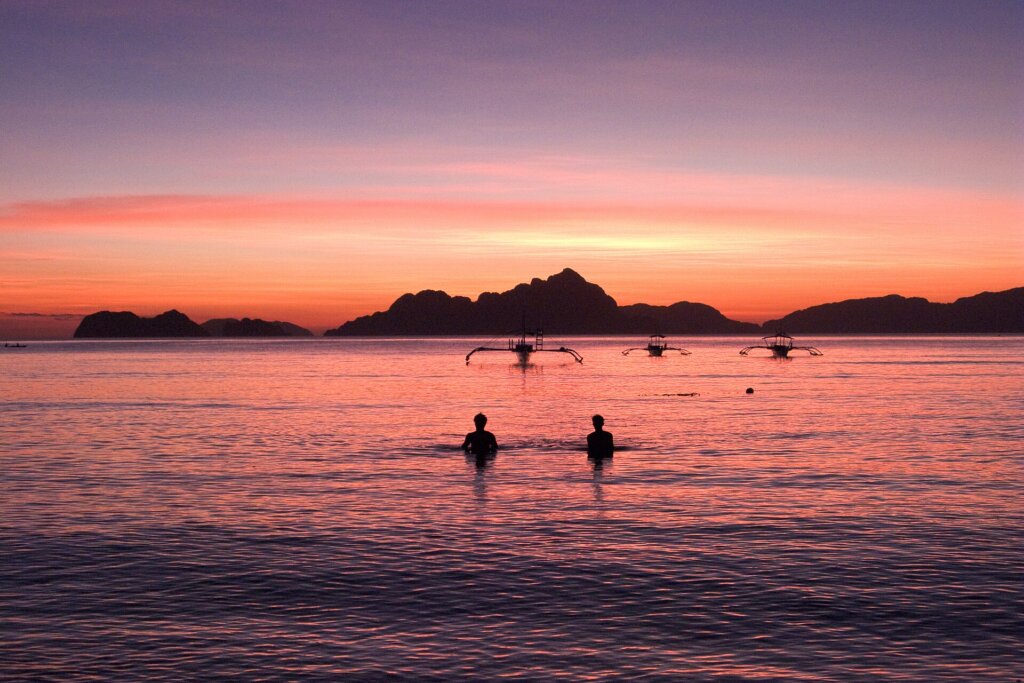
Featured image: Photo: Vyacheslav Argenberg / Wikimedia Commons, CC BY 4.0 (source).