
El Nido’s calm lagoons can give visitors a false sense of security, because the open beaches and channels behave very differently. This guide focuses on reading sea conditions specifically for swimmers, snorkelers and families who plan to enter the water from the shore, not only from a boat. You will learn how monsoon winds change the waves, where rip currents tend to form, what warning signs to look for and exactly what to do if the water starts pulling you away from the beach.
Why Sea Conditions Change So Much Here
El Nido sits on the northwestern edge of Palawan, where two seasonal wind systems shape the water. The northeast monsoon, known locally as amihan, usually brings drier air and steady winds from roughly November to March. The southwest monsoon, or habagat, brings rain and rougher water from about June to September. Transitional months can bring sudden changes in either direction.
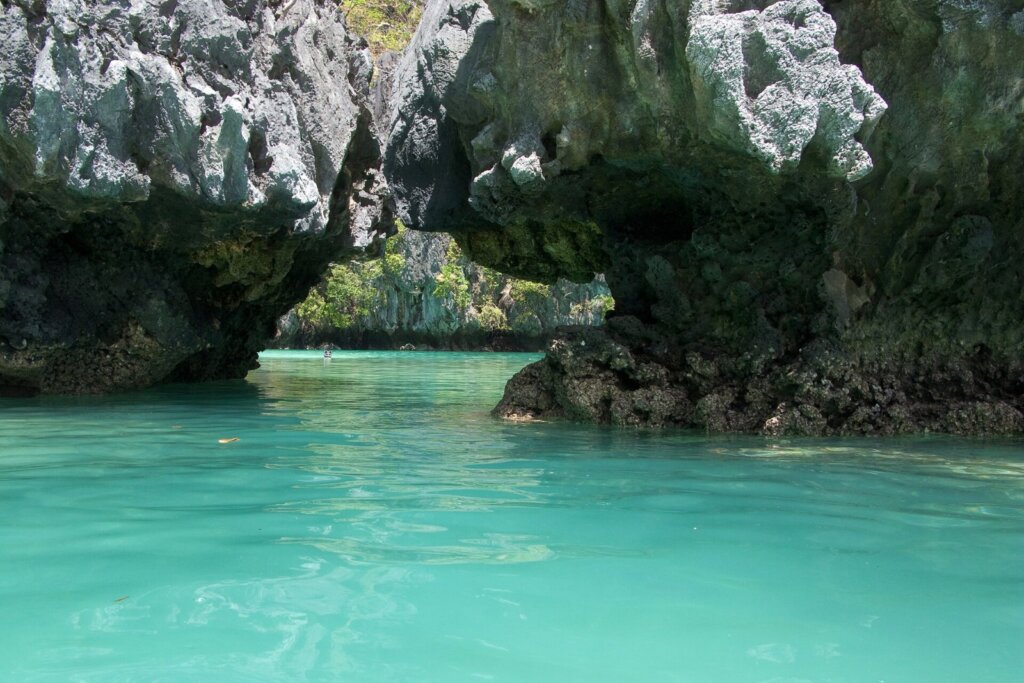
Inside Bacuit Bay, islands block a lot of swell, which is why the lagoons feel gentle. On exposed beaches and open channels, waves, tides and wind can combine to produce strong currents. That contrast surprises many travelers who assume every beach behaves like a hotel pool. For month-by-month expectations, read our October weather guide and the official PAGASA forecasts.
How Rip Currents Form
A rip current is a narrow channel of water flowing away from shore. It forms when waves push water toward the beach and that water must return to sea through a gap in a sandbar, a channel beside a rock or a break between reefs. The result is a fast, narrow stream that can carry swimmers away from the shore even when the waves look small.
Rip currents are not undertow and do not pull you under. They pull you outward. The danger is panic, because swimmers try to fight the current, tire out and struggle to stay afloat. Understanding this changes what you do in the first ten seconds.
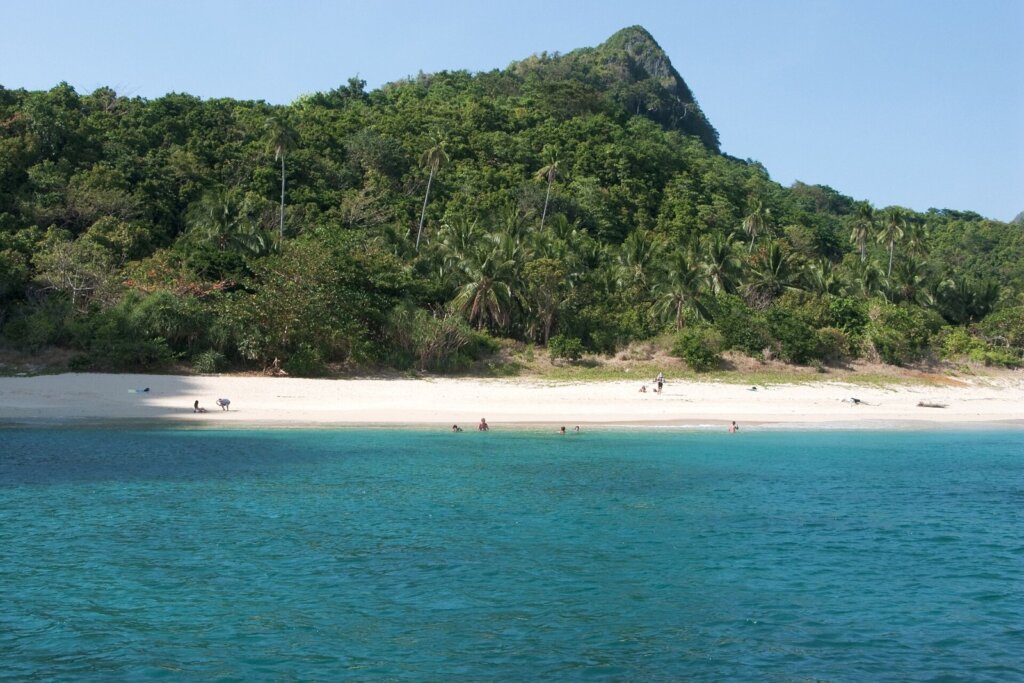
On long, open beaches, particularly those facing the West Philippine Sea, rip currents can appear at any time when waves are building. Beaches inside sheltered coves are less likely to have strong rips, but tidal channels between islands can still move fast.
Warning Signs You Can See From the Beach
| Sign | What It Looks Like | What To Do |
|---|---|---|
| Gap in the waves | A calmer strip between breaking waves | Do not swim there |
| Discolored water | Brown or sandy streak heading out | Stay out of the streak |
| Debris moving seaward | Foam, seaweed or trash drifting out | Choose another spot |
| Choppy narrow channel | Ripples where surrounding water is smooth | Swim only near the shore |
| Red flag or warning sign | Posted by resort or lifeguard | Obey it, even if it looks calm |
Spend two minutes watching the water before you enter. Notice where waves break, where they do not and whether there is a pattern. If you see nobody swimming on an otherwise attractive beach, that is often a clue rather than a coincidence.
What To Do If You Are Caught in a Rip Current
Stay calm and float. Do not swim straight toward the beach against the current, because you will exhaust yourself. Instead, swim parallel to the shore until you leave the narrow channel, then angle back toward land. If you cannot escape, float on your back, conserve energy and wave for help.
If you see someone else in trouble, do not jump in without a flotation device. Shout for help, call a lifeguard or boat crew and throw a buoy, cooler lid or float. Many rescuers become victims because they underestimate the current. Note the location and time so that emergency responders can find the person quickly.
Teach children the same rule: float first, then signal. Fitted life jackets for children are essential in open water, and adults with limited swimming skills should also wear one. Our life jacket guide explains what to look for.
Tides, Wind and Boat Conditions
Tides affect more than beach width. At low tide, lagoons and shallow reefs can become too shallow for boats or swimmers, and channels can flow faster as water drains out. At high tide, currents around narrow passages can strengthen. Ask your guide or hotel for the tide schedule and plan swimming stops accordingly.
Wind creates the chop that makes boat rides uncomfortable and sometimes unsafe. When the Philippine Coast Guard issues sea travel restrictions during storm warnings, small boats may be barred from sailing, and tours are canceled for safety. Never pressure an operator to sail against these rules. Our seasickness guide has tips for the days when the sea is only moderately rough.
Check the marine forecast the evening before and again in the morning. Rain clouds on the horizon, rising wind and swell can change quickly, so being flexible is part of the plan.
Choosing Safer Places to Swim
Sheltered lagoons and coves with shallow sandy bottoms are the safest choices for casual swimmers and families. Beaches with lifeguards or resort staff on duty provide extra reassurance. Our swimming spots guide covers places that are usually gentle and suited to beginners.
Be more cautious at long open beaches such as Nacpan when waves are large. Stay in waist-deep water, swim near others and avoid swimming at dawn or dusk when visibility and help are limited. Avoid alcohol before swimming, because it reduces judgment and coordination.
Also keep an eye on jellyfish and sea urchins during certain months. The jellyfish guide explains seasonal risks and first aid steps.
Emergency Basics and Local Resources
Know how to reach help before you need it. Save your hotel number and the local emergency contacts in your phone, and share your tour plan with someone on shore. Mobile signal can be weak on remote beaches, so tell your guide where you are heading. If you get into trouble, your boat crew is usually the fastest source of help.
Pack a small first-aid kit with antiseptic, bandages and pain relief. In serious cases, get to the local health center or a hospital promptly. The Department of Tourism and local government publish official advisories, and weather.com can supplement your planning with rain and wind forecasts. Learning water safety basics through a course from a group such as PADI can help you feel more comfortable in open water.
Above all, enjoy the water with respect. El Nido’s sea is beautiful, and most days it is safe, but the visitors who stay safe are the ones who pay attention, ask questions and know when to stay on the sand.
Family and Beginner Swimming Rules
Families should set simple rules before entering the water. Children stay within arm’s reach, everyone wears a life jacket in open water and no one swims alone. Choose one adult as the designated watcher who does not use a phone or read during that time. Rotate the role every twenty minutes so that attention stays sharp.
Beginners should practice in shallow, calm water where they can stand. Use fins and a snorkel vest if you are not confident, and avoid channels between islands where currents flow. If you feel tired or cold, get out early; fatigue is a major factor in water accidents. Keep sunscreen, water and shade nearby so heat does not sap your energy.
A Simple Beach Safety Routine
Follow a short routine each time you reach a new beach. First, look at the water for two minutes and identify any rip signs. Second, ask a local, guide or resort staff whether there is anything to avoid today. Third, pick a landmark on shore, such as a rock or tree, and check it every few minutes to see whether you are drifting sideways or outward.
Enter the water slowly, test the current with your legs and swim close to shore until you feel comfortable. If waves are breaking heavily, stay out. A postponed swim costs nothing, while a bad decision can cost far more. Finish by rinsing off, checking for stings or cuts and drinking plenty of water.
Photographers and drone hobbyists should also keep an eye on the tide line, since waves can sweep gear or people from rocks. Never stand on wet rocks facing open water, where a single larger wave can knock you off balance. These small habits keep the experience relaxing and memorable for the right reasons.
Checking Conditions Before You Book Activities
Sea conditions should influence your itinerary, not just your beach time. Keep two or three flexible days in your schedule, so that a rough day does not cancel the whole plan. If your hotel offers a free rebooking or your tour operator offers a weather refund, ask about it at the time of booking. When the wind picks up, choose land activities such as viewpoints, cafes, waterfalls or a scooter ride and save snorkeling for the calm days.
Before you leave your accommodation each morning, look at the horizon, check the flags and ask the staff for their opinion. Local boat crews read the sea every day and their advice is usually more accurate than any app. Trust that experience, and be grateful rather than frustrated when they choose to wait an hour or cancel a leg of the trip.
Frequently Asked Questions
Are there rip currents at El Nido beaches?
They can form on exposed beaches and near channels when waves build, especially during rougher monsoon periods. Sheltered lagoons are usually calmer.
What should I do if I am pulled out by a current?
Stay calm, float, then swim parallel to the shore until free of the current before heading back. Signal for help if you cannot escape.
Which months have rougher seas?
Conditions vary, but the southwest monsoon around June to September and passing storms can bring rougher water. Check daily forecasts.
Are lifeguards available at El Nido beaches?
Some resorts have staff on duty, but many public beaches have none. Swim near others and follow local advice.
Do children need life jackets in the water?
Yes. A properly fitted life jacket is strongly recommended for children and weak swimmers in open water.