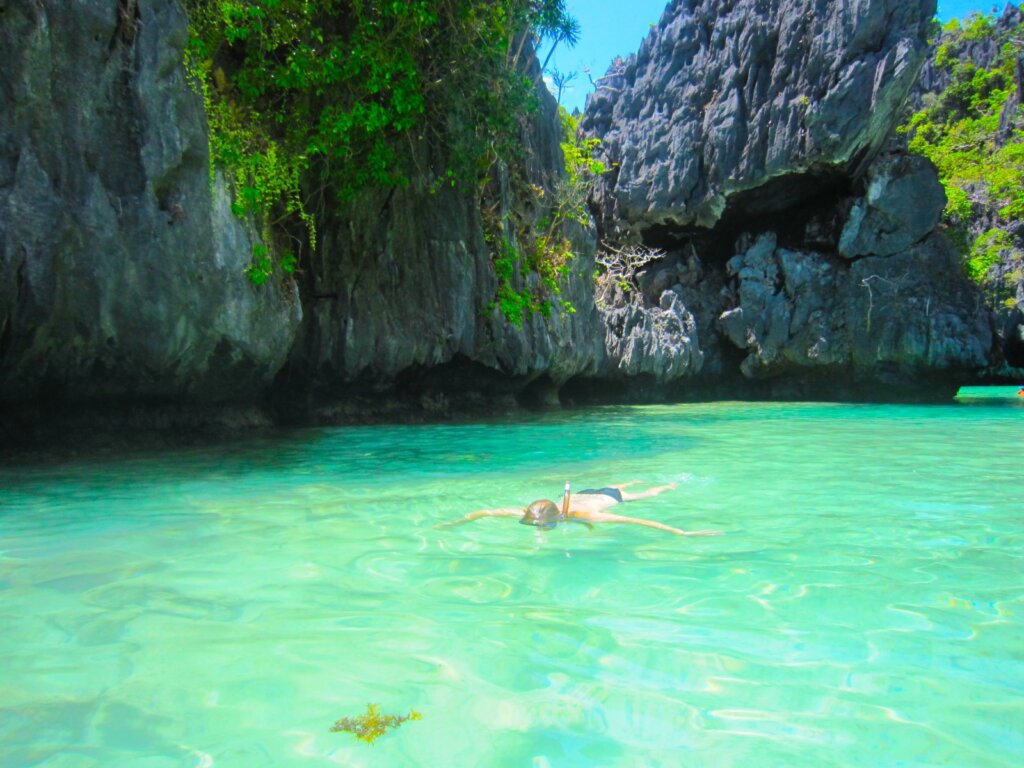

El Nido’s waters hold over 850 fish species, 120 coral species, and populations of green sea turtles and hawksbill turtles — all accessible to snorkellers without any certification or experience. The challenge is knowing which tour stops deliver the best underwater experience and what to realistically expect. This guide covers all nine top snorkelling spots, the marine life at each, and everything non-divers need to prepare.

Table of Contents
- El Nido Snorkelling: Key Facts
- The 9 Best Snorkelling Spots in El Nido
- 1. Tapiutan Strait — Tour C ⭐⭐⭐⭐⭐
- 2. Shimizu Island — Tour A ⭐⭐⭐⭐⭐
- 3. South Miniloc — Near Tour A route ⭐⭐⭐⭐⭐
- 4. Cadlao Reef — Tour D ⭐⭐⭐⭐
- 5. Seven Commandos Beach — Tour A ⭐⭐⭐⭐
- 6. Hidden Beach (Matinloc) — Tour C ⭐⭐⭐
- 7. Small Lagoon — Tour A ⭐⭐⭐
- 8. Dilumacad (Helicopter Island) Wall — Tour C ⭐⭐⭐⭐
- 9. Pasandigan Cove — Tour D ⭐⭐⭐
- Snorkelling Spots by Tour
- Sea Turtle Guide: Where and When to See Them
- Snorkelling Gear: What’s Provided vs What to Bring
- Visibility by Month
- Can You Snorkel Without a Tour?
- Frequently Asked Questions
- Plan Your Snorkelling Trip
- El Nido Snorkelling: Key Facts
- The 9 Best Snorkelling Spots in El Nido
- 1. Tapiutan Strait — Tour C ⭐⭐⭐⭐⭐
- 2. Shimizu Island — Tour A ⭐⭐⭐⭐⭐
- 3. South Miniloc — Near Tour A route ⭐⭐⭐⭐⭐
- 4. Cadlao Reef — Tour D ⭐⭐⭐⭐
- 5. Seven Commandos Beach — Tour A ⭐⭐⭐⭐
- 6. Hidden Beach (Matinloc) — Tour C ⭐⭐⭐
- 7. Small Lagoon — Tour A ⭐⭐⭐
- 8. Dilumacad (Helicopter Island) Wall — Tour C ⭐⭐⭐⭐
- 9. Pasandigan Cove — Tour D ⭐⭐⭐
- Snorkelling Spots by Tour
- Sea Turtle Guide: Where and When to See Them
- Snorkelling Gear: What’s Provided vs What to Bring
- Visibility by Month
- Can You Snorkel Without a Tour?
- Frequently Asked Questions
- Plan Your Snorkelling Trip
El Nido Snorkelling: Key Facts
| Fact | Detail |
|---|---|
| Marine biodiversity | 850+ fish species, 120+ coral species, 1,700+ crustacean/nudibranch species |
| Sea turtle species | Green turtle (Chelonia mydas), Hawksbill turtle (Eretmochelys imbricata) |
| Best visibility months | February-April (20-25 m at top sites) |
| Typical visibility | 10-18 m (dry season) / 3-8 m (wet season) |
| Water temperature | 26-30°C year-round |
| Wetsuit needed? | No — rashguard is sufficient for most snorkellers |
| Certification required? | Never — snorkelling requires no training or certification |
| Gear provided? | Yes — all island-hopping tours include mask, snorkel, fins, life jacket |
The 9 Best Snorkelling Spots in El Nido
1. Tapiutan Strait — Tour C ⭐⭐⭐⭐⭐
The best snorkelling in El Nido. The channel between Tapiutan and Matinloc Islands funnels nutrients through strong currents, creating exceptional coral growth and fish density. Visibility regularly reaches 20+ m in February-April.
- Marine life: Bumphead parrotfish (schools of 20-50), humphead wrasse, large Napoleon wrasse, reef sharks (whitetip), clownfish, triggerfish
- Coral coverage: Excellent — staghorn, brain, table, and sea fan corals
- Depth: 0-20 m from the surface
- Difficulty: Moderate — current can be strong; stay near the boat
- Best time: February-April for peak visibility; morning departures for calmest conditions
2. Shimizu Island — Tour A ⭐⭐⭐⭐⭐
The snorkelling showpiece of Tour A — a dedicated snorkel stop (not beach) with high-density coral coverage in shallow to mid-depth water ideal for all snorkellers. The island’s protected location means calm conditions most of the year.
- Marine life: Clownfish and anemones (guaranteed), Napoleon wrasse, bumphead parrotfish, sea turtles (common), schools of fusiliers and anthias
- Coral coverage: Very good — mix of hard and soft corals in good condition
- Depth: 3-18 m; easy for beginners
- Sea turtle odds: High — this is one of El Nido’s most reliable turtle encounter sites
- Note: Can be crowded in peak season as it is a shared Tour A stop
3. South Miniloc — Near Tour A route ⭐⭐⭐⭐⭐
A coral slope on the southern face of Miniloc Island — one of El Nido’s most diverse reef sites, primarily accessed by dive operators but snorkellable from the surface on private boat trips. Over 40 species of hard coral have been recorded here. Most impressive for its fish density and turtle sightings.
- Marine life: Green sea turtles (cleaning stations at 15 m visible from surface on calm days), leopard sharks at depth, large groupers, sea fans
- Best access: Private boat; not a standard shared tour stop
- Depth: 5-25 m; surface snorkelling covers the richest shallow section
4. Cadlao Reef — Tour D ⭐⭐⭐⭐
The final snorkel stop on Tour D, in the channel off Cadlao Island’s western coast. Benefits from Tour D’s low visitor numbers — coral health here is notably better than the heavily visited Tour A sites. Regular sea turtle sightings.
- Marine life: Sea turtles (green and hawksbill), diverse reef fish, school fish, nudibranch (look on the coral surfaces)
- Coral: Healthy coverage including branching Acropora and brain corals
- Difficulty: Easy — gentle current, calm water
- Why it’s underrated: Few crowds; similar quality to Tour A’s Shimizu without the boat congestion
5. Seven Commandos Beach — Tour A ⭐⭐⭐⭐
The lunch stop on Tour A doubles as an excellent shallow-water snorkel site for beginners and children. The reef along the rocky headland at the north end of the beach starts at knee depth and descends gently. Ideal for first-time snorkellers.
- Marine life: Clownfish, damselfish, anemones, parrotfish, occasional hawksbill turtle
- Depth: 0-8 m — the shallowest recommended site for beginners
- Best for: Children, non-swimmers with life jackets, first-time snorkellers
- Note: Avoid the central sandy beach area — stick to the rocky headlands for the best reef
6. Hidden Beach (Matinloc) — Tour C ⭐⭐⭐
While the enclosed cove itself is too shallow for snorkelling, the waters just outside the passage entrance to Hidden Beach have good reef coverage and frequent turtle sightings. Float on the surface just outside the rock opening rather than inside the cove.
- Marine life: Sea turtles common in the outer waters, butterflyfish, parrotfish
- Depth: 5-15 m outside the passage
- Note: Most visitors enter the cove and miss the snorkelling; position yourself outside for better marine life
7. Small Lagoon — Tour A ⭐⭐⭐
The swim-through entrance to Small Lagoon passes over a reef wall with good coral coverage. Snorkelling here is incidental — the main experience is the lagoon passage — but the underwater section of the entrance is worth a slow look during the swim through.
- Marine life: Reef fish at the entrance wall; the lagoon interior is shallow and sandy
- Visibility: 8-15 m at the entrance
- Note: Life jackets and guided passage take priority; snorkelling is a secondary activity here
8. Dilumacad (Helicopter Island) Wall — Tour C ⭐⭐⭐⭐
The underwater face of Helicopter Island is a wall dive for scuba divers, but snorkellers can explore the top 5-8 m along the cliff edge at the surface. Sea turtles frequently rest on the ledges at 8-12 m — visible from the surface on clear days when visibility exceeds 12 m.
- Marine life: Sea turtles, clownfish, parrotfish, occasional reef shark silhouettes at depth
- Depth for snorkellers: 0-8 m along the cliff edge
- Note: Stay away from the cliff-jumping area when snorkelling
9. Pasandigan Cove — Tour D ⭐⭐⭐
The quietest snorkel stop of all — Pasandigan’s rocky shore has undisturbed reef with good fish diversity and the rare-for-El-Nido possibility of dugong sightings (reported occasionally in the seagrass beds). Low visitor numbers keep this reef healthy.
- Marine life: Reef fish, sea turtles, possible dugong in seagrass areas
- Depth: 3-12 m
- Best on: Tour D (the only tour that visits); or private boat
Snorkelling Spots by Tour
| Tour | Best Snorkel Stop | Overall Snorkel Rating | Sea Turtles? |
|---|---|---|---|
| Tour A | Shimizu Island | ⭐⭐⭐⭐ | ✅ Common at Shimizu |
| Tour B | Coron-adjacent reef | ⭐⭐⭐ | Occasional |
| Tour C | Tapiutan Strait | ⭐⭐⭐⭐⭐ | ✅ At Helicopter Island |
| Tour D | Cadlao Reef | ⭐⭐⭐⭐ | ✅ Common at Cadlao Reef |
Sea Turtle Guide: Where and When to See Them
Sea turtles are one of El Nido’s most sought-after encounters for snorkellers. Two species are resident in Bacuit Bay:
- Green sea turtle (Chelonia mydas) — the larger and more commonly seen species; often seen grazing on seagrass or resting on sandy patches at 10-20 m depth. Surface-visible from snorkellers when water is clear and they come up to breathe
- Hawksbill turtle (Eretmochelys imbricata) — smaller, with a distinctive beak; found around coral heads feeding on sponges at 5-15 m. More easily approached than green turtles
Best Sites for Sea Turtle Encounters (Snorkellers)
| Site | Tour | Turtle Frequency | Best Depth for Sightings |
|---|---|---|---|
| Shimizu Island | Tour A | Very common | 5-12 m (visible from surface) |
| Cadlao Reef | Tour D | Common | 8-15 m |
| Helicopter Island Wall | Tour C | Common | 8-12 m (visible on calm days) |
| Tapiutan Strait | Tour C | Occasional | 10-15 m |
| Seven Commandos Beach | Tour A | Occasional | 3-8 m |
Tips for turtle encounters: Move slowly and avoid splashing — turtles will approach curious, calm snorkellers. Never touch, chase, or block a turtle’s path to the surface. If a turtle is resting, observe from a distance of 2+ metres. Tours that arrive early (9 AM) encounter turtles before boat traffic disturbs them.
Snorkelling Gear: What’s Provided vs What to Bring
| Item | Provided by Tours? | Recommendation |
|---|---|---|
| Mask and snorkel | Yes (basic quality) | Bring your own for better fit and seal |
| Fins | Yes (standard sizes) | Tour-provided fins are fine for casual snorkelling |
| Life jacket | Yes (mandatory) | No action needed |
| Rashguard / UV shirt | No | Essential — bring your own |
| Reef-safe sunscreen | No | Mandatory in Bacuit Bay marine sanctuary |
| Underwater camera | No | Bring if you want photos; waterproof case sufficient |
| Anti-fog spray | No | Optional but useful for tour-provided masks |
On reef-safe sunscreen: Bacuit Bay is a designated marine protected area. Oxybenzone and octinoxate (common chemical sunscreen ingredients) are toxic to coral. All snorkellers should use mineral sunscreen (zinc oxide or titanium dioxide) or a rashguard as primary sun protection. Many operators enforce this at the pier.
Visibility by Month
| Month | Typical Visibility | Conditions |
|---|---|---|
| November | 10-15 m | Improving; early dry season |
| December | 12-18 m | Good; peak season crowds |
| January | 15-18 m | Very good; Amihan chop on some sites |
| February | 18-22 m | Excellent; manta ray season |
| March | 18-22 m | Excellent; low crowds |
| April | 20-25 m | Peak visibility; hottest month |
| May | 18-22 m (early) | Very good early May; drops late May |
| June-October | 3-8 m | Wet season; significantly reduced |
Can You Snorkel Without a Tour?
Most of El Nido’s best snorkel spots are on islands that require a boat to access. Independent snorkelling directly off El Nido Town’s beach is not recommended — Real Beach is the tour boat launch area with no reef. However:
- Las Cabanas Beach (Corong-Corong, 10 min by tricycle): Snorkellable reef off the rocky southern headland; accessible without a tour; 3-8 m depth
- Nacpan Beach headland: The rocky point between the twin arcs has modest reef; accessible independently after your Nacpan day trip
- Private boat rental: Hiring a private boat (4,500-6,000 PHP) gives you access to all the main snorkel sites with your own schedule — ideal for snorkel-focused travellers who want more time in the water than standard shared tours allow
Frequently Asked Questions
Which El Nido tour has the best snorkelling?
Tour C has the best overall snorkelling in El Nido. Tapiutan Strait delivers the highest fish density, best coral coverage, and most consistent visibility of any standard tour stop. For sea turtle encounters specifically, Tour A’s Shimizu Island is the most reliable single site. For uncrowded snorkelling with good quality, Tour D’s Cadlao Reef is the best-kept secret.
Can you see sea turtles while snorkelling in El Nido?
Yes — sea turtle encounters are common for snorkellers, particularly at Shimizu Island (Tour A) and Cadlao Reef (Tour D). Turtles are most often seen resting on sandy patches at 8-15 m depth (visible from the surface in clear conditions) or swimming slowly near the surface when they rise to breathe. Morning tours with the clearest water give the best odds.
Is El Nido snorkelling suitable for beginners?
Yes — all island-hopping tours are suitable for beginners. Life jackets are provided and mandatory. Guides assist non-swimmers at key stops. The shallowest sites (Seven Commandos Beach, Small Lagoon entrance) are suitable for children. Non-swimmers can still participate in tours and enjoy shallow-water snorkelling with a life jacket at most stops.
Plan Your Snorkelling Trip
Book the tours that deliver the best snorkelling: our Tour C complete guide covers Tapiutan Strait in detail, and our Tour A guide covers Shimizu Island. For divers wanting scuba at these sites, see our El Nido diving guide. For planning your El Nido week, use our 7-day itinerary.
| Platform | Best For | El Nido Deals |
|---|---|---|
| Booking.com | Hotels, resorts, free cancellation | View deals → |
| Agoda | Best Asia prices, loyalty rewards | View deals → |
| Klook | Tours & activities | Browse tours → |