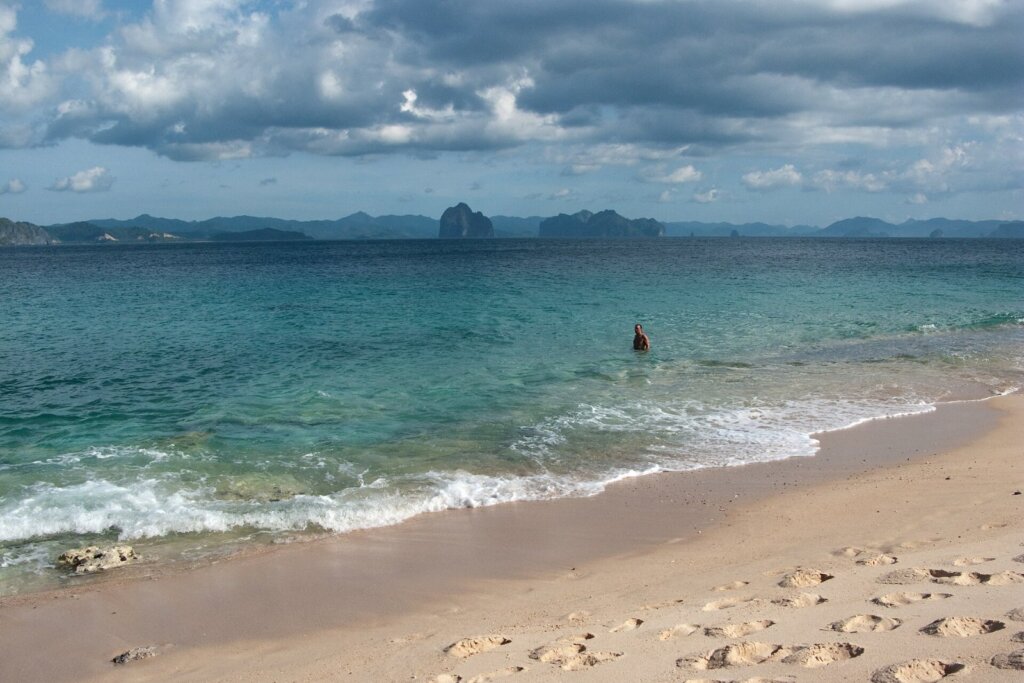
Knees and hips are the joints that complain first in El Nido, because almost every attraction involves stepping off a boat, wading over coral rubble, or climbing something. This guide focuses on El Nido specifically for travelers with bad knees, arthritis or recovering joints, ranking the easiest beaches, tours and routines so you can see the best of Bacuit Bay without overloading your legs.
This is general travel information, not medical advice. Ask your own doctor whether your plans suit your condition.
- Where the Knee Strain Really Comes From
- Seven Easy-Access Stops, Ranked
- Activities to Approach With Caution
- Comparing Your Options
- Boat Landings and Getting Aboard
- Gear That Helps
- A Joint-Friendly Four-Day Plan
- After the Trip and When to Get Help
- Choosing a Hotel Without Stairs Problems
- Walking Distances in Town
- Light Conditioning Before You Fly
- Timing and Weather
- Packing a Small Joint-Care Kit
- Frequently Asked Questions
Where the Knee Strain Really Comes From
It is rarely the walking itself. The difficult moments are the transitions: climbing down a boat ladder or bow, stepping into thigh-deep water, crossing rocky shallows, and getting back up with wet legs. Add heat and fatigue and a joint that felt fine at breakfast can ache by afternoon. Planning a day around these transitions is more useful than avoiding walking altogether.
Pain is also worse when you are dehydrated and tired, so keep water close and take breaks; our heat and dehydration guide has practical advice.
Seven Easy-Access Stops, Ranked
These are general impressions, and conditions vary with tide and weather. Always ask your crew about the landing that day.
- Nacpan Beach. A long, flat stretch of sand reached by road. You can walk as little or as far as you like, and there is shade and food near the entry. Compare it with other beaches in our Nacpan versus Long Beach guide.
- Las Cabañas Beach. A sunset favorite with relatively easy access and plenty of places to sit.
- Seven Commandos Beach. A popular tour stop with wide sand where you can stay close to the boat.
- Corong-Corong. Close to town, so you can retreat to your room whenever your knees tire.
- Lio Beach area. Resort-style access with maintained paths, better for those who prefer fewer surprises underfoot.
- Snorkeling from the boat. Sliding in from a stable platform is often easier than wading in over rocks.
- Small Lagoon by kayak or paddleboard. You stay seated, which reduces joint load, though getting into the kayak needs balance.
Activities to Approach With Caution
Some attractions are rewarding but punishing on knees. The Taraw Cliff climb is steep and rocky; see the Taraw Cliff hiking guide before you decide. Waterfall trails involve slippery stone and uneven steps, covered in the El Nido waterfalls guide. The Secret Lagoon entry requires careful footing over wet rock, and our hidden beach and secret lagoon guide describes what to expect.
None of these is forbidden, but they are better done on your best day, at a slow pace, with proper shoes, or skipped in favor of calmer options.
Comparing Your Options
| Activity | Knee load | Footing | Verdict |
|---|---|---|---|
| Beach day at Nacpan | Low | Soft sand, flat | Great choice |
| Island hopping, standard route | Medium | Boat landings, rubble | Fine with assistance |
| Kayak at Small Lagoon | Low to medium | Seated, entry step | Good if balance is OK |
| Waterfall trek | High | Wet rock, uneven | Only when strong |
| Taraw Cliff climb | Very high | Steep, sharp limestone | Skip with knee pain |
Boat Landings and Getting Aboard
Tell the crew about your knees before you leave the pier, not when you are standing in the water. They can often anchor a little closer, offer an arm, or hold the boat steady. A private boat gives you more control over where you land and how long you spend in each place. Wear closed-toe water shoes, move deliberately, and use the rail or a crew member as a third point of contact. Our boat seating and motion tips and life jacket guide will help you settle in safely.
Gear That Helps
- Closed-toe water shoes with grip and a little cushioning.
- A knee sleeve or brace if your physician recommends one.
- A lightweight walking pole that collapses for the boat, useful on sandy slopes.
- A small dry bag so you are not carrying weight.
- A flotation vest so you can rest in the water.
Our back pain guide overlaps with this one, so read both if your hips or spine are also sensitive.
A Joint-Friendly Four-Day Plan
| Day | Plan |
|---|---|
| Day 1 | Arrive, short town walk, rest |
| Day 2 | Private island hopping with limited landings |
| Day 3 | Nacpan or Las Cabañas, swim, easy sunset |
| Day 4 | Slow morning, gentle swim, departure |
Alternate effort with recovery and avoid scheduling stairs-heavy sightseeing right after a boat day. If you stay in a hotel, ask for a ground-floor room; many properties have multiple flights of steps. Our accessibility guide and seniors accessibility notes have more on step-free options and getting around by tricycle.
After the Trip and When to Get Help
Swelling after a long day is common, so elevate your legs in the evening, rehydrate, and use cold or heat as your clinician advises. A sudden twist with sharp pain, a locked knee or swelling that does not go down needs prompt attention. See the medical clinic and emergency guide for local options.
For general information on arthritis and travel, see the CDC arthritis resources, the WHO osteoarthritis fact sheet, and official Palawan tourism details at the Philippine Department of Tourism.
Bad knees change how you travel, not whether you can enjoy El Nido. Choose flat, shaded stops, tell the crew early, wear the right shoes and let the water do some of the work.
Choosing a Hotel Without Stairs Problems
Accommodation is where knee trouble can quietly ruin a trip. Many El Nido guesthouses and boutique stays are built on slopes with outdoor stairs, and a room on the third floor with no lift means several climbs a day. Before booking, ask three direct questions: Is there a ground-floor room? How many steps are between the road and the room? Is the bathroom step-free or does it have a raised lip? Properties near the beachfront in Corong-Corong or Lio often have flatter grounds, while hillside stays trade views for steps. Browse our accommodation rankings and filter mentally by layout, and see the quiet rooms guide when you want a calmer base that also keeps walking to a minimum.
A shower with a stool or a bench is a big comfort bonus, and a bed at a sensible height makes getting up easier on stiff mornings. Do not be shy about asking for photos of the exact room.
Walking Distances in Town
El Nido town is compact, but it is not smooth. Sidewalks are narrow, vendors and motorbikes crowd the edge of the road, and the beach path can be soft sand. A short stroll from the main street to the pier is manageable for most people, yet an evening of bar-hopping can add up to a couple of kilometers. If your knees are sensitive, pick a hotel within five to ten minutes of the places you will use most, eat dinner near your stay, and take a tricycle for the last stretch home. Tricycle rides are short and cheap relative to a bad night, and fare information is in our tricycle fares guide.
Light Conditioning Before You Fly
A few weeks of gentle preparation can make a real difference, and it is worth running the idea past your doctor or a physiotherapist. Walking on varied surfaces, practicing stepping up and down a low stair, and strengthening the muscles around the hip and thigh help joints cope with the unfamiliar load of a tropical trip. Practice wading in a pool if you can, because moving through water against resistance feels different from walking on land. Do not start an intense new routine in the final week, as an injury before departure is the worst outcome.
Timing and Weather
Calm seas make boarding far easier, so favor the drier months when the water is typically gentler and landings are more predictable. Rough conditions mean more boat movement, slipperier rocks and hurried landings. Check forecasts the night before with PAGASA and ask your operator whether the usual stops are comfortable that day. If conditions look rough, swap a boat day for a beach day on land and move your island hopping to a calmer morning. Flexibility is the single best strategy for sensitive joints.
Packing a Small Joint-Care Kit
Bring any medication and supports your clinician has approved, keeping medicines in their original packaging, as covered in our guide to bringing medication to El Nido. Add a compression sleeve, a few elastic bandages, a small cold pack that you can refreeze in your hotel freezer if one is available, and reusable plasters for blisters caused by new water shoes. Keep it in a waterproof pouch inside your day bag so it travels with you rather than staying at the hotel.
Frequently Asked Questions
Is El Nido possible with bad knees?
Yes, with planning. Many highlights are reached by boat, which means little walking, but the landings involve wading and uneven footing. Choose flat beaches, skip steep viewpoints and tell your boat crew about your knees so they can help you on and off.
Which activities should I skip with knee problems?
Steep hikes such as Taraw Cliff, rocky waterfall trails, and entry to the Secret Lagoon, which involves squeezing through a rock opening over slippery stone, are the hardest on knees. Read each guide and judge against your own mobility.
Are water shoes or sandals better for knee support?
Closed-toe water shoes with a grippy sole and some cushioning are generally steadier on coral rubble and wet rock than flip-flops. If your doctor recommends a brace or specific footwear, bring it.
Is swimming good for sore joints?
Many people find the buoyancy relieving, because water takes weight off knees and hips. Use a flotation vest so you can relax and avoid kicking hard against currents.
Can I get help boarding the boat?
Crews usually step into the water to assist, but it is wise to say so in advance. A private boat makes it easier to request a closer drop-off and extra time.
Where do I get medical help for a twisted knee?
Start with a clinic in town for assessment and basic care, and see our medical guide for details. Serious injuries may require transfer to Puerto Princesa.